Why a digital tread gauge matters before tires get risky
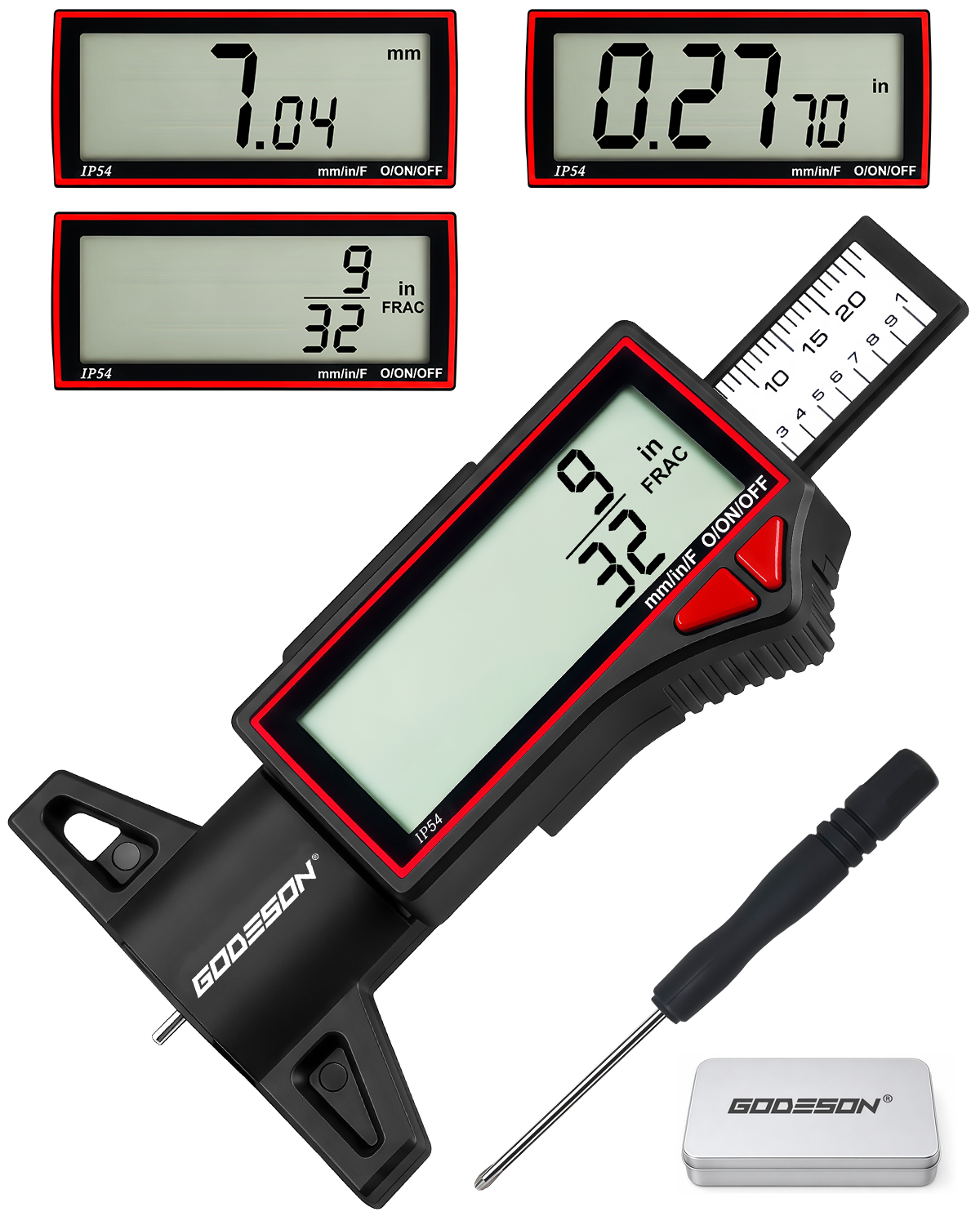
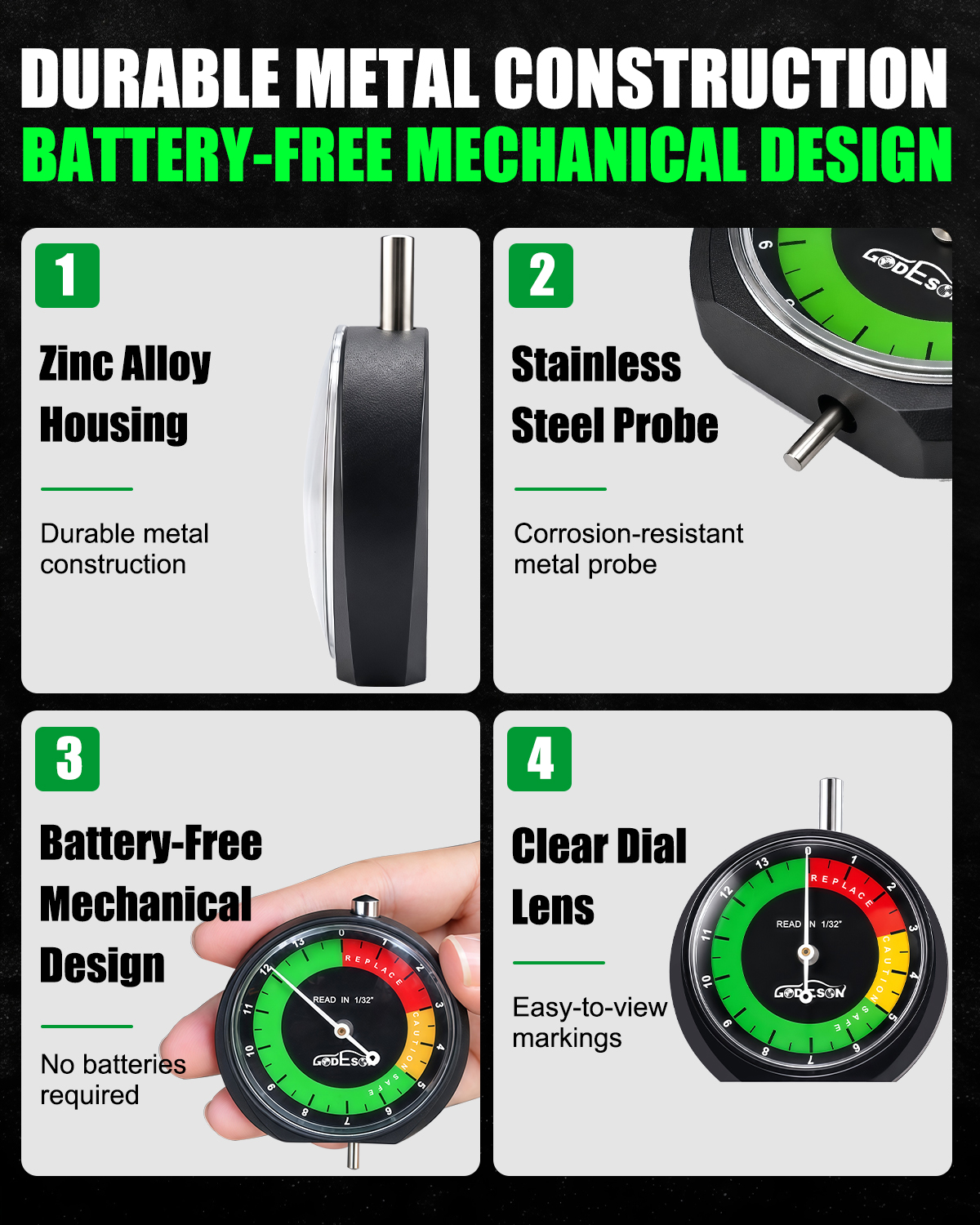
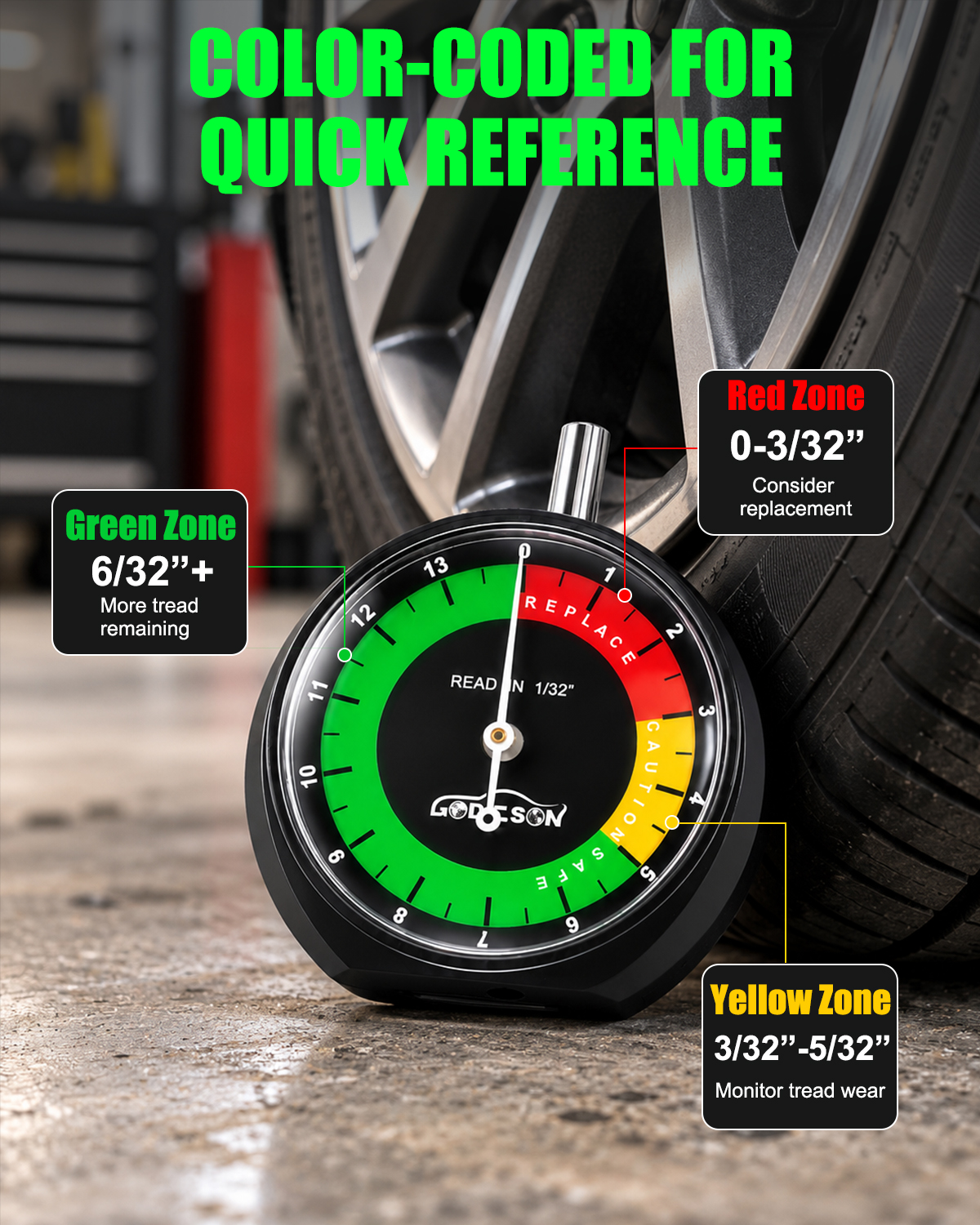
A tire tread depth gauge is one of those shop tools that looks simple until a missed reading turns into a real problem. For fleets, service bays, and everyday drivers who actually check their own vehicles, the point is not just compliance. It is deciding when a tire still has useful life, when wet-road performance is starting to drop off, and when replacement needs to move from “soon” to “now.” The GODESON tire tread depth gauge fits that everyday maintenance use case: a compact digital tool that measures tread in mm, inches, and fractional inches, with a display meant to make the reading easier to share and record.
That matters because tread wear does not fail neatly. One axle may wear evenly while another edge-cups or runs low on one shoulder. A quick glance is not enough, and even a coin test leaves too much room for judgment. A digital gauge gives a number you can write down, compare across tires, and track over time.
What this gauge is designed to do
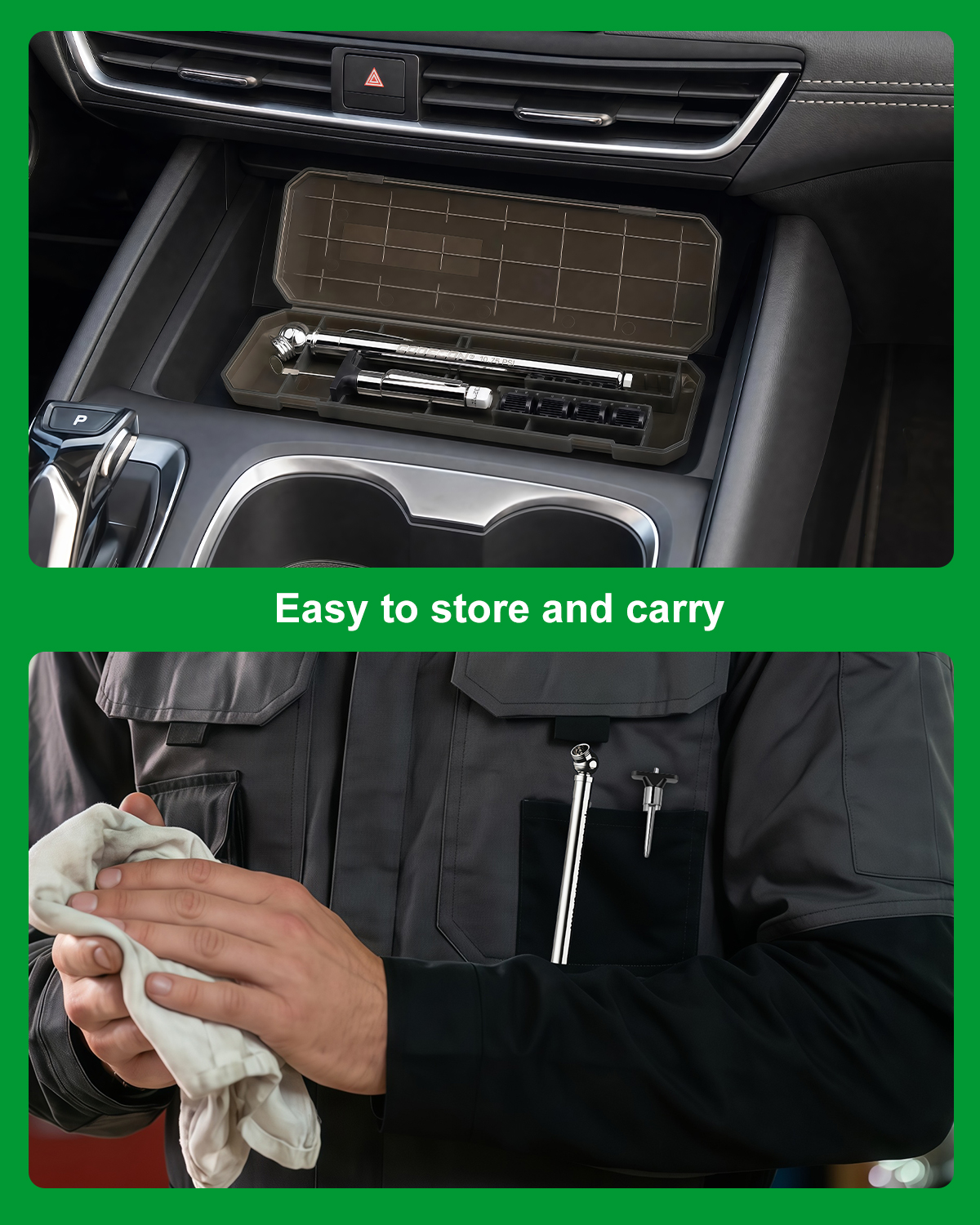
The product information describes a handheld digital tire tread depth gauge kit, with the core measuring body, a metal probe/contact point, an LCD screen, and control buttons. It comes with a small screwdriver and a user manual, and the unit is stored in a compact metal tin or box.
A few details stand out for buyers who care about the practical side of measuring tools:
The gauge body is compact, at about 4.57 in long and 2.36 in high, which is small enough for glovebox or service-cart storage. The metal storage box measures about 5.12 in long and 3.15 in tall, so the whole kit stays organized rather than floating around in a drawer. The packaging text also lists a measurement range from 0.00 mm to 25.4 mm, resolution of 0.01 mm, accuracy of ±0.1 mm, power from one CR2032 battery, operating temperature from 0°C to 50°C, and IP54 water resistance.
That combination suggests a tool aimed at routine tire inspection, not lab work. In other words, it is built for the daily decisions that workshops and fleet teams make over and over again.
How to read the numbers without overcomplicating it
Digital tread gauges can be more useful than analog tools because they reduce interpretation errors, but only if the user understands what the reading means in context.
A tread depth reading is only one part of the story. You still need to check:
Whether the tire is wearing evenly across the width
Whether the lowest point is isolated damage or general wear
Whether the tire is already near the point where wet grip starts dropping off
Whether the axle pair is matching closely enough for the vehicle’s duty cycle
The display on this GODESON tread depth gauge shows mm, inches, and fractional inches, which is practical in mixed-use shops. Some technicians think in metric, others still talk in fractions, and the customer may be used to one format while the fleet manager files records in another. Having all three reduces translation errors at the counter.
Where a compact digital gauge earns its keep
For many buyers, the question is not whether a digital gauge can measure tread. It is whether it will actually be used. A tool that lives in a box, is easy to carry, and gives a clear reading is more likely to become part of routine checks.
Fleet maintenance and pre-trip checks
Fleet operators often need repeatable readings across many vehicles. A small digital gauge helps standardize inspections when several technicians are involved. It also makes it easier to document wear trends rather than relying on memory or rough visual judgment.
Workshop service
In a service bay, speed matters. A quick probe measurement can support tire replacement recommendations, rotation decisions, and customer conversations. The IP54 water resistance is worth noting here, because workshop environments are not perfectly dry or clean. That said, IP54 is not a reason to abuse the tool; it is better read as protection against everyday shop conditions than as permission to leave it exposed.
General vehicle inspection
For owners who inspect tires before long trips or seasonal changes, this kind of gauge is a straightforward way to avoid guessing. It is particularly useful when a tire looks acceptable from a distance but is nearing the wear threshold in the center or on one shoulder.
Practical buying criteria for a tread depth gauge
Not every gauge fits every use. Buyers tend to focus on a few real-world questions.
Is the reading easy to trust?
Resolution and stated accuracy matter, but they are not the whole story. A gauge that is hard to zero, awkward to press into the tread, or difficult to read under bay lighting may produce technically good numbers that nobody wants to use. The black housing and red screen bezel on this model suggest a straightforward handheld design, which is exactly what most users want.
Will it survive the workplace?
A measurement tool for tire service should handle occasional knocks, dust, and damp hands. The listed IP54 rating is useful information, though buyers should resist turning that into a durability fantasy. Water resistance is not the same as ruggedized construction.
Is it easy to store and carry?
This is one of the more underrated points. A gauge that fits in a compact metal tin is less likely to be lost, bent, or thrown into a drawer with loose tools. For mobile technicians and fleet inspectors, the difference between a tool that is protected and one that is always missing can be surprisingly large.
Can the team use it consistently?
If a tool requires too much explanation, it will not be used uniformly. A digital display, a simple probe, and included instructions help reduce training time. That matters in mixed-experience shops where the lead tech and the newest hire may not measure the same way unless the tool is intuitive.
Common mistakes when measuring tread depth
Even a decent tread depth gauge will give misleading results if the operator uses it casually.
One common mistake is reading only the deepest part of the groove and assuming the tire is fine. Another is measuring only one spot on each tire. Tread wear often tells a story across multiple locations, especially on tires that have been underinflated, misaligned, or rotated irregularly.
It is also worth measuring with the tool properly seated. If the probe tip is not set flat in the groove, readings can jump around. And because the product information lists fractional-inch display capability, users should not assume the decimal and fractional readings always get handled the same way in every workflow. Shops should pick one internal reporting method and stick with it.
A small caution: if a gauge is kept in a service truck or glovebox, the battery condition becomes part of the process. The product data notes a CR2032 battery supply, but it does not state whether one is installed. Buyers should check that before relying on it for a first inspection.
What the included kit suggests about use on the shop floor
The presence of a small screwdriver and user manual suggests this is not just a bare instrument thrown in a box. That usually means the user is expected to handle setup, battery access, or basic maintenance themselves. For procurement teams, that is not a drawback; it is a sign that the tool is meant to be practical rather than sealed and disposable.
The metal storage tin is another useful detail. It protects the probe and keeps the gauge from rattling against other tools. In a workshop, the small things often decide whether an instrument survives long enough to stay accurate in day-to-day use.
Who this kind of gauge suits best
The GODESON tire tread depth gauge appears well matched to buyers who want a compact, easy-to-read measuring tool for routine inspection rather than a heavy-duty industrial instrument.
That includes:
Independent repair shops
Fleet maintenance teams
Used-car reconditioning operations
Mobile service technicians
Vehicle owners who want a better-than-visual check
If your process depends on quick documentation, repeat measurements, and a tool that can travel without much fuss, this type of gauge makes sense. If you need a highly specialized measurement system with advanced data logging or integration, this is probably not the right category.
FAQ
Does a digital tread gauge replace a manual one?
Not necessarily. It replaces the reading uncertainty, not the need for a careful inspection. A good technician still checks the tire as a whole.
Why measure in mm and fractional inches?
Because different teams and customers speak different measurement languages. Dual-format display reduces confusion and saves time at the counter.
Is IP54 enough for a tire shop?
It is helpful for ordinary workshop conditions, but it should not be treated as full protection against moisture, cleaning fluids, or abuse.
What is the practical value of 0.01 mm resolution?
It gives a fine-grained display, though real-world tire inspection is usually about consistency and repeatability more than chasing tiny numerical differences.
Final buyer takeaway
If you are comparing a digital tire tread depth gauge for routine vehicle service, the important questions are simple: can the tool be read quickly, carried easily, stored safely, and trusted in everyday shop conditions? Based on the product details provided, the GODESON tire tread depth gauge is aimed squarely at that use case. It is compact, includes a protected storage box, and offers a clear digital readout in the measurement units most technicians actually use.
For sourcing teams and service managers, the next step is to confirm how it fits your inspection workflow: who will use it, how readings will be recorded, and whether you need a single-unit tool for spot checks or a standardized kit for broader fleet use. That is usually where the real purchasing decision gets made.