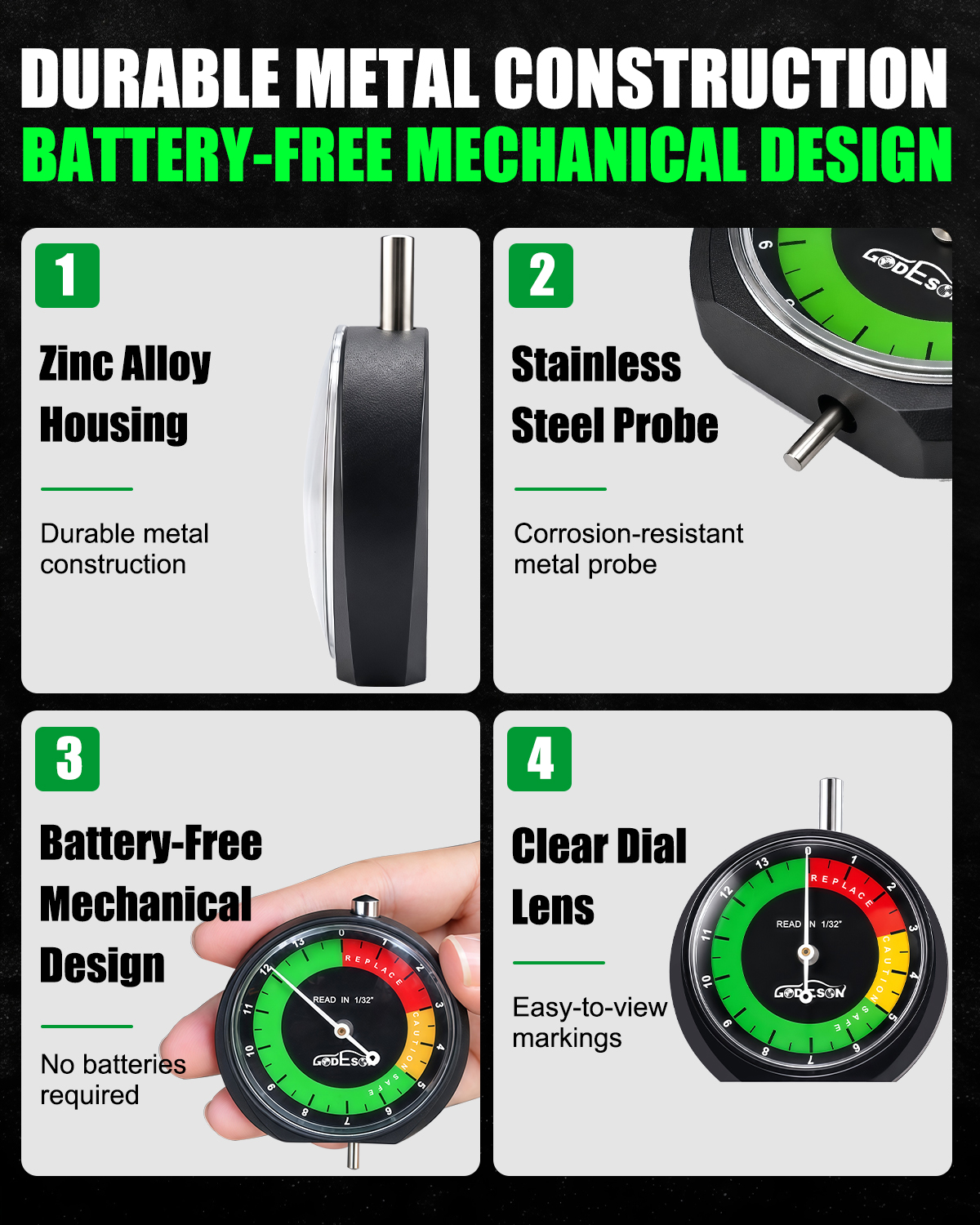
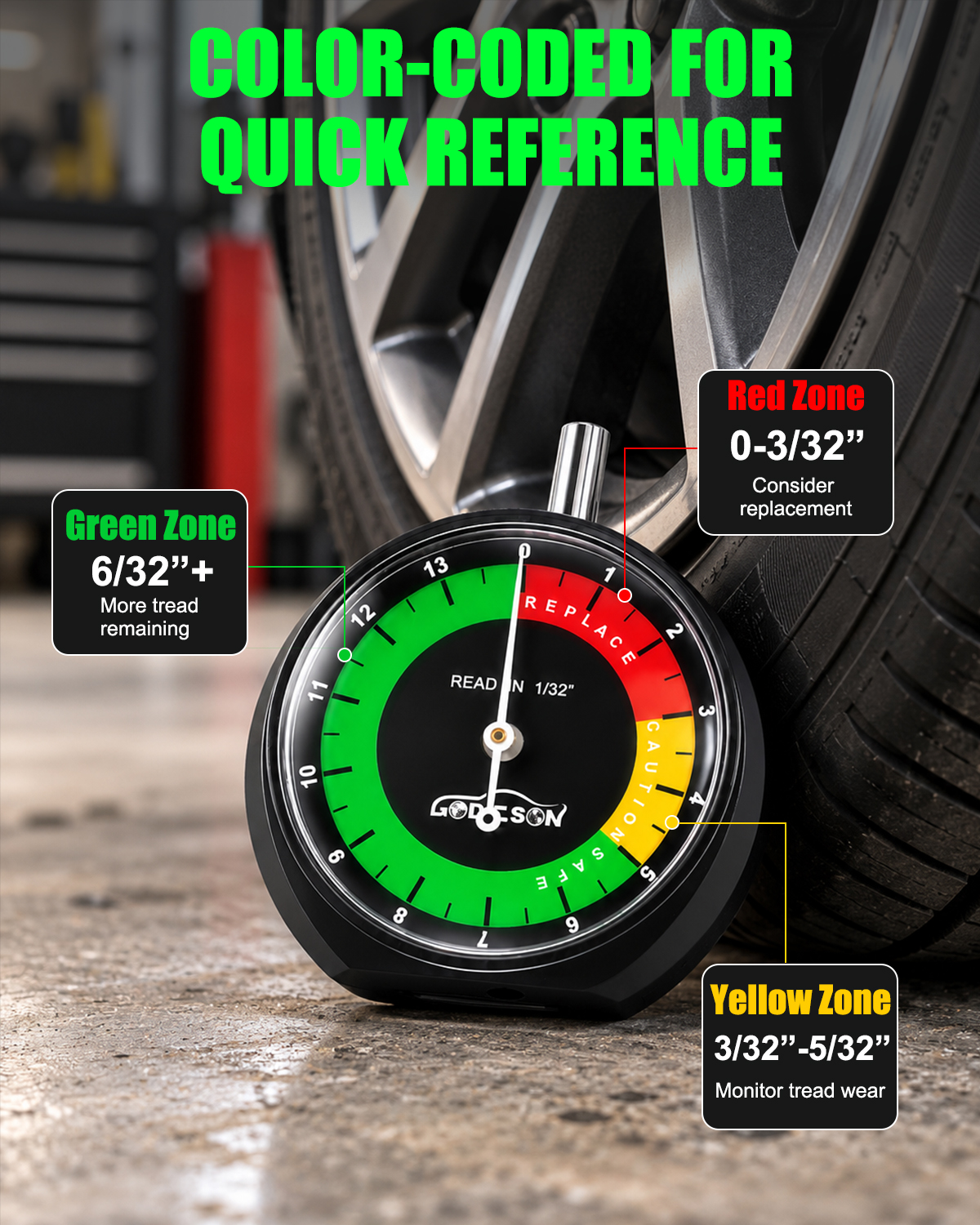
Why a tread depth gauge still matters in a world full of dashboard warnings
A tire can look serviceable at a glance and still be closer to the wear limit than a driver expects. That is why a GODESON tire tread depth gauge belongs in the shop drawer, the fleet toolbox, and even the glove box of anyone who takes tire safety seriously. Modern vehicles will warn about pressure loss, but they do not tell you how much useful tread is left. For sourcing managers and maintenance teams, that gap matters because tread depth affects stopping distance, wet-road grip, and how confidently a tire can stay in rotation.
The practical decision this article helps with is simple: when does a digital tread gauge make sense, what should you look for in the specification sheet, and how should you use the tool without overcomplicating the job? The answer is less glamorous than software-based diagnostics, but in tire maintenance, a small measuring tool can prevent a large problem.
What this digital gauge is designed to do
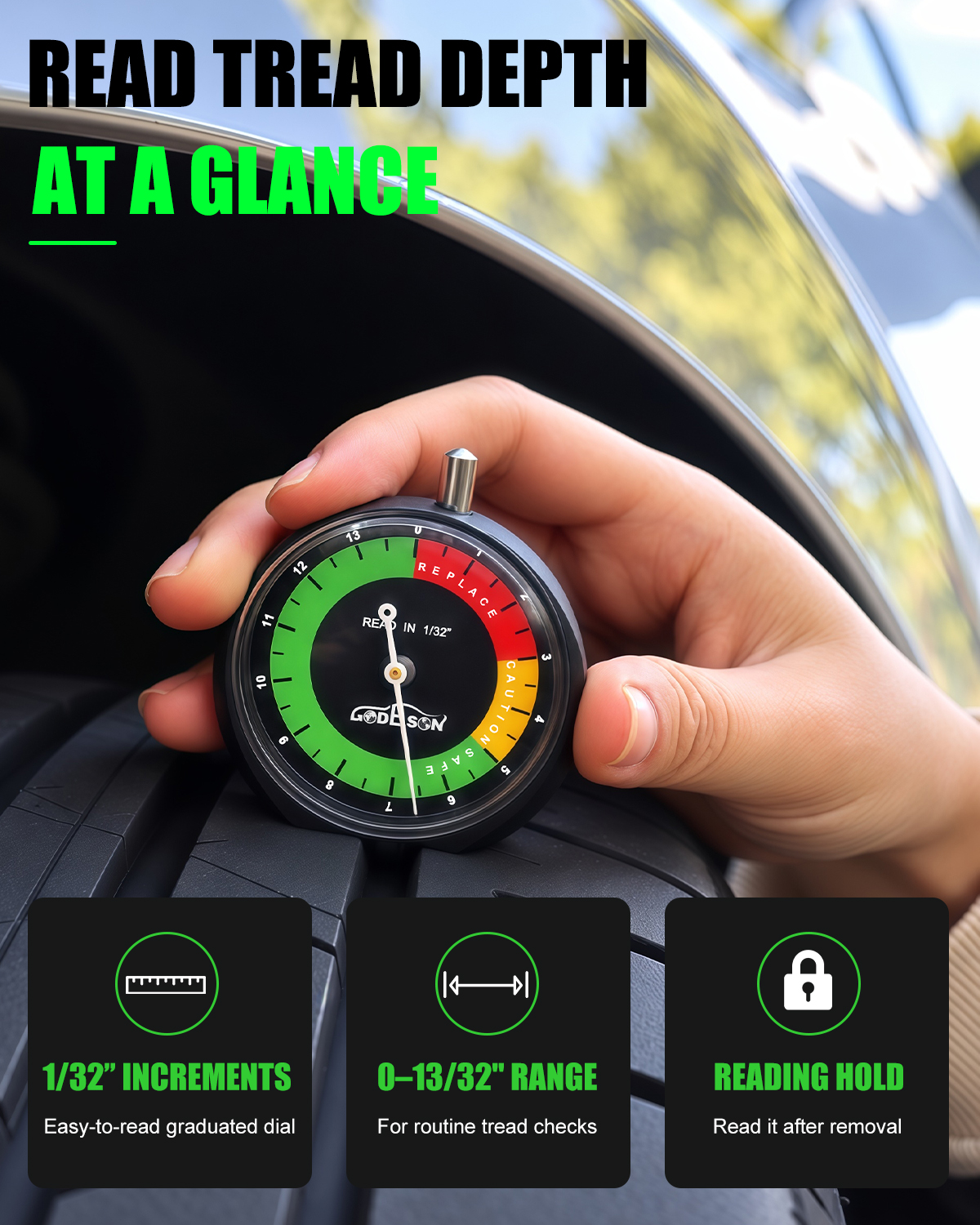
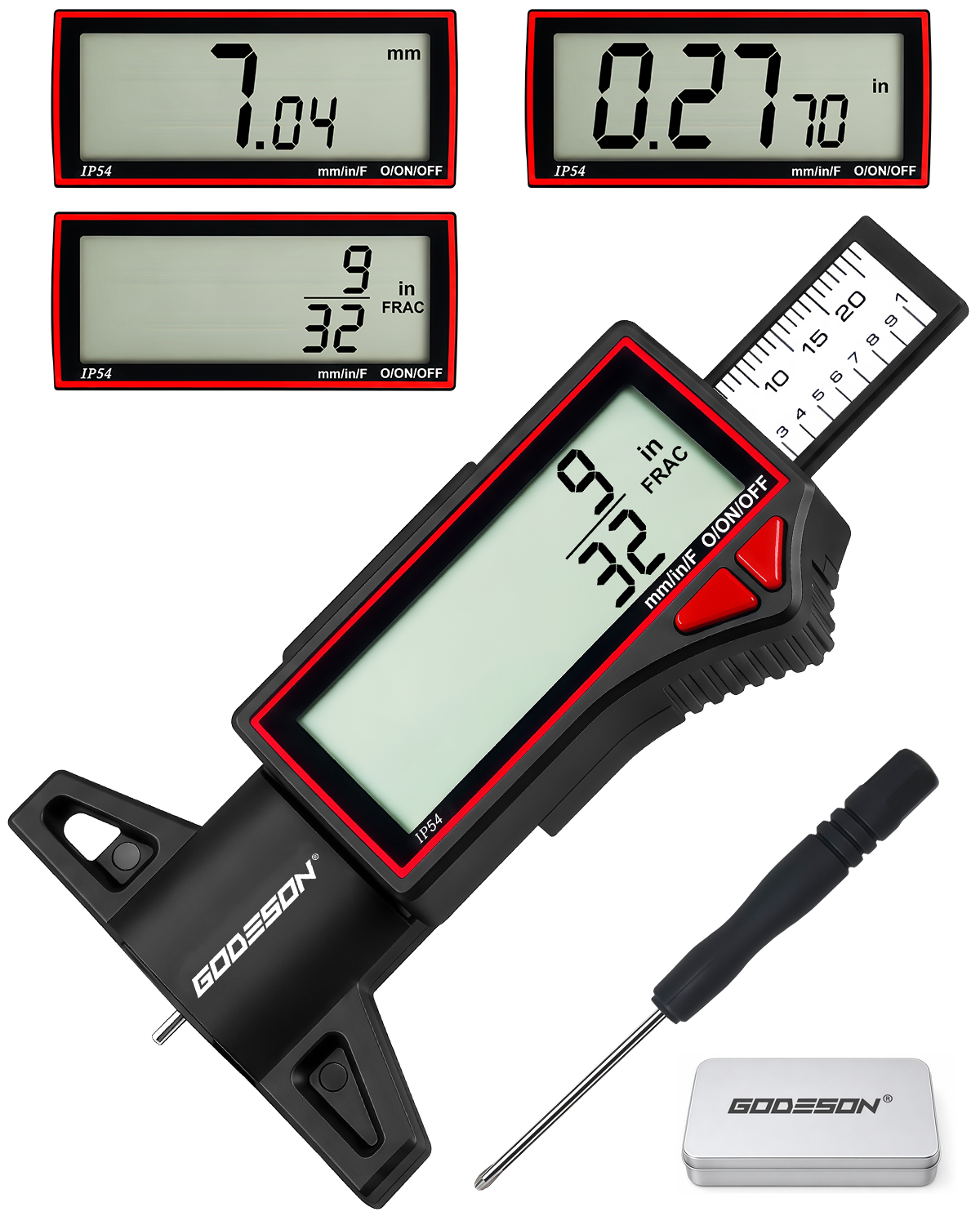
At its core, this is a digital tire tread depth gauge kit built for direct measurement of tire wear. The visible design is straightforward: a black plastic handheld body, a protruding measuring probe, and a tire-contact base/head that gives the tool a consistent reference point. The rectangular LCD display shows measurements in mm and inches, including fractional mode, which is useful when teams work across mixed reporting habits or compare readings with older shop records.
The listed measurement range is 0.00 mm to 25.4 mm, with 0.01 mm resolution and ±0.1 mm accuracy. Those numbers are enough for routine inspection, pre-purchase checks, and fleet maintenance decisions where repeatable readings matter more than lab-grade metrology. The housing is marked IP54, which suggests some protection against dust and splashing water. That is a practical detail in a service bay, though it is not the same thing as full washdown protection, so it should still be treated like an electronic measuring instrument rather than a ruggedized work light.
The kit shown includes the gauge, a metal storage box, a small screwdriver, and a user manual. That is a modest but useful package. A storage box is worth more than it sounds, because measuring tools tend to disappear, get dropped, or end up buried under socket sets. The metal case also helps separate the gauge from oily tools and loose hardware, which is a small detail until it is not.
Why tread depth measurement is a maintenance decision, not just a compliance check
People often treat tread depth as a pass-or-fail item near the legal minimum. That is too narrow. In real use, tread depth influences several decisions at once: whether a tire stays on the axle, whether it can be rotated, whether a vehicle is safe for wet routes, and whether a used car is being presented honestly.
For fleet managers, tread data supports scheduling. A vehicle that is easy on tires can remain in service longer before replacement, but only if that judgment comes from a measurement rather than a guess. For service shops, it supports upsell conversations, though those should be backed by actual readings, not hand waving. For buyers inspecting a used vehicle, it is one of the fastest ways to spot uneven wear or neglected maintenance.
There is also a broader manufacturing and sourcing angle. A measuring tool like this is a low-cost accessory, but it touches a high-value asset. Tires are expensive enough that a few incorrect assumptions can distort replacement timing across an entire vehicle group. In that sense, the gauge is not just a tool; it is a control point.
Key features buyers will actually notice
Digital display and unit switching
The LCD is the obvious convenience factor. Reading tread depth from a digital screen is quicker than interpreting a scale, especially in low light or when a technician is moving through several vehicles in one shift. The unit switching is helpful when one team prefers metric and another still records in inches.
Compact form factor
The gauge is listed at 4.57 in long and 2.36 in at the head. That is compact enough for pocket carry or kit storage without feeling delicate. The metal box at 5.12 in by 3.15 in keeps the set neatly contained. For purchasing teams, those dimensions matter because they influence packing density, shipping efficiency, and how easily the kit can be issued to field staff.
CR2032 power
The gauge is powered by one CR2032 battery, a common coin cell that is easy to source. That is a practical advantage for operations, though buyers should still confirm battery access and replacement procedure during incoming inspection. A tool that is easy to power but awkward to service quickly becomes a desk drawer item.
IP54 marking
IP54 is a useful but sometimes misunderstood label. It indicates a level of protection that should tolerate dusty service environments and incidental moisture. It does not mean the tool should be left in a rain puddle or wiped down with aggressive cleaning methods. In a tire bay, that distinction matters.
How to use a tread depth gauge without introducing bad data
A digital gauge is only as good as the measurement habit behind it. The basic workflow is simple, but it pays to be consistent.
Start with a clean contact area on the tire tread. Debris lodged in grooves can throw off a reading, especially when the tire has picked up stones or hardened road grit. Place the base on the tread blocks and lower the probe into the groove until it seats properly. Read the display once the probe stabilizes. Then repeat in several locations across the tire.
That last step matters. Tires do not always wear evenly, and one reading in the center of the tread can miss shoulder wear, cupping, or alignment-related patterns. A technician checking a fleet vehicle may only need a quick survey, but even then, multiple points are better than a single number.
A small practical caution: do not force the probe into the groove. These tools are for measurement, not persuasion. If the tip is being jammed, the tire may be dirty or the gauge may not be sitting squarely.
What to compare before buying one for shop or fleet use
If you are sourcing tread depth gauges for a team, the first comparison should be between usability and specification realism. A device with impressive numbers but awkward ergonomics will not get used.
Check whether the display is legible at arm’s length and whether the buttons are simple enough for repeat use. Confirm that the measuring range covers the tire work you do most often. The listed 0.00 mm to 25.4 mm range is sufficient for standard passenger tires and many light-duty applications. Also check whether the unit display matches the reporting format your team uses. That sounds trivial until you have technicians speaking in mixed units during the same inspection shift.
Packaging is another overlooked point. A metal storage box is not just about presentation; it protects the tool during transport and reduces handling loss. For procurement, that can be enough to justify a small price difference over a bare tool.
Finally, think about workflow. If the gauge is for pre-purchase inspections, it should be quick to carry and quick to read. If it is for fleet maintenance, consistency and repeatability matter more than anything else. A good tool in the wrong workflow can still become a nuisance.
Common mistakes buyers and technicians make
One mistake is treating all tread depths as equally meaningful. A tire at 4 mm may be fine for one application and borderline for another, depending on route conditions, vehicle class, and local replacement policy. The gauge reports the number; the maintenance rule is still yours to define.
Another mistake is relying on a single spot measurement. Uneven wear is often the signal, not the exception. Shoulder wear, inner-edge wear, and center wear each tell a different story about inflation, alignment, or load handling.
A third mistake is overlooking how the tool will be stored. Electronic gauges that get tossed into a metal drawer with sharp tools tend to suffer from avoidable damage. The included case helps, but only if people actually use it.
Who benefits most from this type of gauge
Automotive service shops benefit because the gauge speeds up inspections and gives customers a clear number rather than a vague recommendation. Fleet maintenance teams benefit because they can standardize checks across multiple vehicles. Buyers doing pre-purchase vehicle assessments benefit because tread depth is one of the quickest objective indicators of how a vehicle has been maintained. Routine tire safety checks, especially in seasonal changeover periods, are another good fit.
For product teams and sourcing managers, the gauge also fits into a broader category of low-complexity inspection tools: inexpensive enough to distribute widely, but important enough to reduce the risk of avoidable mistakes.
FAQ: a few questions that come up in real buying conversations
Is digital always better than analog?
Not always, but digital is usually easier to read and easier to standardize across a team. For quick inspections, that saves time.
Can this replace a full tire diagnostic?
No. It measures tread depth, which is one part of tire condition. You still need to consider sidewall damage, pressure, wear pattern, and vehicle usage.
Does IP54 mean it can be used anywhere in a shop?
No. It gives some environmental protection, but it is still an electronic instrument. Treat it accordingly.
Is the metal box just packaging?
It does more than look neat. It helps protect the gauge in storage and transit, which matters in shop environments.
Final buyer takeaway
A GODESON tire tread depth gauge is not a flashy product, and that is part of its appeal. It solves a narrow but important problem with a compact, easy-to-read tool. The listed range, resolution, IP54 marking, and CR2032 power source make it suitable for routine automotive inspection work, while the included storage box and manual add practical value for teams that keep tools moving between users.
If you are comparing tire inspection tools for shop use, fleet checks, or vehicle intake work, the real question is not whether you need a tread gauge. It is whether you want one that technicians will actually carry, read quickly, and return to the case when the job is done. This one looks built for that kind of everyday discipline.
If you are building a toolkit or sourcing inspection accessories for a maintenance program, ask for the measurement specification sheet, confirm how the unit is operated, and make sure the storage and replacement battery plan are clear before rollout.