Why a tread gauge matters before the tire wears out
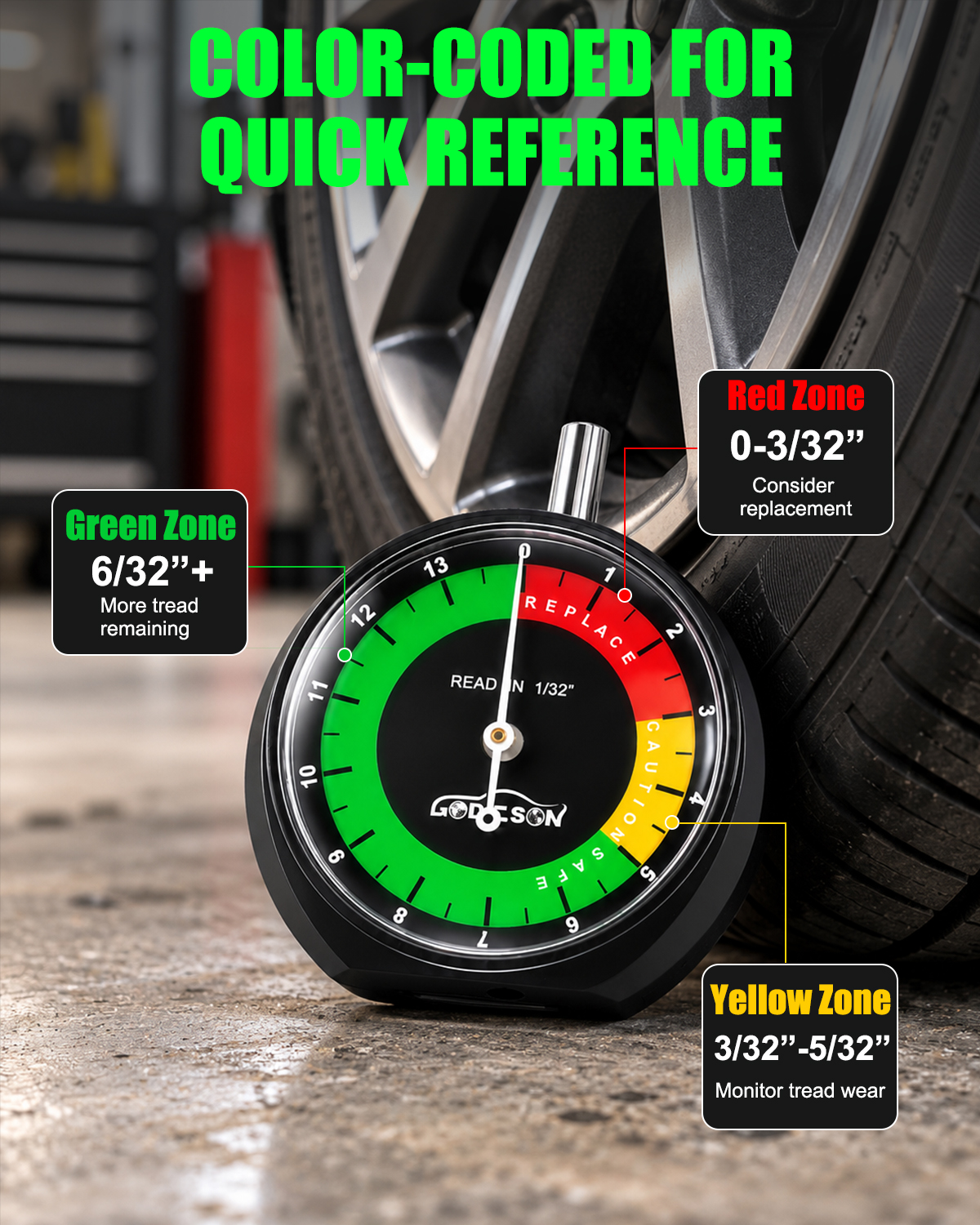
For shops, fleet managers, and everyday drivers, a GODESON tire tread depth gauge is one of those tools that pays for itself by preventing guesswork. Tires rarely fail all at once. They get noisy, lose wet-road grip, and start to look fine long after they have crossed the point where replacement should be planned. That gap between “looks okay” and “actually safe enough” is where tread measurement matters.
A digital tread depth gauge is not a glamorous instrument, but it helps answer a decision that has real cost attached: should the tire stay in service, be rotated, be monitored more closely, or be replaced now? For a passenger car owner, that can mean avoiding a surprise purchase. For a workshop or fleet operation, it can mean controlling risk, documenting wear, and timing procurement instead of rushing into a last-minute order.
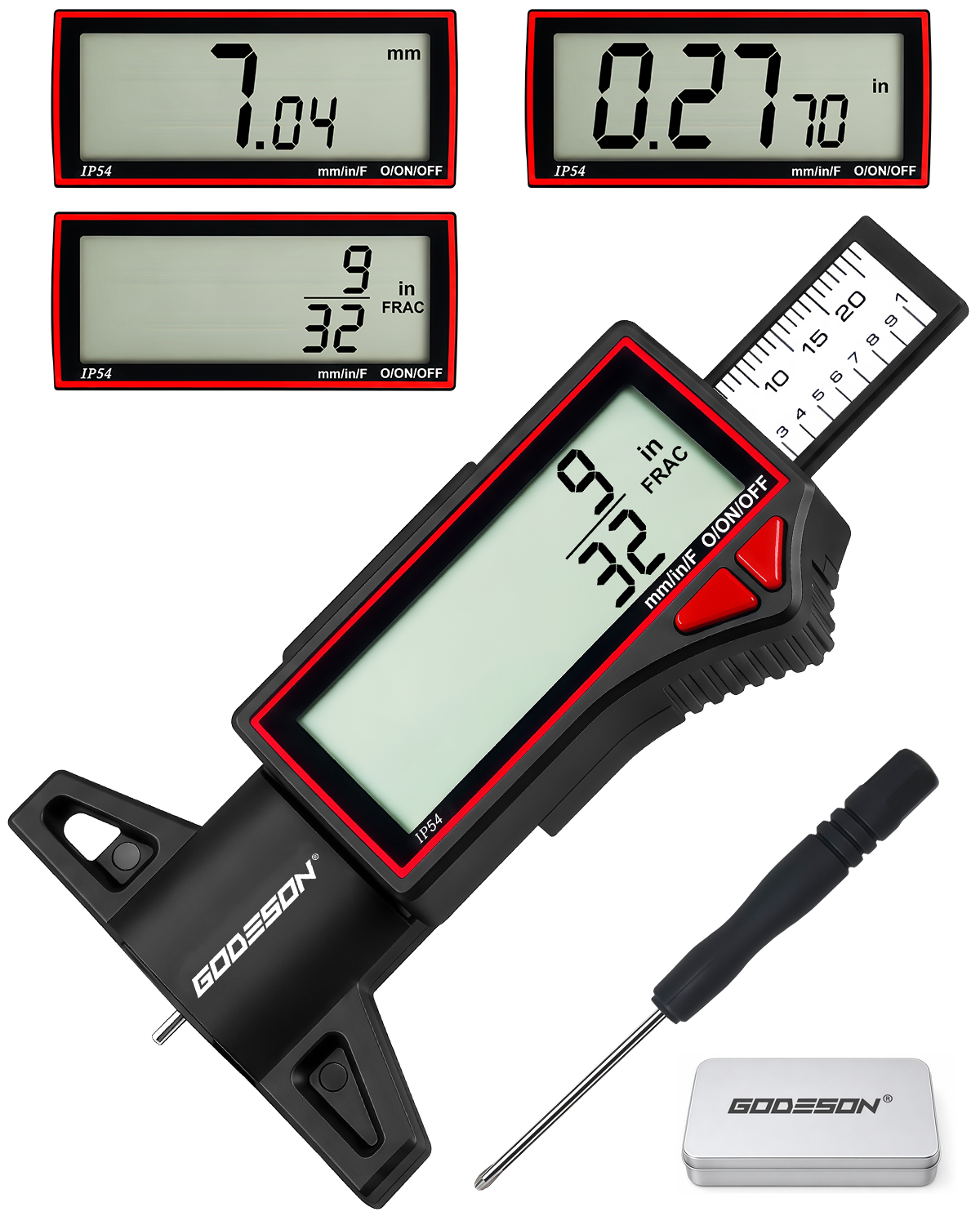
The model described here is a handheld digital tire wear measurement tool with an LCD display, unit selection, and a probe-style measuring shaft. It is aimed at routine inspection rather than laboratory metrology, which is exactly what most tire checks need. That distinction matters. You do not need a complicated setup to tell whether a tire is trending toward the limit; you need a tool that is quick, repeatable, and easy to read in the shop bay or driveway.
What the gauge is designed to do
At a practical level, this type of gauge measures tread depth and shows the reading on a digital display in both millimeters and inches. The listed range runs from 0.00 mm to 25.4 mm, with a resolution of 0.01 mm and stated accuracy of ±0.1 mm. Those numbers are more than marketing decoration. For buyers, they indicate that the tool is intended to support close visual checks and document wear over time without forcing the user to interpret a needle scale or squint at etched markings.
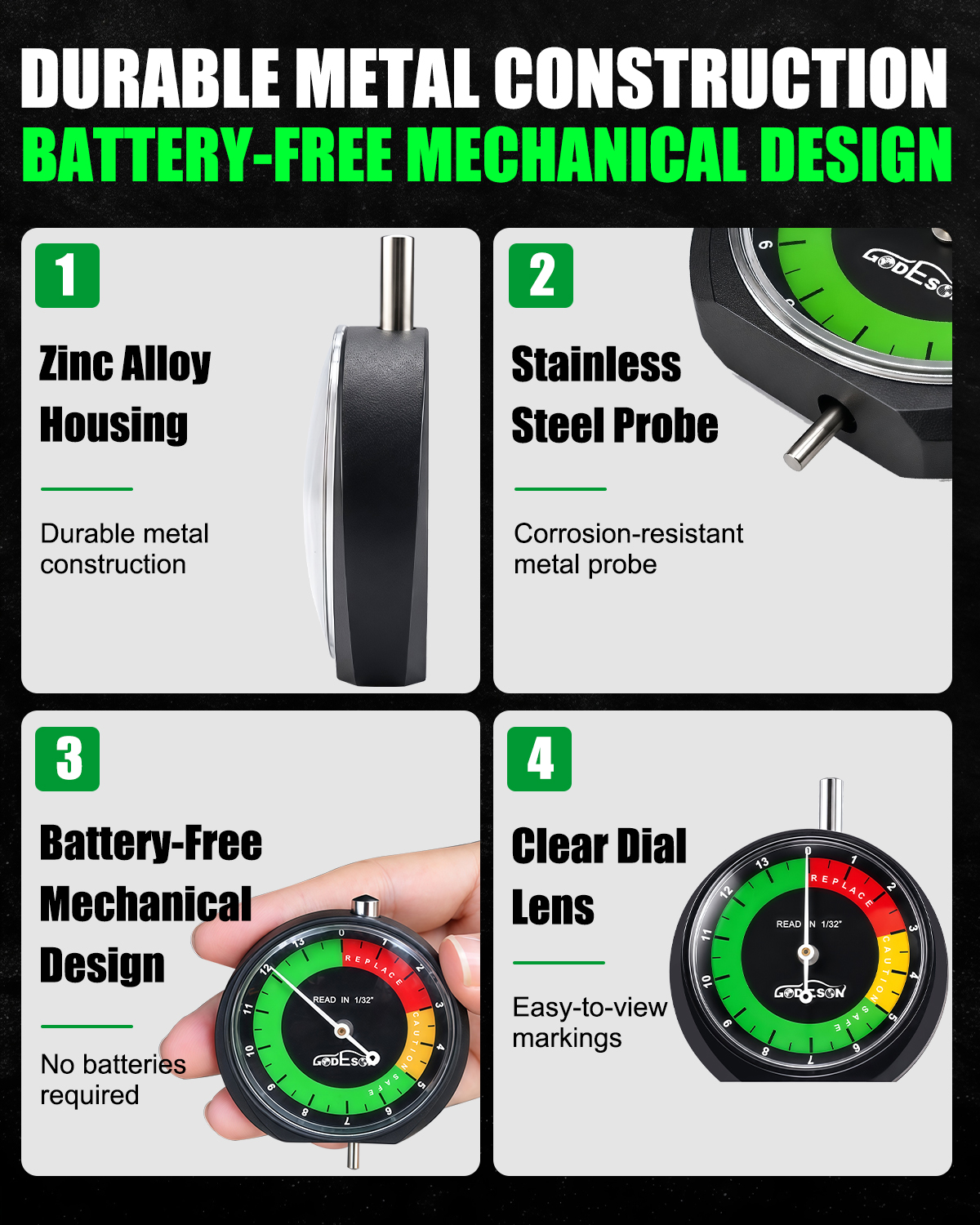
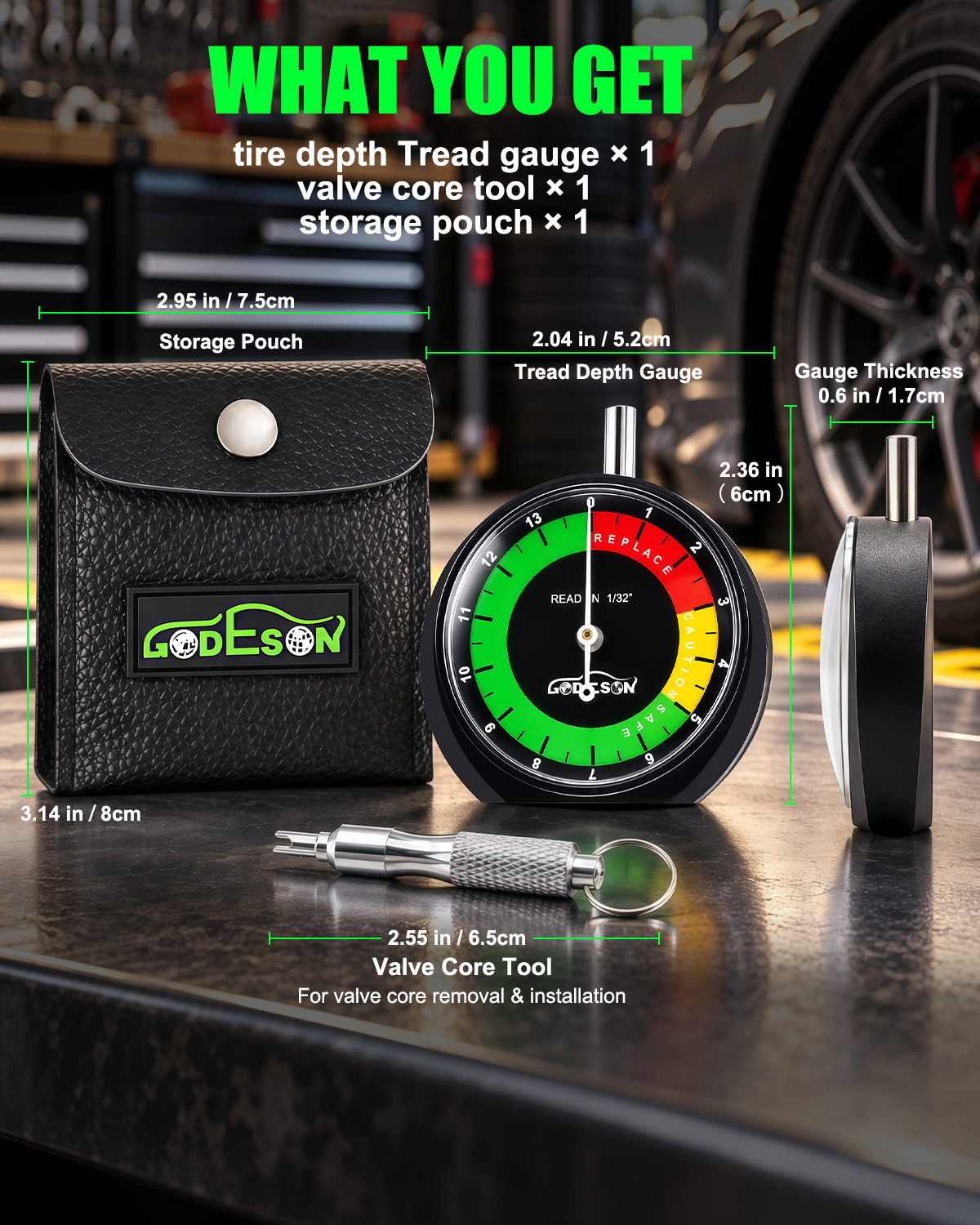
The body appears to be molded plastic with a matte black finish and red trim around the screen. The probe section includes a ruler-like scale, and the whole device is sized for pocket carry or drawer storage. The included metal tin is a small but useful detail. In workshop use, tools that arrive in a protective case tend to stay cleaner, get lost less often, and survive longer than bare plastic gauges tossed into a toolbox.
Key specifications buyers usually care about
When a sourcing manager or service supervisor evaluates a tread depth gauge, the headline questions are fairly simple: can it read clearly, does it survive ordinary shop conditions, and is it fast enough to use every day? Based on the supplied product details, this gauge is positioned around those needs.
Core listed specifications
Measurement range: 0.00 mm to 25.4 mm
Resolution: 0.01 mm
Accuracy: ±0.1 mm
Operating temperature: 0°C to 50°C
Water resistance: IP54
Power: 1× CR2032 battery
Those are the figures that help place the product. IP54 suggests it can tolerate dust ingress to a limited degree and splashing water, which is useful in real-world vehicle service but not a license to leave it sitting in rinse water or brake dust slurry. The operating temperature range is also sensible for garages and indoor service areas. It is a reminder that even a small handheld electronic measuring instrument has an environment where it works best, and that matters when tools move between a climate-controlled office and an outdoor bay in winter.
Where this type of tread gauge fits in a maintenance workflow
In tire service, speed matters, but so does consistency. A tread gauge like this one is typically used during:
incoming vehicle inspection
pre-rotation checks
seasonal tire changeovers
fleet maintenance rounds
used-car reconditioning
DIY safety checks before long trips
That list may sound straightforward, but it highlights a useful point: the tool is not only for the moment of replacement. It is often more valuable earlier, when wear patterns still reveal something. Uneven tread depth can point to alignment issues, inflation problems, aggressive driving, or suspension wear. A digital reading gives the technician a number to compare across positions instead of relying only on visual judgment.
For fleets and dealership service departments, this is especially useful. A measurement can be written into an inspection sheet, compared on the next visit, and used to support a maintenance recommendation. In a business setting, that paper trail is often worth as much as the gauge itself.
Digital gauges versus simple mechanical tools
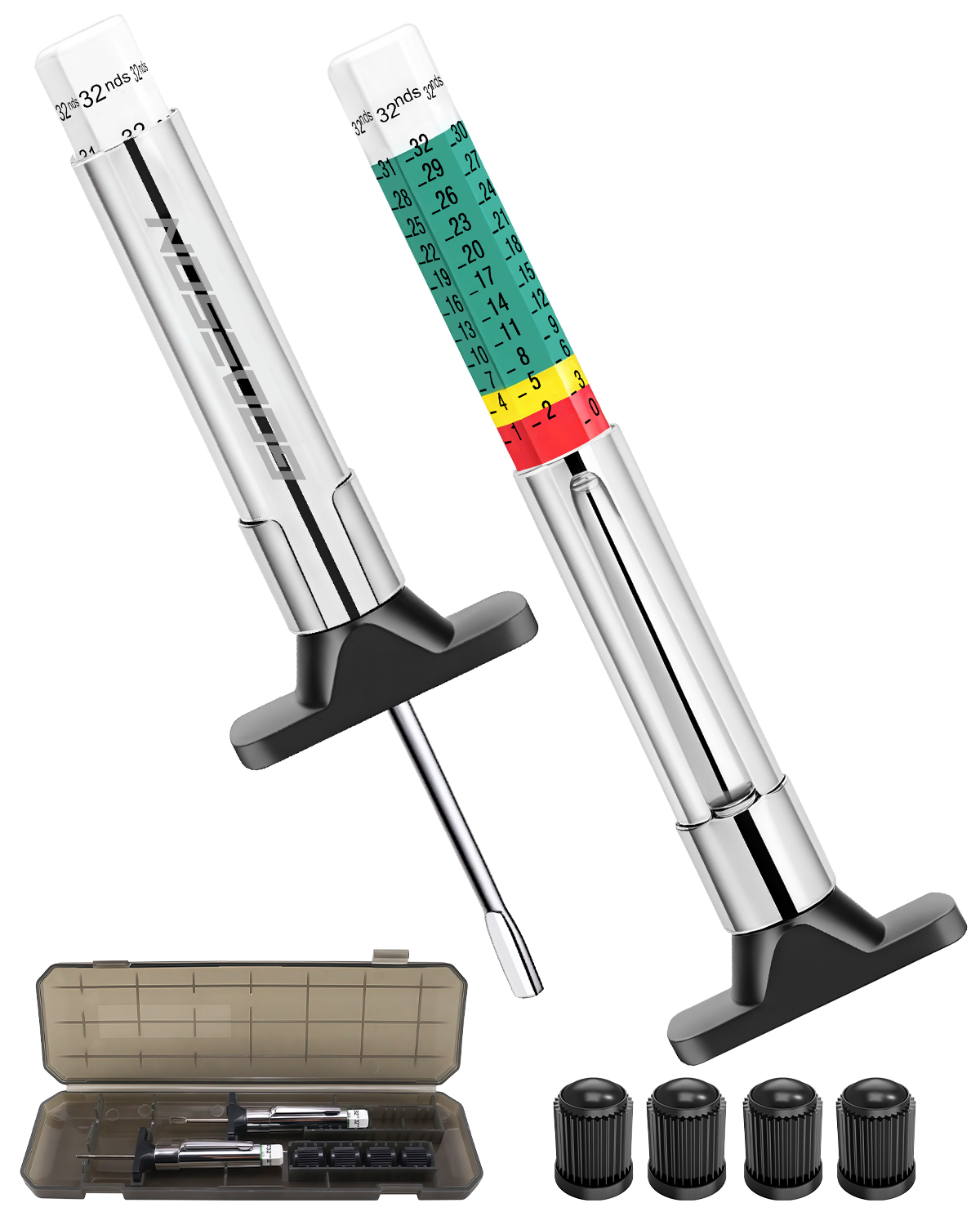
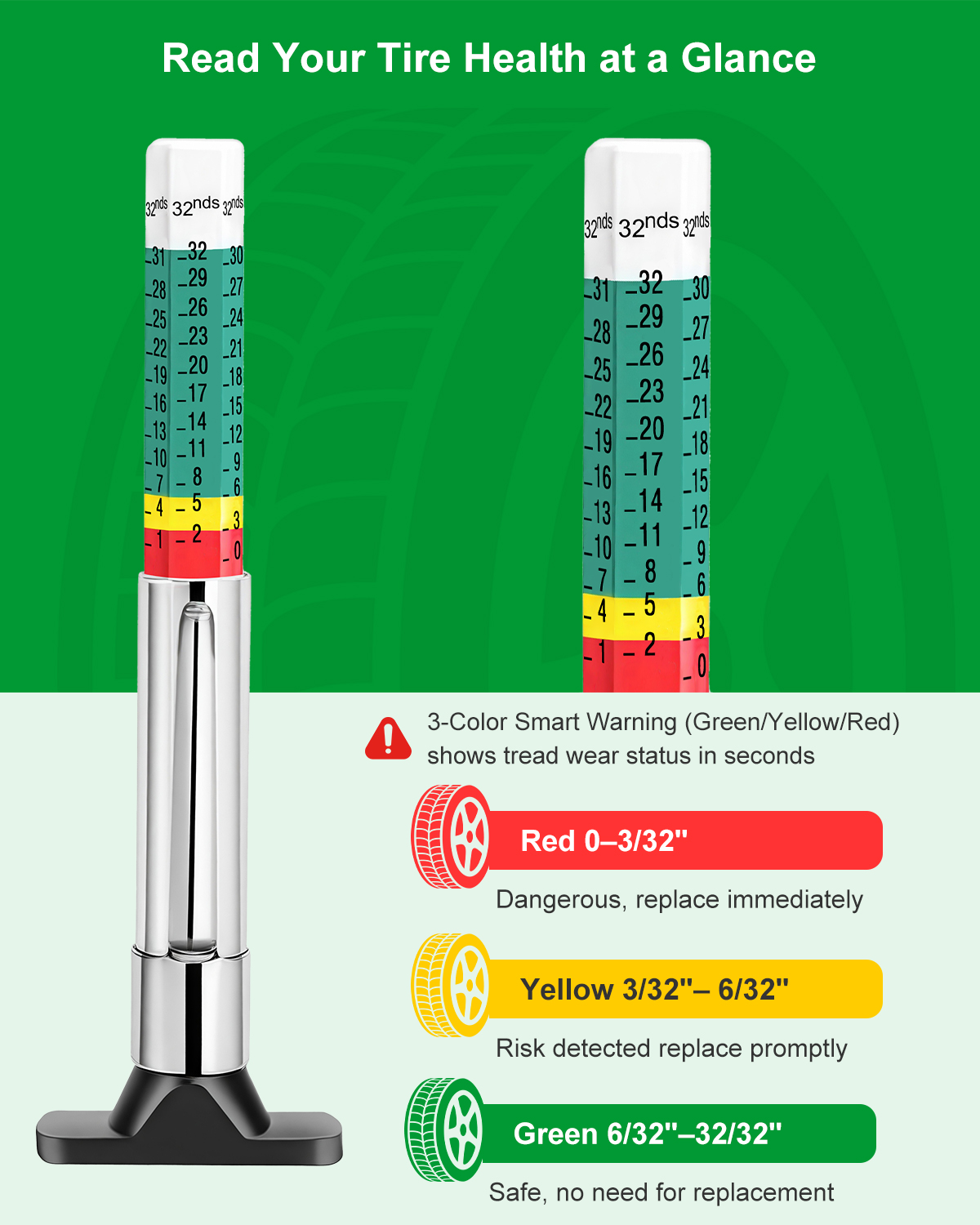
There is still room for basic manual tread depth tools, and anyone who has used a simple probe gauge knows they are inexpensive and durable. But digital units offer a cleaner reading and usually reduce the chance of misreading the scale. That is not a trivial improvement when multiple employees use the same tool or when the reading has to be reported to a customer.
On the other hand, digital tools bring small tradeoffs. They rely on a battery, and they are not immune to accidental drops or contamination around the display and moving probe. The practical buyer should see that as normal, not as a flaw unique to this product category. A digital gauge is best for teams that value readability and quick communication more than absolute simplicity.
The included screwdriver suggests there may be a battery compartment or service point that can be opened when needed. That is a small workshop-friendly detail, though users should still follow the manual rather than forcing the housing. A cracked casing on a cheap gauge often costs more in lost time than the tool itself.
What to look for when comparing tread depth gauges
If you are sourcing similar tools, a few criteria deserve attention beyond the basic spec sheet.
Readability in the field
A large LCD display is worth more than it sounds. In a dim garage or outdoor inspection lane, a reading that is easy to see reduces mistakes and speeds up the job. If technicians must repeatedly tilt the tool to catch the numbers, the device is not really saving time.
Probe design and contact feel
The probe or shaft should move smoothly and make contact without feeling sloppy. With tread measurement, a rough or unstable probe creates inconsistent readings, especially on worn or irregular tires. Buyers should pay attention to how the probe is guided, not just to the numbers on the package.
Storage and portability
The metal storage box included here is more than packaging. For mobile service teams and shop counters alike, a dedicated case keeps the gauge from being buried under heavier tools. That may sound minor, but tools that are easy to find are tools that actually get used.
Environmental tolerance
IP54 is enough for many common shop settings, but it does not make the gauge rugged in the heavy-equipment sense. If the tool will live in a wet wash bay, on construction machinery, or in a very dirty service truck, buyers should think carefully about the environment. The rating tells you what the device can tolerate, not what it should be abused with.
Common mistakes when checking tread depth
One of the most common errors is checking only the center of the tread. On real tires, wear is often uneven, so a single reading can give a false sense of security. Another mistake is failing to measure across all major tire positions, especially when the goal is to diagnose alignment or inflation issues rather than simply determine remaining life.
It is also easy to confuse “looks legal” with “works well.” Tires can pass a casual glance and still perform poorly in rain if the tread is approaching the limit. A gauge helps separate appearance from condition. That is the entire point.
A practical caution: do not force the probe into the tread block. Let the tool sit squarely and read consistently. If the reading jumps around, reposition and repeat. Precision is useful only when the measurement method is steady.
Buyer advice for workshops, fleets, and DIY users
For a workshop, the best case for this type of product is repeatability and ease of communication. A technician can measure, display the result, and explain it to a customer without converting units in their head. That helps with trust, especially when a customer is deciding whether to replace two tires now or wait until the next service interval.
For fleet maintenance, the main advantage is standardization. If every vehicle is checked with the same style of gauge, wear trends become easier to compare across the fleet. That can support rotation schedules and replacement planning. It is not glamorous work, but it saves money when procurement is organized instead of reactive.
For DIY users, the main question is whether the tool is easy enough to keep in the glove box or garage drawer and actually use monthly. A tool that is awkward or hard to read usually ends up unused. This one’s compact format and digital display make it a reasonable choice for routine home checks, especially for drivers who rotate tires themselves or want to watch wear before a road trip.
How to evaluate this kind of product in a sourcing review
When procurement teams review a digital tire tread depth gauge, they should ask for the basics that matter operationally: display clarity, battery access, probe smoothness, material feel, and packaging quality. The supplied information suggests an injection-molded plastic body, a metal or metal-tipped probe section, and a protective metal tin. That combination is sensible for a mass-produced measuring tool.
What should not be assumed is just as important. Unless the supplier states otherwise, do not guess at internal sensor design, calibration process, battery life, or certification beyond the listed IP54 rating. Those details can affect long-term usability, but they need confirmation from the supplier rather than optimism from the buyer side. In B2B purchasing, that simple discipline prevents disappointment later.
Practical next step
If your team needs a straightforward tire wear measurement tool for service checks, vehicle inspections, or shop-floor routine use, this style of digital gauge is worth evaluating against your current method. The real test is not whether it looks technical on a product page. It is whether it saves time, reduces reading errors, and helps someone make a better tire decision before wear turns into a problem.
For buyers comparing options, start with the measurement range, display readability, protection rating, and storage setup. Then confirm the details that matter for your environment. A small gauge can still make a meaningful difference when it is used consistently, and tire inspection is one of those tasks where consistency is usually the whole game.