Why a 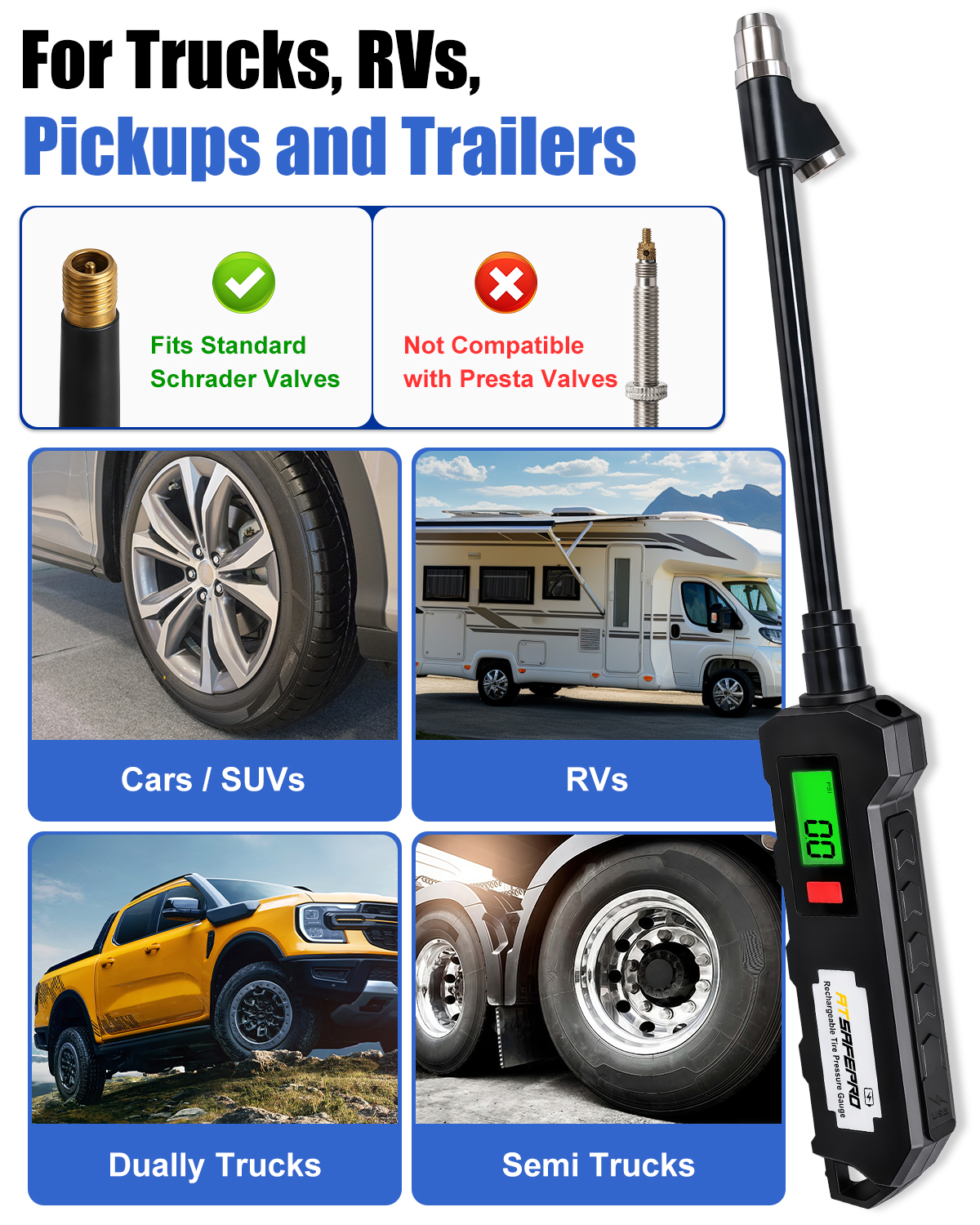 matters more than it looks
The ATsafepro tire pressure gauge sits in a category that most buyers only think about when a tire looks soft, a dashboard light comes on, or a driver starts asking why fuel economy has slipped. That is exactly why this kind of tool earns its place in a shop, garage, or service kit. A tire inflator hose with an integrated analog gauge is not just a convenience piece. It is the point where compressed air, pressure measurement, and a valve connection all have to work together without guesswork.
For engineers, sourcing managers, and product teams, the real question is not whether the tool can inflate a tire. Almost anything can do that. The better question is whether the gauge is legible, the hose assembly feels durable, the chuck connection is practical in daily use, and the reading can be trusted enough to keep tires in the right range. That is the decision this article helps with: when a combined inflator and gauge makes sense, what to look for, and what should prompt a closer inspection before purchase.
What this product actually is
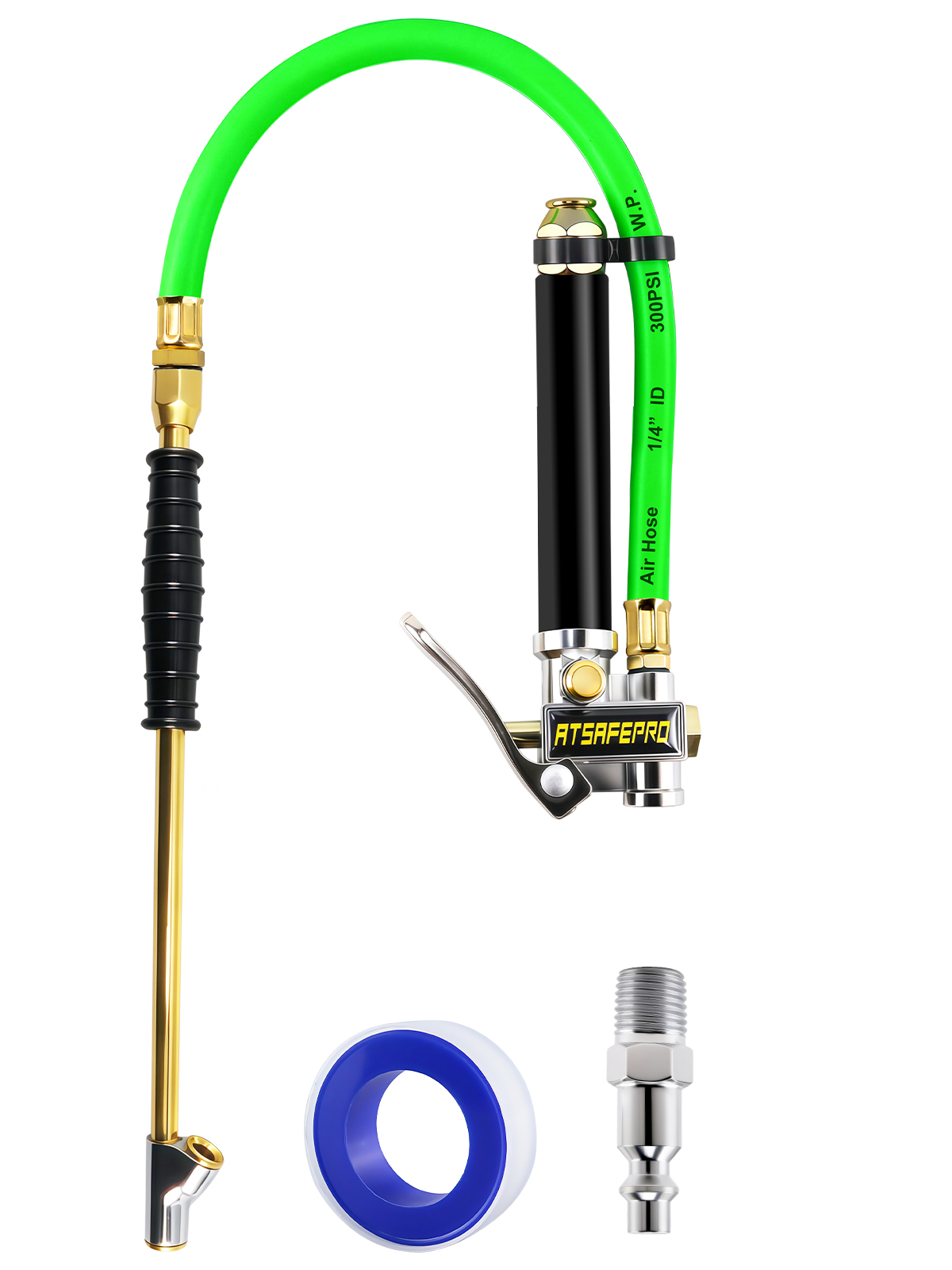
The product here is a tire inflator air hose with an integrated analog pressure gauge and inline chuck/connector assembly. In plain terms, it connects an air compressor or another air supply to a tire valve and lets the user monitor inflation pressure at the same time. The visible construction suggests a black flexible hose, crimped metal end fittings, chrome or silver metal body sections with knurled grip areas, and a round analog gauge protected by a rubberized bezel.
That combination is common in automotive service because it reduces handling steps. Instead of using a separate gauge, then an inflator, then checking pressure again, the operator can manage inflation and reading in one assembly. In a busy tire bay, that saves time. In a home garage, it reduces the chance of overinflation caused by moving back and forth between tools.
Quick takeaway for buyers
If you are comparing this type of tool against a standalone digital gauge or a simple inflation hose, the trade-off is straightforward. An integrated analog unit is usually favored for ruggedness, immediate visual feedback, and simplicity. It is less about data logging and more about practical control. The dial shown uses dual pressure scales, likely bar and psi, which is a useful feature for mixed fleets, export-oriented workshops, or anyone who needs to think in more than one unit system.
There is a practical caveat, though: this style of gauge is only as useful as its clarity and consistency in use. A dial can be easy to read, but if the user has to crouch awkwardly, fight the chuck, or deal with a hose that kinks, the whole assembly becomes less attractive. Buyers should look at the full ergonomics, not just the dial face.
Design details that matter in the shop
The visible build suggests a hose assembly meant for hand use and repeated connection cycles. The flexible hose appears rubber or rubber-like, which is typical for air service tools because it tolerates movement better than a rigid line. The metal fittings appear plated, likely for corrosion resistance and easier wiping after use. The knurled grip sections are a small detail, but an important one. In real use, a knurled section can make the difference between a secure hand-tighten and a sloppy, gloved, half-turned fit.
The gauge housing is also worth noting. The round dial sits inside a black rubberized protective bezel with radial fins or a shock-absorbing outer ring. That suggests the tool is intended to handle bench drops, door-sill bumps, and the sort of minor abuse that happens in garages. It is not a substitute for careful handling, of course, but it signals that the assembly is trying to survive ordinary workshop life.
Analog gauge versus digital reading
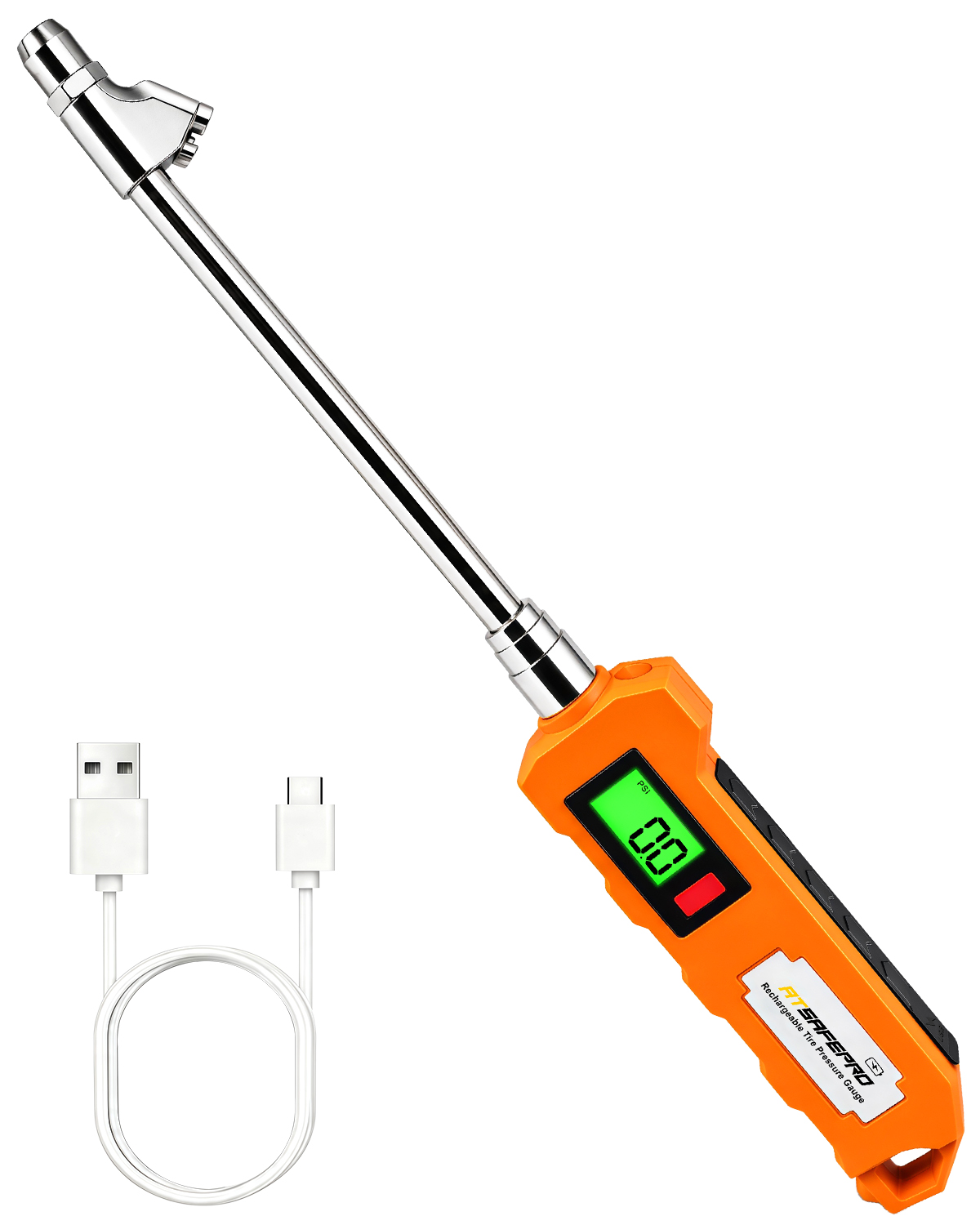
An analog gauge is often chosen for speed and simplicity. Many technicians prefer the immediate sweep of a needle because it is easy to understand at a glance. There are no batteries to replace, and no display backlight to fail at the wrong time. The downside is that analog gauges demand a good sight line. If the dial is small, crowded, or obscured by the hose position, the reading becomes less convenient. Buyers should think about how the tool will actually be held during inflation, not how it looks on a product page.
Where this kind of inflator gauge fits best
The most obvious use cases are car, motorcycle, bicycle, and light truck tire inflation, along with workshop or roadside compressor setups. That range is broad, but it is realistic. The device is especially suited to maintenance tasks where repeated checks are needed and a technician wants both inflation and pressure verification in one tool.
For garages and fleets, the value comes from speed and consistency. For distributors, the value lies in selling a practical accessory that pairs naturally with compressors and tire service kits. For product teams, the challenge is making sure the assembly balances robustness with ease of use. A good inflator gauge feels like a tool, not a gadget.
Selection criteria that are worth the time
When evaluating an integrated tire pressure gauge assembly, several points deserve attention even if the product description is brief.
First, the dual-scale dial should be legible under typical shop lighting. A gauge that offers psi and bar is useful only if both scales can be read without strain. Second, the hose and fittings should feel substantial enough for repeated compression cycles and threading or chuck engagement. Third, the chuck style and connector compatibility need confirmation. The supplied information does not verify thread size, valve type compatibility, or whether adapters are included, so that should be checked before procurement.
Fourth, think about calibration and repeatability. Exact accuracy is not stated here, and it should not be assumed. If the gauge is going into a service environment where pressure matters to the final outcome, ask for the specification sheet or an in-house validation plan. A product can look solid and still need a basic verification step before it earns trust on the floor.
What to confirm before placing an order
Some details are simply not visible from the image and should not be guessed: hose length, inner diameter, maximum working pressure, exact thread standard, and whether it is intended only for Schrader valves or can be adapted for other valve types. Those are not minor details. They influence reach, airflow, compatibility, and the way the product will be stocked or bundled.
Common buyer mistakes
One common mistake is choosing a gauge based only on the dial size or the number of visible features. A large bezel does not guarantee accuracy, and a plated fitting does not guarantee a good seal. Another mistake is overlooking how the tool will be stored. If it will be tossed into a service cart drawer, protective housing matters. If it will hang on a compressor wall, hose memory and connector strain matter more than a polished finish.
There is also a habit of assuming all inflation tools are interchangeable. They are not. The valve connection, gauge placement, hose behavior, and hand grip all affect actual field performance. A technician can usually tell within minutes whether a hose assembly is pleasant to use. Buyers should try to predict that experience before ordering in volume.
Practical advice for sourcing and product planning
If you are sourcing this type of item for a catalog or private-label line, focus on the features that users can feel immediately. The protective gauge bezel, knurled metal grip areas, and visible dual-unit scale are all tangible selling points because they communicate function at a glance. In commodity categories, that matters. Customers often compare three similar-looking inflator gauges in under a minute.
It is also sensible to think about packaging and application language. A workshop buyer may want clear references to automotive service and compressor attachment. A retail buyer may respond better to “easy pressure checking” and “dual bar/psi scale.” Just keep the claims disciplined. If a metric is not confirmed, leave it out rather than stretching the description.
FAQ
Is this only for tire inflation?
It is designed for tire inflation and pressure checking, though similar hose-and-gauge assemblies are often used in workshop air handling tasks. The primary application here is clearly tire service.
Is the gauge digital?
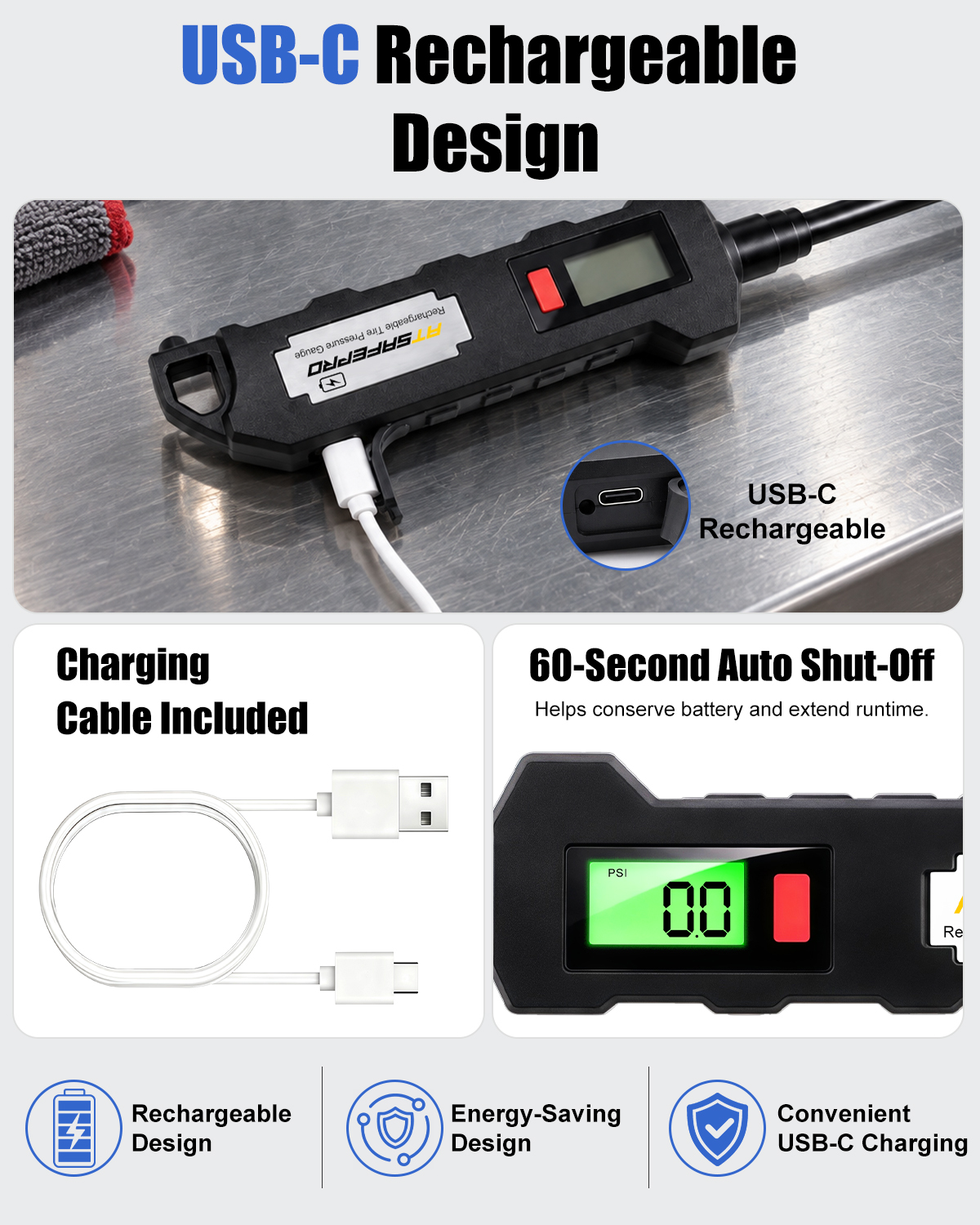
No. The visible unit is analog, with a needle and dual pressure scales.
Can it be used on different vehicle types?
The product is described as suitable for cars, motorcycles, bicycles, and light trucks. Actual compatibility still depends on valve type and connector details, which should be confirmed before purchase.
Are the exact specifications known?
Not from the provided information. Hose length, maximum pressure, calibration accuracy, and thread size are not verified here and should not be assumed.
What to ask for next
If you are evaluating the ATsafepro tire pressure gauge for sourcing, stocking, or workshop use, ask for the specification sheet, connector details, and pressure range documentation before committing. If the goal is to standardize a service accessory across multiple users, it is worth checking how the hose feels in the hand and whether the dial is readable from a normal working position. Those are small things on paper and large things in daily use.
For teams comparing tire inflator hose assemblies, the smartest next step is a side-by-side review of gauge readability, chuck compatibility, hose flexibility, and fit with your compressor setup. That is usually where the real difference shows up, long before anyone starts talking about branding or packaging.