Why a tire pressure gauge still matters in a digital workshop
The ATsafepro tire pressure gauge sits in a category that many buyers assume is solved. After all, every garage seems to have a compressor, a handheld inflator, or some kind of digital readout on the wall. Yet the basic question has not changed: how do you get a pressure reading fast enough, with enough confidence, to make a useful decision before a vehicle goes back on the road? That is where a simple analog gauge still earns its place.
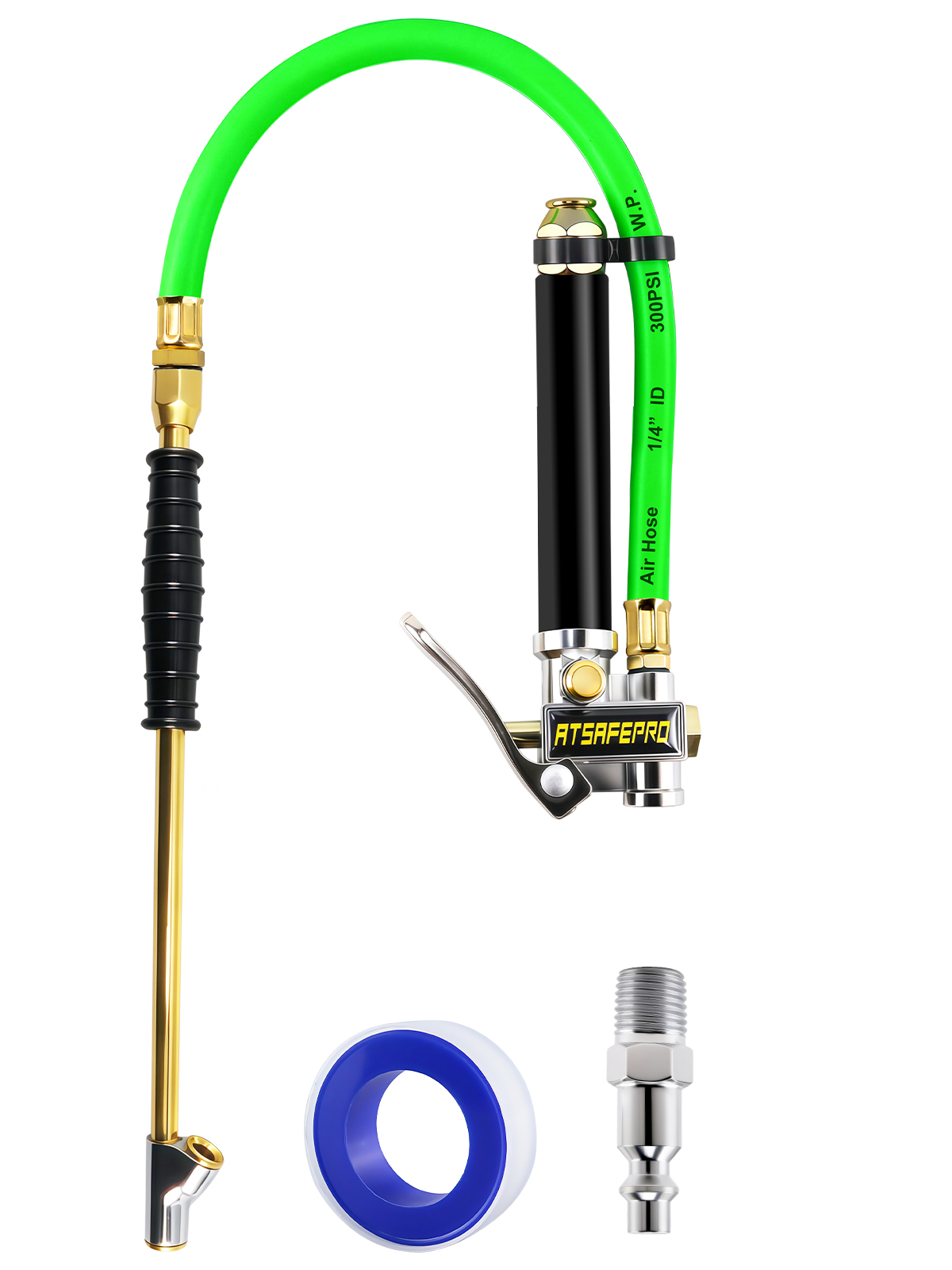
For engineers, sourcing teams, and workshop buyers, the real issue is not whether a tire pressure gauge looks modern. It is whether it gives a readable, durable, low-friction check at the point of use. The ATsafepro tire pressure gauge, based on its visible construction, is built as a handheld pressure-measurement tool with a flexible hose, chrome-plated metal fittings, and a round dial protected by a rubberized bezel. Those details matter because they suggest how the tool will behave in daily handling: easy to reach awkward valves, less likely to scuff a wheel face, and easier to read in a busy bay than a tiny screen buried under glare.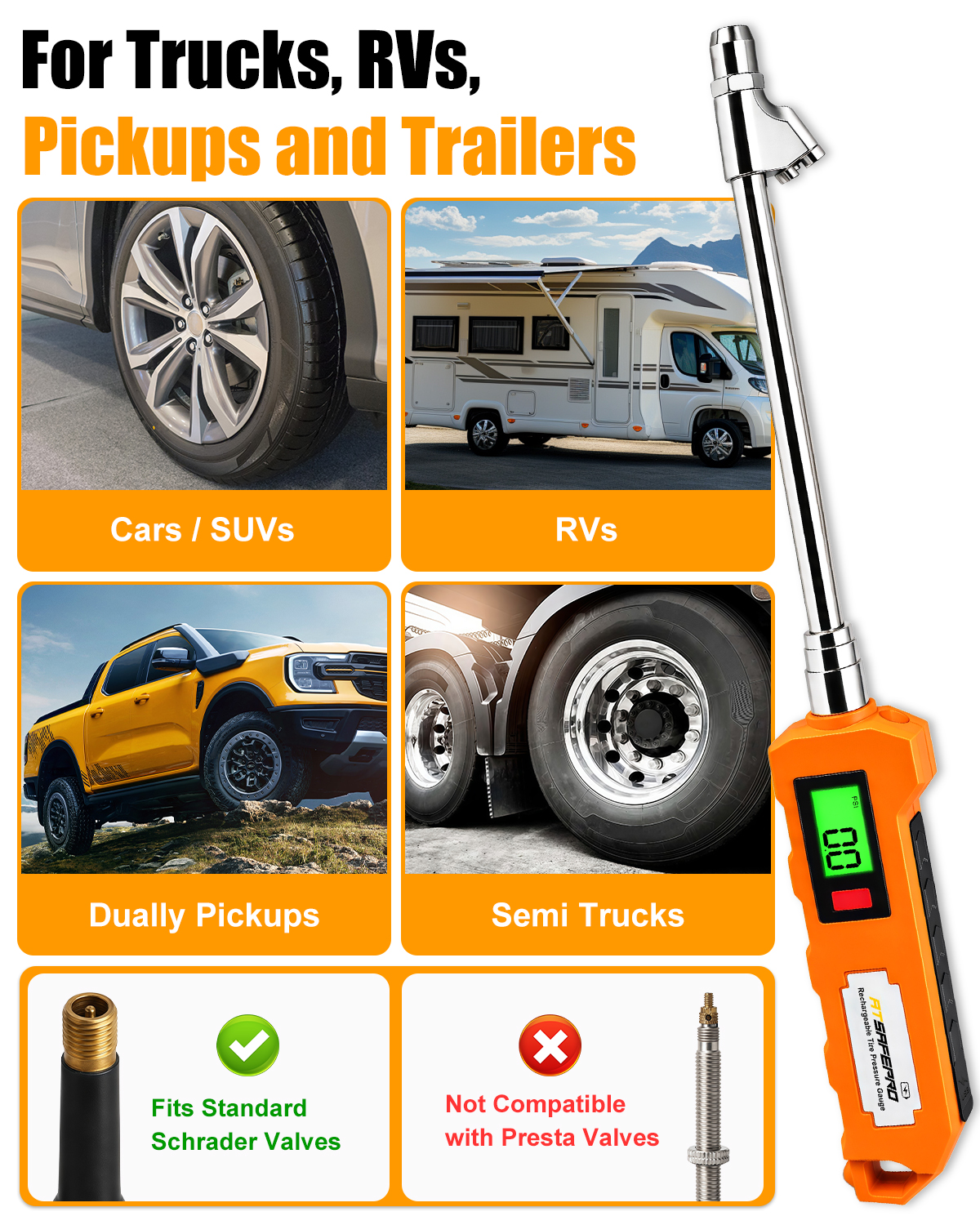
What this tool appears designed to do
From the product description and visible features, this is best understood as a tire pressure gauge and likely inflator accessory. The hose and metal couplings suggest it can connect to an air source or valve system for tire servicing, though the exact inflation or deflation function is not fully confirmed from the image alone. That caution matters. Buyers should avoid assuming a full-service inflator unless the connection method and operating setup are clearly specified by the seller.
What can be said with confidence is that the gauge face shows dual scales in bar and psi. That is useful in mixed-market environments, especially where technicians, fleet operators, or distributors work across regions with different preferred units. A dual-scale analog dial reduces conversion mistakes at the bench, which is a small thing until someone overfills a tire because the number was read in the wrong unit.
Visible construction details that affect everyday use
The ATsafepro tire pressure gauge has a few practical design cues worth noting.
The flexible hose is a real advantage in service work. It gives the operator reach around wheel spokes, deep valve stems, and awkward angles on motorcycles or bicycles. In a garage, that flexibility often matters more than buyers expect, because stiff tools slow down routine checks and invite careless positioning.
The chrome-plated metal body and fittings suggest an assembled tool rather than a purely molded plastic device. That usually means a more robust feel in the hand and better resistance to the sort of abrasion that comes from being dropped into a toolbox or dragged across concrete. Chrome plating is not a guarantee of longevity, of course, but it is a sensible choice for a workshop-facing product.
The knurled grip sections are another practical touch. They are not there for style. A lightly textured grip makes the tool easier to handle with oily hands, gloves, or in cold conditions. That is the kind of detail technicians notice immediately, even if it never makes it into a product brochure.
Finally, the round protective bezel around the gauge face suggests a built-in buffer against impact. Dial gauges fail in boring ways: a bumped lens, a dented ring, a needle that no longer returns cleanly. A protective outer ring does not eliminate those risks, but it may reduce them.
Analog or digital: the buyer decision behind the gauge
The market often frames pressure measurement as a contest between analog simplicity and digital precision. That is too neat. In practice, buyers are choosing between speed, readability, maintenance burden, and acceptable error handling.
An analog gauge like this one has a few advantages in common workshop use:
It can be read at a glance.
It does not depend on batteries.
It tends to tolerate rough handling better than delicate electronics.
It gives operators a familiar tactile workflow when paired with a hose and fitting.
The tradeoff is equally familiar. Analog tools rely on clear dial printing, a stable internal mechanism, and a user who reads the needle properly. If the face is crowded or the scale is too small, the advantage disappears. That is why the dual bar/psi layout is helpful, but only if the dial remains legible under shop lighting.
For sourcing teams, the key question is not whether analog is “better.” It is whether this format matches the working environment. A fleet depot, motorcycle service bay, or general repair shop may value this style precisely because it is immediate and hard to complicate.
Where this type of tire pressure gauge fits best
The product information points to practical applications in automotive tires, motorcycle tires, bicycle tires, and general workshop or garage maintenance. That is a broad use profile, but it makes sense for a hose-based gauge with visible bar and psi markings.
In automotive use, the flexible hose can help with access in wheel wells or around decorative caps.
In motorcycle service, compact valve positions often make straight-on tools awkward.
For bicycles, the reading is only part of the story; connection compatibility becomes the deciding factor, which is why buyers should verify fittings before ordering.
In general workshop settings, this kind of tool works best as a shared bench item or a hand tool used by technicians who need quick checks during routine maintenance. It is not the kind of device that should be chosen only for appearance. The real test is whether the hose, fittings, and gauge layout fit the pace of the shop.
What buyers should verify before placing an order
This is where many purchasing mistakes happen. The visible product details are useful, but they do not answer every question.
First, confirm the connection setup. The product description does not specify whether it includes a valve chuck, compressor connector, or a particular thread type. That matters because a tool can look suitable online and still be unusable with the shop’s existing air line or valve hardware.
Second, ask for the pressure range and calibration information if the application is controlled or safety-sensitive. The visible dial shows bar and psi, but the exact maximum pressure range is not confirmed here. For fleet maintenance or production environments, that omission should be resolved before purchase.
Third, check whether the tool is meant for a specific vehicle class or for general use. The description suggests broad applicability, but buyers should not assume specialty compatibility without written confirmation.
A small caution from the shop floor: if the gauge will be used by multiple operators, readable markings and consistent response matter as much as nominal specifications. A tool that performs well in one person’s hand can become a nuisance if the dial is hard to read or the connection feels vague.
Common mistakes when evaluating a tire pressure gauge
The first mistake is focusing on the chrome finish and ignoring the hose and fittings. A pressure tool is a working interface, not a display piece. The interface is where wear happens.
The second mistake is assuming all analog gauges are interchangeable. They are not. Dial size, bezel protection, hose flexibility, and coupling quality all influence actual usability.
The third mistake is buying without checking whether the gauge’s scale presentation matches the plant or garage standard. If one team works in bar and another in psi, dual scales save time and reduce operator error. If only one unit is used, a cluttered dial may be less helpful than expected.
The fourth mistake is treating unknowns as if they were features. If the seller does not specify accuracy rating, certification, or internal mechanism, do not fill in the blanks with assumptions. In procurement, that kind of guesswork tends to show up later as returns, disputes, or a drawer full of nearly identical tools that nobody trusts.
Practical advice for sourcing and workshop use
If you are evaluating the ATsafepro tire pressure gauge for a catalog, a repair counter, or a small fleet kit, think in terms of workflow. Where will the tool hang, how often will it be handled, and who will read it? Those answers usually matter more than headline descriptions.
For distributors, the dual-scale dial is a selling point because it broadens the audience. For workshop buyers, the flexible hose and protective bezel are the everyday features that justify choosing a hand tool over a generic inflator head. For product teams, the assembled structure suggests a supply chain involving metal machining or plating, rubber hose fabrication, and printed dial components. That is a normal manufacturing path for this type of tool, though the exact calibration standard and internal mechanism are not provided here.
If you need a straightforward pressure-checking accessory for mixed vehicle maintenance, this product profile is sensible. If you need documented metrology performance, specialty valve compatibility, or a highly controlled inflation system, you should request the missing specifications before making the purchase decision.
FAQ
Is this only for cars?
No. The described use cases include automotive, motorcycle, bicycle, and general workshop maintenance. Final suitability still depends on the connector and valve setup.
Does it measure in both bar and psi?
Yes, the visible dial face shows dual scales in bar and psi.
Can it inflate tires?
It appears to be an inflator accessory as well as a gauge, but that function is not fully confirmed from the image alone. Buyers should verify the connection and operating mode.
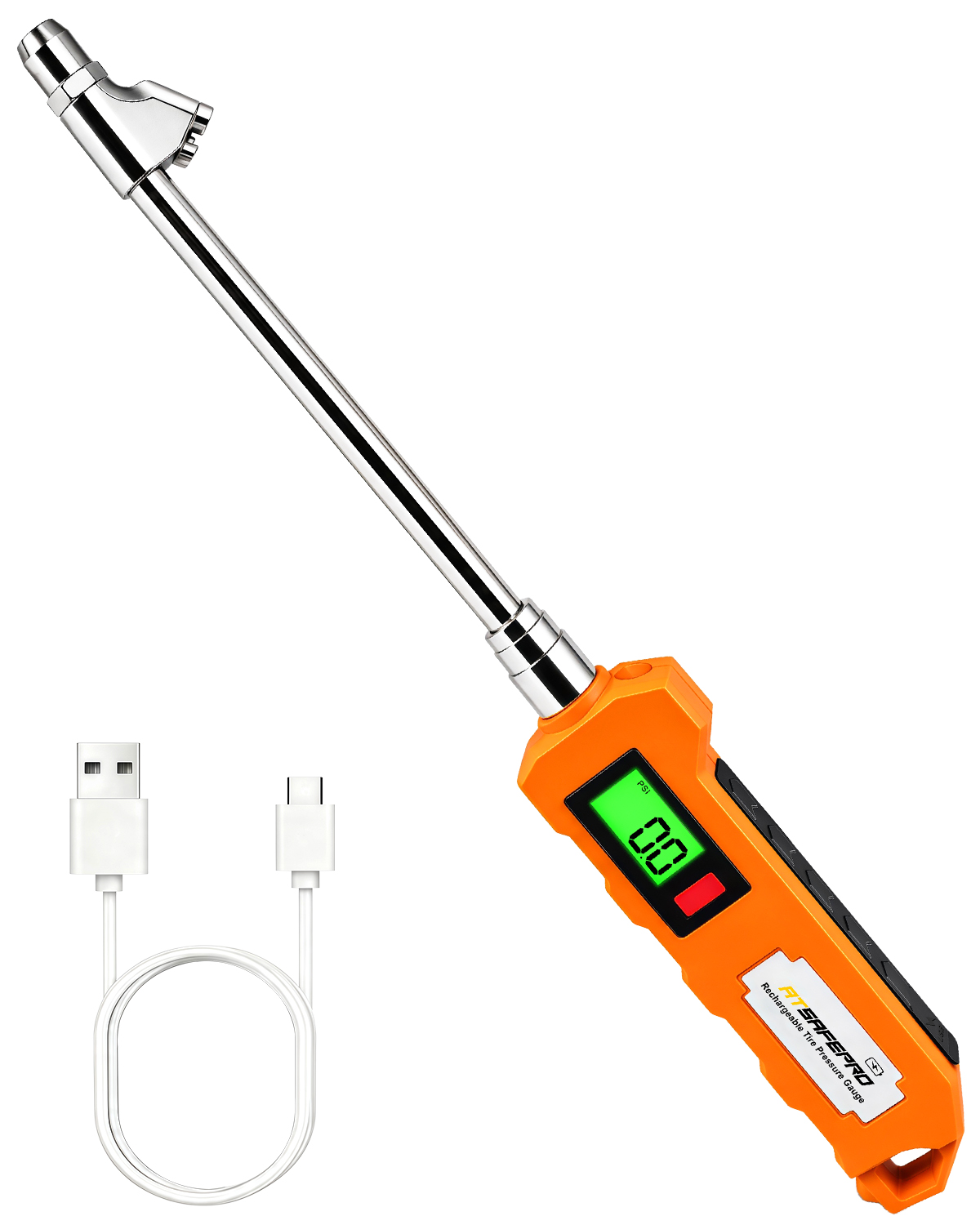
Is it digital?
No. It is an analog dial gauge.
Next step for buyers
If you are comparing tire pressure tools for a workshop, fleet kit, or aftermarket catalog, use the ATsafepro tire pressure gauge as a reference point for the basics that matter: readable dual scales, a flexible hose, and a physical build suited to everyday handling. Then close the information gaps before ordering. Ask for the connection type, pressure range, calibration details, and any application limits that are not visible in the listing. That is the difference between a useful shop tool and a purchase that looks fine only on paper.