Why tread depth measurement deserves more attention than most shops give it
The GODESON tire tread depth gauge sits in a category that looks simple right up until a driver needs a clear answer: is this tire still serviceable, or is it already too close to the limit? For tire shops, fleet managers, and service writers, that question affects safety, replacement timing, and customer trust. For everyday drivers, it can decide whether a road trip starts calmly or with a last-minute tire purchase.
That is why a tread measurement tool is more than a small accessory. It gives a repeatable number, not a guess based on eyeing the grooves. And in tire work, a small guessing error can become a real-world problem. Uneven wear, borderline tread, and seasonal driving conditions all make visual checks unreliable. A gauge that shows the reading clearly is often the difference between a quick inspection and a debate at the service counter.
What this digital gauge is designed to do
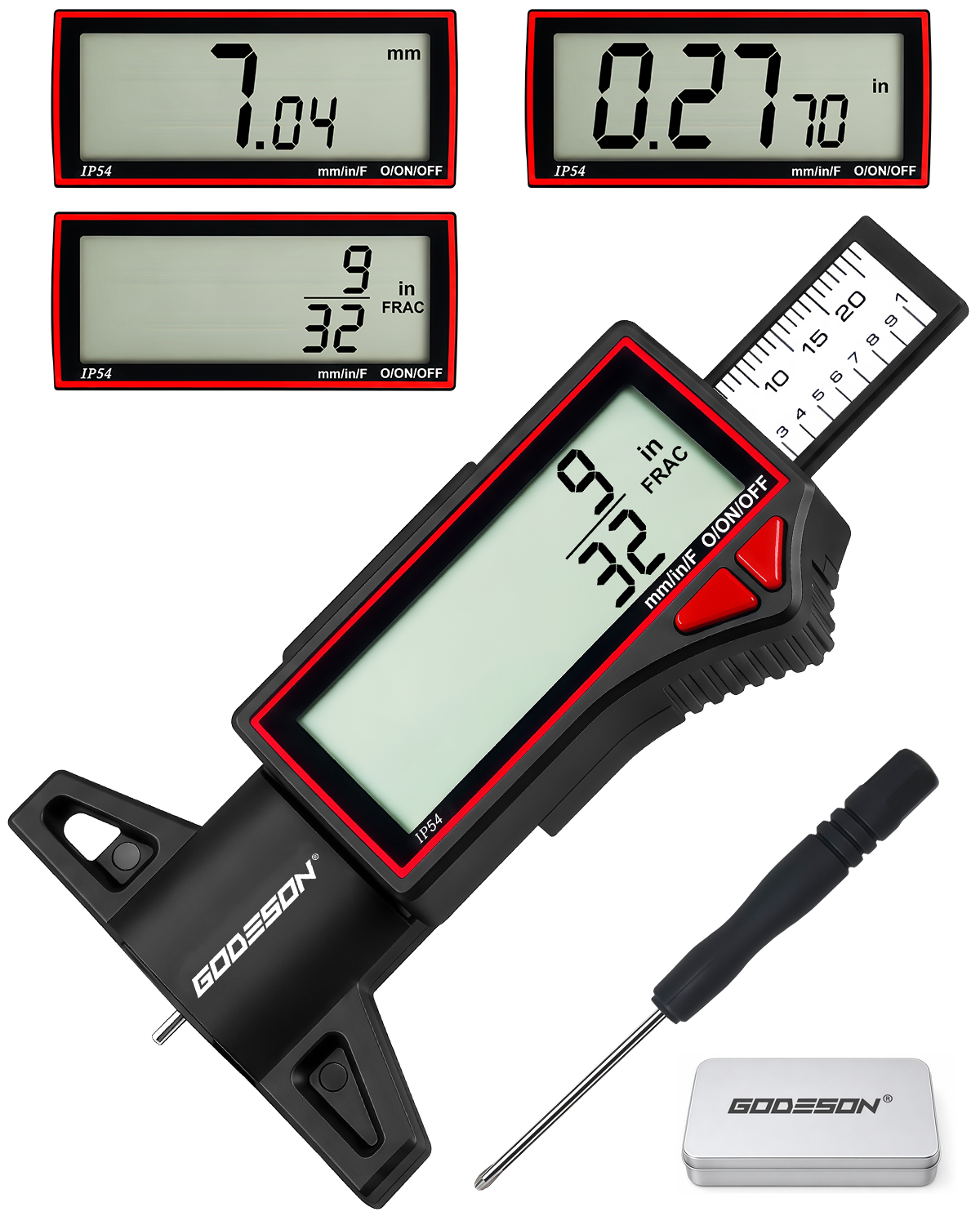
This model is a handheld electronic tire tread depth gauge with an LCD display, a black plastic body, a probe arm for entering the tread, red accent buttons, and a ruler-style measuring shaft. The package shown also includes a metal storage box, a small screwdriver, and a user manual. Those details matter because they suggest the tool is aimed at regular use, not just one-off checking in a garage drawer.
The measurable specifications shown are straightforward and useful: a measurement range of 0.00 mm to 25.4 mm, 0.01 mm resolution, ±0.1 mm accuracy, a CR2032 battery power source, operating temperature from 0°C to 50°C, and IP54 water resistance. For a buyer, that combination points to a practical shop tool that can handle routine inspection work around dust, grime, and occasional moisture. It is not the same as a heavy industrial instrument, and it does not need to be. Tire tread inspection is a field task, and field tools should be compact, readable, and easy to reset.
What the numbers mean in real use
The listed measurement range of 0.00 mm to 25.4 mm is broad enough for typical passenger vehicle tire inspection and many general service tasks. The 0.01 mm resolution is finer than most users will need on a day-to-day basis, but that extra digit can help when comparing tires across axles, documenting wear, or tracking progress over time. In practice, the display precision is only valuable if the tool is used consistently; a clean measurement taken the same way every time is worth more than a fancy screen.
The ±0.1 mm accuracy claim is the sort of detail purchasing teams should notice. It suggests the gauge is intended for serious inspection work rather than casual guessing. Still, a practical caution applies: any tread depth tool depends on correct positioning, a clean tread surface, and a steady hand. Mud, stone debris, and worn tread edges can skew the reading. That is not a flaw unique to this product; it is how tread measurement works.
Where a digital tire tread gauge fits into maintenance workflows
For tire shops and service departments, a digital gauge speeds up the conversation. The technician can take readings across multiple tire positions, compare inside, center, and outside wear, and show the result on the screen. That matters because a customer is more likely to act on a visible number than on a verbal recommendation alone. A clear reading supports tire replacement timing, alignment discussions, and rotation schedules.
Fleet maintenance teams also benefit from standardized tread checks. Vehicles in commercial use do not wear evenly, and not every driver notices the early signs. A compact tread measurement tool helps set inspection intervals and creates a more consistent record from vehicle to vehicle. For mixed fleets, that consistency often matters more than ultra-advanced features. The real goal is not to collect data for its own sake; it is to identify tires that are drifting out of usable range before they become a safety issue.
For consumer buyers, the value is simpler. The gauge can help decide whether a tire is approaching replacement time, whether two tires on the same axle are wearing differently, or whether a used vehicle has tires that are close to the end of their useful life. That is particularly useful when buying a car privately, where tire condition is easy to overlook and not always reflected in the asking price.
Build and packaging details that signal everyday usability
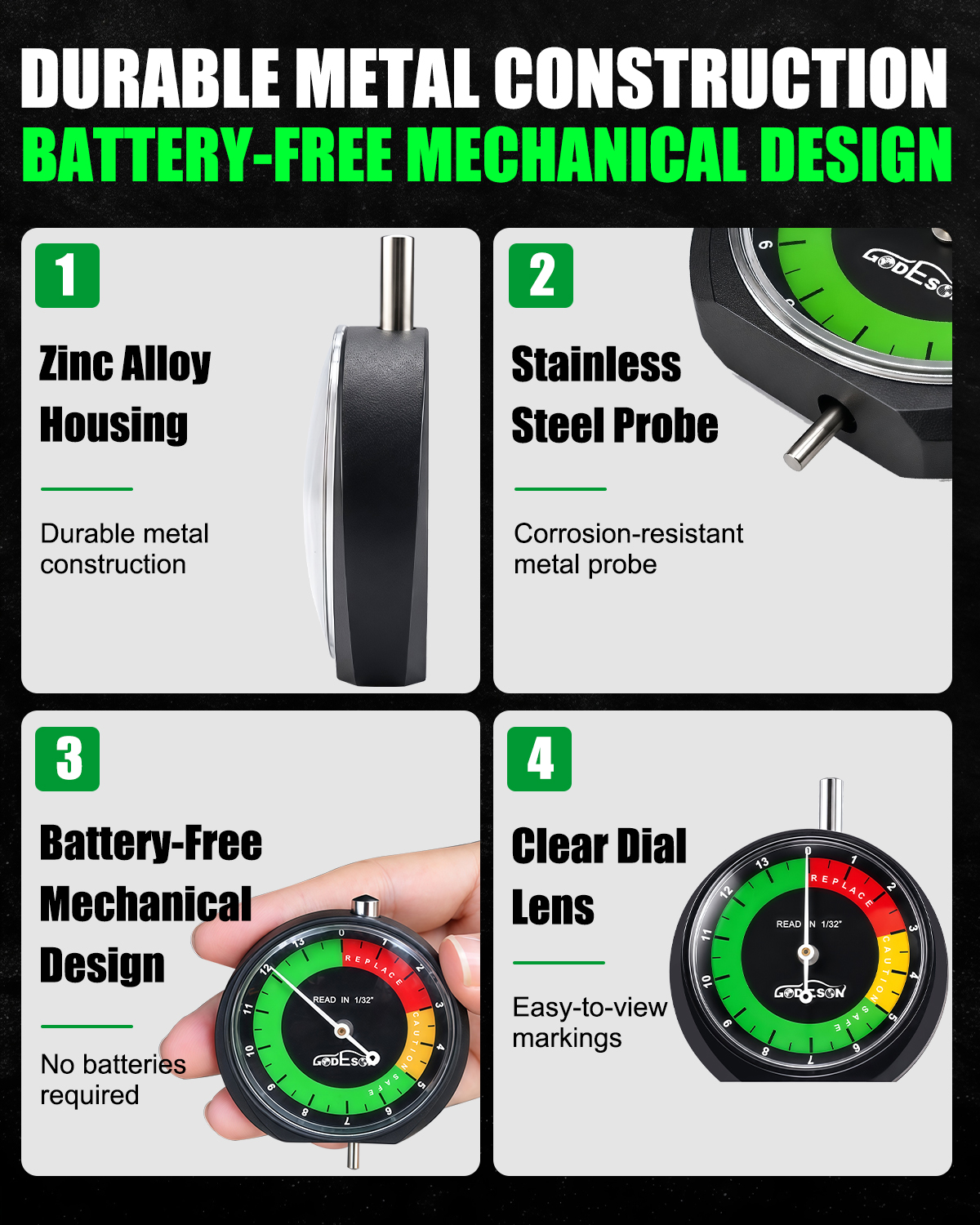
The gauge appears to use a molded plastic housing with a matte black finish and a metal measuring shaft. That is a sensible arrangement for a portable electronic instrument: plastic keeps the body light, while a metal probe gives the user a firmer contact point at the tread. The storage box shown is metal with a silver finish, which should help protect the tool in a shop bag, drawer, or service cart. The included screwdriver suggests battery access or minor adjustment is expected, which is normal for a handheld measuring device.
The overall size is also practical. At about 4.57 inches long, with a shown height of about 2.36 inches, the gauge looks small enough to carry in a pocket or tool pouch without becoming awkward. The storage box, at roughly 5.12 by 3.15 inches, gives it a dedicated home. That sounds minor, but in real shops, tools that disappear into a cluttered bench tend to get lost, damaged, or borrowed permanently.
Selection criteria buyers should actually care about
Readability
A digital display is useful only if it is legible in the environment where it will be used. Bright shop lights, outdoor glare, and dirty hands can all make a small screen harder to read. Buyers should look at the display size and the way the number appears, not just the technical specification sheet.
Durability in normal service conditions
The IP54 rating is relevant because tread checking rarely happens in clean lab conditions. Dust, tire residue, and a little moisture are part of the job. IP54 is not the same as submersion protection, and it should not be treated that way, but it does indicate some level of resistance suited to routine maintenance use.
Measurement consistency
For shop work, consistency can matter more than headline precision. If a gauge can be returned to zero reliably and used the same way across every tire, it becomes a dependable inspection instrument. Buyers should be careful not to overvalue extra decimal places if the tool itself is fiddly or hard to position.
Storage and portability
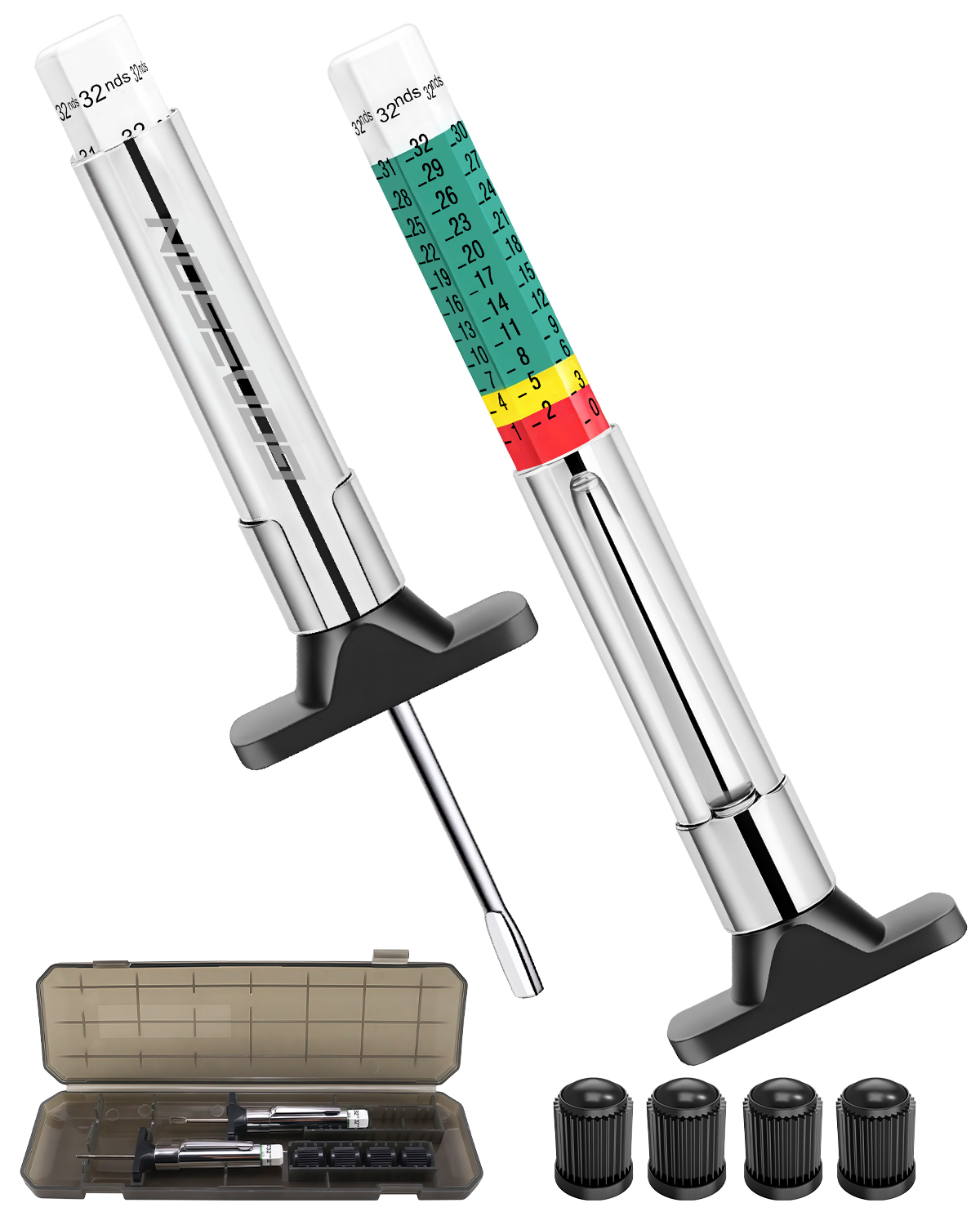
The included case is a small feature that often ends up being a big advantage. Tools that live in a case last longer, get cleaner treatment, and are easier to assign to a technician or vehicle. A small screwdriver in the package is also useful, though buyers should not assume every package includes the battery unless that is explicitly confirmed by the seller.
Common mistakes when using a tread depth gauge
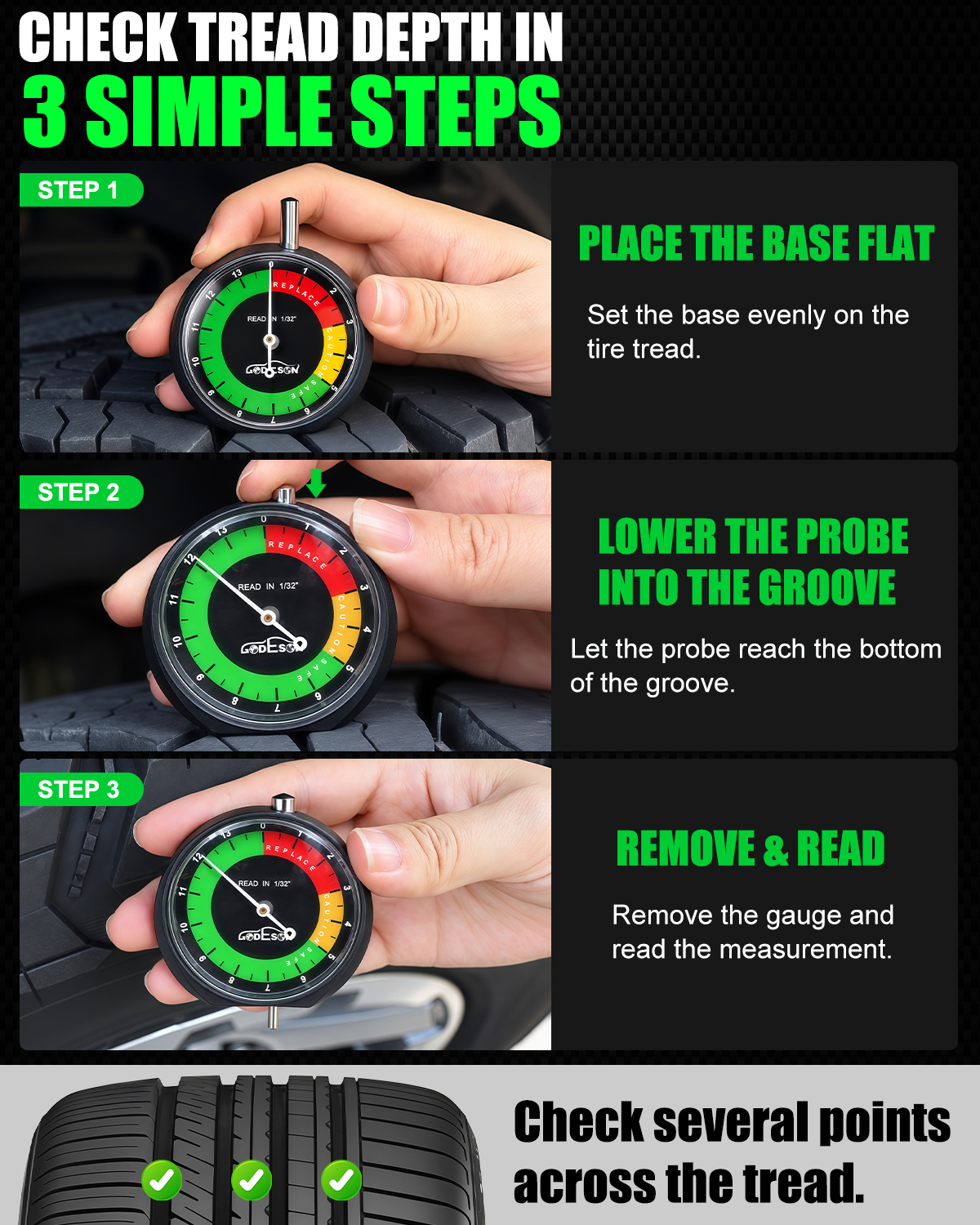
The most common mistake is measuring only one spot on the tire. Tires rarely wear evenly, and a single reading can hide shoulder wear or center wear that changes the real picture. Another mistake is pressing the probe into debris instead of the tread groove. Small stones and packed dirt can add false depth or stop the probe from seating properly.
A second issue is comparing tires without noting where the measurement was taken. Inside, middle, and outside readings can tell very different stories, especially on vehicles with alignment issues. If a tire shows one shallow area, that can be more important than the average number. Buyers who only want a pass/fail answer may miss the wear pattern that explains why the tire is wearing out early.
Finally, some users forget that tread depth is only one part of tire condition. Age, sidewall damage, cuts, and uneven wear can make a tire unsafe even before it reaches a low tread number. A gauge helps with one decision, not every decision.
Who this type of tool makes sense for
This type of digital tire tread depth gauge makes the most sense for tire shops, automotive service centers, fleet maintenance departments, and cautious vehicle owners who want a clearer answer than a coin test or visual inspection can provide. It is especially useful where inspections must be repeated often and explained to someone else. The combination of compact size, digital readout, and protective case suits routine use better than a bulky mechanical setup would.
It may be less attractive for buyers who want a ruggedized industrial instrument for harsh environments, or who need a very specialized inspection process beyond standard tread measurement. In that case, the purchasing team would want to compare the broader tool ecosystem, not just one handheld gauge. But for common vehicle maintenance tasks, this format is practical and easy to adopt.
Buyer-facing takeaways before ordering
If your goal is to speed up tire inspections, communicate findings clearly, and reduce uncertainty around wear limits, the GODESON tire tread depth gauge is aligned with that need. Its visible selling points are the digital display, 0.01 mm resolution, 0.00 mm to 25.4 mm range, ±0.1 mm accuracy, IP54 rating, and compact carry case. Those are the kinds of details that matter in day-to-day service work.
Before buying, confirm the package contents with the supplier, especially anything related to battery inclusion or calibration support. Also consider how the tool will be used: in a shop bay, in a fleet van, or by consumers checking their own tires. The right choice depends less on a long feature list and more on whether the gauge will be used often enough to justify a digital instrument at all.
FAQ
Can this gauge help with safety checks?
Yes. Tread depth is one of the simplest and most useful indicators in a tire safety inspection, though it should be considered alongside overall tire condition.
Is a digital tread gauge better than a manual one?
Not automatically. A digital gauge is often easier to read and record, but the best tool is the one your team will use consistently and correctly.
Does IP54 mean it can get wet?
It suggests resistance to dust and light splashing, not full waterproof use. It is a useful shop-level rating, but not a reason to leave the tool in standing water.
Why does the included case matter?
Because small inspection tools get lost easily. A case helps protect the gauge, keep accessories together, and improve the odds that the tool is where you expect it when a vehicle comes in.
Next step for buyers
If you are sourcing a tread measurement tool for service or inspection work, compare this gauge against your actual workflow rather than against generic feature claims. Look at readability, handling, storage, and how often the team needs to document tire wear. That is where this kind of instrument proves its value.