Why a GODESON air fitting can decide whether a shop line feels solid or constantly annoying
If you work around compressors, impact tools, or a busy garage air system, a GODESON air fitting is the kind of small part that either disappears into the background or keeps reminding you it was chosen badly. People usually notice fittings only when they leak, loosen, cross-thread, or make hose changes slower than they should be. That is why buyers looking at a compressed-air connector are rarely shopping for a glamorous item; they are trying to solve a practical problem: how to keep air moving reliably without wasting time, pressure, or patience.
This particular fitting is described as an all-metal pneumatic connector with a leak-free air connection and a pressure rating up to 300 PSI. Those are straightforward claims, but they matter because air systems tend to expose weak points quickly. A poor connector may seem acceptable on the bench, then start hissing once the line is pressurized or the hose gets tugged around a shop floor. For sourcing managers and maintenance teams, the real decision is not just “does it fit?” but “will it stay usable after repeated service?”
Quick takeaways before you buy
- All-metal construction usually makes more sense in demanding shop environments than soft, lightweight hardware that can wear quickly.
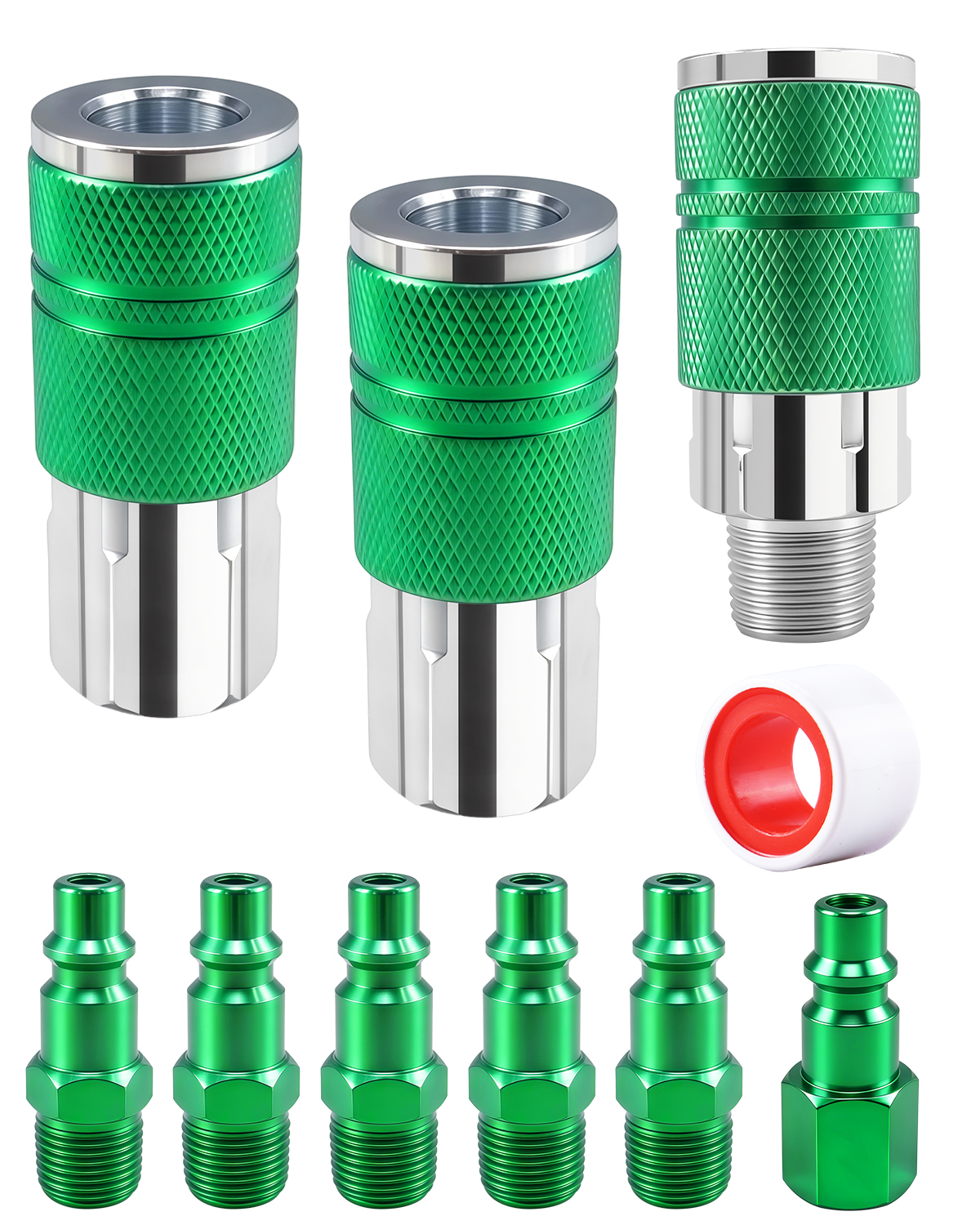
- The bright, polished body and knurled green grip suggest the fitting is designed for hand tightening while still allowing wrench use on the hex section.
- A 300 PSI rating gives buyers a practical ceiling for many compressed-air applications, though the right working margin still depends on the rest of the system.
- The exact thread type, dimensions, and hose compatibility are not visible here, so those details should be confirmed before procurement.
1. What this fitting is meant to do
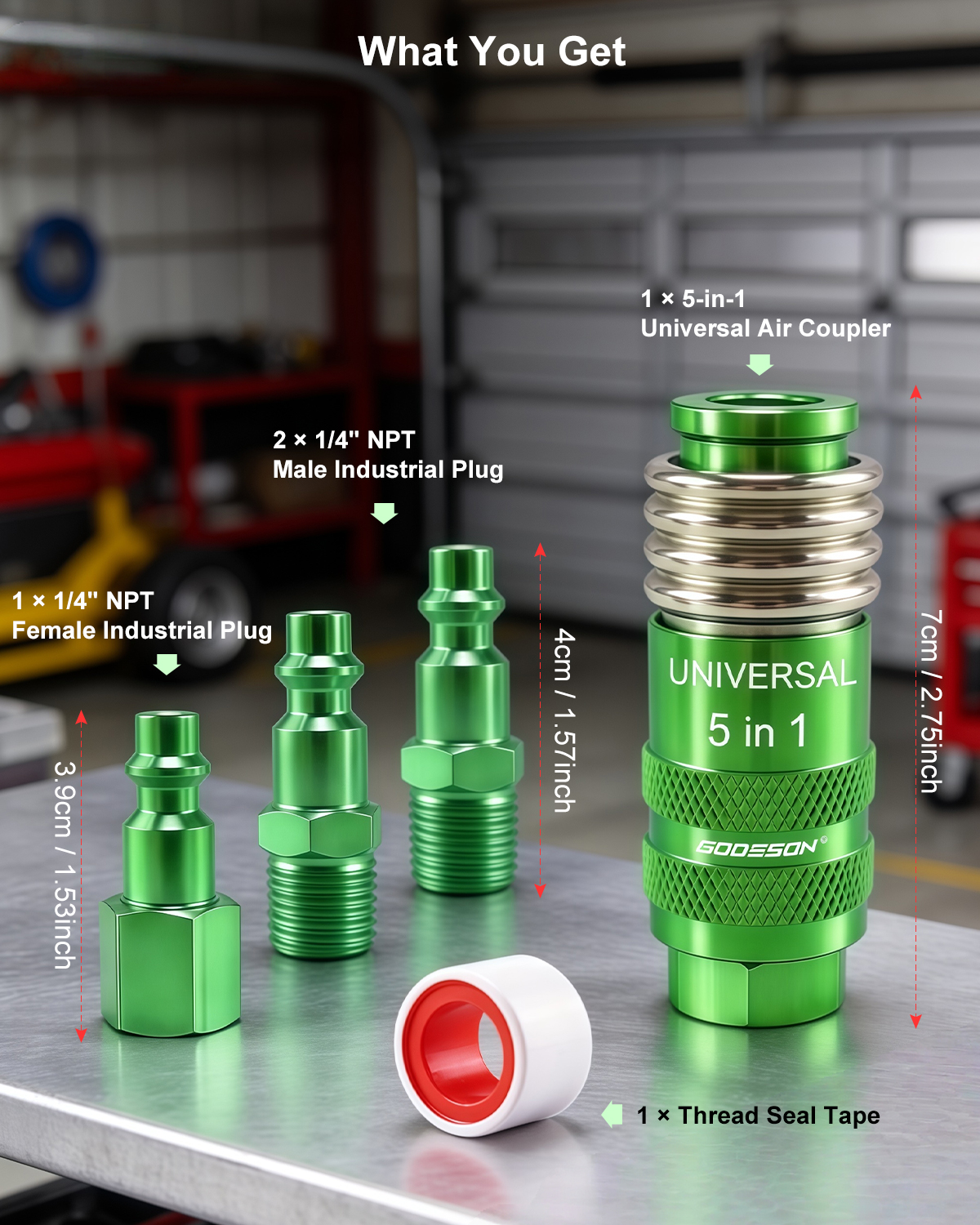
At a basic level, the GODESON air fitting is a metal connector for compressed-air lines. The visible geometry points to a female threaded coupling or hose-end connector, though the exact thread standard is not provided and should not be assumed. In use, parts like this bridge the gap between air compressors, hoses, pneumatic tools, and stationary equipment.
That sounds simple, but in practice the connector has three jobs at once. It must seal. It must survive repeated connection cycles. And it must be convenient enough that operators actually use it correctly instead of reaching for tape, pliers, or whatever is nearby. The hand-grip sleeve and wrenchable hex shape suggest the design is trying to balance those needs rather than optimize for only one of them.
2. The visible construction details that matter
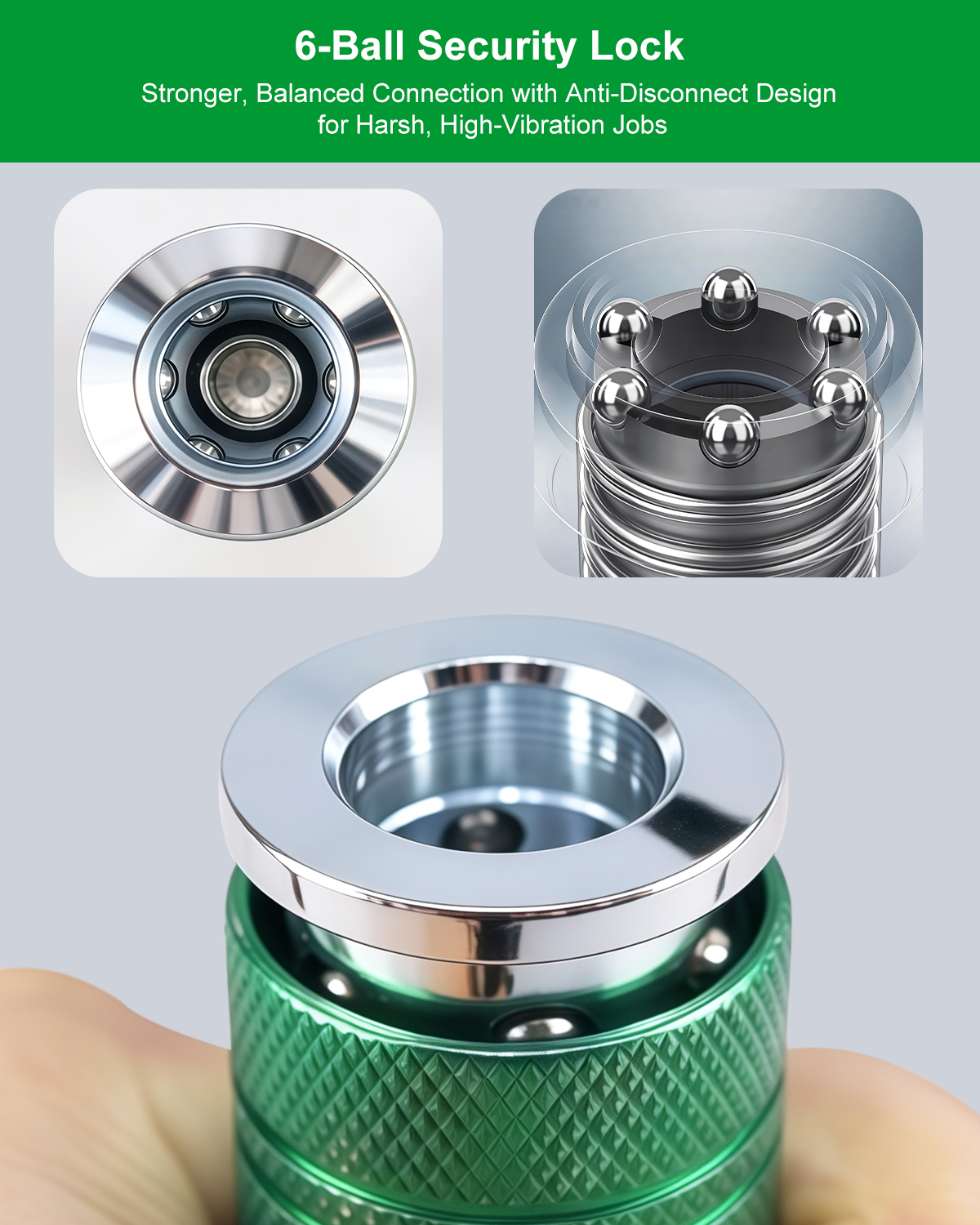
Not every air fitting deserves a close look, but this one gives buyers several useful clues. The main body appears to be machined metal with a polished silver finish. The lower section includes a hex shape for wrenching, which is often a practical sign that the part is intended for secure installation rather than one-time assembly. The upper grip area has circumferential ridges and a green textured sleeve or grip that should improve hand traction.
For shop use, those details are not cosmetic trivia. A knurled or textured grip helps when hands are oily, cold, or gloved. The hex section gives maintenance teams a way to tighten the fitting without chewing up the body. And an all-metal build generally stands up better to accidental knocks, dragging hoses, and the general abuse that comes with industrial maintenance or garage work.
One small caution: polished finishes can look premium, but finish alone does not tell you everything about durability. The underlying alloy, plating, and thread quality still matter more than shine. Since those specifics are not supplied, a buyer should treat the visible build as encouraging, not conclusive.
3. Where a 300 PSI rating fits in real-world use
The stated pressure rating up to 300 PSI places the fitting in a range that is useful for many compressed-air tasks. In everyday terms, that includes common shop-air setups, air tools, garage inflators, and pneumatic maintenance lines. The number is important because fittings are often the weakest point in an otherwise capable air system. If the connector cannot keep up with the line pressure or daily cycling, the rest of the setup does not matter much.
Still, pressure rating is not the only selection criterion. Buyers should think about the full operating environment. Is the line fixed or dragged around? Will the fitting stay on one tool or get changed repeatedly? Is the system used indoors in a clean workshop, or in a harsher industrial area where vibration and debris are part of the routine? A 300 PSI fitting can be a sensible choice, but it should still be matched to the application rather than treated as a universal answer.
4. Why all-metal construction often wins in the shop
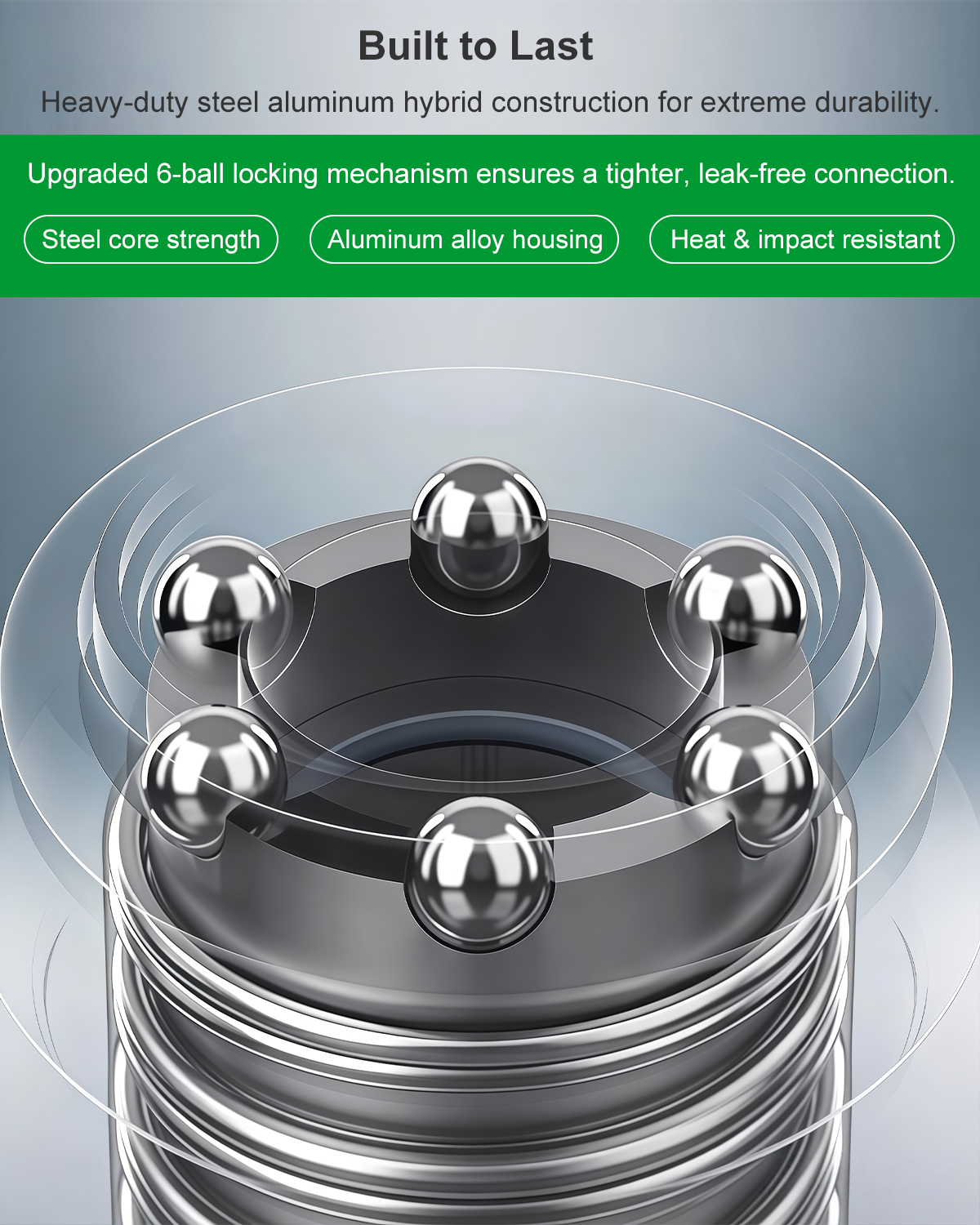
For pneumatic connector duty, all-metal construction is not just a durability talking point. It often means the fitting is better able to handle abrasion, heat near machinery, and repeated torque during service. Plastic components or mixed-material designs can work in lighter-duty systems, but they may be less forgiving when hoses are repeatedly connected and disconnected.
In a maintenance or production setting, the biggest advantage is consistency. If an operator knows the fitting can take wrench force and day-to-day handling without deforming, there is less chance of downtime caused by cracked housings or worn locking surfaces. That said, all-metal does not eliminate wear. Threads can still be damaged by cross-threading, contamination, or careless installation. Stronger hardware still benefits from disciplined assembly practices.
5. What to confirm before placing a purchase order
This is where many buyers get caught. The visible product details are useful, but a pneumatic connector lives or dies by fitment. Before ordering at scale, confirm the thread standard, exact dimensions, and whether the connector is intended for a hose end, tool port, or another type of air connection. Those details are not visible in the supplied information, so they should be verified with the seller or engineering team.
It is also worth checking the intended sealing method. Some air fittings rely on thread sealant practices, while others depend on different sealing geometries or mating hardware. If that part of the assembly is misunderstood, a connector that looks correct on paper can still leak in service. That kind of mistake is tedious because it usually appears after installation, when troubleshooting costs time and interrupts production.
For procurement teams, the safest approach is to treat this as a component that must be matched to the existing air system, not as a generic part that can be forced into place. A few minutes spent checking compatibility tends to save more time than a pallet of the wrong hardware.
6. Common mistakes buyers make with air connectors
One common mistake is assuming all air fittings are interchangeable. They are not. Thread standards, sealing styles, and body geometry can vary enough to create leaks or poor engagement. Another mistake is picking a fitting solely on pressure rating while ignoring service frequency. A connector used on a frequently swapped tool needs different practical qualities than one installed once and left alone.
There is also the habit of over-tightening because compressed air feels forgiving until it does not. A wrenchable hex section is useful, but it is not an invitation to muscle the fitting until the threads complain. Over-tightening can distort seals or make later maintenance harder. In air systems, “tight enough” is often more valuable than “as tight as possible.”
Finally, buyers sometimes ignore ergonomics. The green knurled grip on this fitting suggests the design acknowledges hand use, which is worth paying attention to. Small usability details can matter a lot in a shop where people connect and disconnect lines all day.
7. A practical list for evaluating this type of fitting
- Check that the thread type matches the mating component exactly.
- Confirm whether the fitting is meant for a hose end, a tool inlet, or a fixed line.
- Match the pressure rating to the system, with margin for actual operating conditions.
- Look for all-metal construction if the fitting will see heavy handling.
- Prefer a design with both hand grip and wrench flats when service access is tight.
- Verify the sealing approach before installation, not after a leak appears.
8. FAQ: buyer questions that come up quickly
Is this fitting only for industrial use?
Not necessarily. Based on the supplied information, it is suitable for compressed-air applications in garages, workshops, maintenance areas, and industrial settings. The right environment depends more on system compatibility and duty cycle than on the label alone.
Can I assume it matches any air hose?
No. The exact thread standard and size are not provided, so compatibility must be confirmed before ordering. That is especially important if the fitting is being bought for replacement work.
Does a polished finish improve performance?
Not by itself. A clean finish may be nice to handle and easier to inspect, but sealing and durability depend on the fit, materials, and installation quality.
Is 300 PSI always enough?
For many shop air tasks, it is a practical rating. But the real answer depends on the air system, the tool, and any pressure spikes or misuse in the line. It is wise to leave a margin rather than run equipment at the edge of its rating.
9. What this fitting helps you decide
The value of a GODESON air fitting is not that it solves every pneumatic problem. It helps buyers decide whether they want a rugged, hand-friendly, all-metal connector for everyday compressed-air service, and whether that connector fits into an existing system without compromise. That is a narrower question than “what is the best air fitting on the market,” but it is the question most real buyers actually face.
If you are comparing options for a shop line, maintenance cart, compressor setup, or pneumatic tool station, start with the basics: compatibility, sealing, handling, and service life. If those boxes are checked, a fitting like this can be a sensible, practical choice rather than a decorative piece of hardware.
Next step for sourcing and maintenance teams
Before purchase, confirm the thread standard, mating dimensions, and sealing requirements against your existing air hardware. If the connector is going into a critical line, it is worth reviewing one sample in hand before committing to a larger order. That small step tends to prevent the sort of mismatch that only shows up once production is already waiting.
When a compressed-air system behaves well, no one praises the fittings. They just work. That is usually the best sign you bought the right one.