What a GODESON air fitting is meant to solve
A GODESON air fitting sits in the unglamorous part of a compressed-air system, which is exactly where good hardware earns its keep. If a hose connection leaks, loosens, or needs constant fiddling, the whole setup becomes slower to use and harder to trust. That matters whether the line is feeding a handheld air tool, a workshop drop, or another pneumatic component that depends on steady air delivery. In practical terms, the buyer is usually trying to answer a simple question: will this fitting hold a secure connection and stay that way under normal shop use?
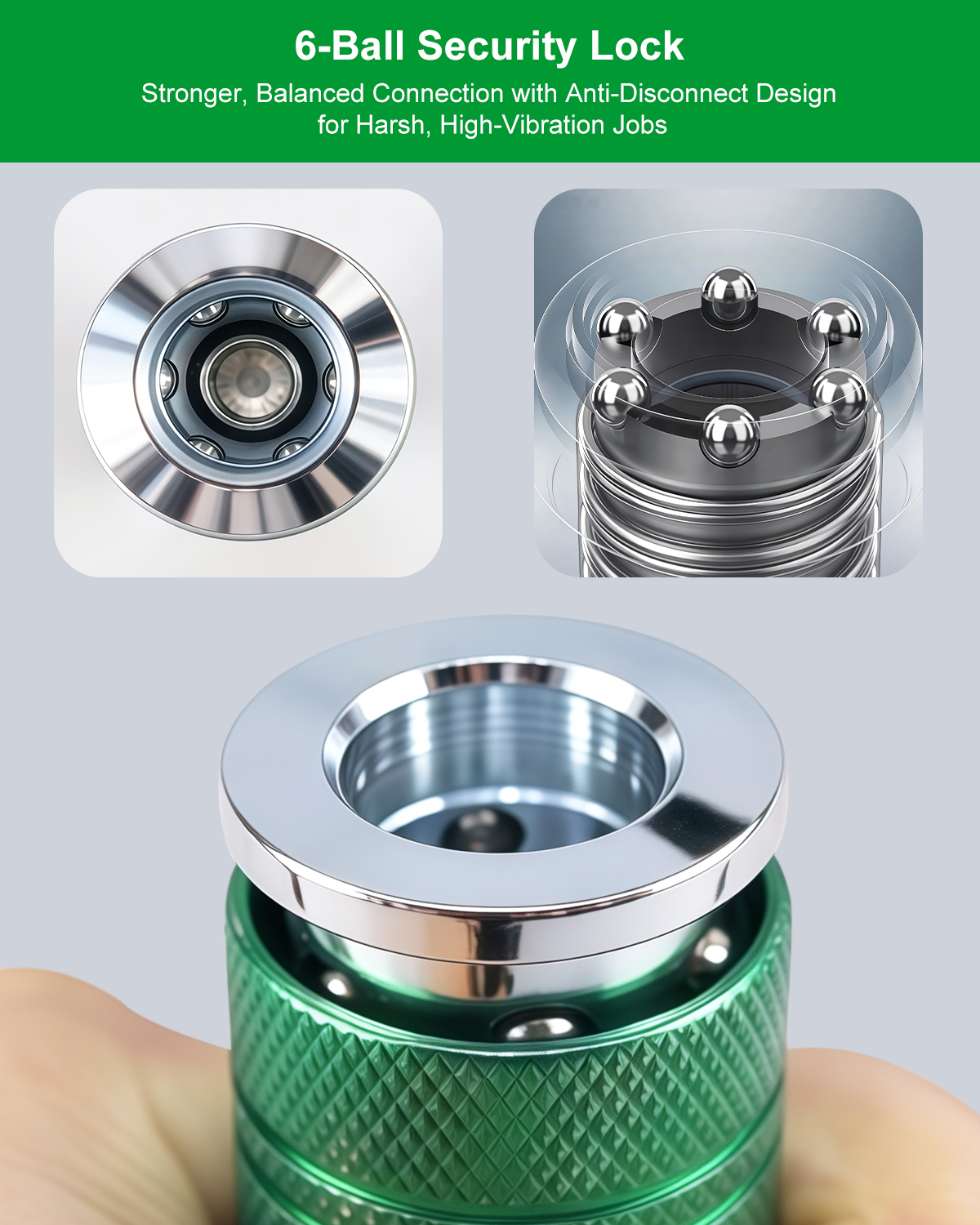
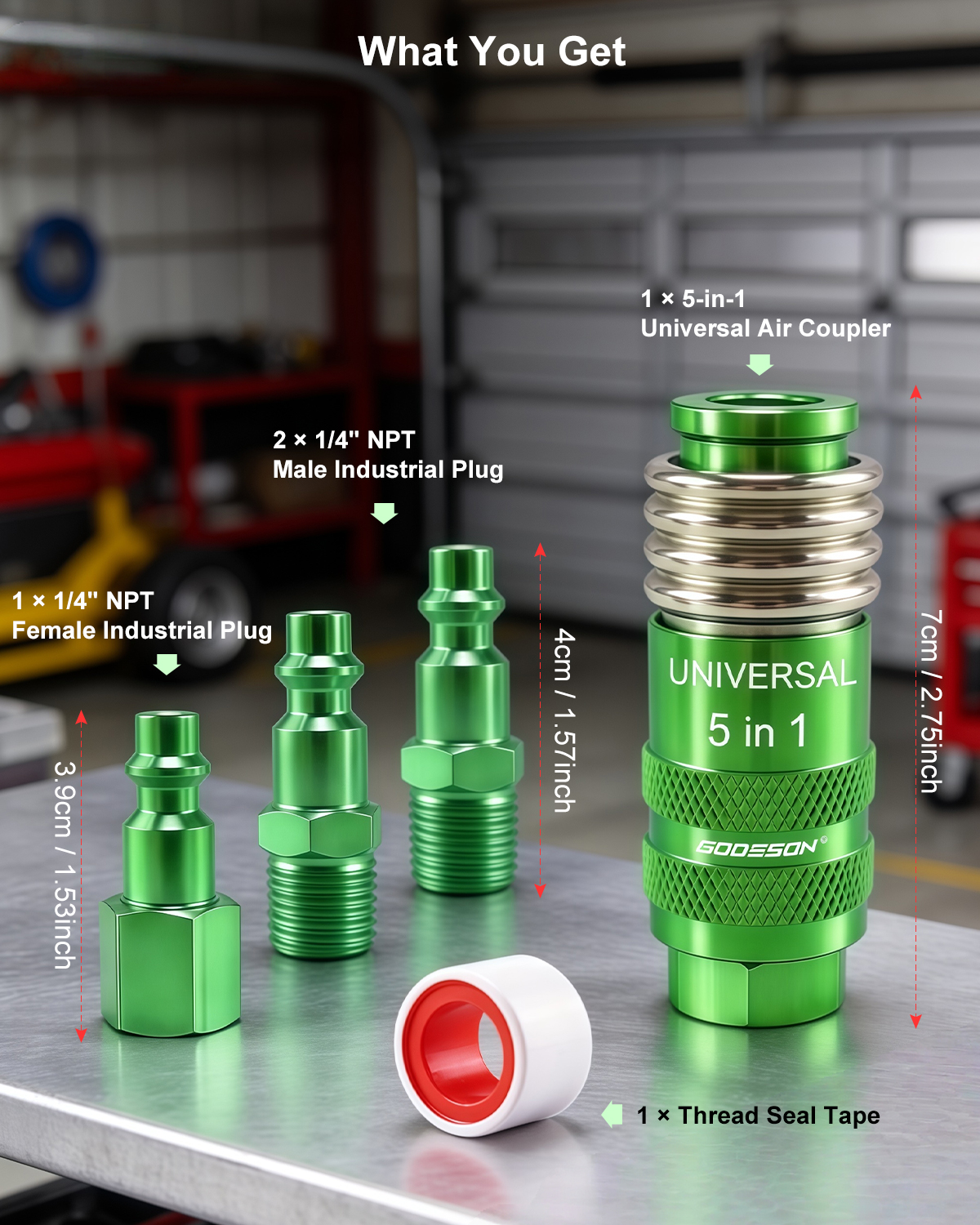
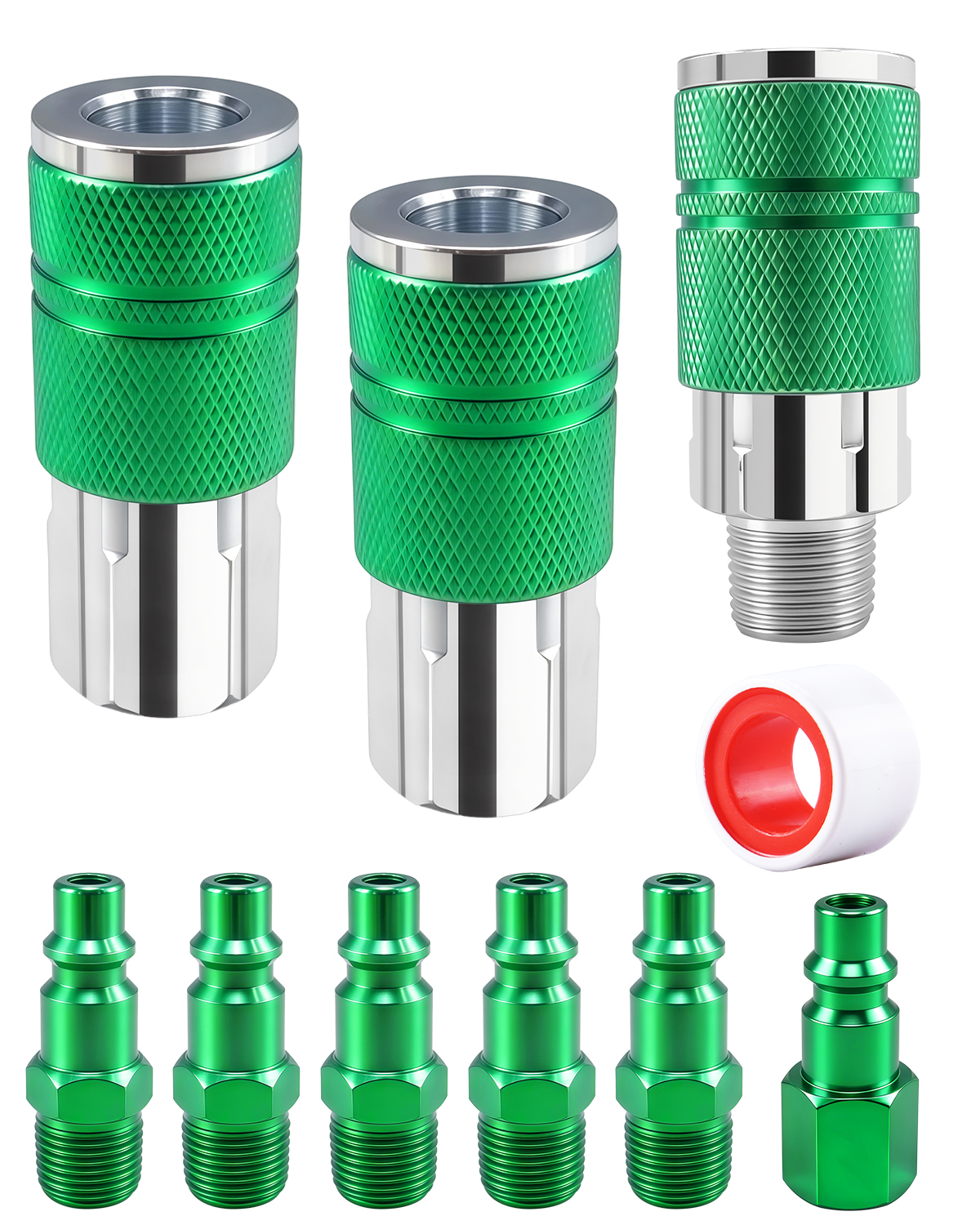
The visible product details point to a threaded pneumatic air fitting or air hose connector with an all-metal body. It has a polished silver lower section, a green knurled outer grip, and a hex-shaped base for wrench tightening. Those design cues suggest a fitting intended for repeated installation and removal, not a disposable accessory. The supplied information also says it is designed for a safe, leak-free air connection and up to 300 PSI, which places it in the category of shop-ready hardware rather than light-duty novelty parts.
Quick takeaways before you buy
If you are sourcing this kind of fitting, the first decision is not style but function. You need to know where it will sit in the line, what kind of thread or coupling it must mate with, and whether the system pressure leaves enough margin. The visible product information does not confirm exact thread size, standard, seal material, or quick-connect format, so those details must be verified before purchase. That is the cautious but necessary approach; a fitting can look right and still be wrong for the system.
What can be said with confidence is that the part appears to be built as a durable metal connector with hand-grip features and wrench flats. That combination usually appeals to maintenance teams and buyers who want a part they can install once, service later, and not worry about as the hose moves around the shop.
How the design supports compressed-air use
All-metal construction
Metal fittings are common in compressed-air systems because they tolerate shop abuse better than softer alternatives. The body shown here appears to be fully metallic, which is useful when the connector is exposed to vibration, abrasion, oil mist, or repeated tightening. In a workshop, a fitting rarely lives in a clean cabinet; it gets bumped, grabbed with gloved hands, and dragged across concrete. A solid metal body is a sensible choice for that environment.
Knurled grip and hex body
The green outer sleeve is not just cosmetic. The diagonal knurling and grooves create a hand-friendly surface for quick adjustment, while the hex lower body gives a wrench point when a tighter installation is needed. That is a practical combination. A technician can start the connection by hand, then finish it with a tool if access allows. It is a small detail, but small details are where hose assemblies become convenient instead of annoying.
Threaded interface
The visible female threaded opening suggests a connector designed to join with a matching threaded component. Threaded interfaces are still widely used in pneumatic systems because they are familiar, compact, and easy to inspect. The tradeoff is that the buyer must pay closer attention to compatibility than with some push-in arrangements. Thread form, diameter, and sealing method all matter, and they are not things to guess at.
Where a fitting like this is typically used
In compressed-air work, a fitting like this is most often seen in air hose connections, tool hookups, and general pneumatic supply lines. It may be used at a compressor outlet, on a distribution manifold, or at the point where a hose connects to an air-driven tool or accessory. The common thread is simple: keep air moving cleanly and keep the joint from becoming the weak spot.
For engineers and sourcing managers, the value is less about the connector itself and more about the reliability of the system around it. A fitting rated for higher pressure than the operating condition gives more breathing room. That does not mean the whole system can be pushed carelessly, but it does reduce the chance that a routine shop line is being asked to operate at the edge of its capability.
How to evaluate this type of air fitting
1. Confirm the connection standard
Before ordering, identify the exact mating standard on both sides of the joint. Do not rely on appearance alone. Pneumatic parts can look similar while differing in thread size, thread direction, or coupling style. If a catalog page is vague, request the dimensional data from the supplier and compare it against the hose, manifold, or tool port you are actually using.
2. Check pressure margin, not just pressure rating
The supplied information says up to 300 PSI. That is useful, but a buyer should still compare the rating against real operating conditions, transient spikes, and the pressure characteristics of the compressor system. In pneumatic hardware, the margin matters because fittings are exposed to start-stop cycles and dynamic loads, not just static pressure.
3. Look at the installation method
The hex base suggests wrench installation is possible, which is helpful in tight spaces or where a hand-tightened joint would not be secure enough. If the fitting will be installed in a service bay or production area, think about future maintenance. A connector that can be removed without destroying adjacent components saves time later. That is not an exciting line on a purchase order, but it matters when a line goes down.
4. Consider the environment
Metal finish, hand grip, and thread engagement all interact with the operating environment. If the fitting will see frequent handling, airborne dust, or oily conditions, a knurled surface can make service easier. If the assembly sits in a cramped machine enclosure, the hex section may be more useful than a smooth collar because it gives the installer something solid to work with.
Common mistakes buyers make with air hose connectors
The most common mistake is assuming “air fitting” is specific enough. It is not. Pneumatic systems are full of parts that are almost interchangeable until they are not. Another common issue is over-tightening in the hope of eliminating leaks. That can damage threads, distort seals, or make later maintenance harder than it should be. Leak resistance should come from correct matching and proper installation, not brute force.
Buyers also sometimes ignore the difference between a fitting that is built for repeated use and one that is merely adequate on paper. The visible all-metal structure here suggests a more serviceable part, but the final judgment still depends on the exact application. A compressor room, a plant maintenance cart, and a benchtop assembly station do not punish hardware in the same way.
Practical buyer advice for sourcing teams
If you are comparing this GODESON air fitting against alternatives, ask for the specifications that the product image does not reveal. Thread size, mating type, seal design, and dimensional compatibility should all be confirmed before release. If the supplier cannot state those clearly, treat the part as incomplete for purchasing purposes.
For shops that buy pneumatic hardware in batches, consistency matters almost as much as the part itself. A fitting that is easy to identify by its metal body, green grip, and hex section may help on the floor, especially if maintenance staff need to distinguish it from other connectors quickly. Visual recognition is not a substitute for documentation, but it does reduce mistakes during installation and service.
It is also worth considering whether the use case calls for one connector type across the facility or a mixed inventory. Mixed inventories can work, but they make spares management more complicated. Standardizing on a clearly documented fitting style usually saves time in the long run.
FAQ
Is this fitting intended for high-pressure air systems?
The supplied information indicates up to 300 PSI. That makes it suitable for many compressed-air applications, but the system should still be checked as a whole. Pressure rating on one part does not automatically validate the rest of the line.
Can I identify the exact thread standard from the image alone?
No. The image shows a threaded female opening, but exact thread size and standard are not provided. That must be verified from the supplier specification or measured against the mating component.
Why does the fitting have a green knurled section?
Most likely for grip and easier handling. The knurled surface gives the installer more control during hand tightening or removal, while the hex body supports tool tightening when needed.
Is an all-metal fitting always better than a composite one?
Not always, but in workshop and industrial air lines, all-metal construction is often preferred for durability and service life. The best choice depends on the system, the environment, and what the fitting has to mate with.
What this fitting helps you decide
At the end of the day, the decision is not simply whether a GODESON air fitting looks sturdy. It is whether the connector is the right physical match, the right pressure fit, and the right service choice for the air line you are building or maintaining. The visible construction suggests a practical, heavy-duty approach: metal body, knurled grip, wrench flats, and a threaded interface meant for secure attachment. Those are all good signs. The missing details are still important, though, so the smart move is to verify compatibility before placing the order.
If you are sourcing for a workshop, production cell, or compressed-air maintenance program, start with the actual mating hardware and pressure requirements, then confirm the connector data point by point. A fitting is small, but in pneumatic systems, small parts tend to determine whether the whole line feels dependable or temperamental.