Why a GODESON air fitting matters in a compressed-air setup
A GODESON air fitting may look like a small piece of hardware, but in a workshop or plant air line, small parts tend to decide whether the whole system feels solid or annoyingly unreliable. When compressed air is moving through tool drops, hose reels, and maintenance lines, the connector is where leaks start, threads get damaged, and pressure losses show up first. That is why buyers do not usually shop for an air fitting in the abstract; they are trying to solve a practical problem: how to make an air connection that stays tight, seals cleanly, and survives daily handling.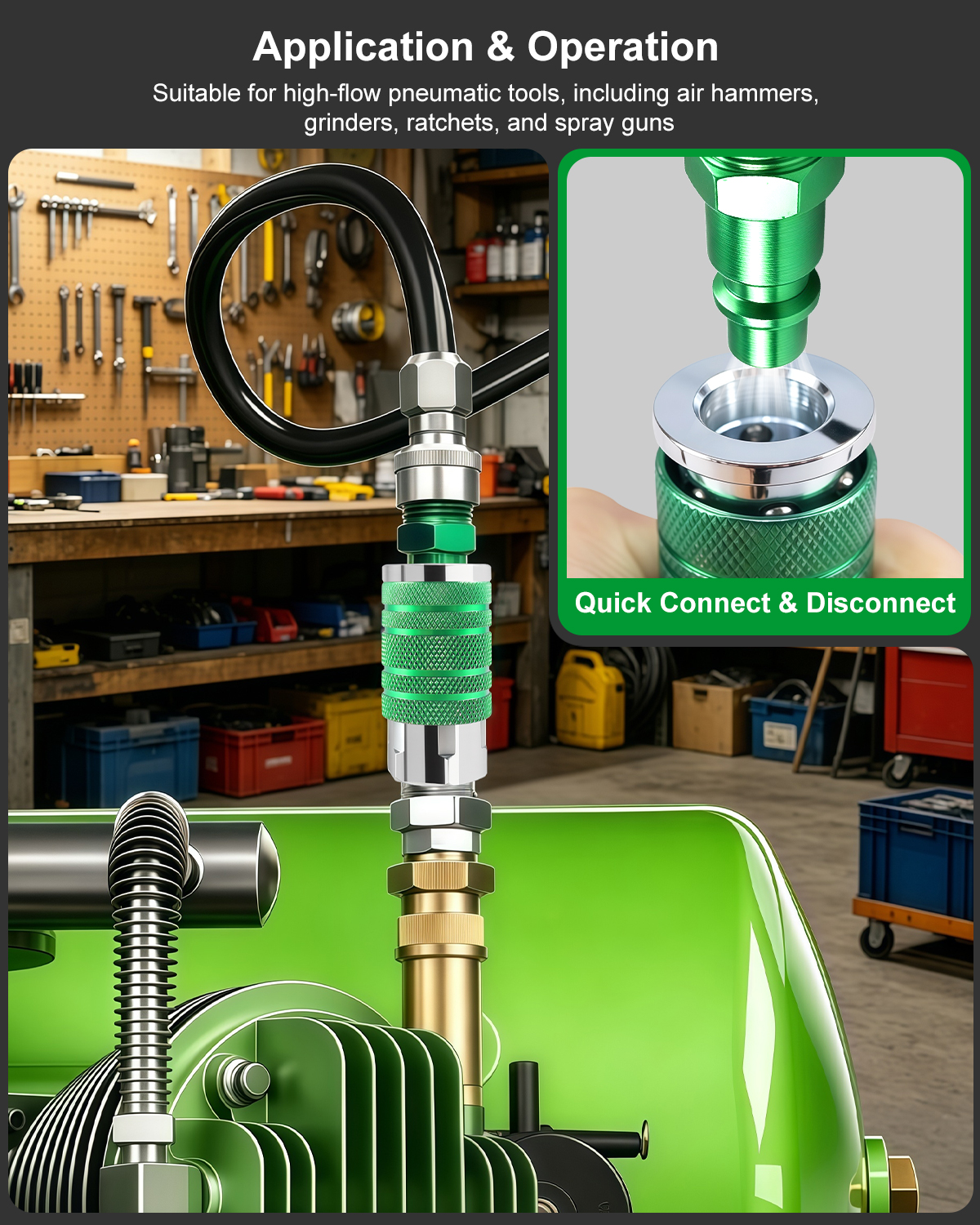
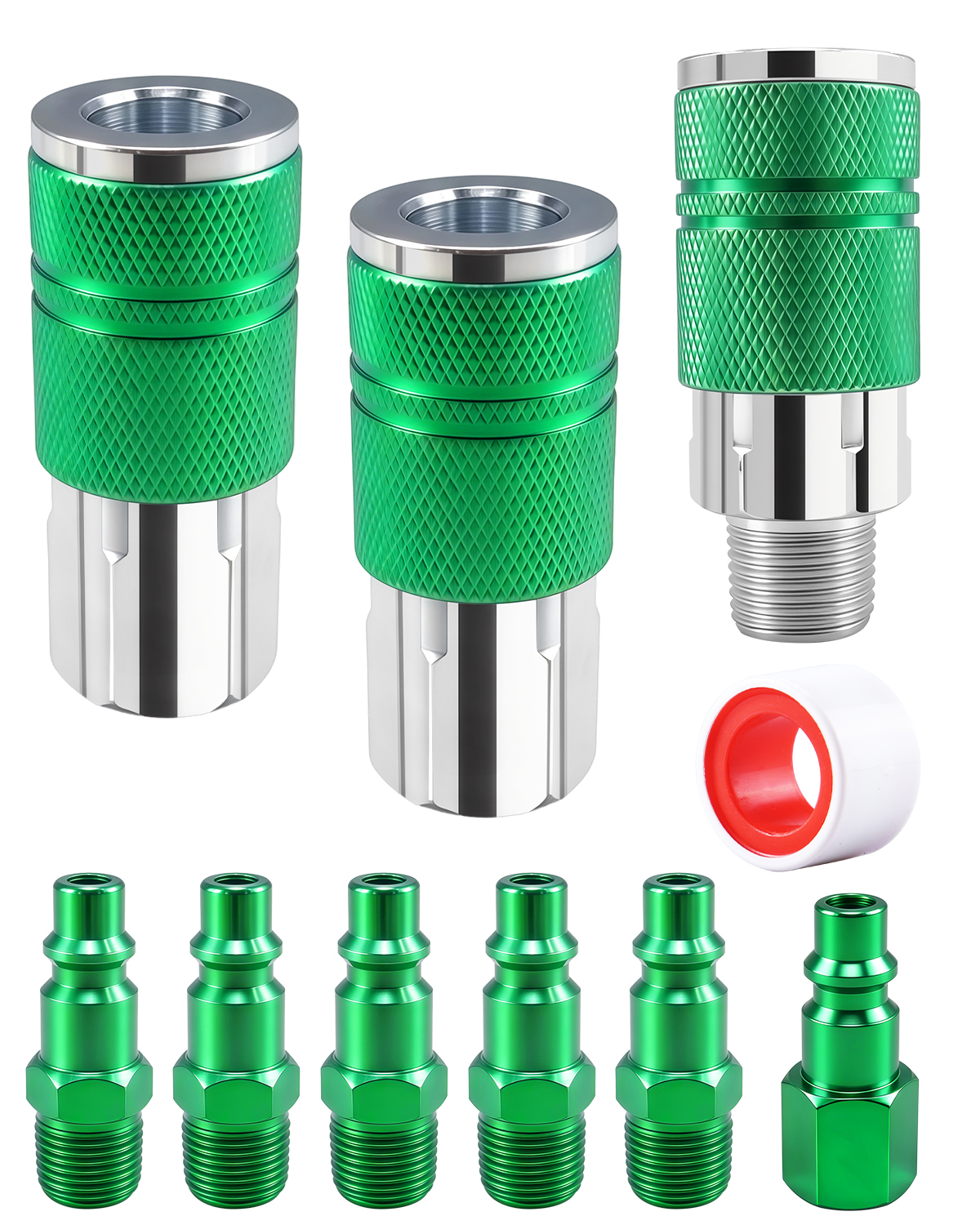
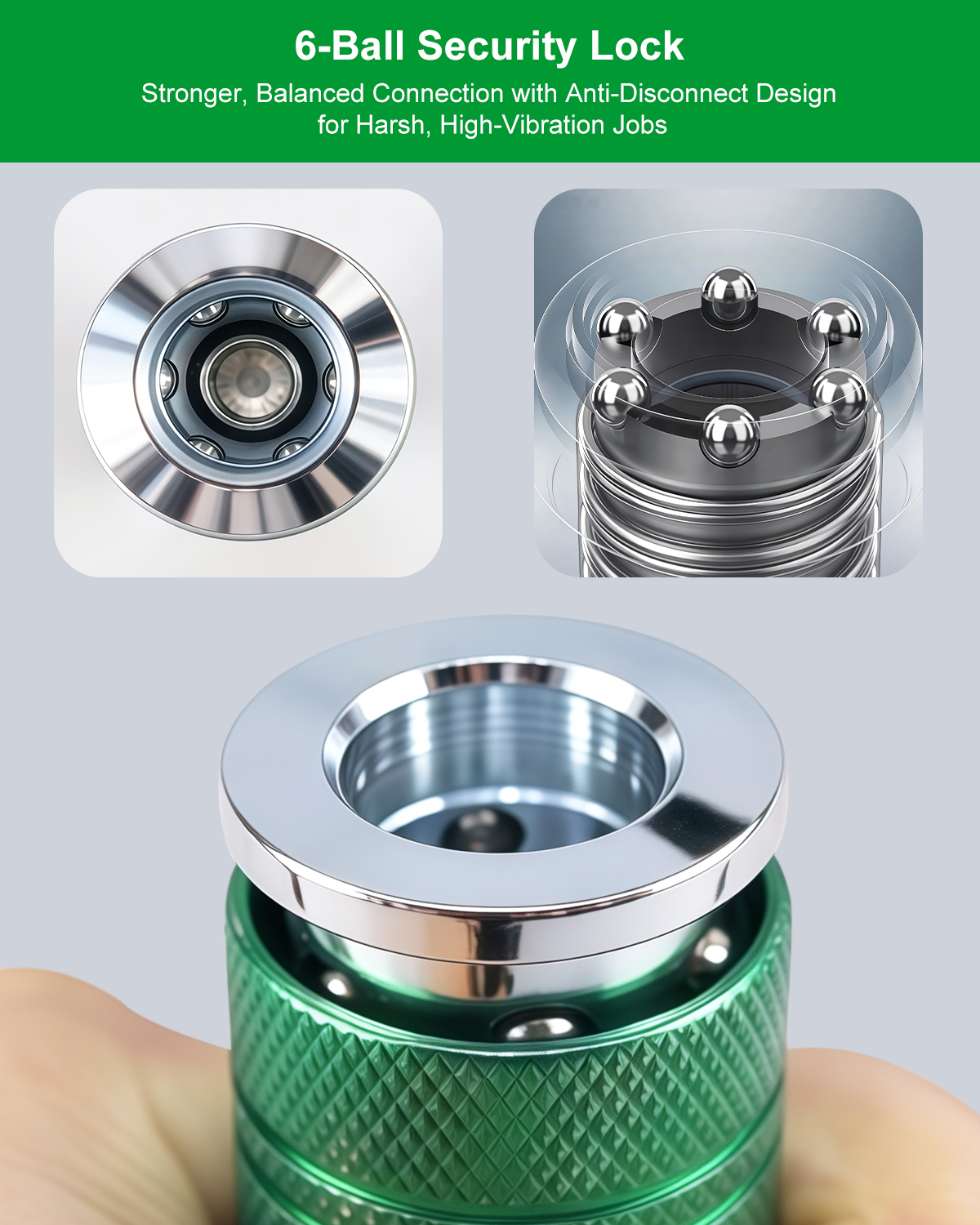
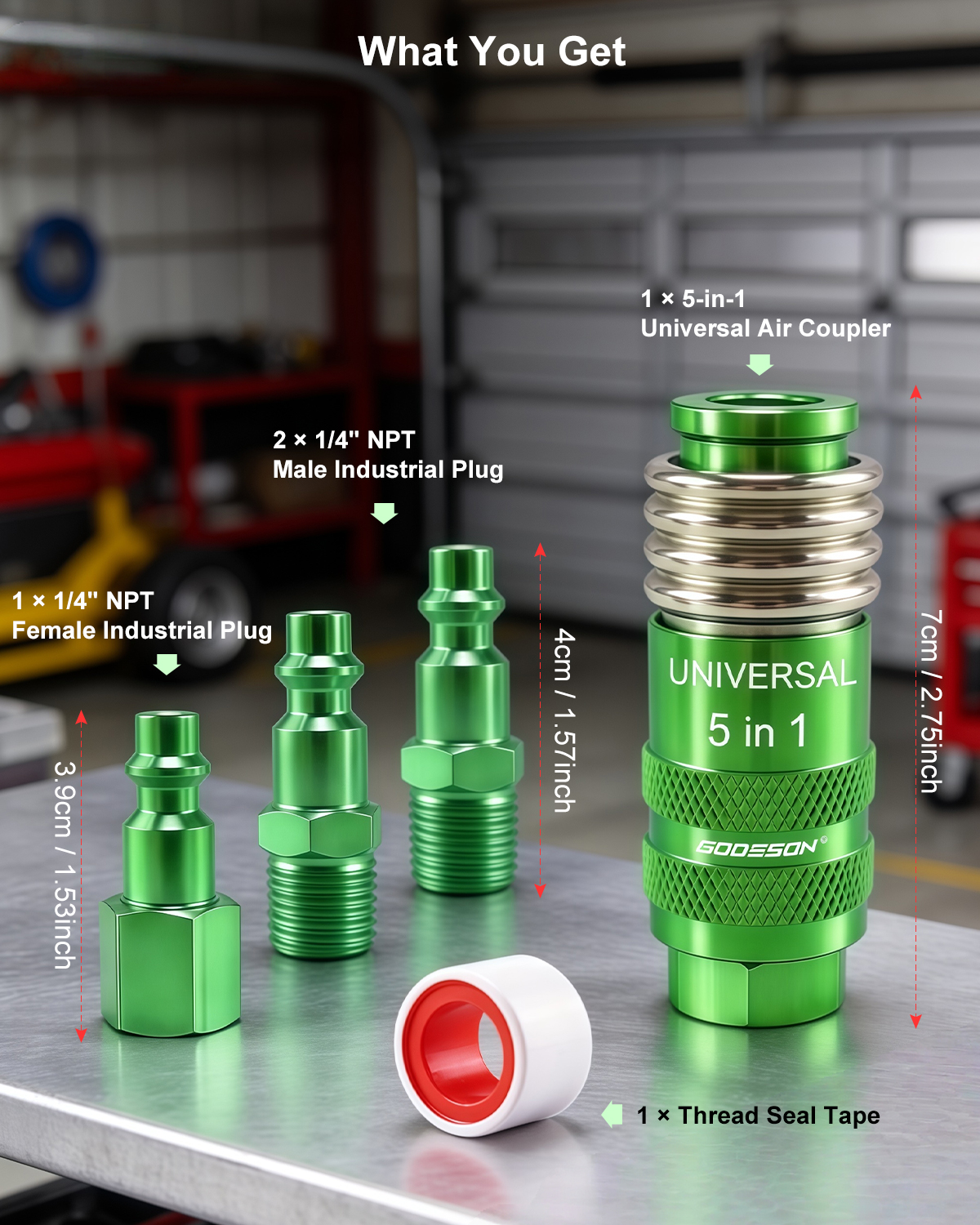
The product shown appears to be an industrial pneumatic connector with an all-metal connection body, a polished silver lower section, and a bright green knurled upper grip. From a buyer’s point of view, that combination suggests two things at once: wrench-ready strength and easier hand handling. The image also points to a 300 PSI rating and a leak-free air connection claim, which are the kinds of details engineers and maintenance teams care about immediately. Not because the number is flashy, but because pressure margin and sealing behavior affect uptime.
What this fitting appears to be designed to do
Based on the visible geometry, this looks like a hose-end or threaded pneumatic fitting rather than a decorative accessory. The faceted hex section at the bottom is the kind of shape you expect when a part needs to be tightened with a wrench. The upper knurled bands look built for grip, especially during installation or field adjustment. In compressed-air service, that is not cosmetic. A fitter wearing gloves or working in a cramped tool station needs something they can hold without slipping.
The internal female threads visible at the base suggest a threaded connection point, though the exact thread standard is not stated. That matters because pneumatic buyers often discover, too late, that a fitting that “looks right” still misses the actual thread spec. If you are matching an existing manifold, coupler, or hose-end assembly, the thread form and seal method should be verified before purchase. It is one of those unglamorous checks that saves a lot of returns.
Quick takeaways for engineers and sourcing teams
For readers trying to decide whether this type of fitting fits their use case, the main points are straightforward:
The visible all-metal construction is a good sign for durability in shop-air and industrial environments.
The 300 PSI claim places it in the range many compressed-air applications expect, though system design should still be based on the lowest-rated component in the line.
The knurled grip and hex body make it easier to install, remove, and service than a smooth-body connector.
The exact thread size, sealing approach, and material alloy are not identified, so those details should be confirmed before specifying it into a build.
That last point is worth repeating. A fitting can look robust and still be wrong for the job if the connection geometry is off by even a small amount. Air systems are less forgiving than they seem, especially when vibration, hose pull, or repetitive tool changes are involved.
Why all-metal construction is still preferred in many air systems
There is a reason many buyers still lean toward metal pneumatic fittings even when lower-cost alternatives exist. In compressed-air service, the fitting is subjected to repeated tightening cycles, accidental impacts, temperature swings, and occasional contamination from shop dust or oil mist. A well-made metal body tends to hold threads better over time and offers more confidence in a high-use environment.
The image also suggests a polished metal connection body, which may help with inspection and cleanliness, though finish alone does not tell the full story. A reflective surface can make wear, burrs, or contamination easier to spot. That is useful during routine maintenance, especially on systems where leaks are tracked by ear, soap solution, or pressure-drop testing.
The green grip section is harder to identify from the available information. It could be an anodized or coated metal element, or another metal with a colored finish. It should not be assumed to be aluminum, brass, or steel without a datasheet. For sourcing, the safe approach is to treat it as a handled surface and confirm the underlying substrate if corrosion exposure, weight, or magnetic behavior matters.
Where a fitting like this tends to make sense
This kind of air fitting is a natural fit for compressed-air tool hookups, maintenance carts, bench air lines, and industrial equipment that needs a secure threaded connection. It also makes sense anywhere the air line is handled frequently. On a production floor, that could mean a service hose that gets connected and disconnected every shift. In a repair shop, it might be part of a central line feeding impact tools, blow guns, or pneumatic test equipment.
The 300 PSI claim suggests a broader utility than very light-duty consumer gear, but buyers should still think in terms of system fit rather than headline pressure. Hose condition, thread engagement depth, seal compatibility, and regulator settings all affect real-world performance. A fitting can be rated well beyond normal shop pressure and still leak if the sealing surface is mismatched or the installation is rushed.
Selection criteria that matter more than catalog language
When choosing a pneumatic connector, it helps to focus on the details that affect installation and maintenance rather than broad product slogans.
Thread compatibility
This is the first check. If the fitting is going into an existing air circuit, verify the thread standard, size, and whether the connection relies on thread sealant, an O-ring face, or another sealing method. The image does not confirm this, so a buyer should not guess.
Pressure margin
The listed 300 PSI rating is useful, but the practical question is whether that gives enough margin above your operating pressure and expected spikes. For air systems, margin is not just about static pressure. It is also about tool shock, transient load, and wear over time.
Handling and installation
A knurled grip and hex tightening section are small features that can matter a lot during service. If technicians will install the fitting in tight spaces or with gloves on, surface texture and wrench access become real productivity factors.
Material and corrosion exposure
The product is described as all-metal, but the exact alloy is not stated. If the fitting will live in a humid shop, near washdown areas, or around corrosive residues, the buyer should ask for material details rather than assuming all metals behave the same.
Common mistakes when buying air fittings
The first mistake is treating every air fitting as interchangeable. In practice, thread standards, seal geometry, and body style vary enough to cause unnecessary downtime. The second is overfocusing on pressure rating while ignoring how the fitting will actually be used. A fitting that is technically rated for a certain pressure may still be a poor choice if it is awkward to tighten, hard to inspect, or incompatible with the rest of the system.
Another common mistake is assuming the visible finish tells you everything about durability. A polished surface and colored grip can be helpful, but finish is not a substitute for knowing the base material, the thread spec, or the seal design. That is especially true in sourcing, where a part might look standard enough in a photo but differ in a small, expensive-to-fix detail.
A final caution: do not mix “close enough” fittings on lines where leaks are costly. In compressed air, a small leak is often treated as a nuisance, but over time it becomes a power-loss problem and a maintenance problem. If the connection is for a critical tool or a frequently used station, precision matters more than convenience.
Practical buying advice for procurement teams
If you are evaluating a GODESON air fitting for a workshop, service fleet, or production environment, ask for the information that the image cannot provide. Confirm the thread size and standard, the exact material specification, the sealing method, and any installation instructions. If the fitting will be used with a specific hose type or quick-connect ecosystem, check compatibility before placing volume orders. That is especially important when replacement parts may be bought later by a different team member who does not have the original sample in hand.
It is also smart to align the fitting choice with the maintenance model. If technicians change hoses often, a part with a better grip surface and wrench-friendly geometry may save time. If the line stays assembled for long periods, the more important factor may be long-term sealing reliability and resistance to loosening.
FAQ: what buyers usually want to know
Is this a high-pressure fitting?
The image indicates a 300 PSI rating, which is useful for many compressed-air applications. Still, the full system should be matched to the lowest-rated component.
Is it definitely leak-free?
The product claim says leak-free air connection, but actual performance depends on correct thread matching, proper installation, and the condition of the mating part.
Can I identify the exact thread from the photo?
No. The photo suggests a threaded internal opening, but the thread size and standard are not stated and should be verified directly.
Is the green section definitely a specific metal?
No. The finish looks like a colored grip surface, but the underlying material is not confirmed.
A sensible next step before specifying it
If the GODESON air fitting is being considered for a compressed-air line, the next step is simple: verify the unseen details before procurement. Match the thread, confirm the sealing approach, and compare the 300 PSI claim with your actual operating conditions. Once those basics are checked, the visible features do suggest a fitting aimed at practical shop use: metal construction, hand-friendly grip, and a shape that looks ready for real installation rather than shelf display.
For teams managing air systems, that is usually what matters most. Not how a fitting reads in isolation, but whether it will hold up after the third reinstall, the hundredth tool change, and the first time somebody drops a wrench on it.