Why a good air fitting matters more than it looks
If you spend any time around compressors, air tools, or workshop distribution lines, you already know that a small connector can cause outsized trouble. A GODESON air fitting may look like a simple metal link in the chain, but in practice it decides how reliably air moves from the source to the tool, how much leakage you tolerate, and how often someone has to stop work to reseat a connection.
That matters to engineers and sourcing teams for a straightforward reason: compressed-air systems are only as stable as their weakest joint. A fitting that is hard to grip, loosens under vibration, or leaks at the thread can waste energy and create nuisance downtime. In a shop with several operators, those little losses add up fast. The reader here is usually trying to answer a practical question: is this the sort of connector that belongs in a general workshop air system, or does it need a more specific match to hose, thread, and pressure conditions?
What the visible design tells you at a glance

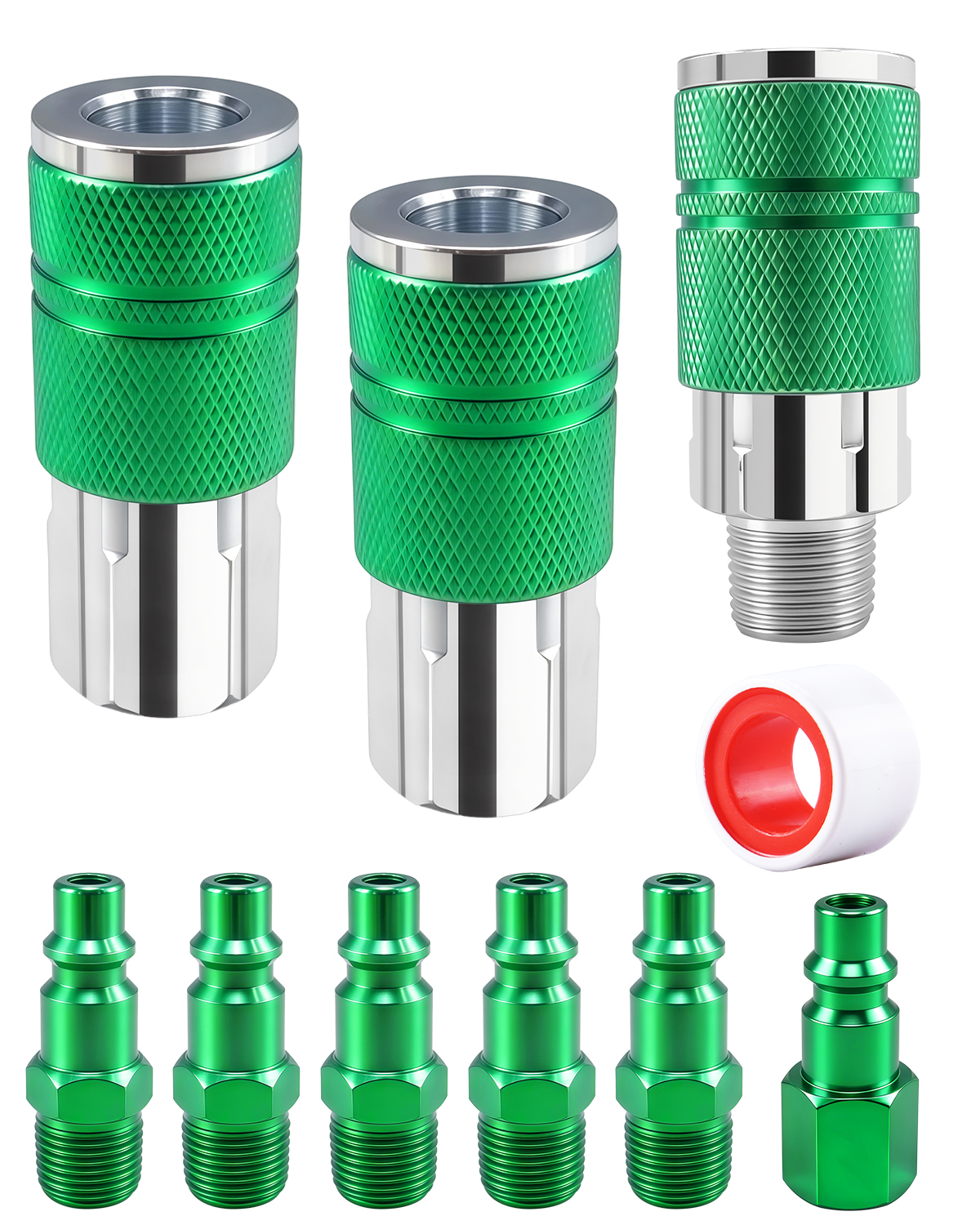
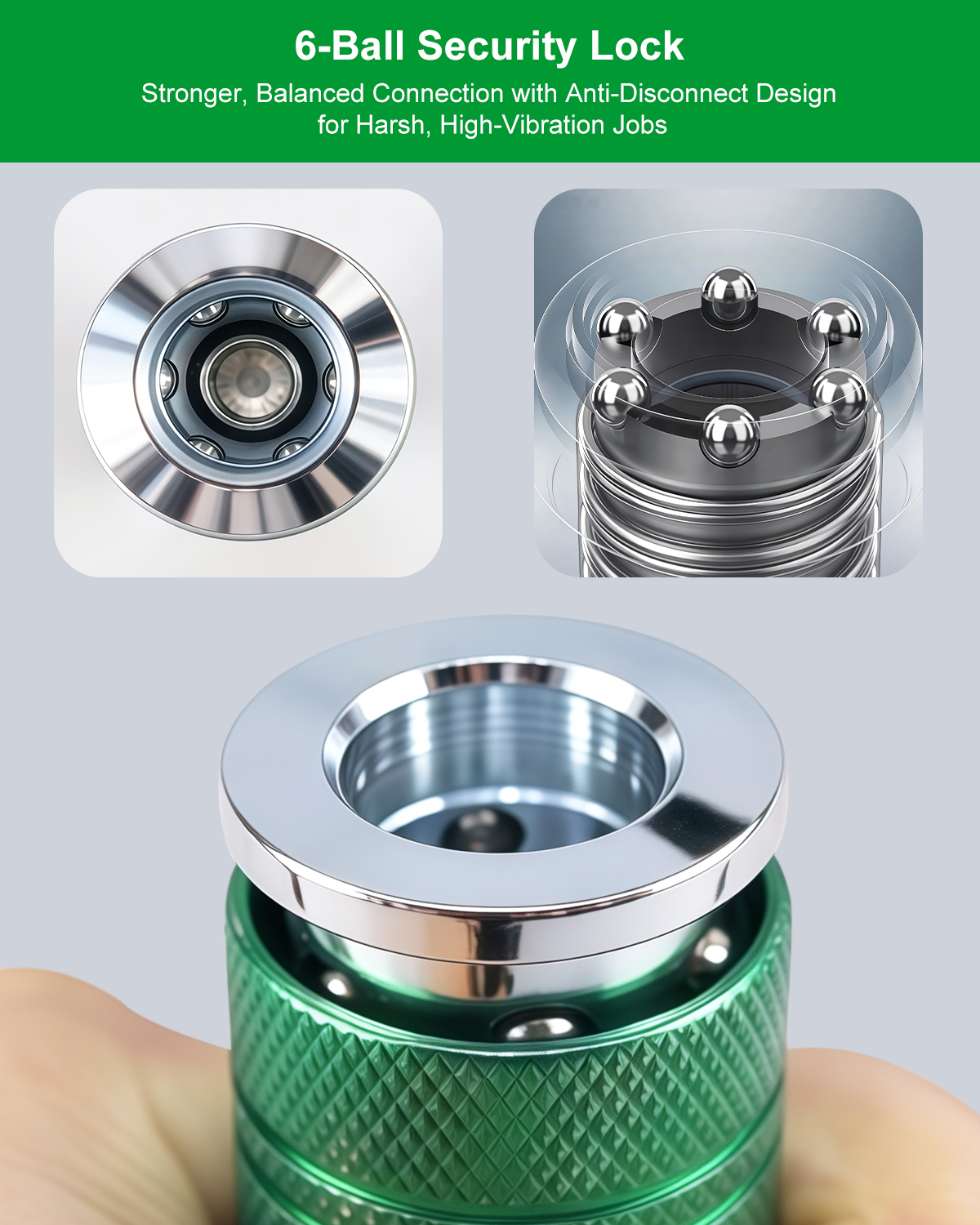
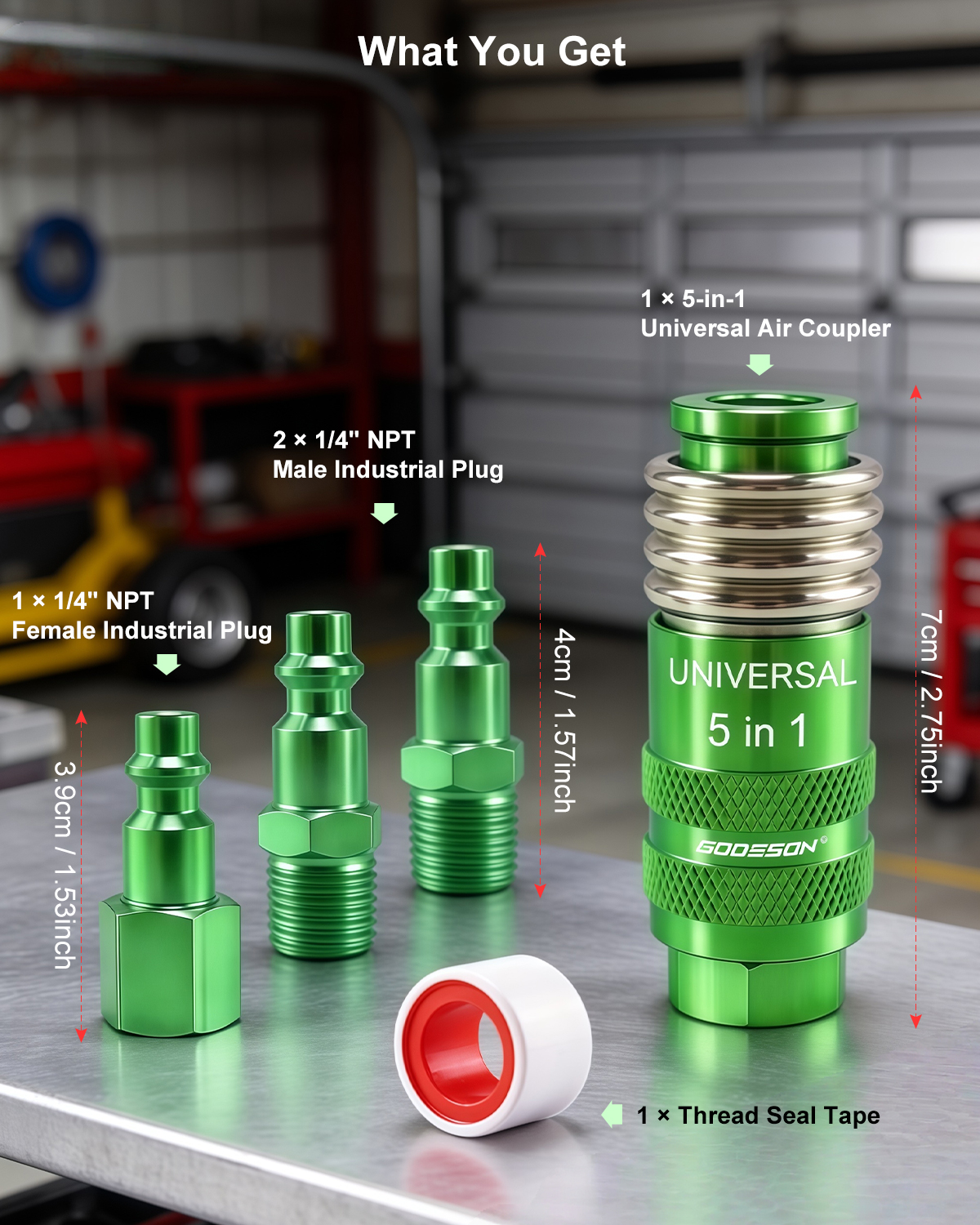
The product shown is an all-metal pneumatic connector with a bright polished body and a green knurled sleeve for handling. The shape suggests a machined fitting rather than a molded one, with visible hex geometry at the lower body and internal female threads at the open end. That is a familiar pattern in compressed-air hardware: metal construction for durability, a threaded interface for secure attachment, and a textured grip area that helps during installation.
The most obvious selling point is the stated pressure resistance up to 300 PSI. That makes the fitting sound suitable for many compressed-air applications, though buyers should still verify whether the rating applies to the exact configuration they plan to use. Pressure claims in this category can depend on thread type, seal arrangement, temperature, and the rest of the air system. A fitting that performs well in one setup may not be the right choice in another.
Where this kind of fitting typically fits in the system
Air hose fittings do one job, but they do it in several different places. They may connect a compressor outlet to a hose, link a hose to a pneumatic tool, or serve as a threaded adapter in a maintenance rack or fixed distribution manifold. The product information points to general industrial air hookup use, which is broad enough to cover workshop air lines, maintenance carts, and repair benches.
For sourcing managers, that broad use case is both useful and risky. Useful, because a common connector can simplify inventory. Risky, because “air fitting” is not a single standard. You still have to match thread form, gender, size, and sealing method. A polished body and a leak-resistant promise do not eliminate the need to identify the mating part. That is the point many buyers miss when they focus only on the exterior finish.
Quick buyer’s view: what matters most before you order
If you are shortlisting a GODESON air fitting or a similar pneumatic connector, the decision usually comes down to five checks rather than one flashy spec.
First, confirm the thread type and size. The image suggests internal female threads, but the exact standard is not provided. Second, check whether the fitting is intended for quick-connect use or a threaded-only assembly. Third, confirm pressure requirements against the actual service condition, not just a headline rating. Fourth, think about handling: the knurled sleeve is a practical touch if operators will install or remove the part by hand. Fifth, decide how much corrosion resistance you need from the finish, because polished does not automatically mean suitable for every environment.
That last point is worth repeating in plain language. A shiny surface helps with visual inspection and can make the part easier to keep clean, but it is not a substitute for a material specification. The exact alloy is not stated here, so buyers should not assume performance in wet, oily, or highly corrosive environments without more data.
Why all-metal construction still matters in a shop environment
In air systems, plastic has its place, but there are plenty of situations where an all-metal connector is simply the safer day-to-day choice. Metal fittings tend to handle repeated tightening better, and they usually stand up more confidently to the rough handling that comes with maintenance work. If a connector is being removed and reinstalled often, the body and thread form become a bigger issue than many purchasing spreadsheets acknowledge.
The product description points to a machined fitting, likely produced with turning, threading, and knurling operations. That kind of manufacturing approach is common for pneumatic connectors because it allows controlled geometry at the thread and sealing surfaces. A knurled grip is also more than a styling detail. On an air line that gets handled with gloves or oily hands, a grip surface can make the difference between a clean hand-tightened connection and a slipped wrench mark on the body.
Pressure rating is useful, but it is not the whole story
The stated 300 PSI capability will catch the eye of many buyers, and for good reason. Pressure capacity is one of the first filters used when selecting any air connector. Still, a responsible buyer should treat the number as a starting point, not the final answer.
Why the caution? Because pressure in a pneumatic system is only one part of the loading picture. Vibration, repeated coupling cycles, contamination, temperature swing, and the specific seal material all influence real-world reliability. A fitting can be perfectly adequate on a steady bench line and still disappoint on a handheld tool setup that gets dragged across the floor. If the application is mission-critical, ask for the test basis behind the rating rather than assuming every 300 PSI claim means the same thing.
Common mistakes when selecting an air fitting
The first mistake is buying by appearance. A polished finish and a sturdy feel are encouraging, but they do not tell you whether the thread standard matches your existing equipment. The second mistake is assuming any “air fitting” will work with any air hose. Pneumatic systems often combine different connector types, and one mismatched thread can turn a simple installation into a return shipment.
The third mistake is overlooking maintenance access. Some fittings look great on a catalog page but are awkward to tighten in confined spaces. Here, the green knurled sleeve suggests easier hand handling, which may help in tight spots, though it does not replace proper wrench access where torque matters. The fourth mistake is ignoring seal compatibility. The product information does not specify seal material, so buyers should not assume it is suited to aggressive lubricants or unusual temperatures without checking.
Practical selection criteria for engineers and sourcing teams
For engineering teams, the first criterion is compatibility. Match thread form, diameter, and connection style to the air circuit you already have, and do not rely on visual similarity alone. For sourcing teams, the second criterion is consistency. If you are standardizing across a plant, a connector like this may be attractive because it appears robust and straightforward, but only if the supply can stay consistent on the actual dimensions and thread standard.
The third criterion is ease of use. A connector that can be handled quickly by maintenance staff has real value, particularly in repair scenarios where time matters. The fourth criterion is durability in service. All-metal construction is a plus, especially in workshop settings, but the buyer should still confirm whether the part is intended for repeated coupling, static threaded use, or both. Finally, consider documentation. A fitting with incomplete dimensional data can complicate procurement more than people expect, especially when the plant already uses several connector families.
How to think about this product in a real workshop
Picture a maintenance bench where a technician changes tools throughout the day. The fitting needs to be easy enough to install without fuss, strong enough to handle repetitive use, and stable enough to keep the air path sealed. The polished metal body helps with inspection. The knurled grip helps with handling. The claimed leak-resistant performance is what makes it worth considering in the first place.
At the same time, a good buyer keeps one foot on the ground. You still need to verify the mating dimensions, because compressed-air work has a habit of exposing small mismatches immediately. There is no substitute for checking the actual tool side, hose side, and compressor side together before making a larger purchase decision.
FAQ
Is the GODESON air fitting suitable for high-pressure use?
The product information states a pressure resistance up to 300 PSI. That suggests suitability for many compressed-air applications, but the exact working conditions and test basis are not provided, so buyers should verify the match to their own system.
Does the polished finish mean it is corrosion-proof?
No. The finish is visually clean and may help with handling and inspection, but the exact alloy and corrosion performance are not specified. If the fitting will be exposed to moisture, chemicals, or outdoor conditions, ask for more material detail.
What should I confirm before ordering?
Confirm thread type, size, mating connector style, seal arrangement, and whether your application is quick-connect, threaded, or a hybrid setup. Those details matter more than the exterior appearance.
A sensible next step for buyers
If you are evaluating a GODESON air fitting for a workshop, maintenance rack, or pneumatic tool line, treat it as a potentially solid general-purpose connector, but do not skip the compatibility check. The visible all-metal construction, knurled grip, and 300 PSI claim are useful signals. The missing details are just as important.
Before you place an order, compare the fitting against one known-good sample from your current setup. That small step prevents the most common air-system mistake: buying a connector that looks right, feels right, and still does not mate correctly when it reaches the bench.