Why a GODESON air fitting matters in the real world
A compressed air system is only as reliable as its smallest connection, and that is where a GODESON air fitting earns attention. On paper, a fitting is a simple part: join two pneumatic components and keep air moving. In practice, it is the piece that decides whether a workshop line holds pressure, a tool starts instantly, or a hose connection becomes a nuisance that bleeds air and time.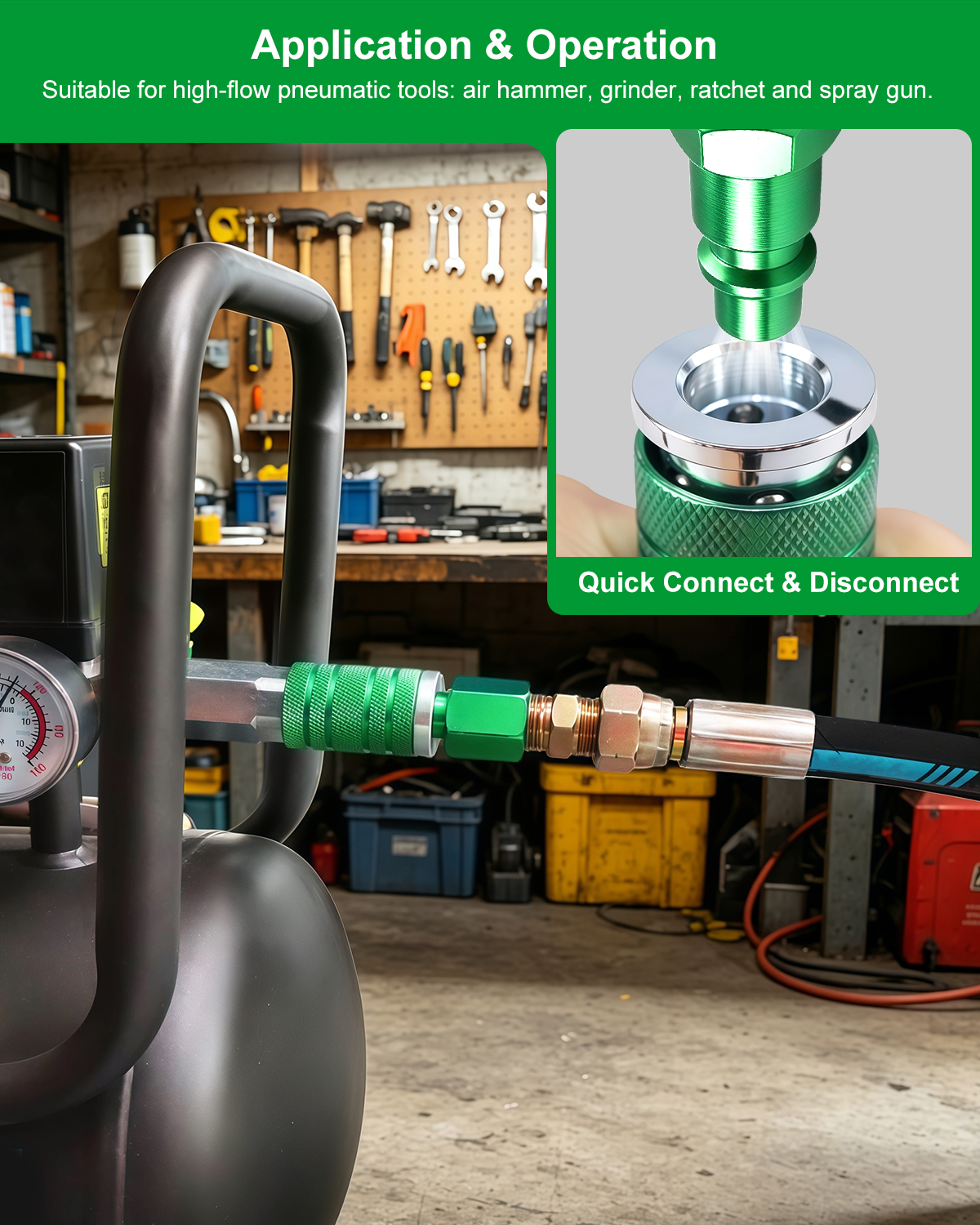
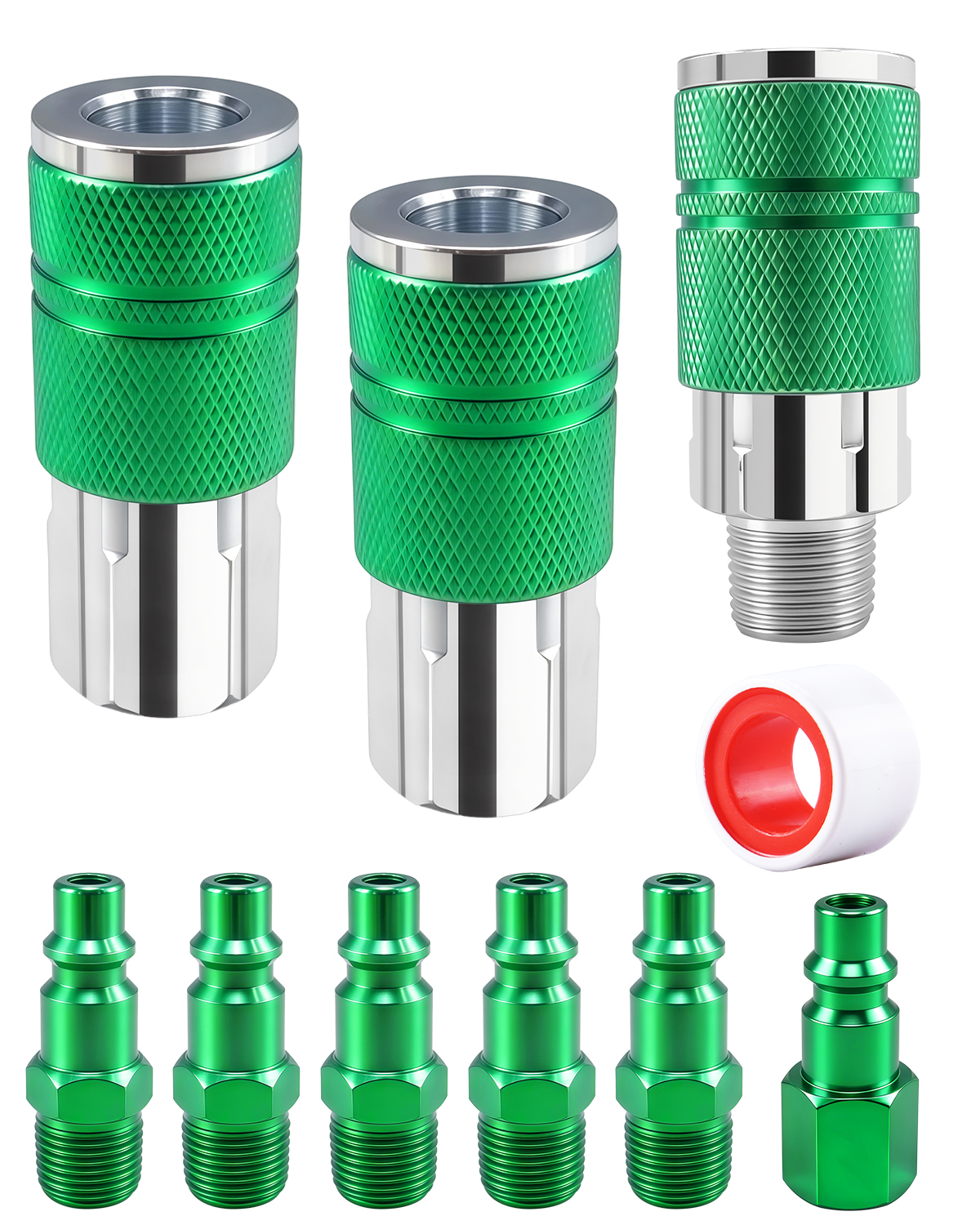
For engineers, sourcing managers, and product teams, the question is not whether a connector looks solid. The question is whether it creates a safe, leak-free air connection, stands up to routine handling, and suits the way the system is actually used. The product details provided point to an all-metal pneumatic connector with a bright green knurled grip, machined body, female threaded opening, and a pressure resistance claim up to 300 PSI. That combination suggests a part aimed at practical compressed air work, not a decorative accessory.
What this type of air fitting is trying to solve
Air systems punish weak joints. Vibration, repeated hose movement, quick tool swaps, and the occasional over-tightening all put stress on connector points. A fitting that is too light can deform. A fitting with poor thread quality may start leaking after a few cycles. A connector that is hard to grip slows down maintenance and invites hand-tool abuse.
An all-metal air fitting addresses those pain points in a straightforward way. Metal construction generally gives the part better feel under torque, better durability in workshop handling, and more confidence when the line sees pressure variation. The green knurled sleeve is not just a visual cue; it also gives operators a surface they can grip when threading or unthreading the connector. That matters on greasy hands, in cold shops, and in tight installations where a wrench is useful but not always ideal.
Quick buyer takeaway
If your main concern is a practical pneumatic connector for compressed air tool hookups, industrial air lines, or compressor-related connections, this style of fitting makes sense when you want a compact, hand-friendly, metal-bodied part. The 300 PSI pressure claim places it in a range that should suit many standard compressed air applications, though buyers still need to confirm compatibility with their own system requirements and thread format before placing it into service.
That last point is worth underscoring. A fitting can be well made and still be wrong for the job if the threads, sealing method, or mating geometry do not match the rest of the assembly. In procurement terms, the most expensive mistake is often not the unit price; it is discovering too late that the connector does not integrate cleanly.
Construction details that matter
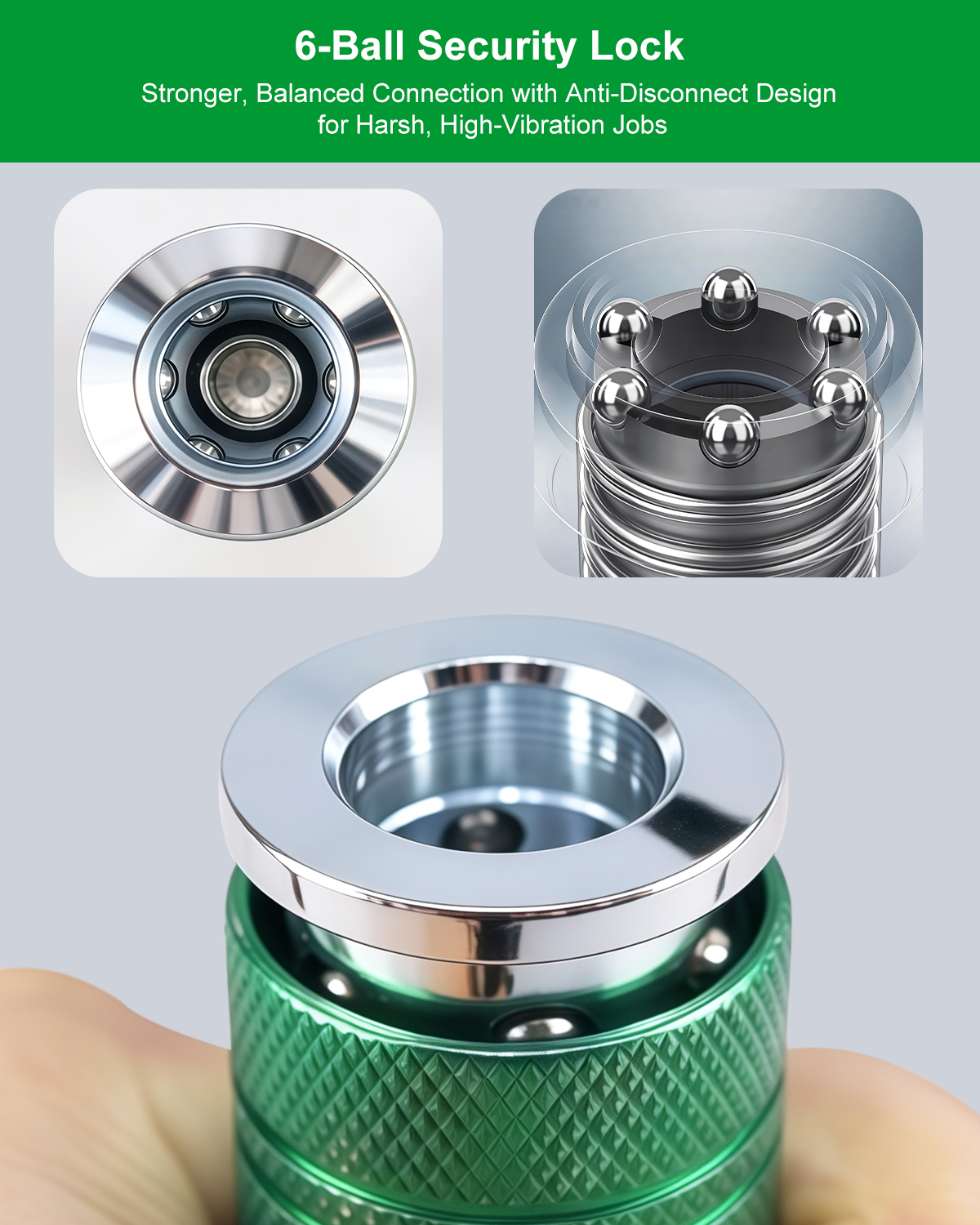
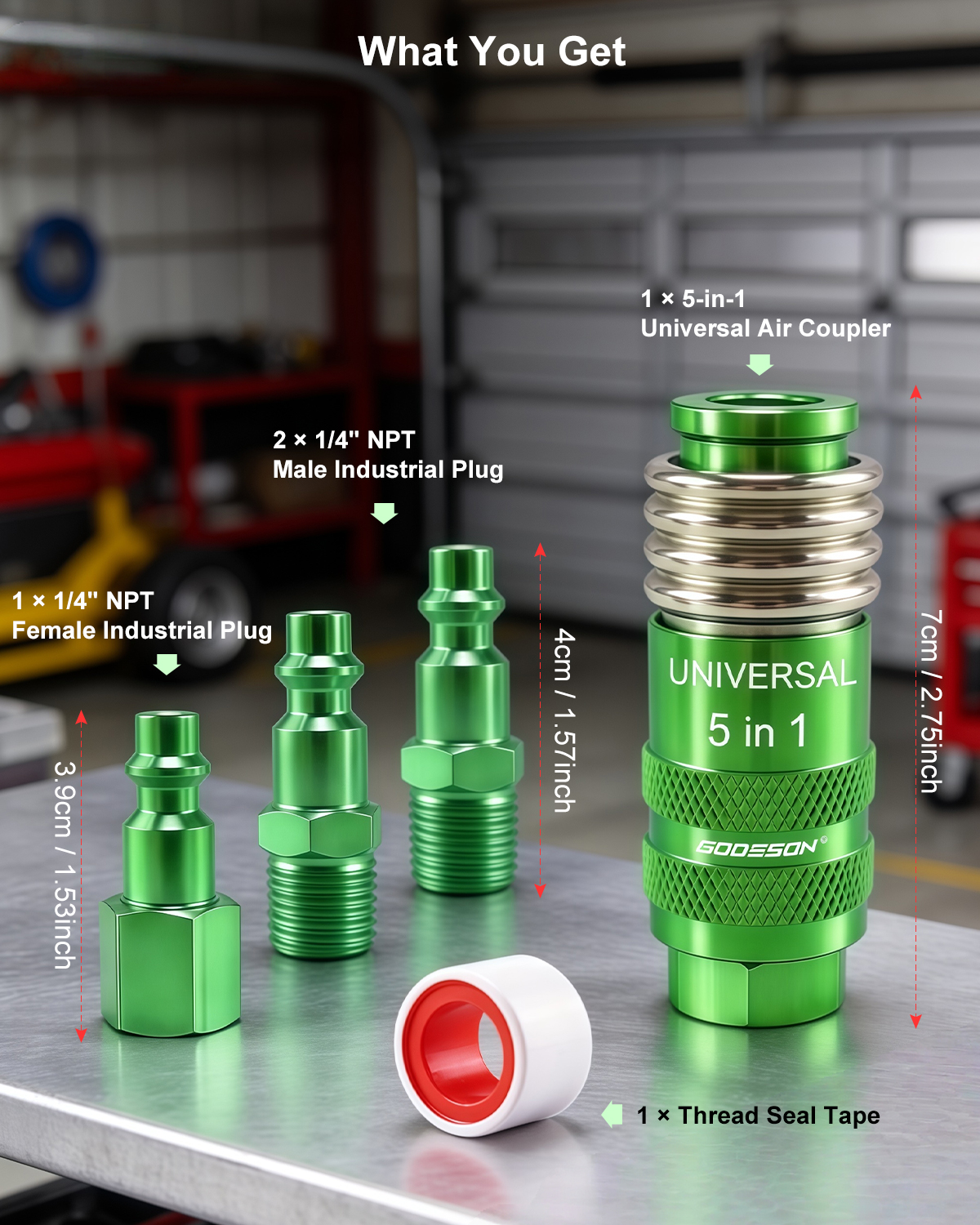
The available product information describes an all-metal body with a polished silver finish and a green grip section. The external profile appears machined, with a hex-like shape that should help with wrench engagement. The bottom opening shows internal female threads, which points to a threaded connection style rather than a purely push-on or plastic-sleeved design.
That mix of features is useful for several reasons:
All-metal body
Metal fittings are often favored in shop air because they tend to handle repeated assembly cycles better than lighter-duty alternatives. They are also easier to inspect visually for wear, deformation, or cross-threading damage. Of course, metal alone does not guarantee performance, but it is a solid starting point for a part that lives near compressors, tools, and hose reels.
Knurled grip collar
The bright green knurled section suggests the fitting is intended to be handled directly, not only with tools. That can speed up maintenance and reduce fumbling during setup. It is a small design choice, but in an active workshop, small design choices affect workflow more than people expect.
Threaded geometry
Because the fitting uses internal female threads, the buyer should verify the exact thread specification before ordering in volume. Thread form, size, and sealing approach are not minor details; they determine whether the connection seals properly and whether the part is suitable for a given compressor, hose, manifold, or pneumatic device.
Where this kind of fitting fits best
This style of pneumatic connector is most relevant in compressed air systems where operators need a sturdy, straightforward connection point. Typical use cases include workshop air lines, compressed air tool hookups, and industrial pneumatic assemblies that call for a threaded adapter or coupler-style interface.
It is a practical choice when the buyer wants:
- A metal-bodied fitting for routine shop use
- A hand-grip feature that makes installation and removal easier
- A connection expected to tolerate compressed air service rather than light hobby use
- A compact component that can be integrated into a larger air line layout
That said, not every application benefits from the same connector style. If the system requires a specific quick-disconnect standard, a special seal arrangement, or a nonstandard thread interface, the buyer should not assume this fitting is a universal substitute. Pneumatic systems are unforgiving that way.
Selection criteria buyers should actually check
Spec sheets can be misleading when they stop at broad claims. The useful questions are narrower.
1. Thread compatibility
Confirm the exact thread size and form of the female opening. This is the first gating item. If it does not mate with the existing hardware, nothing else matters.
2. Pressure requirement
The supplied information notes pressure resistance up to 300 PSI. That may be more than enough for many compressed air applications, but system design should always respect the weakest component in the line. A fitting should not be evaluated in isolation.
3. Handling and service access
A knurled grip is helpful where operators need to connect and disconnect parts repeatedly. If the fitting will live inside a protected enclosure and rarely be touched, the grip feature matters less than footprint and sealing reliability.
4. Material behavior in your environment
All-metal construction is often appreciated in industrial air lines, but the exact alloy and surface treatment were not identified in the provided data. Buyers in harsher environments should consider exposure to moisture, oils, and shop chemicals before final approval.
5. Assembly practice
Even a well-made fitting can leak if installed carelessly. Cross-threading, inadequate sealing method, or over-tightening can compromise the connection. That is the boring truth of pneumatic assembly: the part and the installation process both matter.
Common mistakes when sourcing pneumatic connectors
One common mistake is treating every air fitting as interchangeable because the outside dimensions look similar. They are not. Threading details, connector style, and sealing method can differ in ways that are not obvious from a photo.
Another mistake is buying on pressure claim alone. A 300 PSI rating sounds reassuring, but it is only one part of the picture. The buyer still needs to validate the fitting against the full operating environment: duty cycle, hose movement, vibration, and the rest of the line architecture.
A third mistake is ignoring handling. In an actual workshop, a fitting that is awkward to grip becomes a maintenance annoyance. That annoyance often turns into tool marks, damaged threads, or rushed assembly. The green knurled section on this design is a small but sensible answer to that problem.
Practical comparison: what to value in a metal air fitting
When comparing this type of fitting with lighter or more generic alternatives, the decision often comes down to durability versus price sensitivity. For a buyer managing a pneumatic system that sees regular use, the metal body and hand-friendly collar are meaningful advantages. For a one-off, low-duty setup, those advantages may matter less than inventory availability or matching an existing standard.
A useful rule of thumb: if the connection will be installed once and left alone, almost any compatible part can look acceptable at purchase. If it will be reworked, inspected, swapped, or handled by different operators, the better-built fitting tends to pay for itself in reduced friction and fewer callbacks.
FAQ
Is this a quick-connect fitting?
The available information indicates a coupler-style or threaded pneumatic connector, but the exact fitting type is not fully identifiable from the supplied data. Buyers should verify the mating interface before specifying it.
Can it be used on compressor lines?
Yes, the described use cases include compressor connections and compressed air lines, assuming the thread and system requirements match.
Is the fitting suitable for high pressure service?
It is described as resistant up to 300 PSI. That may suit many shop air systems, but actual suitability depends on the full assembly and operating conditions.
What should I ask the supplier before ordering?
Ask for the exact thread specification, sealing approach, dimensional data, material details, and any applicable compatibility information for your existing air line components.
A sensible next step for buyers
If you are sourcing a GODESON air fitting for a pneumatic build, treat it as a functional component, not a commodity afterthought. Confirm thread compatibility, verify the 300 PSI claim against your system needs, and make sure the hand-grip design fits the maintenance pattern of the equipment.
For product teams, that means checking interface drawings before release. For sourcing managers, it means aligning the connector with existing line standards to avoid mixed inventories. For engineers, it means asking one simple question before approving the part: will this fitting make the air system easier to trust, or merely cheaper to purchase?
That distinction usually decides whether a connector becomes a long-term part of the system or a recurring field complaint.