What buyers are really looking for in a GODESON air fitting
When someone searches for a GODESON air fitting, they are usually not looking for theory. They are trying to solve a practical problem: how to keep compressed air moving without leaks, weak joints, or fittings that feel loose after a few weeks in the shop. That matters because a poor air connection is more than an annoyance. It wastes compressor output, reduces tool performance, and can turn a routine maintenance task into a chase for hiss, vibration, and pressure drop.
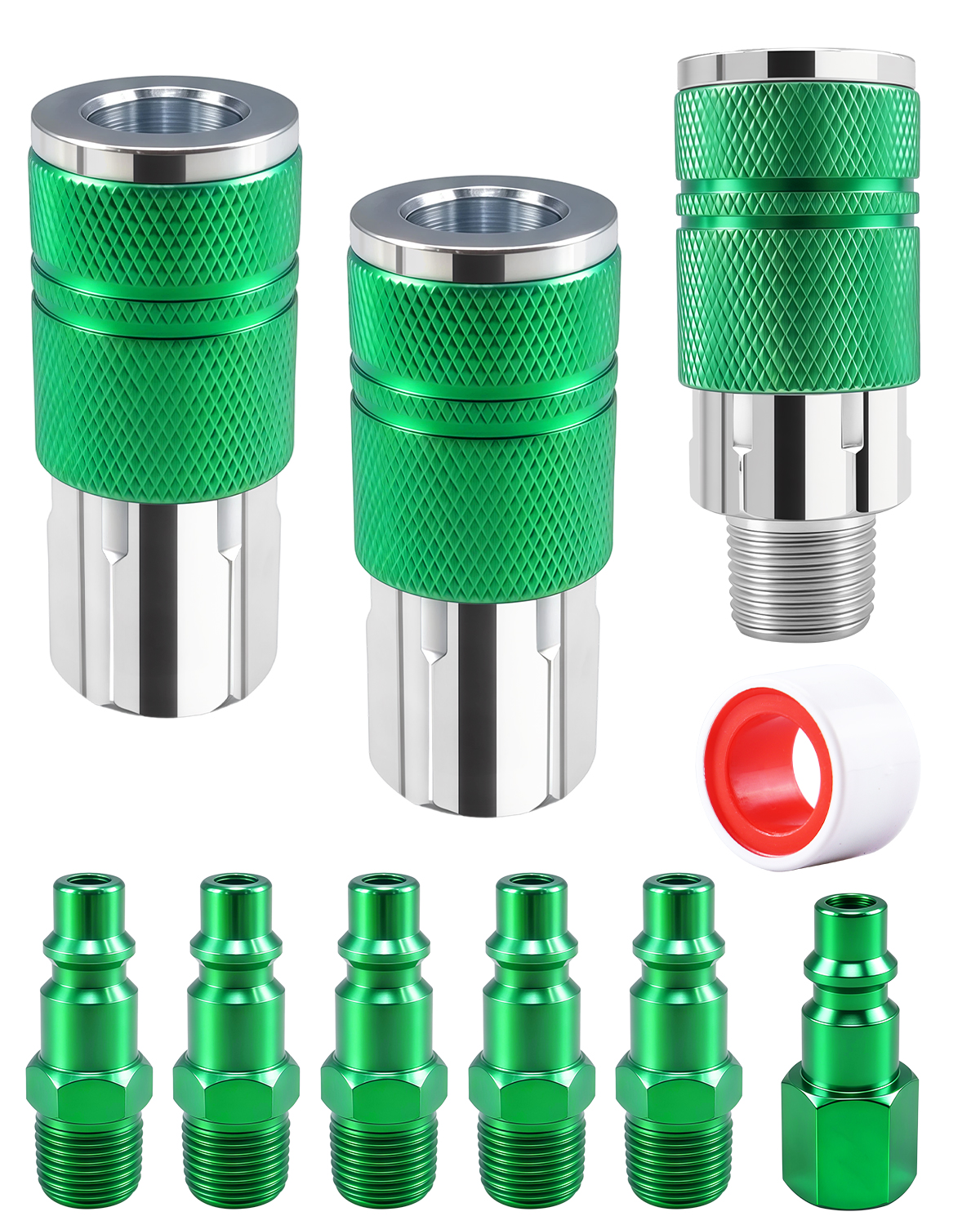
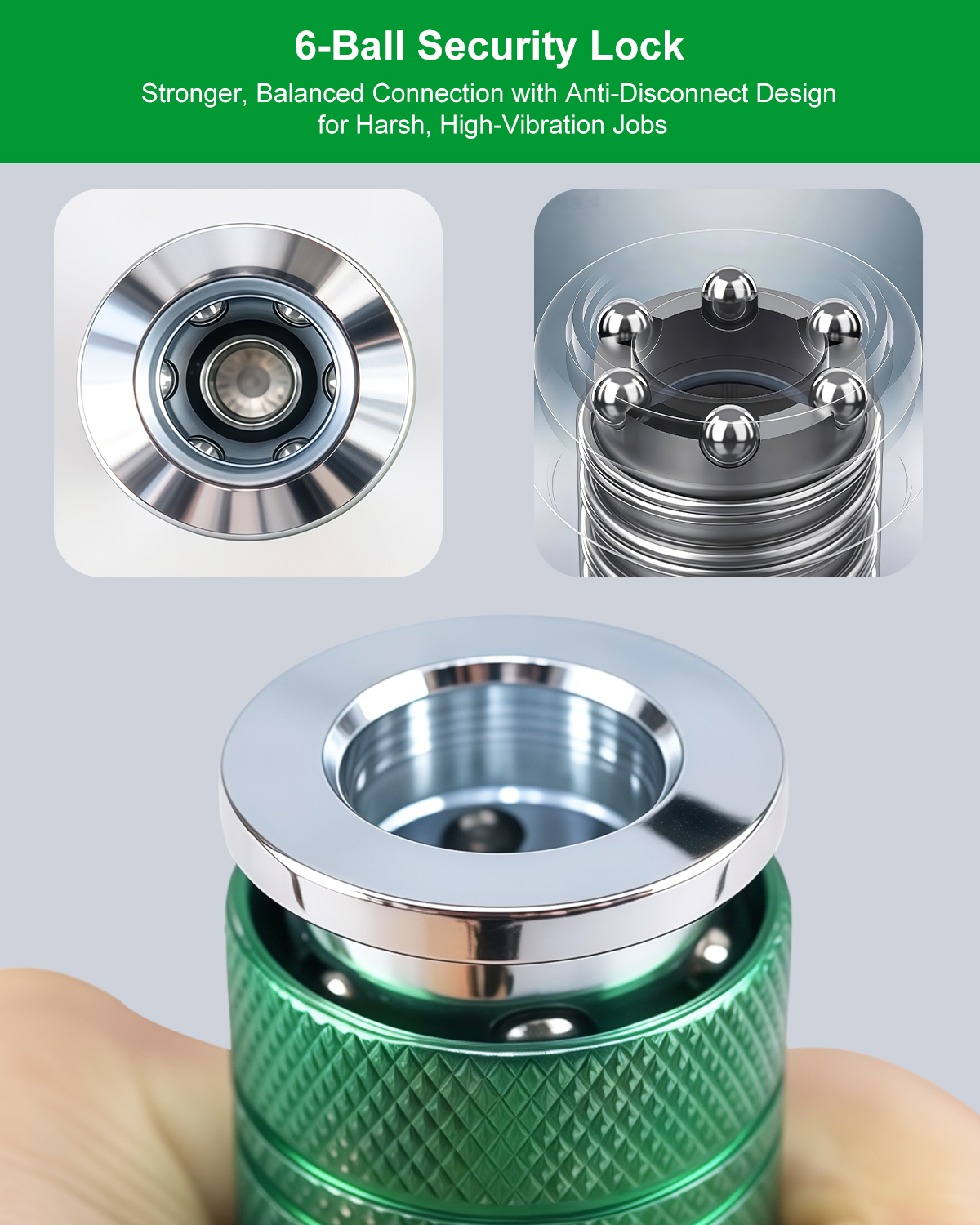
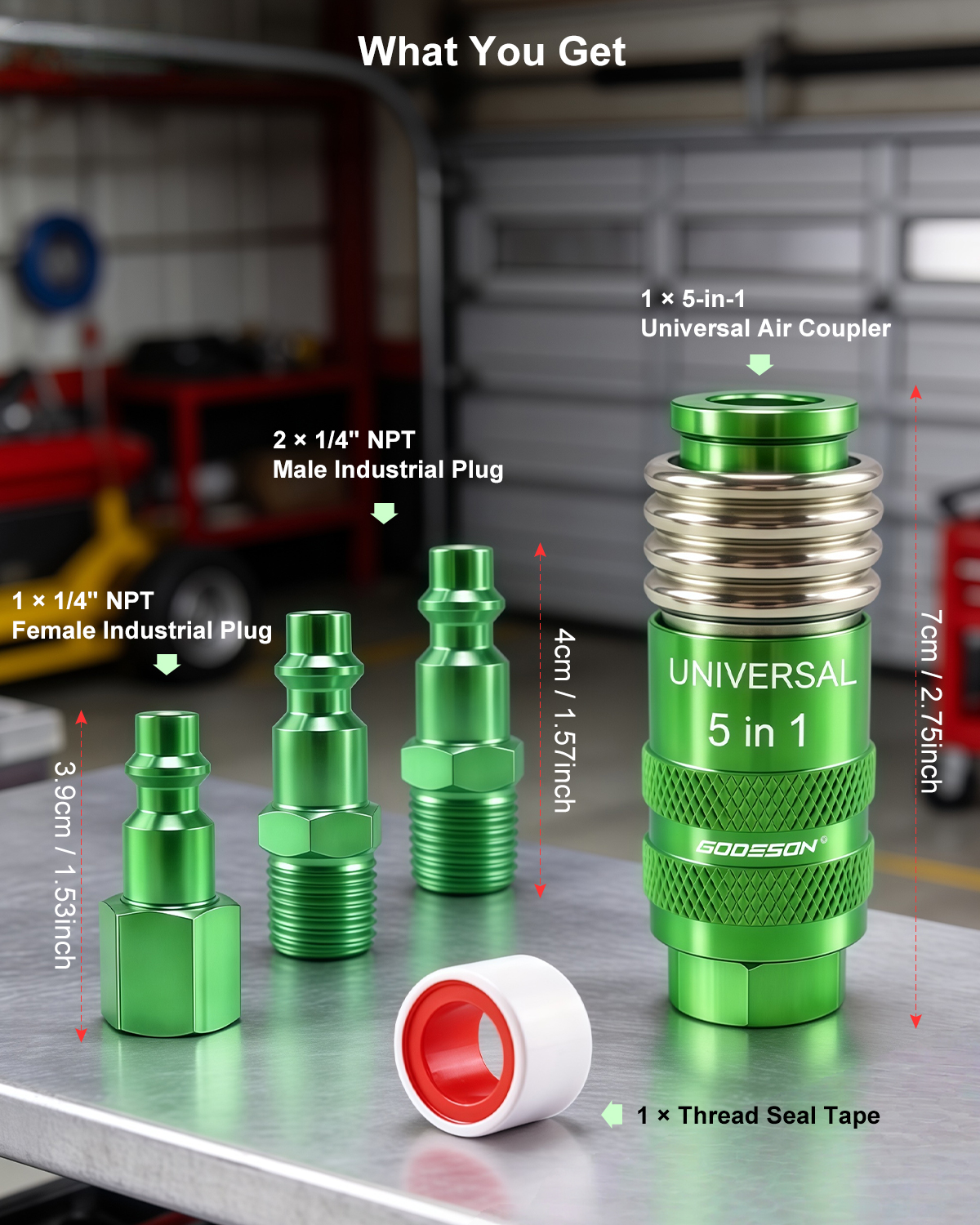
The fitting shown is positioned as an all-metal pneumatic connector with a bright silver body and a green knurled collar for grip. It is described as a safe, leak-free air connection rated up to 300 PSI. For buyers, that combination signals a connector meant for shop air lines, compressor hoses, and pneumatic tools where durability matters more than lightweight convenience. The main question is not whether it looks robust; it is whether it fits your system, your pressure range, and your service conditions.
Why the material choice matters more than the finish
In compressed-air hardware, finish gets attention first because people notice chrome-like surfaces and colored sleeves. But the real issue is usually material and structure. An all-metal fitting tends to appeal to maintenance teams because it holds up better under repeated coupling, occasional knocks, and the everyday abuse that comes with garage and industrial use. Plastic-bodied connectors may be fine in lighter service, but they are not usually the first choice when operators want a more substantial feel and fewer worries about wear.
The visible construction here suggests a machined metal fitting with a hexagonal lower section and a threaded opening. That is useful from a handling standpoint. Hex surfaces give a wrench something to grip if installation requires it, and the knurled green collar suggests hand-friendly operation. I would still caution buyers not to assume all metal means all compatible. A fitting can be rugged and still be the wrong thread, wrong profile, or wrong quick-connect style for your hose and tool setup.
Quick comparison: metal pneumatic fittings versus lighter alternatives
For sourcing teams, the decision is often not whether a fitting works in general, but which construction makes sense for the environment.
All-metal fittings
These are typically favored where durability, vibration resistance, and repeated handling matter. They are a sensible fit for compressor lines, workshop air systems, and industrial maintenance carts. The tradeoff is that they can be slightly heavier and may cost more than basic composite versions. In return, they usually feel more substantial and are less likely to be treated as disposable hardware.
Composite or plastic-bodied fittings
These can be useful for lighter-duty setups, temporary lines, or cost-sensitive applications. The downside is that they often inspire less confidence in harsh environments, especially where the fitting may be bumped, dragged, or exposed to oil, grime, or heat.
Shop-grade quick-connect hardware
Quick-connect-style parts are prized because they reduce downtime. A good connector lets operators attach and remove tools quickly without a long search for tape, sealant, or a wrench. But the convenience only pays off if the connector seals properly and matches the rest of the air system. A mismatched quick-connect can be the most expensive “easy” part in the shop.
What the visible design tells you about use
The visible geometry here matters. The body appears cylindrical, with a hex section near the lower half and a threaded female-looking opening at the bottom. The green outer sleeve or collar is knurled, which usually helps with grip during installation or coupling. That combination points to a part designed for practical handling in a workshop rather than hidden, permanent installation.
The stated pressure rating of up to 300 PSI is another important clue. That is enough to place the fitting in the normal working world of compressed air systems, air tools, and maintenance lines. It does not tell you everything, though. Pressure rating alone does not guarantee suitability for every compressor setup, especially if your system sees frequent cycling, heat buildup, or exposure to vibration. If your operation is particularly demanding, you still need to verify the full compatibility picture before buying in volume.
Selection criteria that matter to engineers and sourcing managers
There are a few checks worth doing before placing this kind of part on a purchase order.
Confirm the thread and connection standard
This is the obvious but most commonly overlooked step. The image suggests a threaded lower body, but the exact thread size and standard are not provided. Do not assume compatibility from the visual shape alone. A fitting that seems close enough can still create leak paths, assembly delays, or field returns.
Match the fitting to the hose and tool ecosystem
Air systems usually grow in layers. A plant may have one compressor setup, a separate hose assembly, and a mix of tools from different suppliers. The safest approach is to confirm the entire connection chain rather than just the one new part.
Look at the environment, not just the pressure rating
A 300 PSI rating is useful, but the shop environment can be rough in ways pressure specs do not capture. Oil mist, dust, repeated coupling, and accidental impact all affect service life. All-metal construction is a plus here, but buyers should still consider whether the collar, threads, and sealing surfaces will stand up to the actual worksite.
Consider operator handling
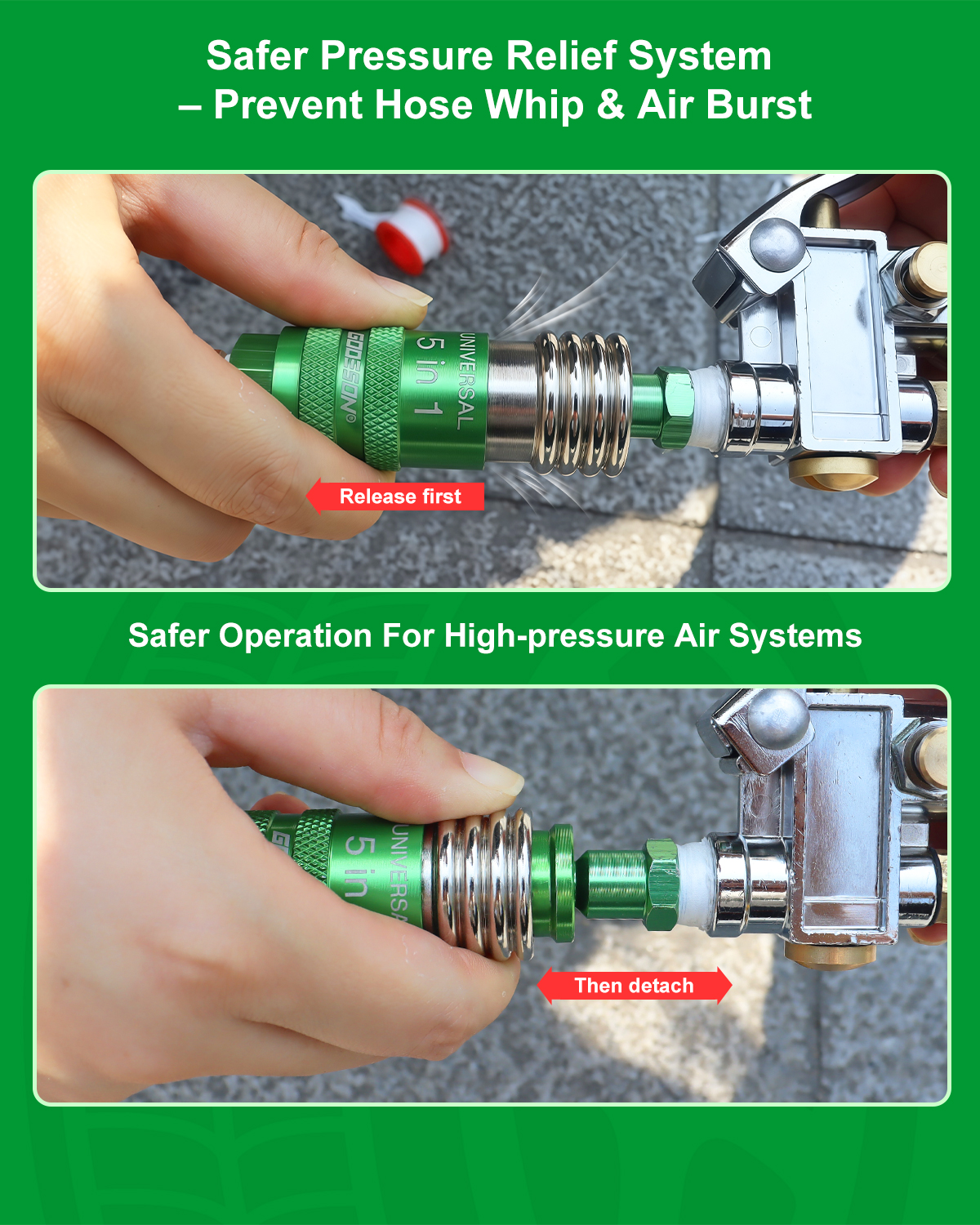
The green knurled sleeve suggests easier gripping, which may sound minor until someone is wearing gloves or working in a cramped cabinet. Small handling details often determine whether a fitting gets used properly or cross-threaded under pressure to “just make it fit.”
Common buying mistakes with air fittings
The first mistake is assuming that a leak-free claim means universal compatibility. It does not. A fitting can be well made and still fail in a particular system if the thread, seal geometry, or connector style is wrong.
The second mistake is overvaluing appearance. A bright chrome-like body can suggest quality, and often it does reflect decent machining, but appearance alone does not tell you whether the internal design suits your air line. Buyers should treat the finish as a secondary clue, not a procurement criterion.
The third mistake is ignoring service habits. If operators connect and disconnect tools all day, the fitting needs to tolerate repeated use without becoming loose, sticky, or difficult to grip. In that situation, the shape of the collar and the quality of the metal finish become practical rather than cosmetic.
Where a fitting like this tends to fit best
Based on the visible design and the product description, this kind of GODESON air fitting is most relevant in compressed-air tool connections, compressor hose assemblies, and maintenance or workshop pneumatic systems. That includes garages, repair benches, light industrial lines, and other places where a secure air connection is needed quickly and repeatedly.
It is not the sort of part that usually gets bought for its own sake. It gets bought because someone is tired of leaks, pressure loss, or connectors that feel cheap when the hose is under load. In that sense, it is a small component with an outsized effect on day-to-day shop performance.
Buyer-facing checklist before you source at scale
Before ordering, ask for the following information if it is not already supplied:
- exact thread size and connection type
- confirmation of compatibility with your existing air hardware
- details on the sealing method, if available
- full dimensional data for installation planning
- any verified test or rating documentation you require internally
If those details are missing, proceed carefully. That is not unusual with commodity pneumatic parts, but it is still the point where procurement teams can save themselves from returns and field rework.
FAQ: practical questions buyers ask
Is an all-metal air fitting always better?
Not always, but it is often preferred for workshop and industrial use because it tends to be more durable and feel more secure in regular handling.
Does a 300 PSI rating mean it works with every air compressor setup?
No. It only tells you the pressure capability. You still need to confirm thread type, connector style, and system compatibility.
Why does the collar color matter?
Usually it does not affect performance by itself. In this case, the green knurled collar appears to improve grip and visual identification, but color should never replace specification checks.
Can you tell the exact fitting type from the image?
Not with confidence. The visible geometry suggests a quick-connect-style pneumatic connector, but the precise standard is not confirmed.
What to do next
If you are evaluating a GODESON air fitting for production use, treat it like any other critical shop component: verify the connection standard, confirm the pressure requirement, and judge the design against how your operators actually use air lines. The part shown has the right visual cues for a durable compressed-air connector, but the real decision still comes down to fit, seal, and system compatibility.
For sourcing teams, the smartest next step is to request the missing dimensional and compatibility details before committing to a larger purchase. That is the difference between a fitting that quietly disappears into the workflow and one that becomes a recurring maintenance problem.