Why a small air fitting can make or break a compressed-air system
In compressed-air work, the smallest components often decide whether a system feels dependable or irritating. A GODESON air fitting is one of those parts: not glamorous, not expensive-looking, but central to how cleanly air moves from compressor to tool. When a connector is built to stay secure, the whole line behaves better. When it is sloppy, the result is familiar to anyone who has spent time in a shop: hiss, pressure drop, loose tool response, and unnecessary downtime.
For engineers, sourcing managers, and maintenance teams, the real question is rarely whether a fitting can be installed. It is whether it will hold up under daily handling, repeated connection cycles, and real shop conditions. That is where a metal pneumatic connector with a leak-free claim and a pressure rating up to 300 PSI earns attention. Those two details do not tell the whole story, but they do point toward a fitting meant for practical compressed-air use rather than light-duty convenience.
What the GODESON air fitting is designed to do
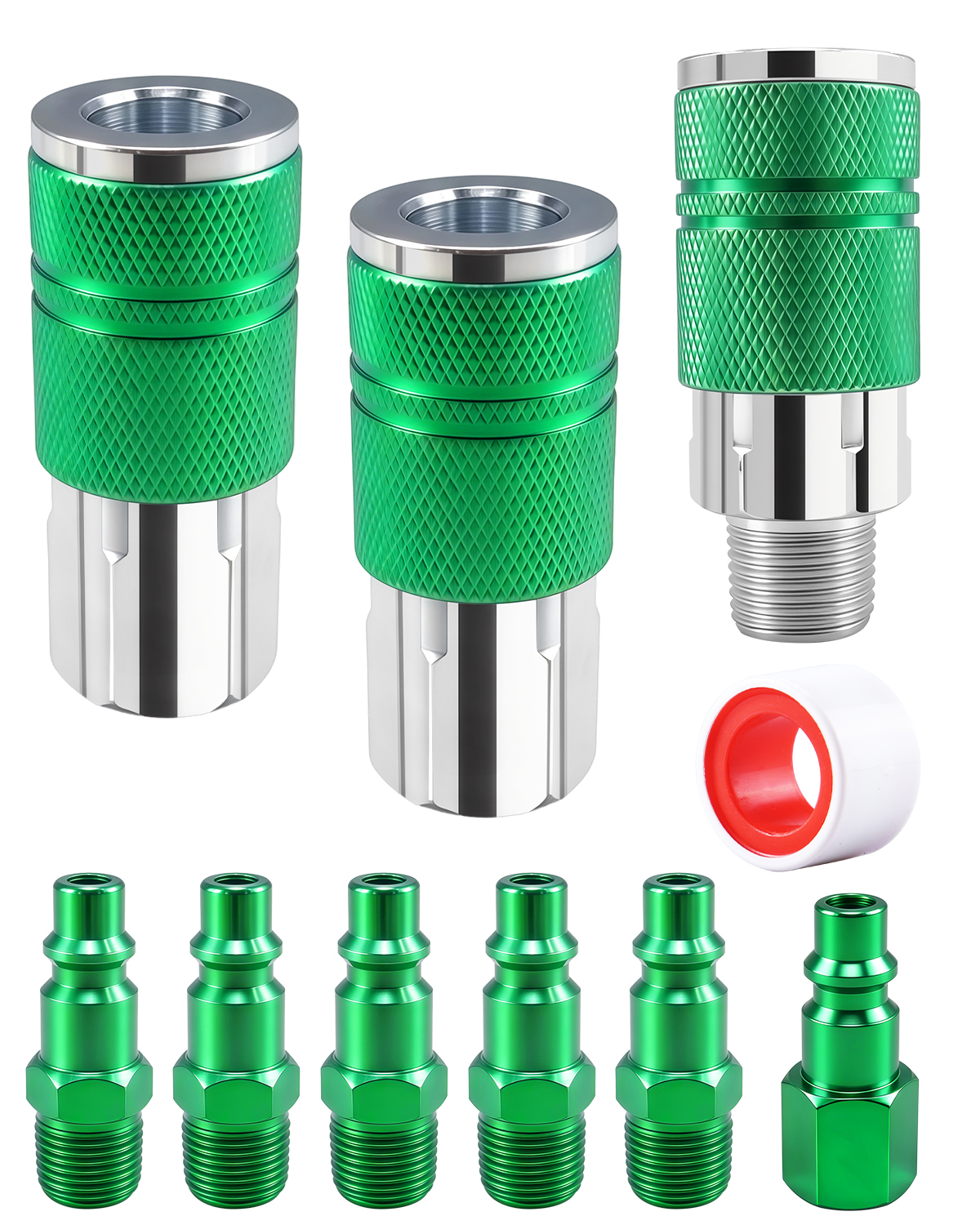
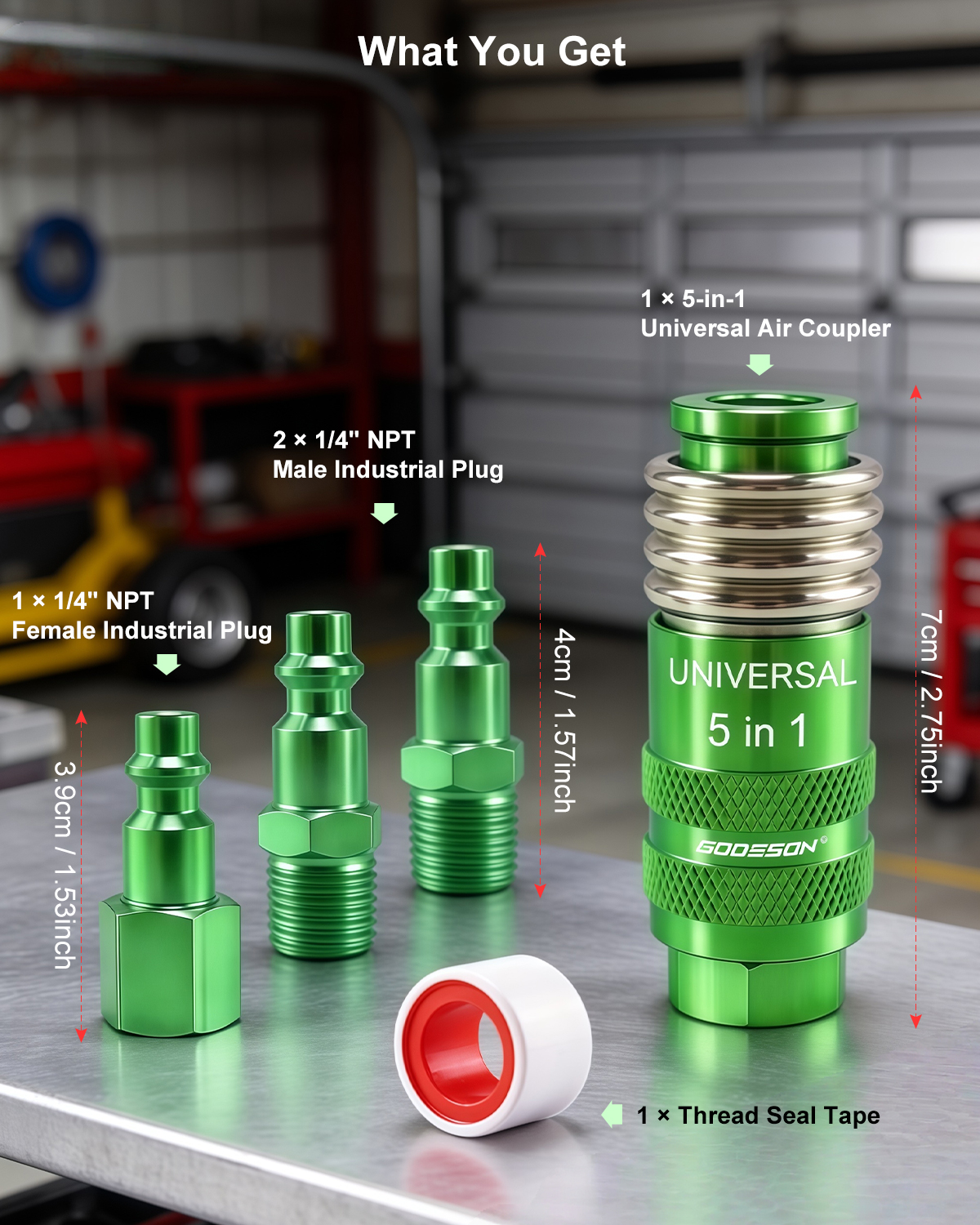
Based on the product information provided, the GODESON air fitting is an all-metal connector for compressed-air lines. Its function is straightforward: create a secure air connection between hoses, tools, or equipment that rely on pneumatic power. The visible design suggests a machined metal body with a bright polished or satin silver exterior and a green knurled grip sleeve. That grip feature matters more than it may first appear. In workshop use, a fitting that can be handled easily with gloves, oily hands, or in a crowded service bay usually saves more frustration than a smooth decorative part ever could.
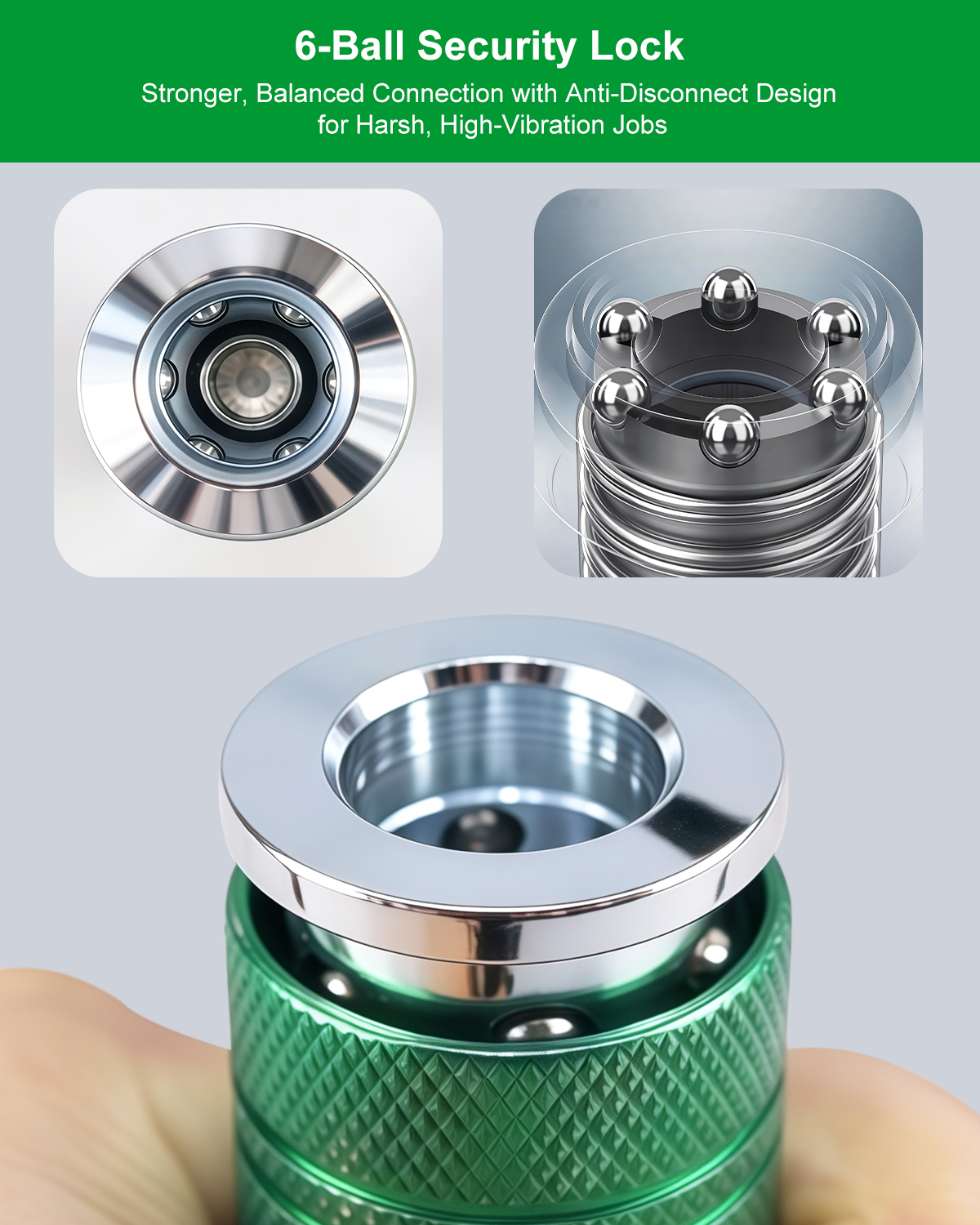
The product image also states that the connection is “safe, leak-free” and rated up to 300 PSI. The rating is worth noting, but only within its proper context. A pressure figure is not a blanket promise for every installation. It still depends on the full system design, the mating components, and correct threading or sealing. Even so, a 300 PSI rating places the fitting in a category that suggests serious compressed-air service rather than hobby-only use.
Quick buyer takeaways
If you are evaluating this kind of fitting for a plant, shop, or field kit, the short version is this:
It is built like a metal connector rather than a lightweight disposable part.
It is intended for compressed-air and pneumatic applications.
The grip sleeve should help with hand installation and removal.
The leak-free claim is attractive, but it still needs to be judged against the full system.
The 300 PSI figure gives it room for demanding air line use, though not every application needs that much headroom.
That is the practical lens. Not every buyer needs the same thing. A maintenance team replacing damaged couplers may care most about durability and ease of handling. A sourcing manager may care more about consistency, fit, and whether the part reduces returns. An engineer will look for pressure handling, sealing behavior, and compatibility with the rest of the air network.
What the visible construction tells us
There is a lot you can infer from the geometry even without a spec sheet. The fitting appears cylindrical with a hexagonal or multi-flat lower section, which usually helps with wrenching during installation. The lower opening is threaded internally, indicating it is meant to mate with a corresponding male thread or threaded air component. That is a useful detail for system integration, because threaded interfaces are common in industrial air lines and workshop equipment.
The upper sleeve is green and knurled, with a textured diamond pattern for better grip. In practical terms, that kind of surface helps a technician tighten or loosen the fitting without slipping. If the sleeve is a separate component, it may be serving a protective or ergonomic role. If it is metal, the texture likely comes from machining or forming. If it is a polymer or rubberized element, it adds comfort and handling advantage. The product information does not confirm which is the case, so it is better not to guess.
What matters is the overall design philosophy: all-metal body, hand-friendly grip, and a form factor that looks intended for repeated use in a compressed-air environment. That combination usually signals a focus on ruggedness rather than ornament.
Where this type of air fitting fits best
A connector like this belongs in compressed-air systems where a secure connection is not optional. Common uses include workshop air lines, pneumatic tools, industrial hoses, and equipment that needs a dependable air connector. That can mean assembly benches, service stations, fabrication areas, or maintenance carts.
It is especially relevant where people connect and disconnect lines often. The better the grip and the more stable the threaded interface, the less likely operators are to cross-thread parts, over-tighten fittings, or leave a line slightly loose. Those mistakes are common. They are also expensive in small ways that add up: wasted air, inconsistent tool output, and repeat service calls.
For buyers, the key is to match the fitting to the actual duty cycle. A fitting that looks robust on a desk may still be wrong if the line size, thread standard, or sealing method does not match the application. That sounds obvious, but in procurement it is often the missed detail that causes the most headaches.
What to check before you buy
The product data does not provide the thread standard, size, compatible hose diameter, or internal sealing method. Those are exactly the items that should be verified before purchase. It is tempting to start with the visible pressure rating and assume the rest will fall into place. In practice, fit and compatibility determine whether the part is useful at all.
A sensible buyer checklist would include:
Thread compatibility
Confirm the thread type, size, and whether the connector is intended for male or female mating parts. Thread mismatches are one of the fastest ways to turn a good-looking fitting into a return.
System pressure and working conditions
The visible 300 PSI rating is useful, but the full air system should still be reviewed. Consider pressure spikes, vibration, temperature exposure, and whether the connector will live on portable equipment or fixed piping.
Handling requirements
If technicians wear gloves or work in oily conditions, the knurled sleeve could be a real advantage. If the fitting will be installed once and rarely touched again, handling comfort may matter less than exact dimensional compatibility.
Material expectations
The body is clearly metal, but the exact alloy is not specified. That means buyers should avoid making assumptions about corrosion resistance or chemical behavior unless those details are confirmed by the supplier.
Common mistakes when choosing air connectors
The first mistake is treating all air fittings as interchangeable. They are not. Even when two parts look similar, minor differences in thread form, sealing surface, or connector geometry can create leaks or installation trouble.
The second mistake is overvaluing a pressure number and undervaluing fit. A high PSI rating means little if the connector does not match the rest of the circuit.
The third mistake is ignoring handling. In real industrial work, the best fitting is not always the one with the most impressive spec on paper. It is often the one that installers can tighten cleanly, inspect easily, and replace without drama.
One more practical caution: “leak-free” is a desirable claim, but it should be interpreted as a design intent, not a substitute for system validation. The final result depends on correct mating parts, correct assembly, and the condition of the surrounding hose or pipe.
Why the all-metal approach matters
All-metal fittings have a reputation for toughness because they usually tolerate shop abuse better than lighter alternatives. They can feel more substantial in the hand, resist accidental knocks, and hold up well in industrial environments where tools are constantly being moved around.
That said, metal alone is not a magic answer. Weight, corrosion exposure, and installation practices still matter. A sturdy connector is useful because it reduces fragility, not because it solves every problem. In a well-run compressed-air setup, the fitting should disappear into the background. It should not demand attention. That is the standard worth aiming for.
How a buyer can think about value here
A fitting like this should be judged on reliability, fit, and ease of daily use rather than on appearance alone. The polished silver body and green grip sleeve may stand out visually, but the real value is operational: does it install cleanly, hold pressure, and reduce nuisance failures?
For procurement teams, a sensible way to think about value is to weigh the cost of the connector against the cost of air loss, downtime, and maintenance labor. In compressed-air systems, those hidden costs are often greater than the part price itself. A connector that performs well can quietly save time every week.
For engineers and product teams, the bigger question is whether the fitting improves the interface between equipment and user. If it does, it becomes part of a better system. That is often how small hardware earns its keep.
FAQ
Is the GODESON air fitting suitable for compressed-air systems?
Yes, based on the provided information, it is intended for compressed-air and pneumatic applications.
Does it use a leak-free design?
The product image states a safe, leak-free air connection claim. As with any fitting, final performance still depends on correct installation and compatible mating parts.
Can it handle high pressure?
The visible rating is up to 300 PSI. That makes it suitable for demanding air-line use, assuming the rest of the system matches the application.
Is the thread standard known?
No. The thread standard is not provided, so it should be confirmed before ordering.
What to do next
If you are evaluating the GODESON air fitting for a build, replacement program, or maintenance stocking list, start with compatibility. Confirm the thread, the mating parts, and the actual operating environment before you lock in a purchase. From there, the visible strengths are clear enough: an all-metal construction, a hand-friendly grip, and a design aimed at secure air connection under pressure.
That is often enough to separate a useful industrial fitting from a generic one. In compressed-air work, the best components are not the loudest. They are the ones technicians trust every time they reach for the line.