Why a tire pressure gauge still matters in a shop full of sensors
An ATsafepro tire pressure gauge is the kind of tool people notice only when it is missing. On paper, tire pressure is a simple number. In practice, that number affects handling, tread wear, fuel use, braking feel, and whether a vehicle leaves the bay with a complaint waiting to happen. For automotive technicians, motorcycle shops, bicycle service counters, and fleet maintenance teams, a gauge is not a backup accessory. It is part of the basic decision-making process before a vehicle goes back on the road.
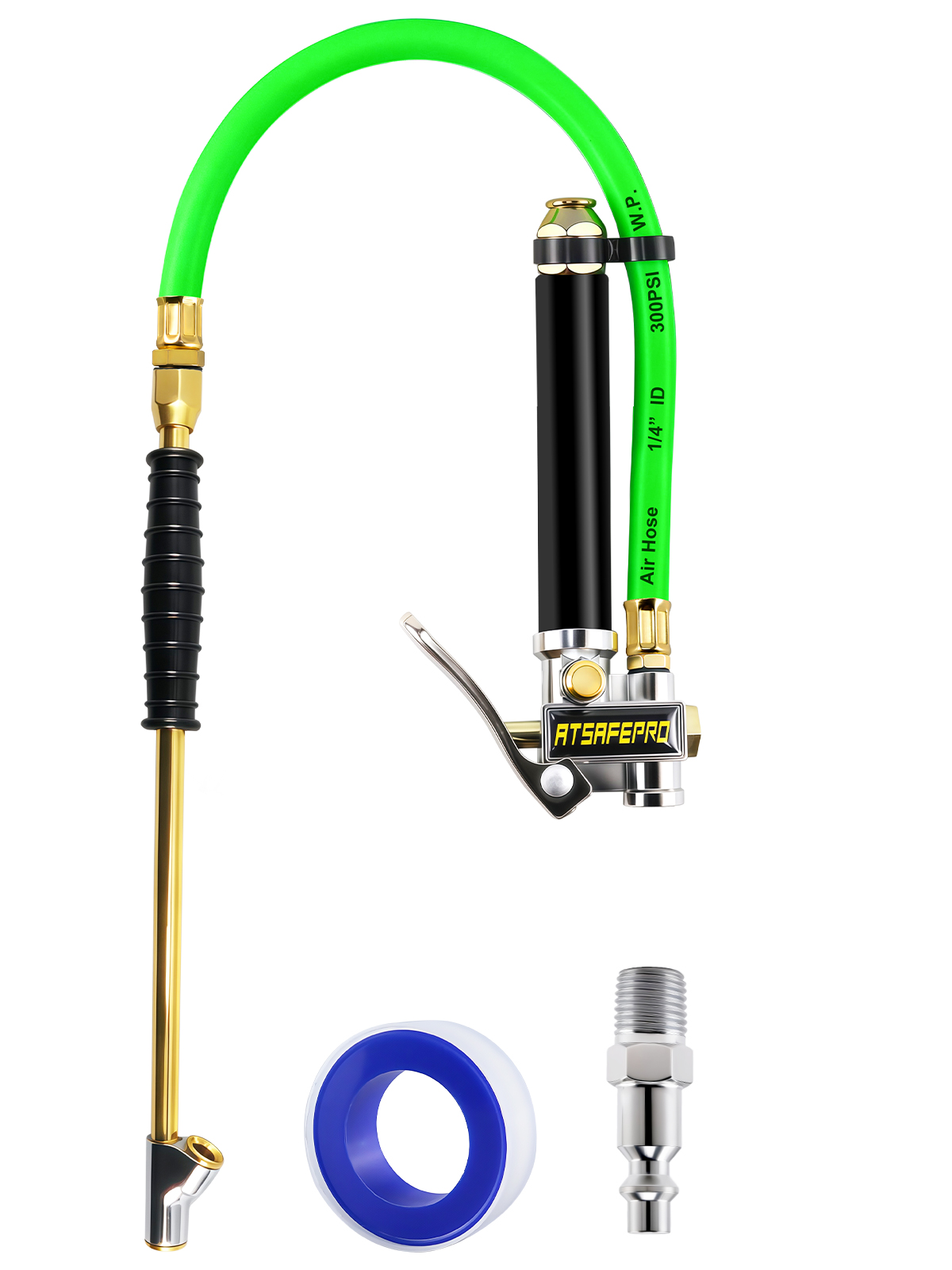
The visible product here is an analog tire pressure gauge and inflation chuck assembly with a flexible rubber hose, chrome-plated metal fittings, and a T-handle style connector. It shows pressure in psi and bar, with the dial scaled to about 160 psi and 11 bar. That dual-scale layout alone tells you a lot about the intended use: the tool is meant to be readable in more than one shop environment, and it is trying to cover common passenger-vehicle needs without feeling overly specialized.
If you are comparing gauges for a garage, the real question is not whether the tool has a dial. It is whether the structure, readability, and hose-and-fitting arrangement make daily work easier or more annoying. That is where an analog design like this still has a place.
What this style of gauge is built to do
This product sits in a practical middle ground. It is not a delicate bench instrument, and it is not a bare brass pencil gauge that lives in a glove box and gets used twice a year. It looks like a service accessory intended for repeated hand use, with a flexible hose, visible knurled grip areas for tightening, and a gauge body that can be handled in a shop setting.
The likely job is twofold: checking tire pressure and connecting to compressed air through a service line or valve interface. The exact internal mechanism is not visible, so it would be a mistake to claim more than that. Still, the combination of hose, metal connector, and gauge body is typical of tire service tools used where a technician wants to read pressure at the wheel rather than rely only on a compressor display.
Quick read: why buyers look at this format
Before digging into features, most buyers are trying to answer a few practical questions:
Can the gauge be read quickly and clearly?
Does the hose make valve access easier in tight wheel wells?
Will the metal fittings stand up better than a plastic-only assembly?
Does the dual psi/bar scale fit the shop’s normal workflow?
Key visible features and what they mean in daily use
The dial face uses a conventional analog pointer, which is still preferred in many shops because it gives an immediate visual read without waiting for a screen to wake up, update, or dim out. That sounds minor until you are working in a noisy bay, with gloves on, and you need to move from one wheel to the next without fuss.
The outer bezel appears protective, which is helpful in a tool that may be set down, bumped, or hung near other hand tools. The gold-colored rim and black gauge housing also make the face stand out visually. That matters more than marketing people admit. A gauge that is easy to spot is a gauge that gets used correctly instead of being left on a cart because it blends into the clutter.
The black rubber hose is another meaningful detail. Flexible hose matters when valve stems sit awkwardly behind wheel designs, deep in fender openings, or in positions where a rigid body would force the operator into a poor angle. In a real shop, awkward angle usually means air leakage, wasted time, or a bad seal on the first try. None of that is glamorous, but it is what technicians remember.
Chrome-plated or polished fittings, plus the knurled grip sections, suggest the tool is meant for hand tightening and repeated connection cycles. For buyers, that usually points to a service tool that aims to balance durability with ease of handling. A smooth fitting is nice in a catalog photo; a grippy fitting is what matters when the hose has to be attached quickly and cleanly.
Analog versus digital: why some buyers still choose the dial
Digital gauges have their place, especially when buyers want backlighting, memory functions, or electronic readouts. But analog remains popular because it is predictable. No batteries. No display lag. No concern about a screen failing after a drop. And for many technicians, a dial makes it easier to see pressure movement in real time while adjusting air.
That said, analog tools require honest expectations. A buyer should still ask how the gauge is calibrated, how often it should be checked, and whether the scale range suits the vehicles being serviced. Those are not small details. A gauge can look solid and still be the wrong fit for a fleet, motorcycle shop, or bicycle station if the usable range is off.
With this product, the visible range up to about 160 psi and 11 bar gives it broad utility. That is enough for many passenger vehicles and shop tasks, while leaving room for some higher-pressure applications. It is not wise to assume it covers every specialty tire or every industrial need. Shop buyers should always match the working range to their actual customer mix.
How to evaluate this kind of tire service accessory before buying
For sourcing managers and product teams, the decision should not rest on appearance alone. A hose-and-gauge assembly has several points that deserve inspection.
1. Readability under shop conditions
Look at dial size, contrast, and scale spacing. A gauge that reads well in a product photo may be harder to read when the mechanic is crouched beside a dirty wheel. Dual-scale markings are useful, but only if the labels are legible at a glance.
2. Hose flexibility and routing
The U-shaped hose is a practical feature, especially around tight wheel geometry. Buyers should think about how easily the hose can be maneuvered without kinking or pulling the gauge body into an awkward position. That affects both comfort and seal quality.
3. Fitting quality
Metal fittings with knurled grip sections are a good sign for hand use, but the real test is consistency in threading, sealing, and connection feel. If a tool feels loose or rough during assembly, it will become a source of complaints quickly.
4. Suitability for the service environment
A tire shop needs a different tool profile than a hobby garage. The same gauge may be fine for periodic checks in a home workshop and inadequate for repeated all-day use. Buyers should judge the assembly as a working tool, not just a measured object.
Common mistakes buyers make with pressure gauges
One common mistake is buying by maximum range alone. A bigger number on the dial does not automatically mean better performance for passenger tires. In fact, a scale that is too broad can make the everyday reading zone feel cramped if the dial design is not balanced.
Another issue is assuming that any analog gauge will feel the same in hand. It will not. Hose stiffness, connector shape, and grip texture change the actual user experience more than many spec sheets suggest.
A more subtle mistake is overlooking the workflow. If a gauge is meant to measure and inflate through the same assembly, then the interface with the compressor line or valve matters as much as the dial itself. A shop can lose time every day if a supposedly simple tool is fussy at the connection point.
Who is this style of gauge best suited for?
This type of product makes sense for automotive garages, motorcycle repair shops, bicycle service stations, and tire shops that want a straightforward manual gauge with a hose attachment. It also fits fleet maintenance and general workshop use where operators prefer mechanical reliability and fast visual feedback.
For buyers with very specialized needs, the questions become more specific. If you need exact calibration documentation, a particular thread size, or a defined working-pressure standard, you should verify those details before purchase. The visible product description does not supply them, and it would be risky to assume.
Practical buyer advice before placing an order
Ask for close-up images of the dial, fittings, and hose ends. Confirm whether the product is intended only for checking pressure or also for inflation service. Verify compatibility with the valves and air systems used in your market. If the tool will be sold across regions, confirm the psi and bar presentation is appropriate for the intended users.
It is also worth checking whether the gauge body and hose are assembled in a way that supports replacement or serviceability. Many buyers ignore that point until the first batch is in use, then discover that a single damaged hose can sideline the whole tool. That is the sort of annoyance that shows up after the purchase order has cleared.
FAQ
Is an analog gauge still useful in modern tire service?
Yes. In many shops, it remains a preferred option because it is quick to read, does not need batteries, and gives a live visual response during inflation checks.
What does the dual psi and bar scale help with?
It makes the tool easier to use in different markets and service environments. Technicians can work in the unit they know best without converting numbers on the fly.
Should buyers assume this tool is certified or calibrated?
No. Those details are not provided here. Buyers should request confirmation if certification, calibration, or compliance documentation matters for their application.
Is this a good fit for home garages?
Likely yes, especially for users who want a durable, easy-to-handle gauge with a hose. Still, the final choice should depend on the vehicle types and pressure ranges you actually service.
A sensible next step for sourcing teams
If you are evaluating the ATsafepro tire pressure gauge for resale, shop use, or private-label sourcing, start with the basics: confirm the pressure range, inspect the hose and fittings, and compare the dial readability against your target market. That will tell you more than a polished product image ever will. In tire service, small differences in handling and visibility are usually what separate a tool people keep reaching for from one that ends up in a drawer.
For procurement teams, the best move is to request full dimensional and compatibility details before making assumptions. For technicians, the best move is simpler: pick the gauge that feels dependable in the hand and readable at a glance, because that is the one that will get used when the bay is busy.