Why a manual gauge still matters in tire inflation work
An ATsafepro tire pressure gauge sits in a part of the market that has not gone away, even as digital tools have become common. For many workshops, garages, and fleet-minded buyers, a simple analog gauge is still the tool you reach for when you want a quick read, a rugged body, and no battery to hunt down at the wrong moment.
That matters because tire pressure is one of those maintenance details that looks minor until it causes real trouble. Underinflation can push up heat, wear the shoulders of the tire, and make steering feel vague. Overinflation can shorten the contact patch and make the ride harsher than it needs to be. If you are sourcing tools for a shop or choosing equipment for your own service bay, the decision is less about novelty and more about whether the gauge is easy to read, easy to handle, and suited to repeated use.
This kind of product also suits buyers who prefer a visible dial over a screen. There is a practical comfort in watching a needle settle on a scale rather than waiting for a display. It is not glamorous, but in service work that is often a good sign.
What the tool is designed to do
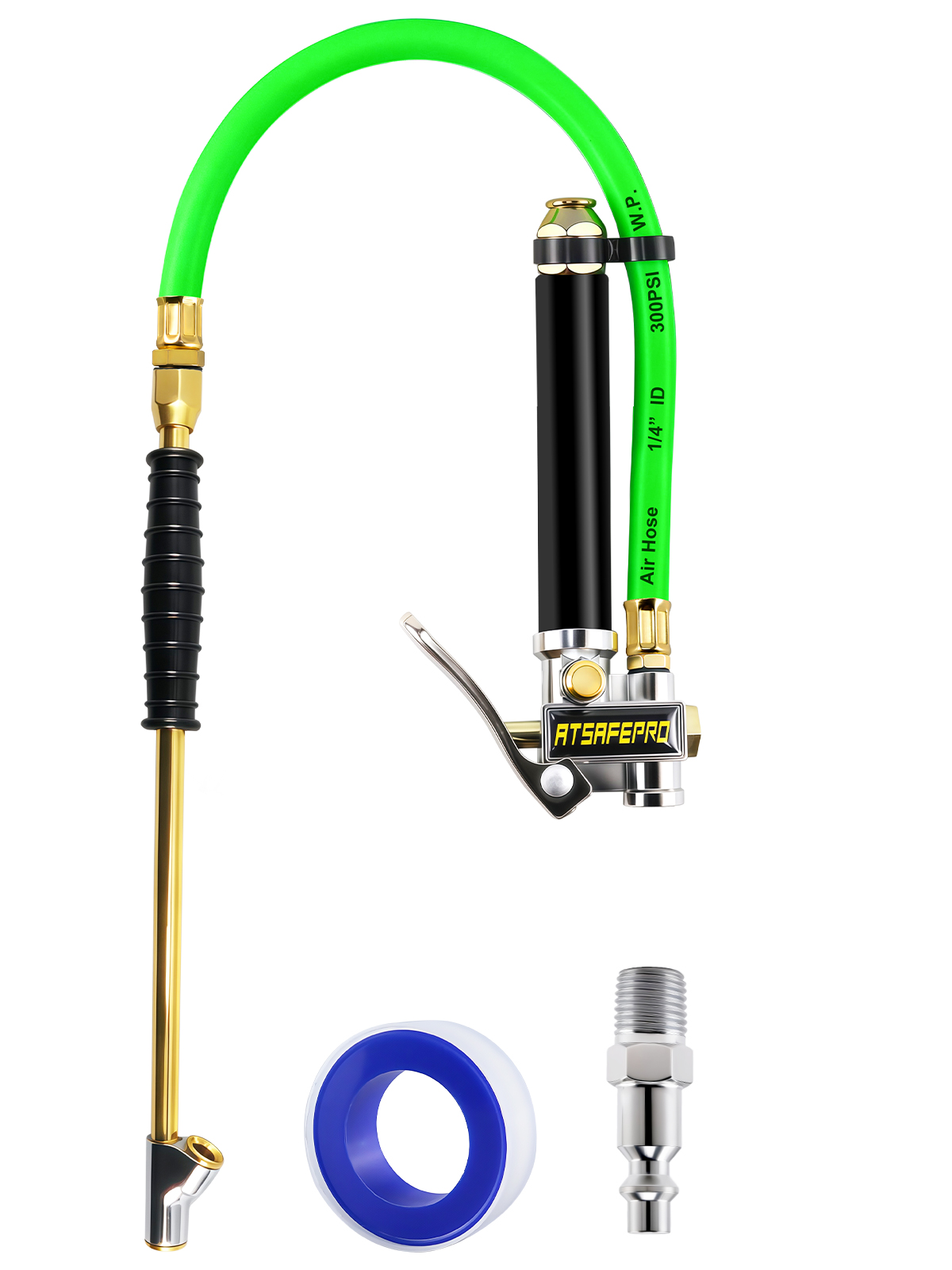
Based on the visible structure, this is an analog tire pressure gauge and inflator-style air pressure tool. The unit has a round dial, a black flexible hose, chrome-plated or polished metal fittings, and a small side valve or bleed feature near the gauge body. That combination suggests a tool intended to check tire pressure and, in some setups, connect to an air source for inflation. The exact operating mode depends on the hose and connector configuration, which is not fully visible here, so it is best not to assume more than the image shows.
The dial itself uses dual units, with bar and psi both printed on the face. The scale appears to reach roughly 11 bar or 160 psi, which gives it enough range for common passenger vehicles and some light truck or workshop tasks. The black rubber bumper around the bezel is a small detail, but it is the kind of detail that often decides whether a tool survives being dropped onto a concrete floor more than once.
Quick buyer takeaways
If you are comparing this type of gauge with other tire service tools, a few points stand out immediately:
The first is readability. A large analog face can be easier to use in a dim garage than a cramped digital display. The second is durability. A rubber hose and metal couplings usually hold up better in daily shop handling than lightweight housings with delicate hinges or buttons. The third is grip. Knurled sections on the fittings suggest the tool is meant to be tightened by hand without slipping, which is useful when gloves are on and air lines are stiff in cold weather.
There is also the matter of workflow. Some buyers want a gauge that is only for checking pressure. Others need an inflator-style assembly that can do both measuring and filling. The product image points toward the second category, but because the exact chuck style and valve compatibility are not provided, a sourcing team would still want to confirm that before purchase.
Parts and construction: what the visible details suggest
Hose and fittings
The black flexible hose is doing a lot of practical work here. In tire service tools, hose flexibility affects how easily the operator can reach awkward valve stems, especially on motorcycles or tightly spaced wheel wells. A U-shaped hose layout also helps keep the tool compact enough to handle in one hand. The metal fittings appear polished or chrome-plated, which gives the tool a cleaner finish and usually a more durable feel at the touch points.
Those fittings look like they are designed for hand tightening rather than being hidden inside a molded shell. That is a useful sign for maintenance-minded buyers, because field replacement and inspection tend to be easier when the tool is built from accessible parts rather than sealed pieces.
Gauge body and bezel protection
The round dial sits in a black outer shroud or rubber ring. This is not just cosmetic. In a workshop, gauges get knocked against wheel rims, benches, and toolboxes. A protective ring can help reduce damage to the bezel and keep the face readable for longer. The needle indicator and printed scale are the heart of the instrument, so anything that helps preserve visibility is worth attention.
The gauge face appears clearly marked in bar and psi. For international procurement, that is a practical feature because it reduces the need for conversion or separate labeling. Engineers and service teams often prefer dual-scale faces when tools move between regions or when procurement serves mixed vehicle fleets.
Bleed or release control
The small side valve or button near the gauge body suggests a bleed function. In tire service, that matters because pressure is not only about adding air. It is also about trimming a tire down to the right value without disconnecting and reconnecting the chuck repeatedly. A bleed feature can save time, though its usefulness depends on how responsive and well-positioned it is. If the control is awkward, the benefit disappears quickly.
Where this style of gauge fits best
This type of tire pressure tool is a good fit for automotive service, motorcycle maintenance, bicycle inflation tasks, and light truck checks, assuming the connector configuration matches the valve system in use. In a garage or workshop, analog gauges still make sense when the job is repetitive and the operator wants instant visual confirmation. They also suit mobile mechanics who value a tool that can be dropped into a kit without needing charging cables or special batteries.
For industrial buyers, the real question is not whether analog is old-fashioned. It is whether the tool supports the pace of the workflow. A simple, rugged gauge can be faster than a more complicated device if it reads cleanly and connects without fuss. On the other hand, if the team needs documented measurement data, a manual analog unit may be only one part of a broader quality process.
What to check before buying
Buyers often focus on the dial scale and stop there, but that is only one part of the decision. The connection type matters just as much. A gauge can look ready for service and still be mismatched to the valve stems or air line fittings used in a specific shop. Since the exact chuck or thread type is not visible here, that point should be confirmed before ordering in volume.
Accuracy is another issue. The product data does not provide a verified accuracy class or calibration statement, so it would be unwise to assume precision grades from the image alone. For workshop use, that may be acceptable if the gauge is part of routine tire maintenance rather than a metrology-controlled process. For procurement in a service network, however, buyers should ask for calibration information if pressure consistency is critical.
Hose length is also worth checking. A hose that is too short causes awkward hand positions, while an overly long one can tangle in a tight bay. The product image shows a compact U-shaped hose, but not the exact dimensions. That is the kind of detail that looks small on a spec sheet and then becomes very visible on a floor with three jobs waiting.
Common mistakes buyers make with analog tire tools
One common mistake is assuming all gauges that show psi and bar are equivalent. They are not. Dial layout, needle visibility, bleed response, and connector quality can vary a lot. Another mistake is buying for the highest possible pressure range rather than the most readable scale. A 160 psi face may be fine for mixed use, but if the lower end of the dial is crowded, reading typical car tire pressures can become less convenient than expected.
Another problem is overlooking grip and handling. The knurled sections visible on the fittings suggest manual use, but if the tool is intended for regular workshop duty, operators will also care about whether it feels balanced in the hand and whether the gauge can be read without twisting the wrist at an odd angle. Small ergonomic flaws become irritating very quickly when a tool is used all day.
And a practical caution: if a tool seems to combine inflation and pressure checking, make sure staff understand exactly how the bleed and fill functions work. That sounds obvious, but mixed-function hand tools can be misused when people assume the same motion applies to every vehicle and every valve.
How to compare this gauge with alternatives
When comparing the ATsafepro tire pressure gauge style against digital alternatives, the tradeoff is usually simplicity versus features. Digital models may offer backlighting, memory, or easier reading in some conditions. Analog models, especially those built with metal fittings and a rubber-protected dial, often appeal because they are straightforward and less dependent on power. Neither is universally better.
If the buying decision is for a workshop, consider how often the gauge will be handled with oily hands, dropped onto the floor, or used in weather that makes touchscreen or battery devices less convenient. If the decision is for a retail kit or general garage use, consider whether customers will understand the dial quickly without training. A clear analog face often reduces that learning curve.
FAQ for sourcing and shop use
Is this only for cars?
Not necessarily. The visible range and style suggest use on cars, motorcycles, bicycles, and light trucks, but the final fit depends on the connector and valve compatibility. Confirm the connection details before assigning it across a mixed fleet.
Can it inflate tires or only measure pressure?
The visible hose and fittings suggest an inflator-style assembly, but the exact function is not fully confirmed by the image alone. Buyers should verify whether it is a measuring-only gauge or a combined inflate-and-check tool.
Is analog still a sensible choice?
Yes, especially where durability, speed of use, and no-battery convenience matter. In a busy service environment, those basics often outweigh extra features.
What a sourcing manager should ask for next
If you are evaluating this product for procurement, ask for the missing technical points before making a purchase decision: connection type, hose length, maximum working pressure, calibration information, and valve compatibility. If the supplier can provide those details clearly, the rest of the evaluation becomes much easier. If they cannot, treat the product as a general-use tool rather than a tightly specified service instrument.
For teams building a tool kit or a retail assortment, the value proposition is straightforward. The design is compact, readable, and mechanically familiar. It is the sort of tire pressure tool that fits into established maintenance routines without needing a new training program. That may not sound dramatic, but in shop equipment, boring often means dependable.
Next step for buyers
Use the visible build as a starting point, then verify the details that cannot be confirmed from appearance alone. If your application depends on connector fit, pressure range, or repeatable calibration, request those specifications before placing an order. If you simply need a rugged analog tire pressure gauge for everyday garage use, this style is worth a closer look because it keeps the job simple where it should be simple.