Why an integrated tire gauge matters on the shop floor
An ATsafepro tire pressure gauge is the kind of tool that looks simple until you spend a morning using one with a compressor running and a queue of vehicles behind you. For anyone responsible for tire service, fleet checks, or routine workshop maintenance, the real issue is not whether you can read pressure. It is whether you can read it quickly, add air without swapping tools, and avoid the little errors that creep in when the gauge and inflator are separate pieces of kit.
That is the practical appeal of a tire inflator / air chuck gauge assembly. It combines pressure reading and inflation in one handheld unit, so the operator can connect, watch the dial, and make adjustments with less back-and-forth. In a garage, that saves time. In a sourcing decision, it also changes how you think about durability, readability, and compatibility with your existing air system.
What this tool is designed to do
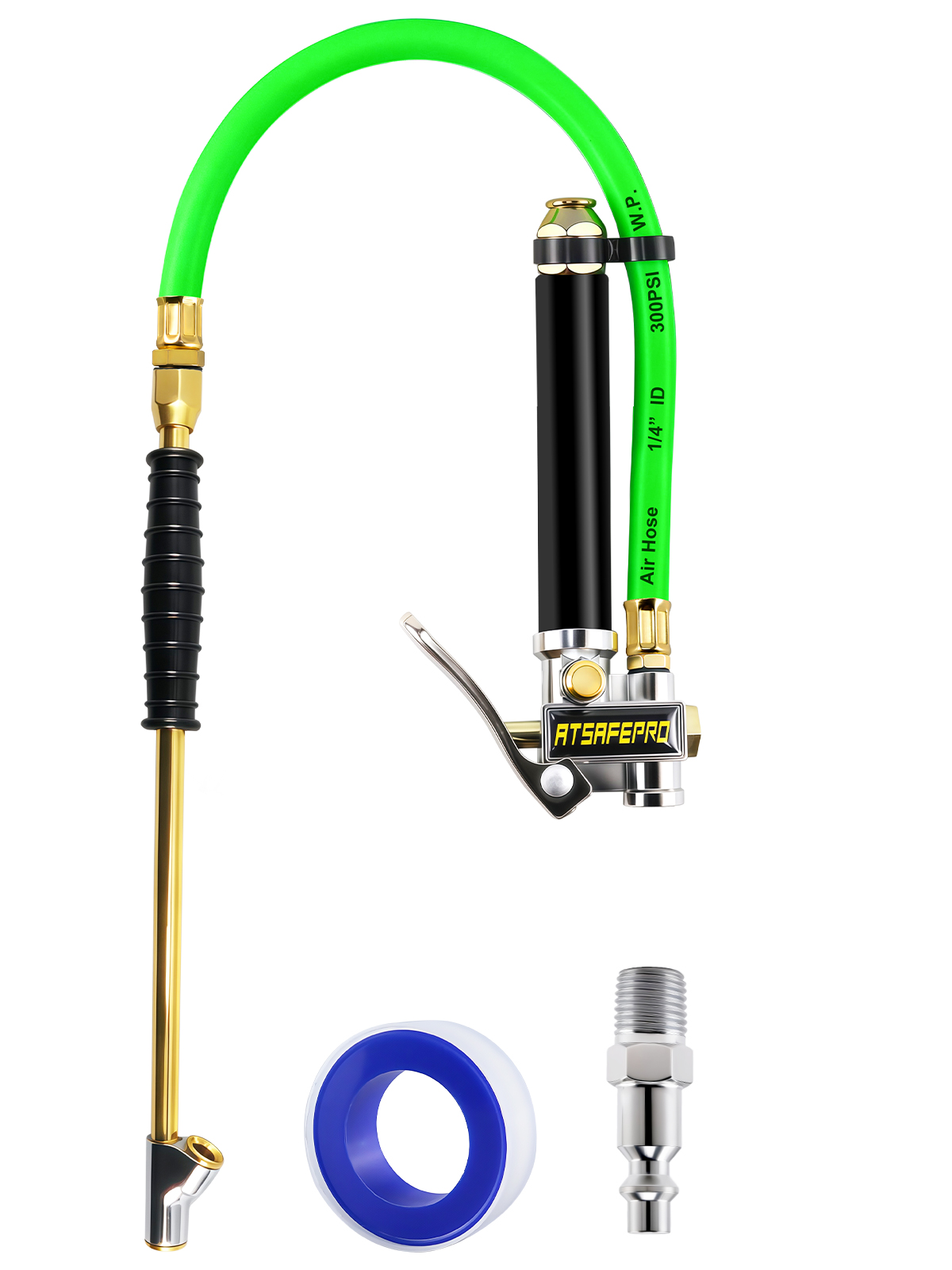
Based on the visible product structure, this ATsafepro tire pressure gauge is built as an assembled pneumatic accessory. It appears to include a black U-shaped flexible hose, chrome-finished metal fittings, a round analog gauge, and a straight metal air chuck or connector at the lower end. In plain terms, it is meant to attach to an air source, read tire pressure, and support inflation during the same operation.
The dial face shows dual scales in psi and bar, with markings that appear to reach roughly 140 psi and about 10 bar. That range is useful for everyday automotive work and many general pneumatic tasks, though the exact operating details should always be checked against the supplier’s specification sheet rather than inferred from the face alone.
Why buyers keep choosing analog inflator gauges
Digital tools have their place, but a mechanical analog gauge still makes sense in many environments. Workshops value them because they are easy to glance at, they do not need batteries, and they tend to tolerate rough handling better than a fragile electronic display. That does not make them perfect. Analog gauges can be harder to read in low light, and a damaged dial lens can ruin visibility fast. Still, for many service teams, the tradeoff is worth it.
The ATsafepro tire pressure gauge seems aimed at that middle ground: practical, compact, and straightforward. If your team wants a tool that can live near the compressor and be picked up for repeated inflation tasks, this is the sort of assembly that fits the job.
Key construction details visible from the product
A close look at the product tells you a fair amount about how it is built, even without opening it up.
The hose appears to be a matte black rubber or rubber-like polymer. That matters because the hose is the part that gets twisted, dragged, and bent most often. A flexible hose makes it easier to reach valves on passenger vehicles, motorcycles, and equipment with awkward wheel access.
The fittings look chrome-plated, which is common in pneumatic accessories because it improves surface wear and corrosion resistance while giving the product a cleaner workshop appearance. The gauge housing is black plastic with a toothed or protective outer bezel, a small but useful detail that can help shield the dial edge from knocks.
The dial itself uses white markings on a black face with yellow branding. That color combination is practical in a workshop, especially when the operator is moving quickly and does not want to squint at a pale dial under uneven light.
How to judge whether this type of gauge fits your application
Buying a tire inflator gauge is partly about specifications, but it is also about fit for workflow. A garage manager will care about speed and repeatability. A procurement team may focus on durability and standardization. A parts buyer servicing mixed vehicle types will care about whether the unit is compatible across cars, motorcycles, bicycles, and light trucks.
Here is the useful framing: if your work involves frequent pressure checks and incremental inflation, an integrated air chuck gauge assembly is usually more efficient than carrying a separate gauge and chuck. If your priority is laboratory-level measurement or recording exact values for compliance purposes, you may need a different class of instrument entirely.
In other words, this is a service tool, not a metrology instrument.
Selection criteria that matter more than the sales copy
When comparing products like this, buyers usually do better by asking a few grounded questions.
1. Can the gauge be read easily where you work?
A dial that looks clear in a product photo may be harder to read at arm’s length, especially in low light or when the operator’s body blocks the view. Larger numerals and a clean scale layout help. The ATsafepro tire pressure gauge appears to use a straightforward dual-scale face, which is a good start.
2. Does the hose geometry suit real-world access?
The visible U-shape suggests the hose is meant to offer a manageable hand position while reducing awkward bending. That may seem minor, but anyone who has tried to reach a valve through a wheel spoke knows that hose handling affects workflow more than many buyers expect.
3. Is the build robust enough for repetitive shop use?
Look for metal where wear is concentrated and for protective housing around the gauge. A black plastic body is not automatically a weakness; it can be perfectly adequate if the assembly is intended for normal workshop use. The weak point in many products is not the gauge face itself but the fittings, the chuck, or the hose interface.
4. Does the pressure range match your needs?
A scale topping out near 140 psi is suitable for many standard inflation tasks. If your operation routinely handles higher-pressure equipment, or if you need tighter control at a narrow pressure band, confirm that the visible scale and the internal mechanism are appropriate before placing an order.
Common mistakes buyers make with tire inflator gauge assemblies
The most common mistake is treating all tire gauges as interchangeable. They are not. A gauge that works fine for a passenger car may feel clumsy on a crowded service bay compressor line. Another common error is assuming a visible dial range tells the whole story. It does not. Range is only one part of the picture; accuracy, valve style, hose length, and connector compatibility all matter, even if they are not obvious from a listing image.
A practical caution: if the supplier does not clearly state thread type, chuck style, or calibration information, do not fill in the blanks yourself. Ask. Pneumatic tools often look universal until the day a new fitting arrives and does not mate cleanly with the shop’s air line.
Where this kind of tool usually earns its keep
The ATsafepro tire pressure gauge appears suited to a broad set of maintenance environments. That includes automotive garages, tire service stations, small workshops, and maintenance teams working on mixed vehicle fleets. It also has a place for motorcycle and bicycle servicing where the pressure range is compatible and the connection style fits the valve setup.
For product teams and sourcing managers, the value proposition is simple: one assembled tool can reduce bench clutter and speed up routine inflation work. For technicians, the value is more immediate: fewer tool changes, fewer chances to lose air between checking and filling, and a more direct feel for pressure adjustments.
What to verify before you order
Because some details are not visible, a careful buyer should confirm a few points with the supplier before committing:
The hose length and hose diameter
The fitting and thread type at the air source connection
Whether the chuck is clip-on, screw-on, or another style
The stated accuracy class or calibration basis, if available
Whether the unit includes a bleed valve or other control function
The actual maximum working pressure and recommended use range
These are not small details. They determine whether the product is a smooth fit for your shop or just another tool that ends up in the wrong drawer.
Practical buying advice for engineering and sourcing teams
If you are buying for a team, think in terms of standardization. One well-chosen tire inflator gauge assembly can be easier to train around than several nearly identical models with different chucks or hoses. That matters when turnover is high or when multiple shifts share equipment.
It also helps to test the tool against your real use case, not only against the product image. Can it reach the rear wheels of your most common vehicle type? Is the dial legible when the compressor is running? Do operators prefer the grip and hose movement? These are the kinds of small field checks that save unplanned replacements later.
FAQ
Is the ATsafepro tire pressure gauge only for cars?
No. Based on the visible product category, it is intended for vehicle tires and similar inflatable applications, so it may also suit motorcycles, bicycles, and light trucks if the connector and pressure range match the task.
Does the gauge show both psi and bar?
Yes, the dial face appears to use both psi and bar scales.
Is it digital or mechanical?
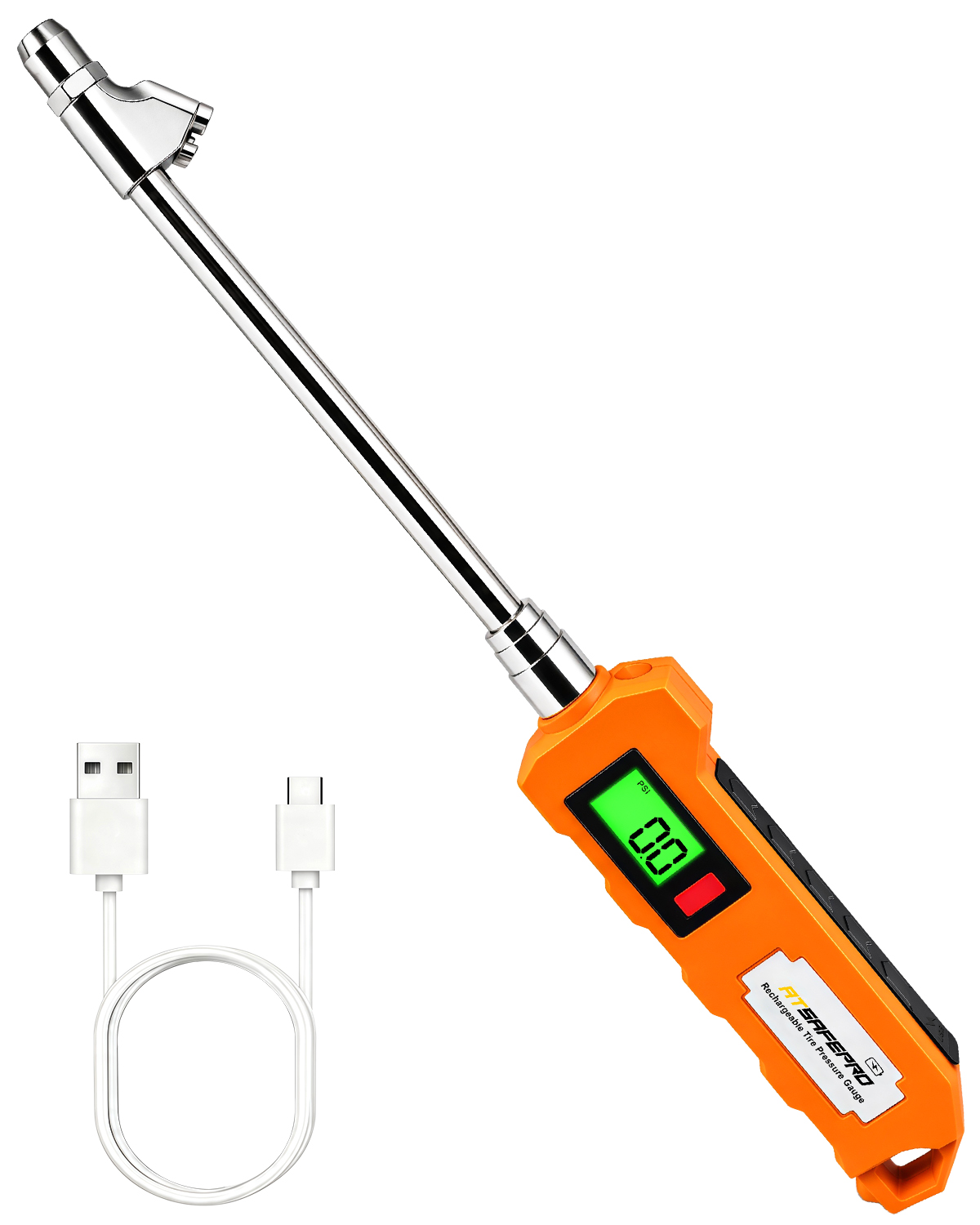
It appears to be a mechanical analog gauge with a round dial.
Can I assume the exact fittings from the photo?
No. Thread type and chuck configuration should be confirmed directly with the supplier before purchase.
A sensible next step
If you are shortlisting an ATsafepro tire pressure gauge for workshop or fleet use, start by matching the visible pressure range, hose style, and gauge readability to your actual service routine. Then ask the supplier for the missing fitment details. That is the quickest way to tell whether this inflator gauge assembly is a good operational match or just a decent-looking part that needs the wrong adapter to become useful.