Why a tire pressure gauge with an air chuck matters on the shop floor
The ATsafepro tire pressure gauge is the kind of tool people often underestimate until they need one in a hurry. In practice, an integrated tire inflator and gauge assembly does two jobs at once: it connects to compressed air and gives the operator a live pressure reading while the tire is being filled. That sounds simple, but in garages, service bays, and small workshops, this small difference saves time, reduces guesswork, and helps avoid the sort of overinflation problem that turns into a comeback job later.
For buyers, the question is rarely whether a gauge is useful. The real decision is whether a portable hose-and-gauge setup is the right choice for routine tire inflation, spot checks, and general compressed-air pressure checking. If you handle cars, motorcycles, bicycles, or light trucks, this style of tool can be more practical than carrying a separate gauge and inflation hose. It is especially handy when the work is repetitive and speed matters more than a fancy display.
What the ATsafepro tire pressure gauge appears to be designed for
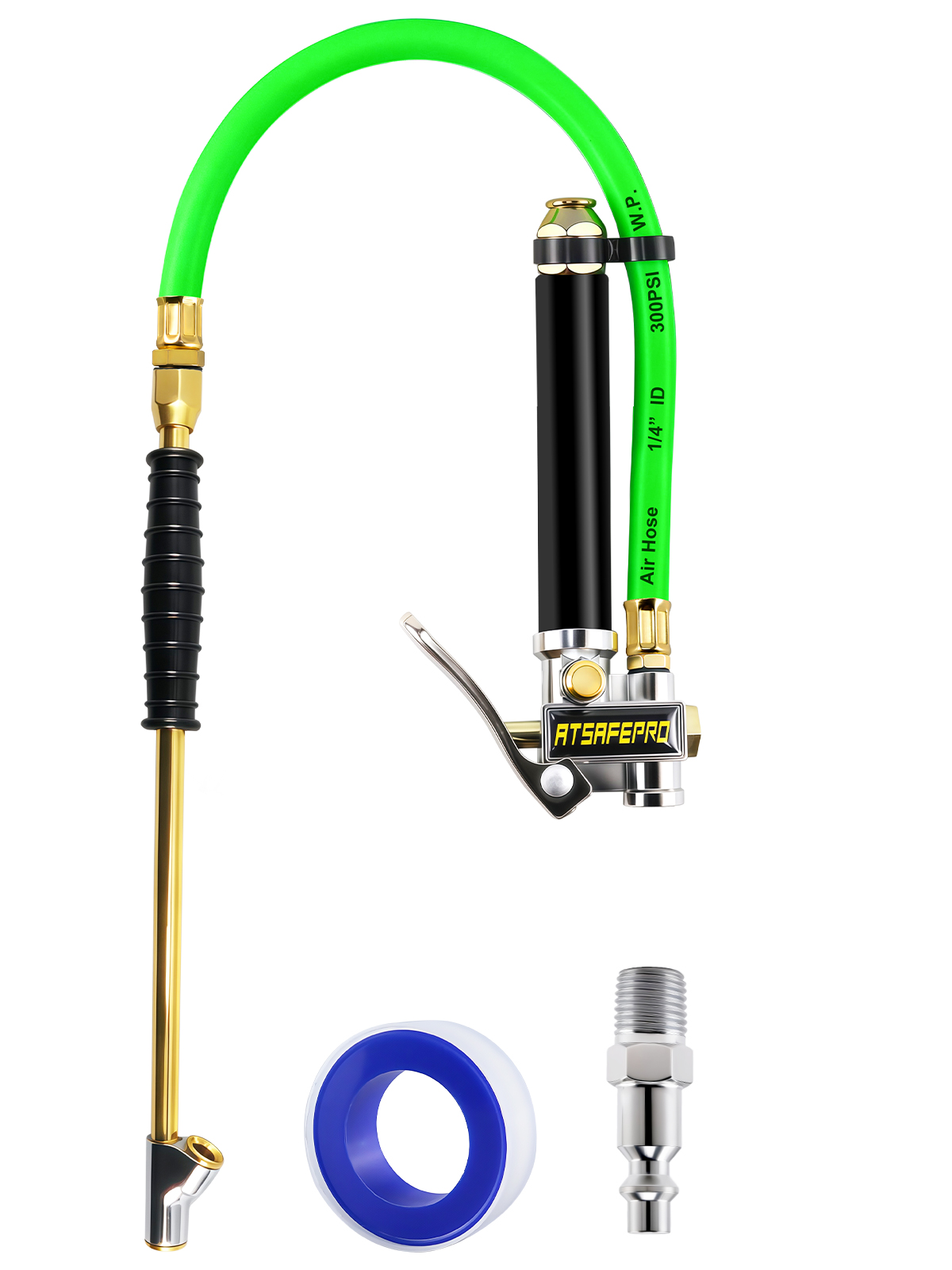
Based on the visible construction, this is an assembled pneumatic accessory with a flexible black hose, metal fittings, and an analog dial gauge. The body combines a hose section with a gauge module, so the operator can connect one end to an air supply and use the other end at the tire valve. The knurled metal sections suggest the designer expected gloved hands, oily fingers, or the usual shop conditions where grip matters more than elegance.
The gauge face shows dual pressure scales in bar and psi, with markings that appear to reach around 11 bar or 160 psi. That range is broad enough for most everyday tire inflation tasks and general low-to-medium pressure shop use. It is not the kind of detail one should overread, though. A visible dial range is not the same thing as a verified accuracy specification, and buyers should still confirm calibration, tolerances, and connector compatibility before making a purchase decision.
How this style of tire inflator compares with simpler hand gauges
A basic pocket tire gauge is useful for quick checks, but it cannot inflate a tire. A standalone air chuck can inflate, but it leaves the operator guessing unless a separate gauge is attached. An integrated tire pressure gauge solves that middle ground. It puts pressure measurement directly into the inflation workflow.
That matters in real service work. When a mechanic or technician has to top off several tires, the extra step of switching between tools slows the job and increases the chance of losing track of the target pressure. The ATsafepro tire pressure gauge format supports a more controlled process: connect, inflate, watch the dial, and stop at the target. For fleet checks, garage maintenance, and casual home use, that is often enough.
Still, there is a tradeoff. Analog gauges are easy to read in a workshop and do not need batteries, but they rely on a clear dial face and a well-made internal mechanism. If the gauge is cheap or poorly protected, a drop on concrete can affect performance. That is true for many products in this category, not just this one.
Key visible construction details buyers should notice
The product appears to use a flexible rubber or rubber-like hose with metal end fittings. That combination is common in pneumatic accessories because it balances durability and maneuverability. A fully rigid connector would be annoying to use near crowded wheel wells, while a flexible hose gives the operator room to work at an angle.
The fittings look chrome-plated or polished metal, and the gauge housing is black with a metallic-looking bezel. From a sourcing standpoint, that kind of mixed-material build is typical of an assembled accessory rather than a single molded component. It usually means the product depends on several subcomponents: hose, chuck or connector, gauge module, seals, and grip surfaces. Each part affects reliability.
A small but important detail is the gauge face layout. Clear white markings on a dark background improve readability in a dim service bay. Yellow branding is visible, but branding alone tells you little about performance. What matters more is whether the markings are cleanly printed, whether the needle is stable, and whether the gauge remains readable after repeated use.
Where this product fits best in a buyer’s workflow
For sourcing managers and product teams, the best use cases are the ones with repeatable, light-duty to medium-duty inflation needs. Think garages, gas station service counters, mobile maintenance kits, and workshop air lines where the same tool may be used across different vehicles.
It is also a practical option for users who do not want to juggle a hose in one hand and a gauge in the other. That matters more than people admit. In field use, convenience can become a quality issue because the more awkward the tool is, the more likely it is to be used roughly or inconsistently. A combined inflator-gauge tool tends to encourage better habits.
If your application involves very high precision, regulated reporting, or a need to document pressure readings, this type of tool may not be enough on its own. In that case, a calibrated digital instrument or a more formal test setup may be a better fit. But for day-to-day inflation, it is a sensible, serviceable format.
Selection criteria that matter more than appearance
Connector and chuck compatibility
The product image suggests a straight connector or air chuck style fitting, but exact thread size and compatibility are not visible. That is not a small detail. In pneumatic tools, the wrong connector can slow down the whole workflow or require extra adapters. Buyers should verify how the tool mates with their existing compressor line, hose ends, and valve types.
Gauge readability
Dual bar and psi scales are useful when the tool may move between markets or departments with different habits. In one shop, psi is the default; in another, bar is the standard. A gauge that presents both clearly reduces mistakes, especially during busy shifts.
Durability of the hose and body
A hose that looks fine on day one can still age badly if the rubber compound is weak or if the fittings are loosely assembled. Repeated bending near the ends is a common failure point. Buyers often focus on the gauge face and ignore the hose, but the hose is what gets dragged, stepped on, and coiled too tightly.
Ease of grip and control
The knurled sections on the metal body are a useful sign. They suggest the tool is meant to be handled quickly without slipping. That matters when a user is balancing a tire valve, an air line, and a compressor trigger all at once. A small ergonomic detail can make the difference between a calm inflation task and a fiddly one.
Common mistakes when choosing a tire inflation gauge assembly
One common mistake is assuming that all analog gauges read the same way. They do not. Some have easy-to-read dials but vague construction quality. Others are sturdy but hard to read at a glance. The buyer should care about both.
Another mistake is treating the pressure scale as proof of operating performance. A dial that reaches 160 psi is not the same thing as a tool that is accurate, repeatable, and suitable for your exact process. That distinction matters in purchasing, because a wider scale can sometimes make small pressure changes harder to read.
A third mistake is overlooking the intended vehicle mix. A tool that works nicely for passenger tires may be less convenient for certain light truck or specialty applications. If your team handles mixed fleets, you should look at connector geometry, hose reach, and gauge scale before making a bulk decision.
Practical advice for buyers and shop managers
If you are comparing this kind of tire pressure gauge against other pneumatic accessories, start with the workflow, not the spec sheet. Ask who will use it, how often, and in what conditions. A garage that handles quick top-offs may prioritize speed and readability. A small equipment shop may prioritize hose durability and connector consistency. A retail buyer may care more about packaging and universal appeal.
It is also worth checking whether the pressure scale aligns with the pressures you actually use. A gauge that covers a broad range is useful, but the useful part is the section you read every day. If the dial is crowded or the increments are hard to interpret, the tool becomes less efficient even if it looks robust.
And one practical caution: with any tire inflator and gauge assembly, the operator’s technique matters. A solid tool will not compensate for a leaking valve, a tired compressor, or rushed handling. If pressure readings seem inconsistent, check the system before blaming the gauge.
FAQ: quick answers for sourcing and use
Is the ATsafepro tire pressure gauge mainly for inflation or measurement?
It appears to do both. The design combines an air chuck or connector with an integrated analog pressure gauge, so it can inflate a tire while displaying pressure.
Does it show both psi and bar?
Yes, the visible dial markings appear to include both bar and psi scales.
Can it be used for motorcycles and bicycles?
It is presented as suitable for tire inflation in cars, motorcycles, bicycles, and light trucks, though exact valve compatibility is not visible and should be checked.
Is this a digital gauge?
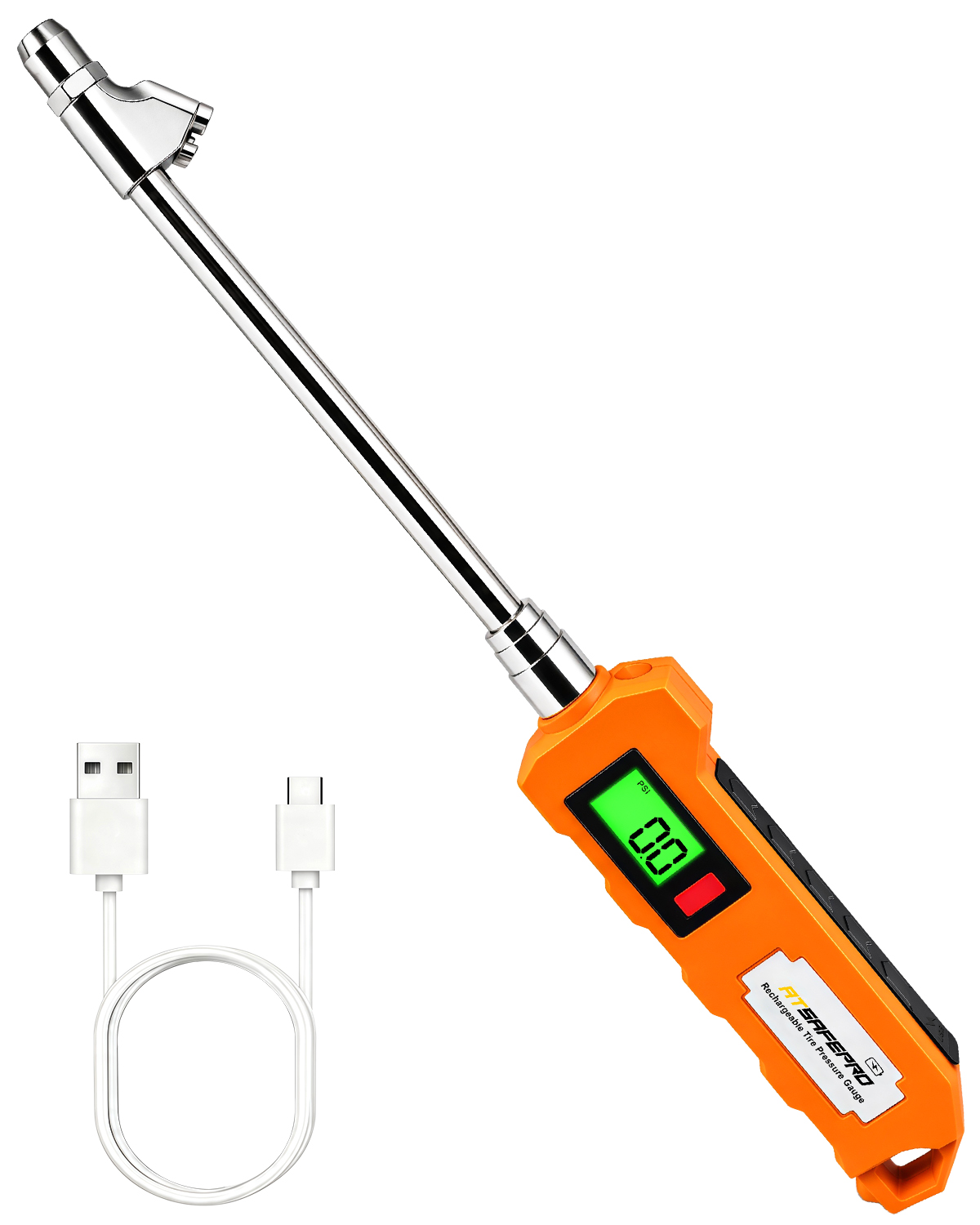
No, the visible unit is analog.
What to ask before you place a purchase order
Before ordering, confirm the connector type, hose dimensions, pressure accuracy specification, and any compatibility requirements with your current air system. Those are the details that determine whether the tool fits your operation. A clean-looking gauge is welcome, but a good fit in the field is what actually saves time.
If your team needs a portable inflation tool with a built-in pressure reading, the ATsafepro tire pressure gauge fits a familiar and useful category. It is not trying to be a laboratory instrument. It is trying to be a practical shop tool, and that is often exactly what buyers need.
For procurement teams, the next step is straightforward: match the tool to the vehicle types, check the connector standard, and compare the dial readability and hose build against the other options in your shortlist. That will tell you more than the branding ever will.