What the ATsafepro tire pressure gauge is meant to solve
The ATsafepro tire pressure gauge sits in a very practical category: a handheld air chuck assembly with an integrated analog gauge for inflating tires while watching pressure in real time. For anyone who has had to top up a tire at a garage, in a workshop, or in a home bay with a compressor, the value is obvious. You do not want to inflate blind and then stop, disconnect, recheck, and repeat. That wastes time, and it is easy to overshoot the target on a warm tire.
This kind of tool helps the buyer make a straightforward decision: do you want a simple inflation accessory that combines air delivery and pressure readout in one unit, or do you prefer a separate gauge and hose setup? The ATsafepro tire pressure gauge is clearly aimed at the first camp. It is built for convenience, quick checks, and on-the-spot inflation, especially where a compact hand tool is easier to handle than a larger shop inflator.
What you can tell from the design
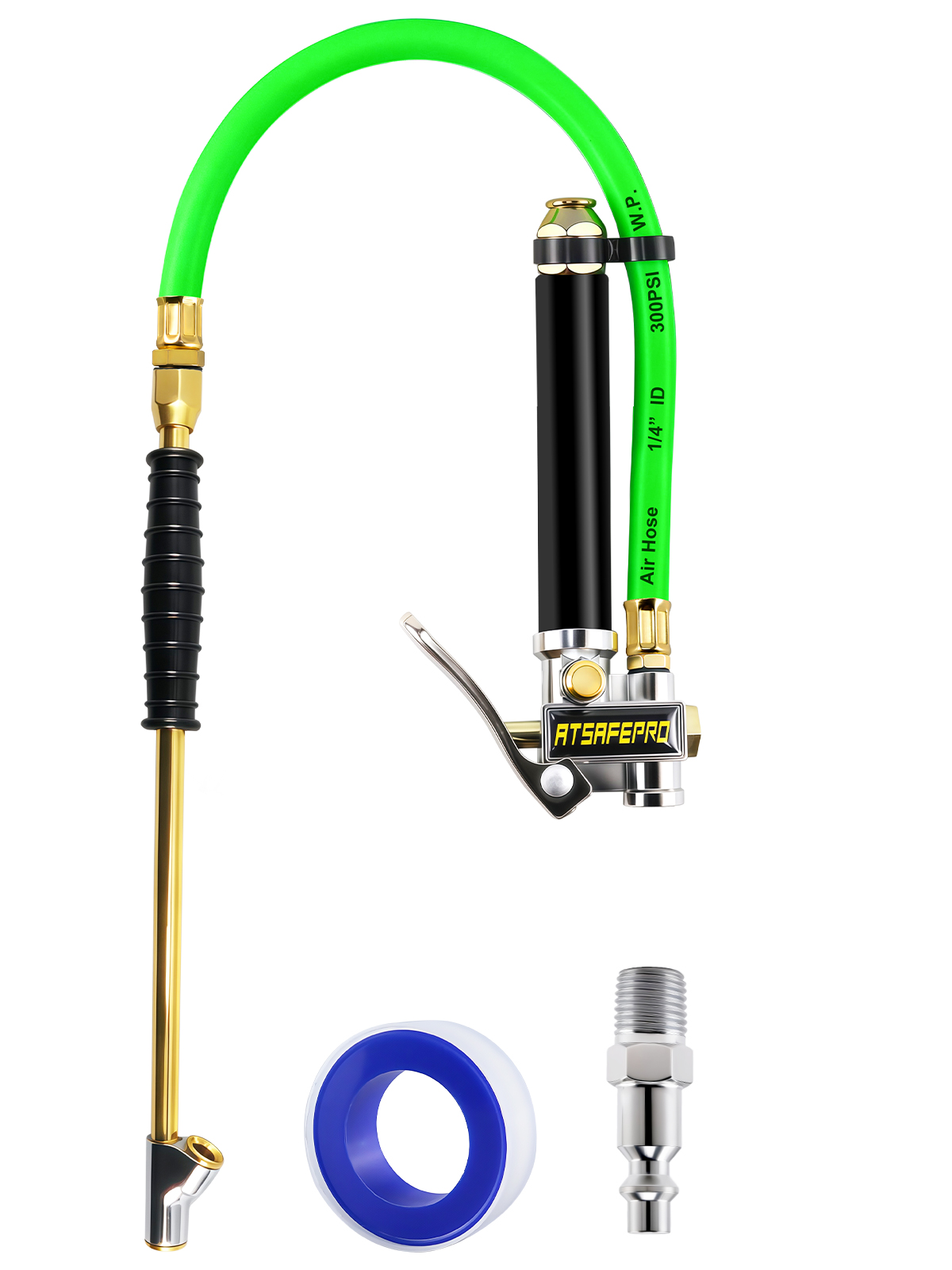
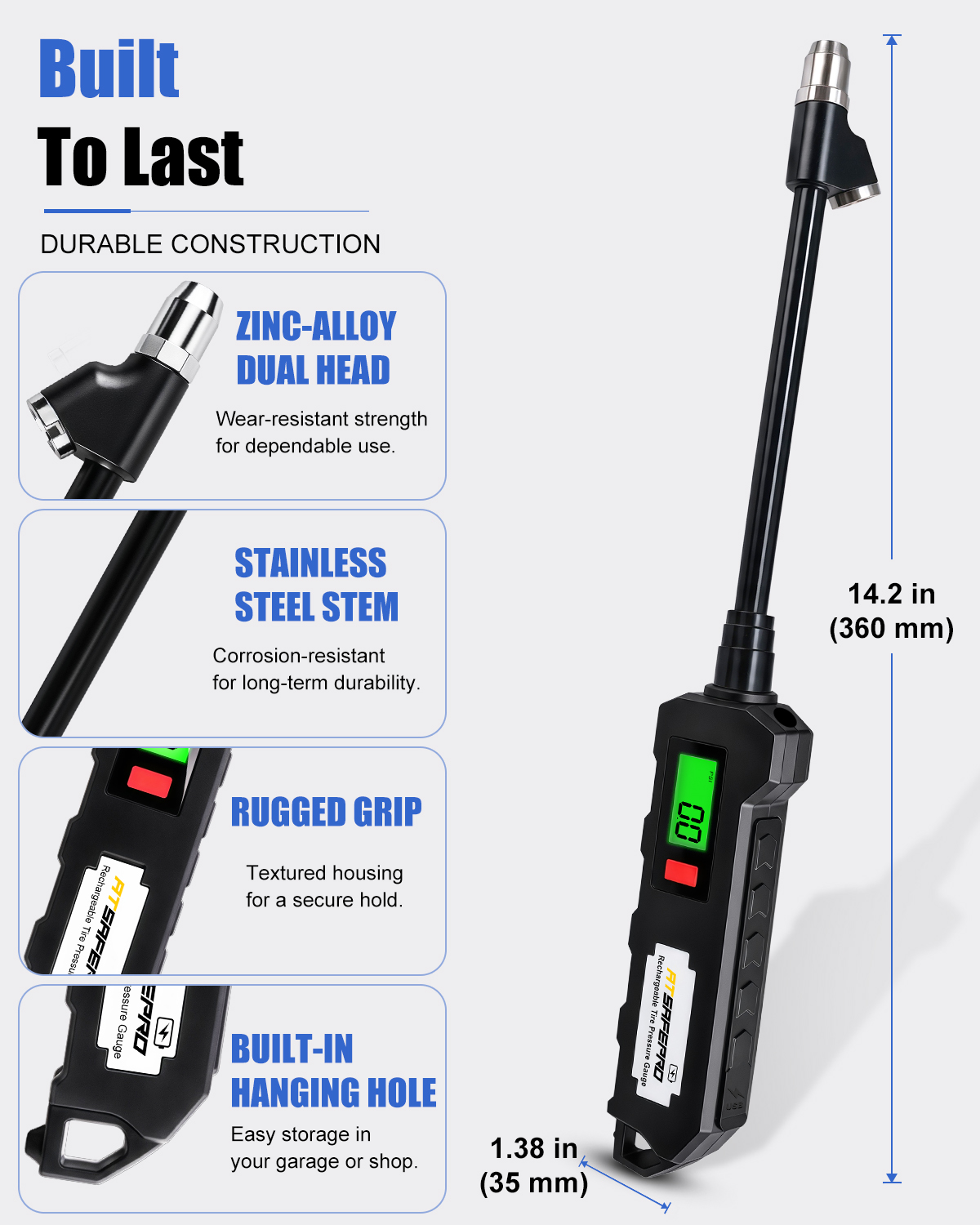
Based on the visible construction, this is not just a gauge body with a pointer. It is an assembled pneumatic accessory built around a black flexible hose, chrome-plated or polished metal fittings, and a side-mounted analog dial enclosed in a protective outer ring. The hose has a U-shaped form, which usually helps the tool sit naturally in the hand while connecting to an air source and a tire valve.
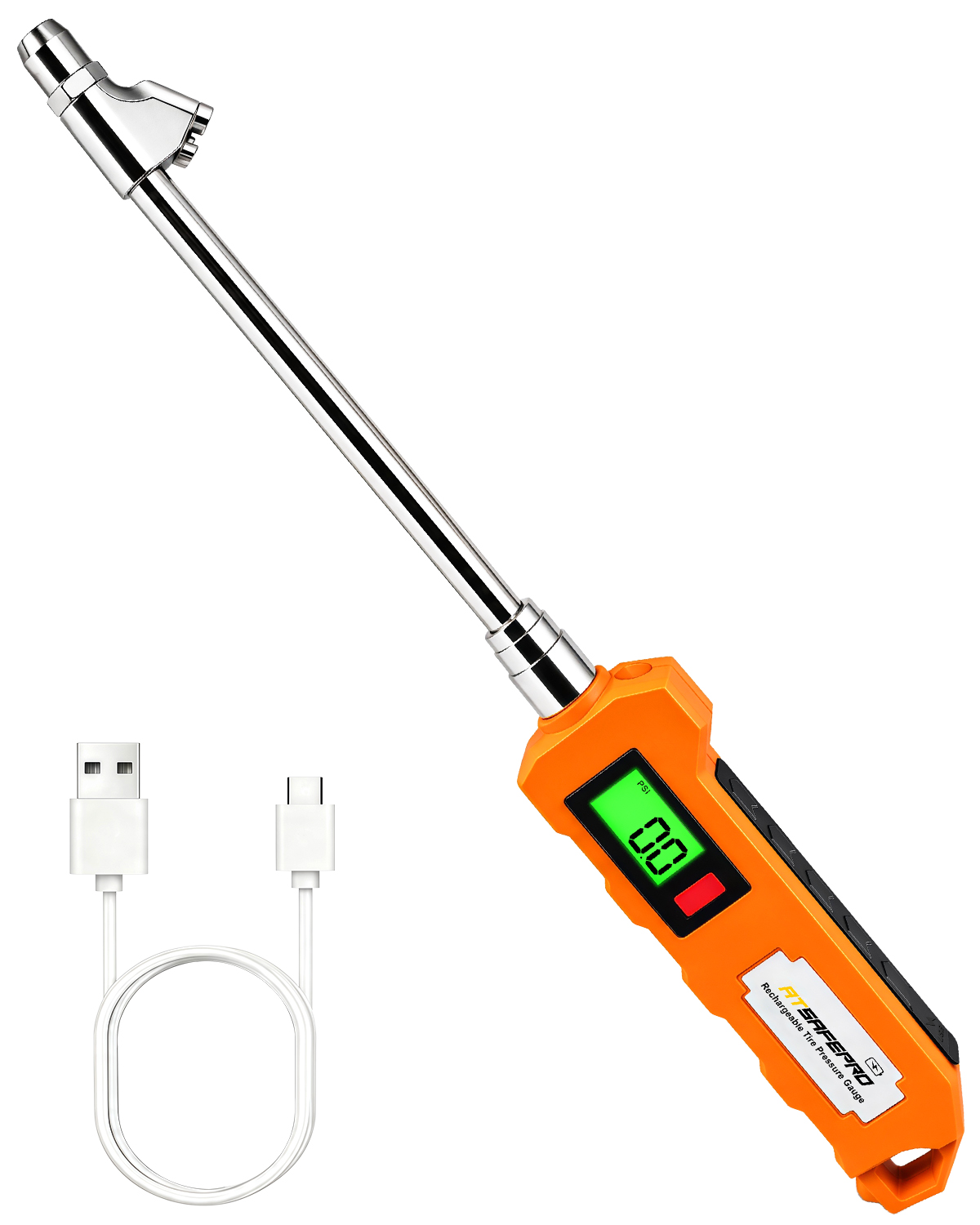
The gauge face uses dual units, bar and psi, which is important in real use. Many shops and distributors deal with mixed standards, and a dual-scale dial avoids the awkward second step of converting pressure on the fly. The dial appears to cover a range up to about 120 psi and 8 bar, which is enough for many passenger-vehicle and light-duty inflation tasks. That said, the visible range is not the same thing as confirmed calibration or working limits, so buyers should still verify the exact specification before ordering for production use.
Why integrated analog gauges still matter
Digital tools get plenty of attention, but analog pressure gauges remain common in workshops for a reason. They are immediate. There is no battery to replace, no screen to read in poor light, and no startup delay. A needle pointer gives a live readout while air is moving, which is useful when a technician is trying to hit a target pressure without a lot of back-and-forth.
There is also a durable, low-fuss quality to this format. In a shop environment, a tool that tolerates being picked up, set down, and used repeatedly is often more valuable than a more delicate instrument. The protective guard around the gauge on the ATsafepro tire pressure gauge suggests the design is trying to address that practical reality. It is a small detail, but one that matters when the tool may be dropped, bumped against a rim, or handled with oily gloves.
How this type of tool is typically used
The basic workflow is familiar to anyone who has used a compressor accessory. The metal fitting connects to the air supply side, the chuck end connects to the tire valve, and the gauge provides a live pressure reading as air enters the tire. In a garage or service station, that lets the operator inflate and monitor in one motion instead of switching between tools.
For buyers, the main question is compatibility. The visible product is described as suitable for cars, motorcycles, bicycles, and other inflatables if the valve type and pressure range match the application. That “if” matters. Different valves, pressure ranges, and inflation habits can make a big difference in day-to-day use. A tool can look universal and still be awkward on a particular fleet, especially if the application includes narrow valve access or repeated use on small wheels.
Where it fits best
This style of tire pressure gauge is best suited to routine maintenance, shop top-offs, and general-purpose inflation where a simple analog reading is enough. It is not trying to be a data logger, a calibrated laboratory instrument, or a specialty fleet-management device. That is fine. Many buyers do not need more than reliable, readable pressure feedback during inflation.
Materials and build: what the visible details suggest
The most visible materials are a black rubber hose, metal connector fittings, and a gauge body with a rubber-like protective ring. The hose likely provides flexibility and resistance to routine handling, while the metal ends offer the rigidity needed for sealing and connection under compressed air. The knurled grip sections are another useful touch. They give the user something to hold when tightening or aligning the tool, and they reduce the chance of slipping when hands are wet or greasy.
From a manufacturing standpoint, this kind of product usually combines several processes: molded rubber or elastomer hose production, machining or forming of metal connectors, and assembly of the gauge module. The internal gauge mechanism is not visible here, so it would be unwise to claim a specific movement type or calibration method. Still, the overall construction points to a practical assembly designed for mixed-material durability rather than decorative finish.
Selection criteria buyers should not skip
Even a straightforward tool deserves a short checklist before purchase. With a tire pressure gauge like this, the first question is pressure range. The visible dial suggests a scale up to around 120 psi and 8 bar, but the buyer should confirm whether that range suits the intended tires. Passenger vehicles, motorcycles, shop equipment, and inflatables can all sit in very different pressure bands.
The second question is readability. A dual-scale gauge is useful only if the markings are clear under the lighting conditions where it will be used. In a dim bay or outdoors at dusk, a crowded dial can slow the operator down. Here, the bold circular gauge format should help, but again, the real test is practical use, not brochure language.
The third issue is grip and ergonomics. The knurled sections and U-shaped hose layout suggest the tool was designed to be held with one hand while the other manages the valve area or compressor hose. That may sound minor, but in repetitive shop work it matters more than buyers expect.
Common mistakes when sourcing this kind of accessory
One common mistake is treating all analog tire inflation tools as interchangeable. They are not. Hose flexibility, connector style, gauge visibility, and the feel of the fittings can change the user experience substantially. A tool that looks similar in a catalog may feel very different in the hand.
Another mistake is assuming the printed scale tells the whole story. A dial showing bar and psi is helpful, but it does not automatically guarantee accuracy, durability, or suitability for a specific fleet. Buyers sourcing for service departments should ask for the actual product specification sheet, especially if the device will be used as a standard workshop tool rather than an occasional convenience item.
A third trap is overlooking valve access. On some wheels, the gauge body or hose angle can make attachment awkward. The ATsafepro tire pressure gauge appears compact enough for general use, but compact does not mean perfect for every rim design or confined valve position.
Practical advice for engineers and sourcing teams
If you are evaluating this product for purchasing, ask how it will be used most often. Occasional top-up use in a garage is a different requirement from repeated daily use in a service operation. The latter places more stress on fittings, hose flexibility, and gauge legibility. If the tool will be handled by multiple operators, simple robustness often matters more than extra features.
Also, keep the end user in mind. A mechanic who wants a fast, tactile tool may prefer the analog readout. A procurement team may focus on compatibility and supply consistency. A product team packaging accessories for retail sale may care about the clear dual-unit scale, which is easier to explain to end customers than a specialized reading format.
It is also worth being cautious about assumptions. Unless the supplier provides verified data, do not assume exact hose length, hose diameter, maximum working pressure, or calibration accuracy. Those are not small details; they define whether the product fits a workshop’s actual workload.
What the ATsafepro tire pressure gauge tells us about the category
This product reflects a long-standing truth in pneumatic accessories: useful tools are often the ones that combine a few functions cleanly rather than trying to do everything. The integrated gauge removes one step from inflation. The protective ring reduces obvious handling damage. The metal fittings and rubber hose suggest a working-tool mindset rather than a lightweight novelty.
For many buyers, that is enough. They are not shopping for a showroom piece. They are looking for a hand tool that can be connected, read, and trusted in routine maintenance. If the fit, scale, and build quality align with the intended use, that is a sensible buy.
FAQ
Is this only for car tires?
No, not necessarily. The visible product is suitable for vehicle tires and may also be used for motorcycles, bicycles, and other inflatables, but only if the valve type and pressure needs match the tool.
Does the dual gauge help in international sourcing?
Yes. A bar and psi scale makes it easier for teams working across regions or with mixed documentation standards. It reduces conversion errors and speeds up everyday use.
Can I assume professional-grade performance?
Not from the image alone. The design looks practical and workshop-friendly, but professional-grade performance depends on verified specifications, build quality, and calibration data supplied by the manufacturer or seller.
Next step for buyers
If you are considering the ATsafepro tire pressure gauge for procurement, ask for the full specification sheet and confirm valve compatibility, pressure range, hose dimensions, and any available documentation on accuracy or testing. That is the difference between a tool that merely looks right and one that fits a real maintenance workflow.
For sourcing managers and product teams, the safest approach is to match the tool to the actual use case first, then compare finish, ergonomics, and supply consistency. A straightforward analog inflator-gauge assembly can be a very practical part of the kit, but only when the details line up with the job.