Urban vs Rural Driving: Different Tire Care Priorities

  • blog
Posted by ATSAFEPRO On Sep 06 2025

 ATSAFEPRO tire tools

Urban vs Rural Driving: Different Tire Care Priorities

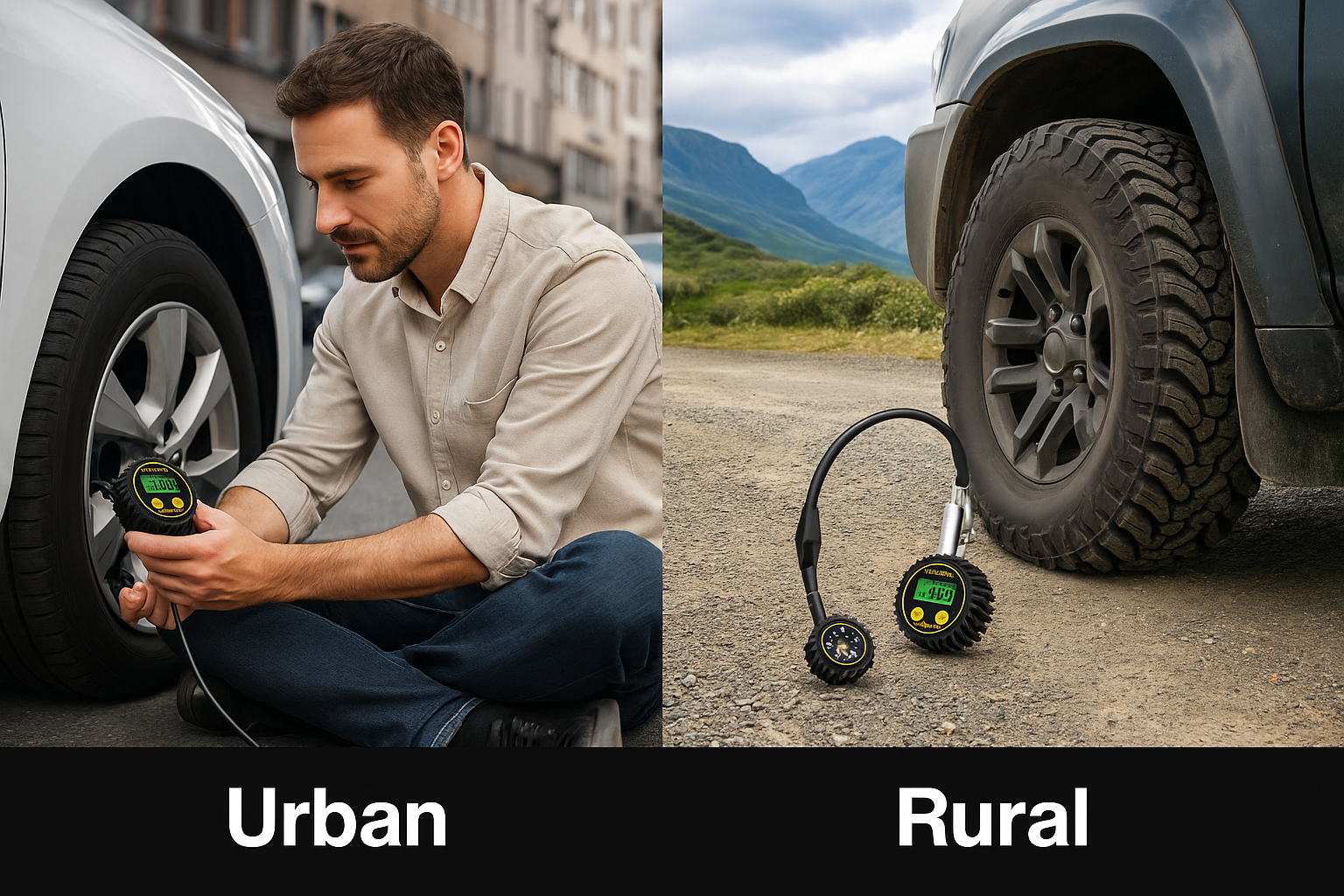
How Driving Environments Shape Tire Stress

City and rural driving may seem like simple lifestyle differences, but they expose tires to very different challenges. Urban drivers deal with smooth but congested roads, frequent braking, and sharp cornering. These create heat buildup and uneven tread wear. Rural drivers, on the other hand, face gravel, dirt, potholes, and long stretches without service stations. Here, tires are at risk of punctures, sidewall cuts, and faster tread degradation. Recognizing these unique conditions helps you plan a smarter tire care routine.

Tire Care Priorities for Urban Drivers

In city driving, traffic density and stop-and-go patterns put special demands on tires:

  • Frequent Pressure Checks: Heat from braking and acceleration raises PSI, often leaving tires overinflated. Using an accurate tire pressure tool prevents wear on center tread.

  • Front Tire Wear: Constant braking loads the front tires disproportionately. Scheduling rotations every 5,000 miles balances tread life.

  • Potholes and Curbs: Hidden road hazards in parking lots or side streets can bend rims and bruise sidewalls. Weekly visual inspections help catch damage early.

  • Fuel Efficiency: With urban fuel use already high, underinflated tires only worsen mileage. A digital tire gauge from ATSAFEPRO ensures you stay efficient.

Tire Care Priorities for Rural Drivers

Rural environments demand durability and consistency:

  • Protection Against Punctures: Gravel, nails, and uneven terrain make flats more common. Keeping a portable tire inflator with gauge ensures you can refill after minor leaks and get to safety.

  • Tread Depth Monitoring: Dirt and rough roads wear tread faster. A tread depth gauge helps confirm when traction is no longer safe.

  • Long-Distance Pressure Stability: On long rural commutes, tires can lose PSI gradually. Monthly checks are essential to avoid sidewall fatigue.

  • Seasonal Adjustments: Rural climates often swing from extreme cold to intense heat, amplifying pressure changes. A quick reading with an ATSAFEPRO digital inflator gauge prevents underperformance in harsh weather.

Long-Term Impact on Vehicle Lifespan

Ignoring these priorities shortens not only tire life but the overall health of your car. Underinflated tires strain the suspension, worn tread increases brake load, and sidewall damage can lead to blowouts. Over time, these issues translate into higher maintenance costs and reduced vehicle lifespan. By adopting tailored habits—urban drivers focusing on rotation and pressure stability, rural drivers emphasizing puncture readiness and tread checks—you protect both safety and investment.

Tools That Simplify Tire Care Everywhere

  • ATSAFEPRO Digital Tire Gauge: Delivers ±0.5 PSI accuracy, preventing guesswork in both urban and rural conditions.

  • ATSAFEPRO Portable Inflator With Gauge: Compact yet powerful, ideal for roadside emergencies and daily checks.

  • ATSAFEPRO Tread Depth Gauge: Shows exact wear levels, ensuring tires are replaced before they compromise safety.

These tools transform maintenance from a chore into a routine you can manage at home or on the go.

Smarter Tire Habits for Every Driver

Whether you’re navigating crowded city streets or rural backroads, tire care must reflect your environment. City drivers benefit from pressure stability and rotations, while rural drivers rely on puncture prevention and tread monitoring. With the right tools—like those from ATSAFEPRO—these habits become quick, reliable, and cost-saving.

Explore ATSAFEPRO tire tools or connect via Contact Us to find solutions tailored to your driving lifestyle.
Featured Blogs

Tag:

  • Blog
Share On
Featured Blogs
ATsafepro Torque Wrench: What Buyers Should Check Before Ordering

ATsafepro Torque Wrench: What Buyers Should Check Before Ordering

1. ATsafepro torque wrench: what buyers should look for before they put one in a cart 2. 1. What the kit appears to be for 3. 2. What you can verify from the visible design 4. 3. Why socket material and markings matter 5. 4. Quick buyer checklist for an adjustable click-type torque wrench set 6. 5. Where buyers tend to get tripped up 7. 6. Practical notes for shops, fleets, and retail buyers 8. 7. Short takeaways for procurement teams 9. 8. FAQ: common questions buyers ask 10. 9. A sensible next step

ATsafepro Torque Wrench Review: What Buyers Should Check

ATsafepro Torque Wrench Review: What Buyers Should Check

1. A practical look at the ATsafepro torque wrench: what buyers are really checking 2. What stands out in the kit 3. How a click-type torque wrench helps in daily work 4. What the visible construction suggests 5. Where this kind of kit fits best 6. How buyers should evaluate it before purchase 7. Common mistakes buyers make with torque tools 8. A short interview-style takeaway from the shop floor 9. What to ask the supplier before you commit 10. Bottom line for buyers

ATsafepro Torque Wrench Review: Features, Uses, and Buyer Fit

ATsafepro Torque Wrench Review: Features, Uses, and Buyer Fit

1. Why buyers keep asking about the ATsafepro torque wrench 2. Quick take: what this set appears to be built for 3. Interview notes from a buyer’s point of view 4. What the visible design tells you 5. Socket set inclusion: where this package adds value 6. Selection criteria that matter more than the product photo 7. Common mistakes buyers make with torque tools 8. Practical use cases where this set looks sensible 9. Buyer-facing cautions worth saying out loud 10. FAQ 11. What a smart next step looks like

ATsafepro torque wrench: What this adjustable click-type kit offers

ATsafepro torque wrench: What this adjustable click-type kit offers

1. Why an adjustable click-type torque wrench kit matters in real shop work 2. What this kit appears to offer at a glance 3. How a click-type torque wrench works 4. Best use cases for a kit like this 5. Selection criteria buyers should check before specifying one 6. Common mistakes when using a torque wrench kit 7. What the visible construction suggests about durability 8. How to use the kit well in day-to-day work 9. Who should buy this type of kit 10. FAQ 11. What to do next

ATsafepro Torque Wrench: What Buyers Should Check Before Use

ATsafepro Torque Wrench: What Buyers Should Check Before Use

1. ATsafepro torque wrench: what buyers should look for before putting one in service 2. What this kit appears to be 3. Why torque control matters in the shop and garage 4. Quick buyer read: what matters most in a kit like this 5. How a click-type torque wrench is typically used 6. Materials and construction cues buyers can actually inspect 7. Common mistakes when buying a torque wrench kit 8. Practical selection advice for different buyers 9. FAQ 10. What a careful buyer should do next

ATsafepro torque wrench: what buyers should look for in a wheel-service kit

ATsafepro torque wrench: what buyers should look for in a wheel-service kit

1. What is in the kit? 2. Why the socket assortment matters 3. How a click-type torque wrench helps prevent damage 4. Material and construction: what the image suggests 5. Where this type of kit fits best 6. What buyers should verify before ordering 7. Common buyer mistakes with torque wrench kits 8. Quick buyer FAQ 9. Final buyer take