ATsafepro torque wrench: what buyers should look for before they put one in a cart
If you are comparing an ATsafepro torque wrench against the usual pile of service tools, the real question is not whether it looks the part. It is whether the kit gives you controlled tightening, quick changeover, and enough accessory coverage to solve everyday fastening jobs without improvising. That matters most in automotive work, roadside tire service, and general maintenance, where under-tightening leaves hardware loose and over-tightening creates its own mess a week later.
This kind of torque wrench kit is built for a very specific decision: do you need a single wrench, or do you need a boxed set that helps you work on wheel lugs, bolts, and mixed fastener sizes with less hunting around for sockets? The visible design points toward the second option.
1. What the kit appears to be for
The visible product category is a torque wrench kit, more specifically an adjustable click-type torque wrench set. That tells you a lot. A click-type wrench is designed to give a tactile or audible signal when the preset torque level is reached, which is why it remains common in shops that want simple, repeatable tightening rather than digital readouts.
From the visible accessories, this set looks aimed at practical service work:
- Automotive wheel lug tightening
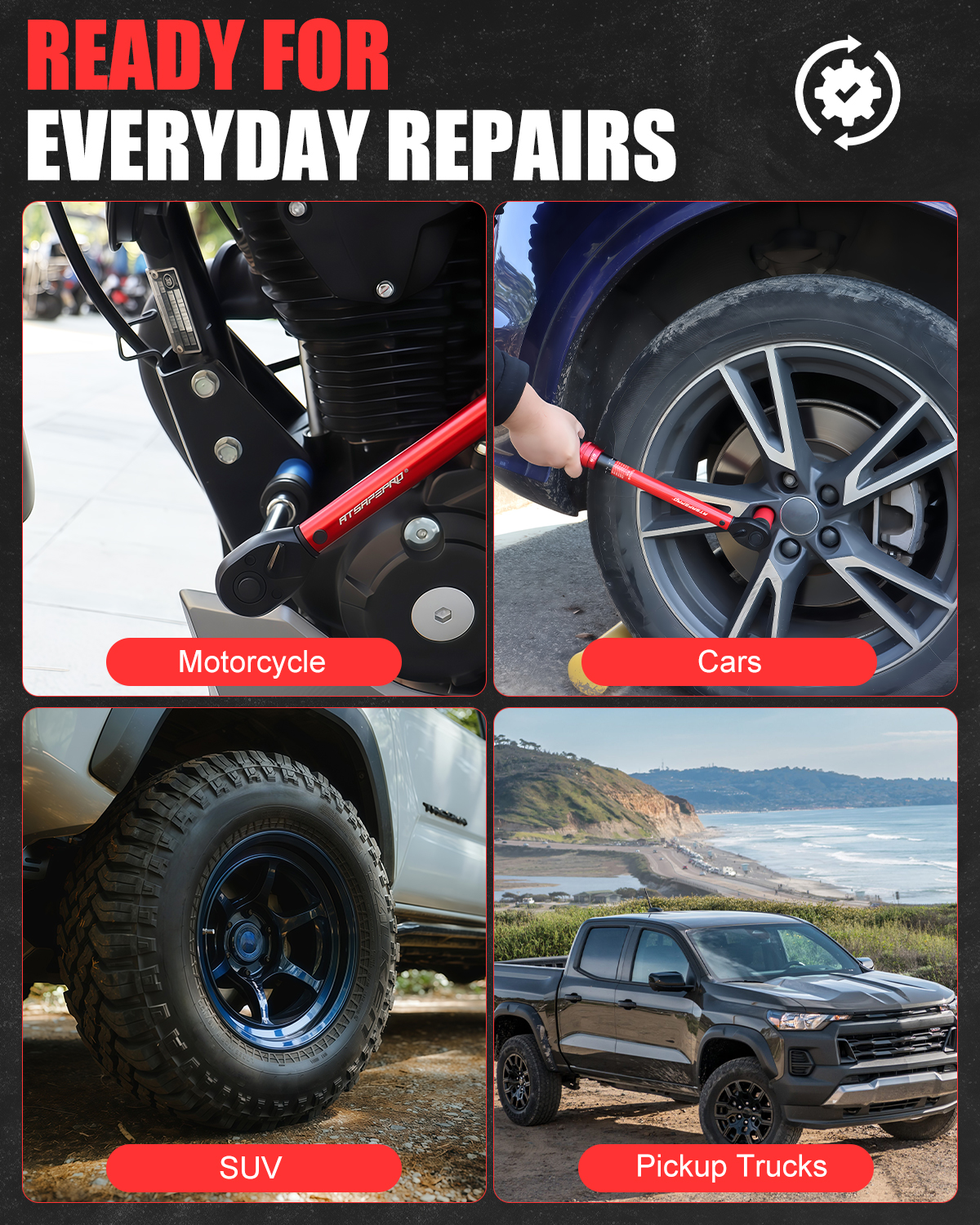
- Tire changes and roadside tool kits
- General mechanical assembly and maintenance
- Tasks that need socket changes without rebuilding the whole setup
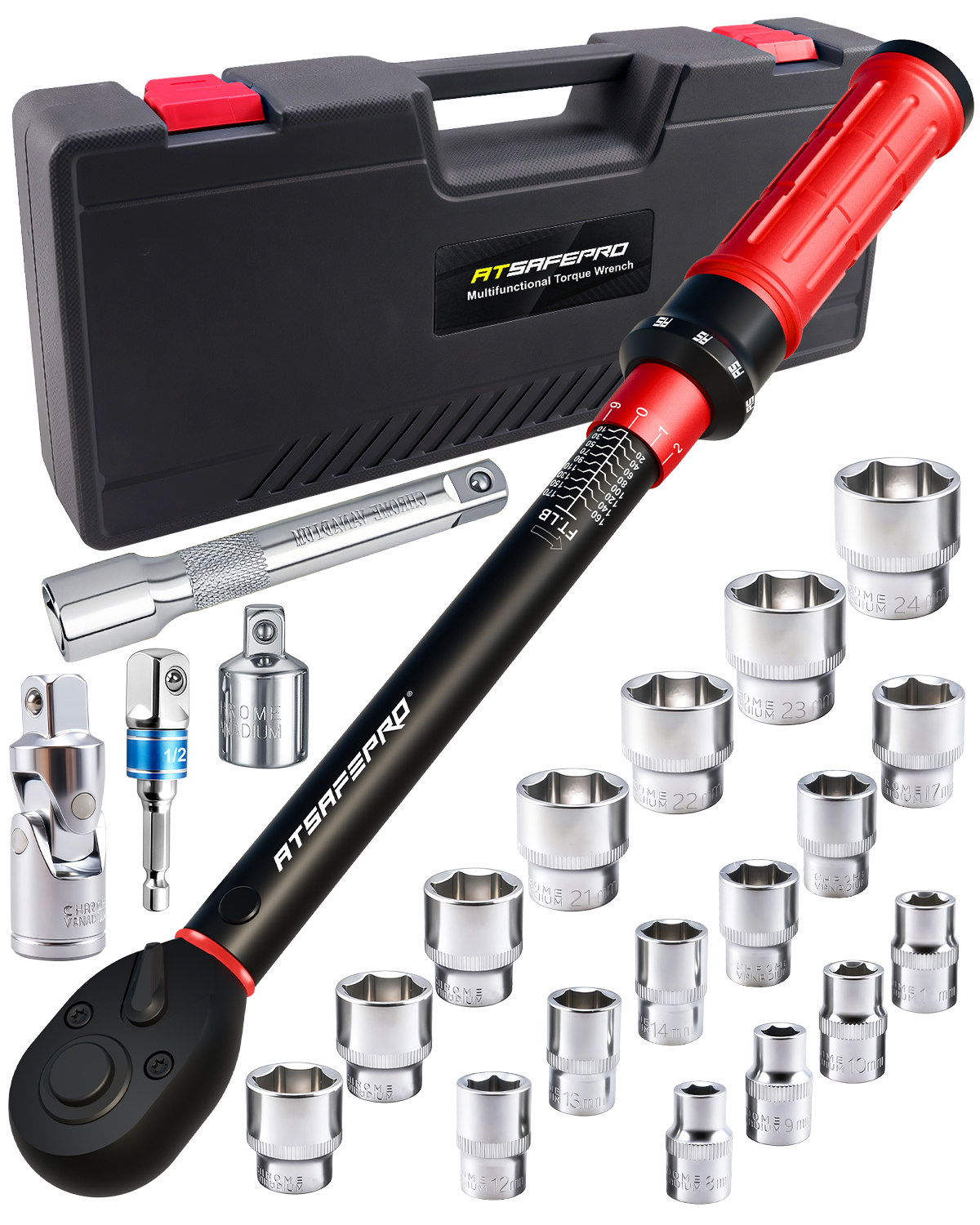
The sockets shown in the kit include visible sizes such as 17 mm, 19 mm, and 21 mm. Those sizes are familiar in wheel and chassis work, which is one reason this sort of set often lands in trunks, service bays, and field repair kits.
2. What you can verify from the visible design
A lot of buying mistakes start with guessing. Here, the image gives a few concrete clues that are more useful than marketing language.
Torque scale on the wrench shaft
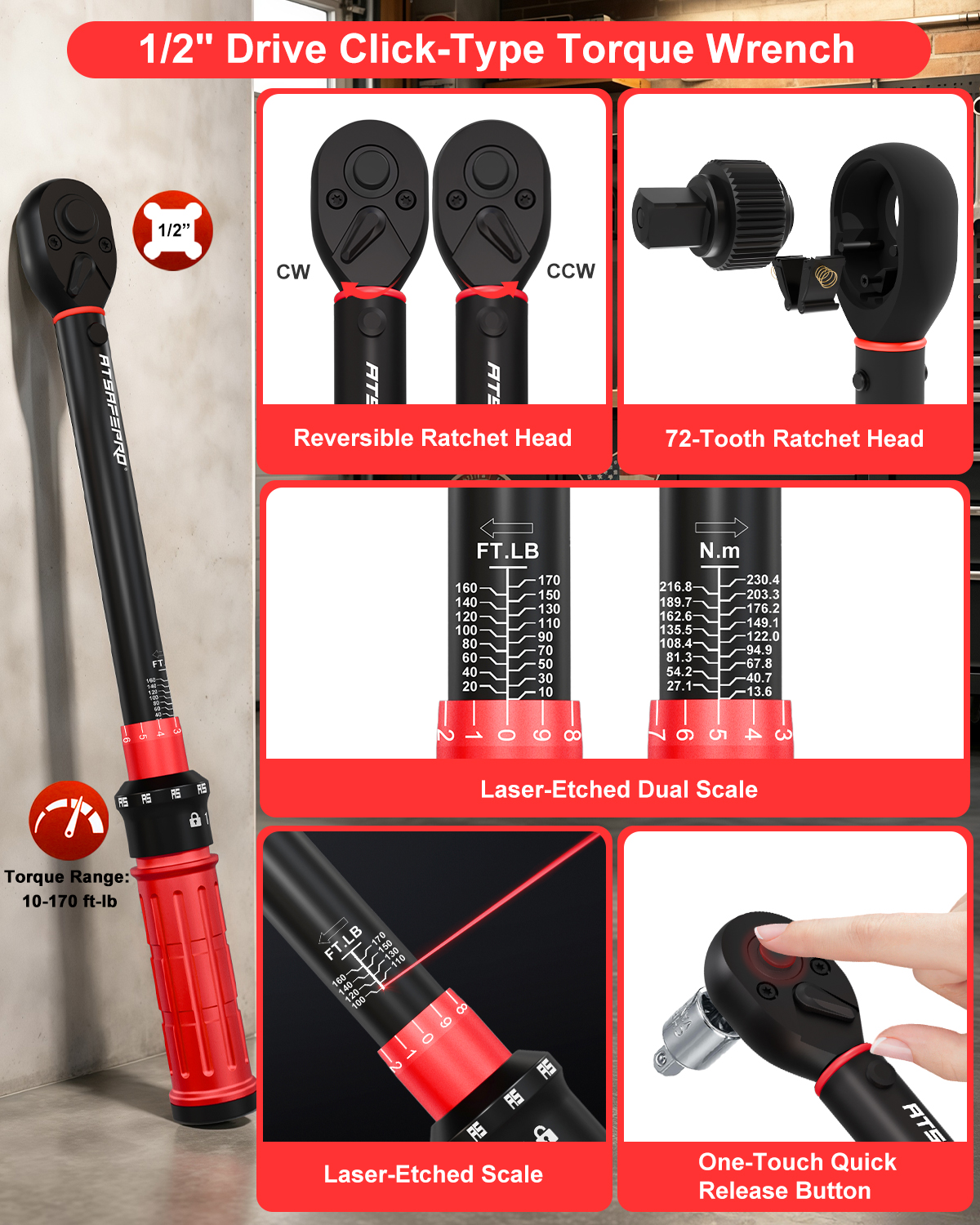
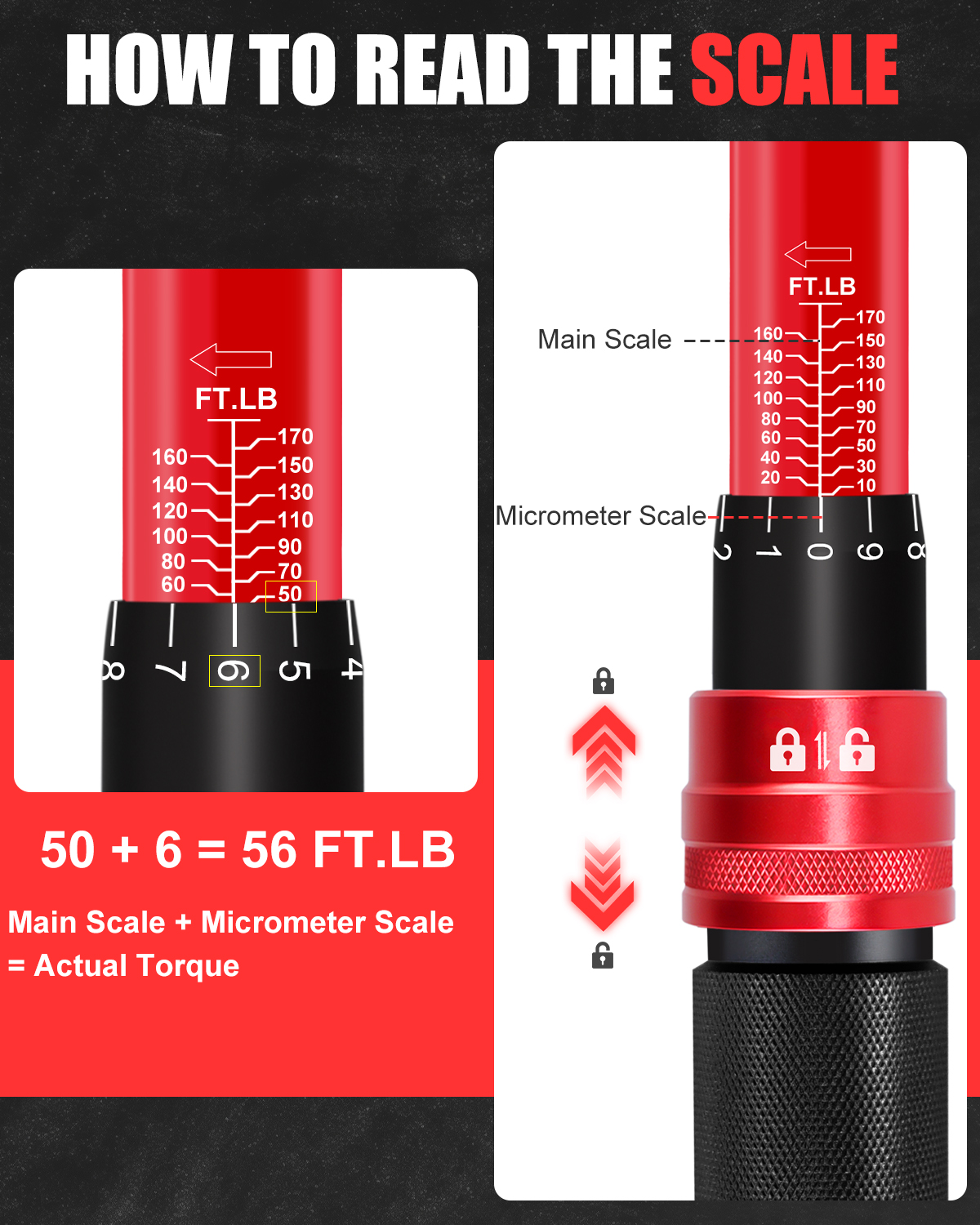
The wrench has a printed scale on the shaft. That is not a small detail. A readable torque scale is what lets the user set a target value instead of tightening by feel. For buyers, the scale layout matters as much as the tool itself, because a hard-to-read marking can slow down even a simple job.
Long red metal wrench body
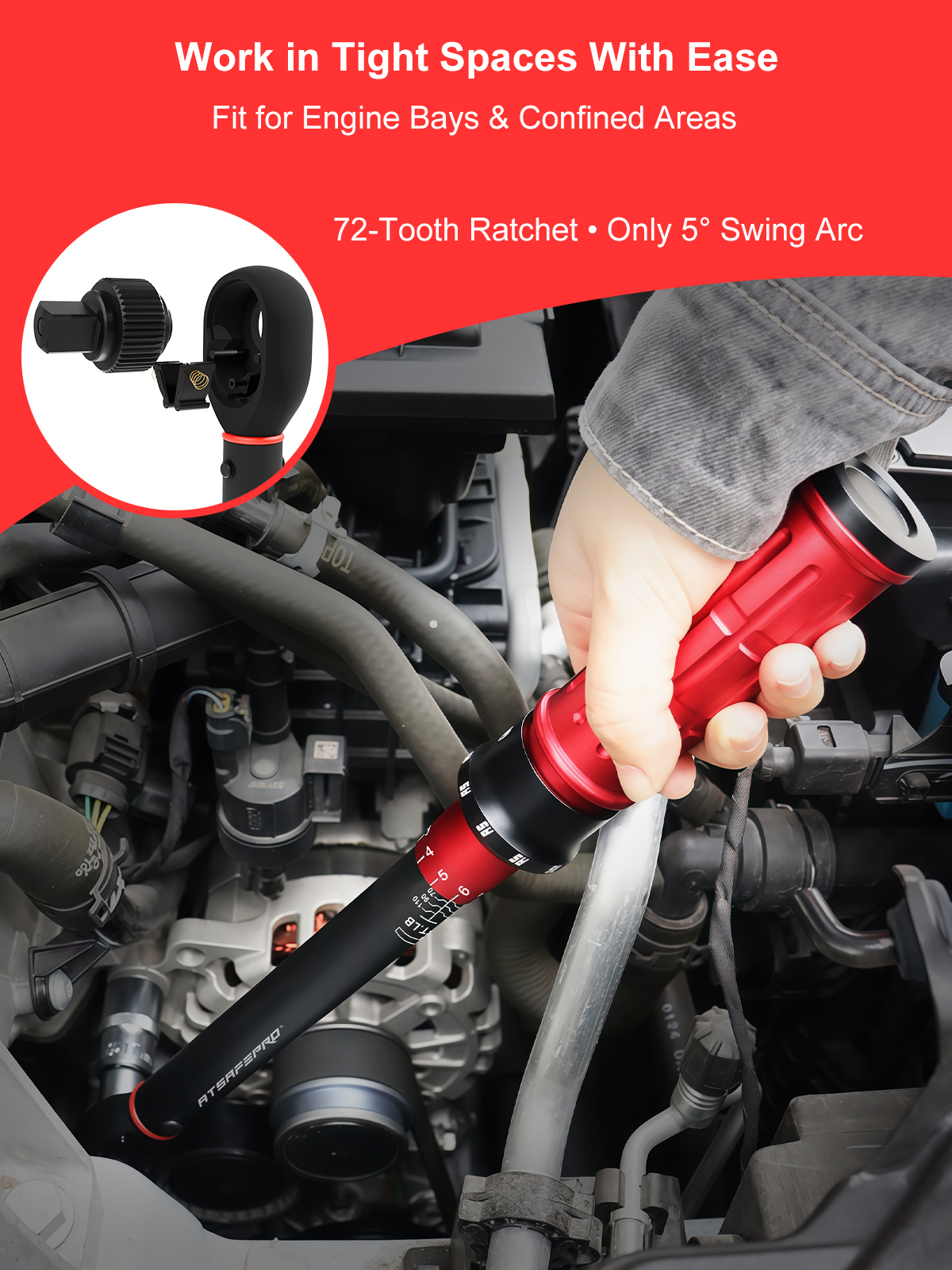
The wrench body appears to be metal with a red painted or anodized-looking finish. The length suggests leverage for controlled tightening, though the exact length is not confirmed. In practice, longer handles help with smoother pull application, but they also make storage and trunk carry a little more awkward. That tradeoff is normal.
Black textured grip
The handle has a black knurled or textured grip, likely polymer or rubber-coated. That is a sensible choice for shop use because torque tools are often handled with oily hands, and a slick grip is a nuisance at the exact moment you want control.
Storage case and accessory layout
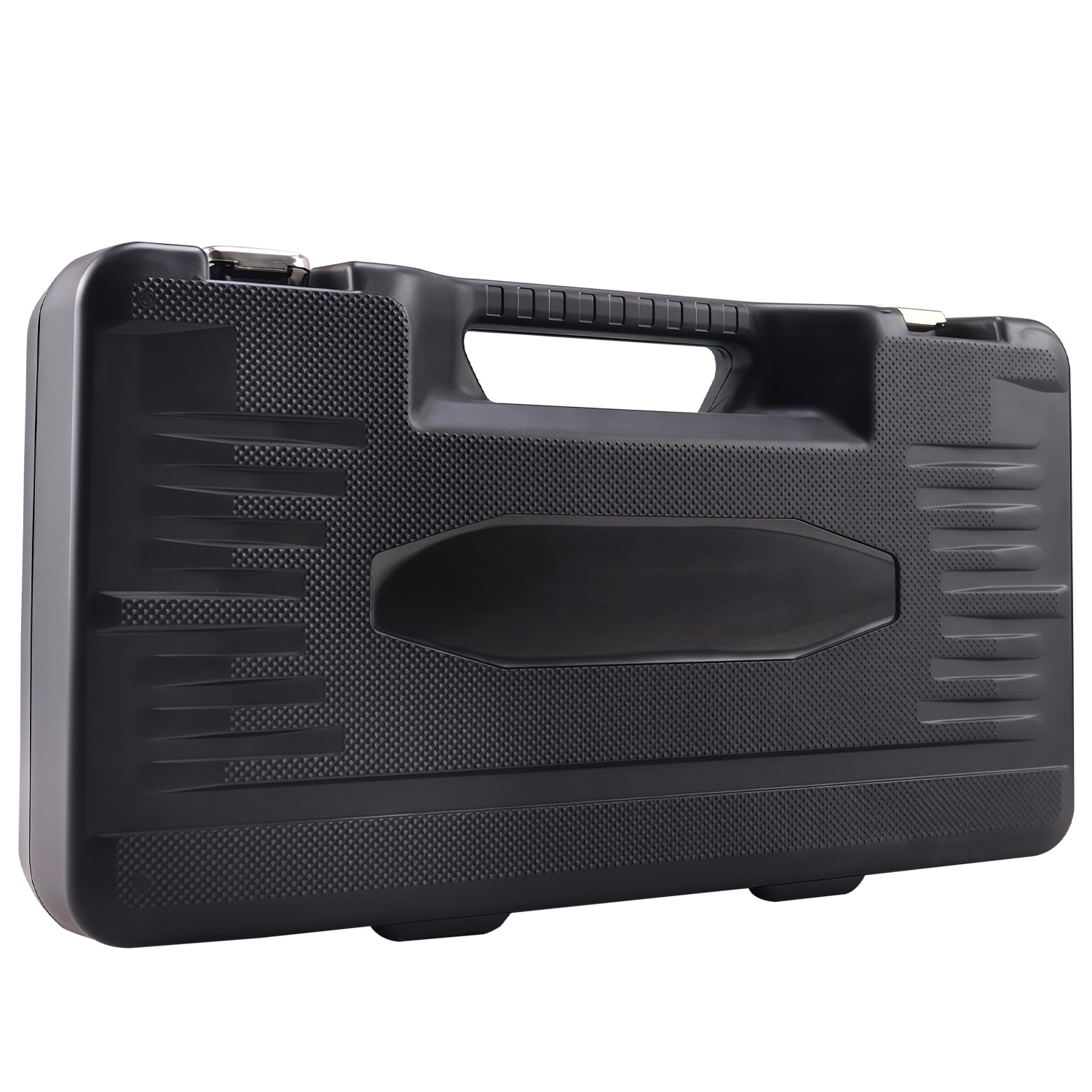
The black molded plastic case with fitted interior is one of the stronger practical signals here. A case is not just packaging; it protects the wrench, keeps sockets together, and makes it easier to return the tool to zero or store it in a fixed position. Buyers who have lost adapters in a tool drawer know the value of that immediately.
3. Why socket material and markings matter
Some of the visible socket pieces are marked “CR-MO,” and sizes such as 17 mm, 19 mm, and 21 mm are visible on the black base sections. CR-MO is a common shorthand for chrome-molybdenum alloy, often used in impact-style socket families. Based on the visible markings, this set is trying to cover heavier-duty fastening rather than delicate bench work.
That said, it is worth keeping one caution in mind: not every socket in a mixed kit has the same duty rating just because it looks dark or comes with sleeves. If a buyer plans to use the set on stubborn wheel hardware or with impact tools, they should confirm the socket rating from the actual product listing or documentation rather than assuming the whole kit is one uniform grade.
The chrome extension or adapter piece also points to a broad-use kit philosophy. Adapters are handy, but they are also the sort of accessory that gets overused as a workaround. A good shop will treat adapters as convenience pieces, not a substitute for the correct drive and socket combination.
4. Quick buyer checklist for an adjustable click-type torque wrench set
If you are evaluating this type of set for procurement or shop use, focus on the things that affect day-to-day work rather than the catalog gloss.
- Can you read the torque scale quickly under shop lighting?
- Does the handle feel secure enough for controlled pull application?
- Are the included socket sizes actually useful for the jobs you do most?
- Does the storage case hold everything without rattling loose?
- Are the sockets and adapters matched to the kind of fastening you plan to do?
- Will the kit simplify service, or just add more parts to manage?
This is especially important in fleet maintenance or tire service, where downtime is tied to speed and repeatability. A torque wrench set should reduce steps, not create a scavenger hunt.
5. Where buyers tend to get tripped up
Torque tools are straightforward in theory and fussy in real life. A few common mistakes show up again and again.
Using the tool as if it were a breaker bar
A click-type torque wrench is for controlled tightening, not for breaking loose seized fasteners. If a buyer uses it as a leverage bar, accuracy and calibration can suffer. That warning sounds obvious, but in busy service environments the wrong tool gets pressed into duty more often than anyone likes to admit.
Ignoring the fastener and socket fit
The presence of 17 mm, 19 mm, and 21 mm sockets is useful, but buyers should still check whether those are the correct sizes for their vehicles or machinery. The wrong fit can round fasteners, which turns a quick job into a drill-out problem.
Assuming every kit is calibrated the same way
The exact torque range, accuracy tolerance, and calibration certification are not visible here, so those should be verified before purchase if the tool is going into a quality-controlled environment. For consumer use, that may be less critical. For production or maintenance records, it is not optional.
6. Practical notes for shops, fleets, and retail buyers
This kind of torque wrench kit makes the most sense when the buyer wants a ready-to-use package rather than building one piece by piece. That is particularly true for service trucks, tire shops, and mixed maintenance teams. The case keeps accessories organized, and the combination of wrench plus sockets can cover a decent amount of routine work.
For retail buyers, the value often lies in convenience. For a shop, the value lies in reducing missing-tool problems and keeping a standard setup available for common fastening tasks. Those are different purchasing goals, and the right answer is not always the more expensive option.
If the kit is being considered for automotive wheel work, one practical aside: wheel fasteners are not a place to be casual. Even a well-made torque wrench is only as useful as the person using it. Clean threads, correct specification, and proper tightening sequence matter just as much as the tool in hand.
7. Short takeaways for procurement teams
- The ATsafepro torque wrench appears positioned as a kit, not just a standalone wrench.
- Visible socket sizes suggest wheel and general service applications.
- The case, adapters, and socket selection add practical value for field use.
- Some key specifications are not visible, so buyers should confirm torque range, drive size, and calibration details before ordering in volume.
- CR-MO markings on some sockets point toward heavier-duty use, but the full material story should still be checked.
8. FAQ: common questions buyers ask
Is this only for automotive work?
No. Automotive use is the clearest fit, but the tool also suits general mechanical maintenance and assembly tasks where controlled tightening matters.
Can I use the sockets with impact tools?
The visible CR-MO markings suggest impact-style socket design on some pieces, but that should be confirmed for the exact parts in the set before using them with an impact tool.
What should I verify before purchase?
Check torque range, drive size, calibration information, and whether the included sockets match your actual fastener sizes. Those are the details that determine whether the kit is useful or merely complete-looking.
Is the case important?
Yes, more than many buyers expect. A fitted case reduces lost accessories and makes the wrench easier to store in a service vehicle or shop drawer.
9. A sensible next step
If you are sourcing an ATsafepro torque wrench for a shop, fleet, or maintenance kit, start by matching the visible strengths of the set to the work you actually do: wheel lugs, common metric fasteners, and jobs that benefit from a packaged wrench-and-socket solution. Then confirm the missing specifications before making a final buying decision. That is the unglamorous part, but it is where good purchasing decisions usually get made.