ATsafepro torque wrench vs. ordinary hand tightening: what changes in the shop
If you are comparing an ATsafepro torque wrench with a plain ratchet, breaker bar, or “tight enough by feel” method, the real question is not which tool looks stronger. It is which approach gives you repeatable clamping force without damaging threads, warping parts, or leaving a wheel nut too loose for road use. That is the practical decision behind torque-controlled fastening, especially in automotive and maintenance work where the same fastener may need to be serviced, removed, and retightened more than once.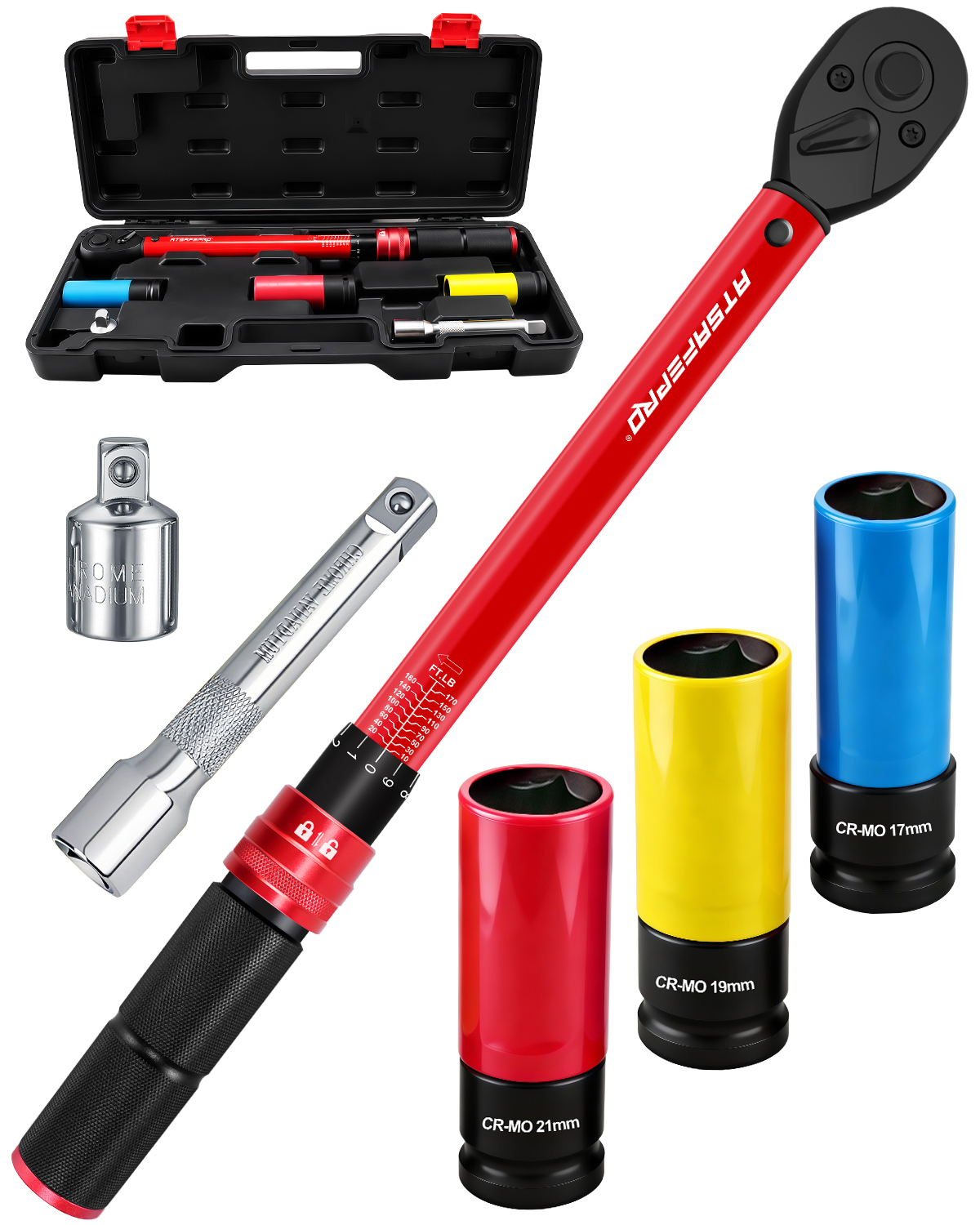
This is where a click-type adjustable torque wrench earns its place. The visible ATsafepro kit combines a red metal wrench body, a black ratcheting head, a knurled grip handle, printed torque markings, and a hard carry case with several socket pieces and an adapter. On paper, that sounds straightforward. In practice, it is the kind of kit that can suit a driver, technician, or small repair team because it travels well and covers more than one fastener size. The trade-off is that you still need to understand what the tool does well, and where a simple socket set or larger shop-grade wrench might be the better buy.
Quick comparison: torque wrench set, standard ratchet, and impact tool
For buyers scanning options, the differences are worth stating plainly.
A standard ratchet is about speed and access. It is excellent for loosening fasteners and for general assembly, but it does not tell you how much load you are applying.
An impact tool is about force and productivity. It can break stubborn hardware free and install fasteners quickly, but it is not the tool you reach for when the final tightening value matters.
A torque wrench, by contrast, is about controlled final tightening. That matters when the fastener preload affects safety, sealing, alignment, or service life. Automotive lug nuts are the obvious example, but the same logic applies to machine covers, brackets, frames, and many maintenance tasks.
The ATsafepro torque wrench kit shown here sits in that middle ground: portable, multi-piece, and aimed at users who want a hand tool set rather than a bench-level measuring instrument. That makes it useful, but it also means the buyer should pay attention to the visible scale, the adjustment mechanism, and the socket selection rather than assuming one kit handles every fastening job.
What the visible kit suggests about real-world use
From the product information, the wrench appears to have a long metal shaft with a coated or anodized finish, a black knurled grip, and a ratcheting head. That layout is common in click-type adjustable torque wrenches because it gives the user leverage, hand control, and a clear point at which the mechanism signals the target torque has been reached.
The included case is not a small detail. In the field, loose tools get separated, torque settings get changed accidentally, and sockets wander off into other jobs. A hard storage case helps keep the wrench and its accessories together, which is a practical advantage for mobile mechanics, fleet maintenance staff, or DIY users who do not want a half-complete kit under a truck seat.
The visible sockets are marked CR-MO 17mm, 19mm, and 21mm, plus an additional adapter or extension. That points toward automotive wheel service and similar tasks where common hex sizes are needed. One caution: the visible markings do not by themselves confirm impact rating, surface hardness, or suitability for use with an impact gun. For hand torque work, that distinction matters less than it does in impact applications, but it is still worth checking before assuming the accessories are interchangeable across every shop workflow.
Why torque control matters more than many buyers expect
A fastener can fail in several ways even when it appears tight. Under-tightening may allow movement, gasket seepage, joint relaxation, or even wheel loosening in service. Over-tightening can stretch studs, crush sealing surfaces, strip threads, or make future disassembly unnecessarily destructive. The problem is that “snug” is not a process control method.
That is why maintenance teams often separate fastening into two steps: run down the fastener quickly, then final-torque it with a calibrated wrench or a properly set adjustable torque wrench. The adjustable wrench is doing the part that human judgment is worst at, namely repeatable final load.
For vehicle work, the issue can be obvious. For machinery assembly, it can be more subtle. Brackets, covers, and frame joints may not seem critical, but uneven tightening can still create vibration issues or localized distortion. A torque wrench does not make the joint perfect; it simply makes the tightening process far more consistent than hand feel alone.
How this style of wrench compares with other common options
Click-type adjustable wrench
This is the category the ATsafepro torque wrench appears to fit. The user sets a target value on the scale, tightens the fastener, and feels or hears the click when the preset torque is reached. That makes it easy to use in routine shop work, though it still requires a steady hand and an understanding of how to read the scale correctly.
Beam-style wrench
A beam wrench is simple and durable, with a direct visual reading. It is often valued for its straightforwardness, but it can be slower to use and less convenient in cramped workspaces.
Digital torque wrench
Digital tools can offer more features and clearer readouts, but they add cost, batteries, and sometimes more delicate handling requirements. For many buyers, especially in general repair or automotive service, that is more wrench than necessary.
Compared with those alternatives, the ATsafepro kit appears to be a practical general-purpose package rather than a specialized precision instrument. That is not a flaw. It just defines the buying decision.
What to check before choosing a kit like this
Torque wrench buying mistakes often start with one assumption: “it has sockets, so it will fit my job.” Sometimes yes. Sometimes no.
First, confirm the drive size and overall torque range before purchase if the application is critical. Those details are not fully visible here, so a buyer should verify them from the seller or product sheet rather than guessing from appearance.
Second, think about the fastener sizes you actually use. The shown 17mm, 19mm, and 21mm sockets make sense for wheel service and similar mechanical work, but they do not cover every fastener family.
Third, decide whether portability or shop specialization matters more. A cased set is ideal for travel, roadside service, or one-tool convenience. A larger workshop may prefer a dedicated torque wrench lineup for different ranges instead.
Fourth, check whether the wrench is intended for final tightening only. Most click-type torque wrenches should not be used to break fasteners free. That is a common misuse, and one that shortens tool life.
Common mistakes buyers make with adjustable torque wrenches
The first mistake is using the tool like a regular ratchet. A torque wrench should not become your all-purpose loosen-and-tighten handle. That habit can wear the mechanism and make readings less trustworthy over time.
The second mistake is setting torque from memory instead of reading the scale carefully. Small errors can matter, especially on wheel hardware or threaded assemblies with sensitive materials.
The third is ignoring the accessory stack. A socket, extension, or adapter changes reach and access, and in some jobs that is exactly what you need. In others, extra length changes the feel of the tool and makes the setup less convenient in tight spaces. Not every extension is a problem, but buyers should understand when they are adding parts and why.
The fourth mistake is expecting one kit to be universal. A compact set with a few sockets can be very useful, but universal is a slippery word in tooling. It usually means “broad enough for common work,” not “covers every shop requirement.”
Who this kind of kit suits best
The ATsafepro torque wrench kit looks best suited to users who need controlled tightening in a portable format: DIY vehicle owners, mobile repair workers, maintenance technicians, and small shops that value organized storage. It is also a sensible choice for anyone who wants a straightforward mechanical tool instead of a battery-powered or highly specialized alternative.
It may be less suitable for buyers who need verified calibration documentation, a narrow torque band for engineering-critical work, or a larger industrial tool program with formal tool control. Those users usually need more documentation than a retail-style kit typically shows at first glance.
Practical buyer advice before you order
Look closely at the fastener types you service most often. If your work centers on common automotive wheel sizes and general fastening, a cased wrench set with 17mm, 19mm, and 21mm sockets is immediately useful. If your jobs vary widely, check whether additional sockets or a different drive system would save time later.
Also, treat the printed torque scale as a feature worth inspecting rather than a decorative line on the shaft. On any adjustable wrench, clear markings and an easy adjustment feel matter more in daily use than a flashy finish.
If you need a torque wrench for professional assembly or repair, the smartest next step is to confirm the actual torque range, adjustment method, and accessory compatibility before buying. That is the difference between a kit that lives in the drawer and one that gets used every week.
FAQ
Is the ATsafepro torque wrench mainly for automotive work?
It appears well matched to automotive and general mechanical fastening, especially wheel-related jobs and routine maintenance.
Can I use the included sockets with impact tools?
Not enough information is provided to confirm that. The visible CR-MO markings suggest a metal socket construction, but impact suitability should be verified before use with an impact tool.
Is a torque wrench better than tightening by feel?
For critical fasteners, yes. It gives more consistent clamping force and reduces the risk of under- or over-tightening.
What should I confirm before buying?
Check the actual torque range, drive size, calibration or accuracy details if required, and whether the included sockets match your common fastener sizes.
What to do next
If you are comparing the ATsafepro torque wrench to other shop tools, start with your actual fastening tasks rather than the spec sheet alone. Match the wrench to the job, the fastener sizes, and the level of control you need. That simple filter will tell you quickly whether this kit is a practical buy or just another tool taking up case space.