Tire Tools Every Cyclist Should Carry for Safer Rides

  • blog
Posted by ATSAFEPRO On Aug 29 2025

 ATSAFEPRO cycling tools

Tire Tools Every Cyclist Should Carry for Safer Rides

Why Tire Care Matters More for Cyclists

Unlike cars, bicycles rely on narrow contact patches with the road, making tire health critical. Even slight underinflation can lead to sluggish handling, higher rolling resistance, or pinch flats. Overinflation reduces grip on wet or uneven surfaces. For long-distance riders or daily commuters, small tire issues can quickly become serious safety hazards. That’s why having the right tire tools on hand is essential.

Digital Tire Pressure Gauges for Precision

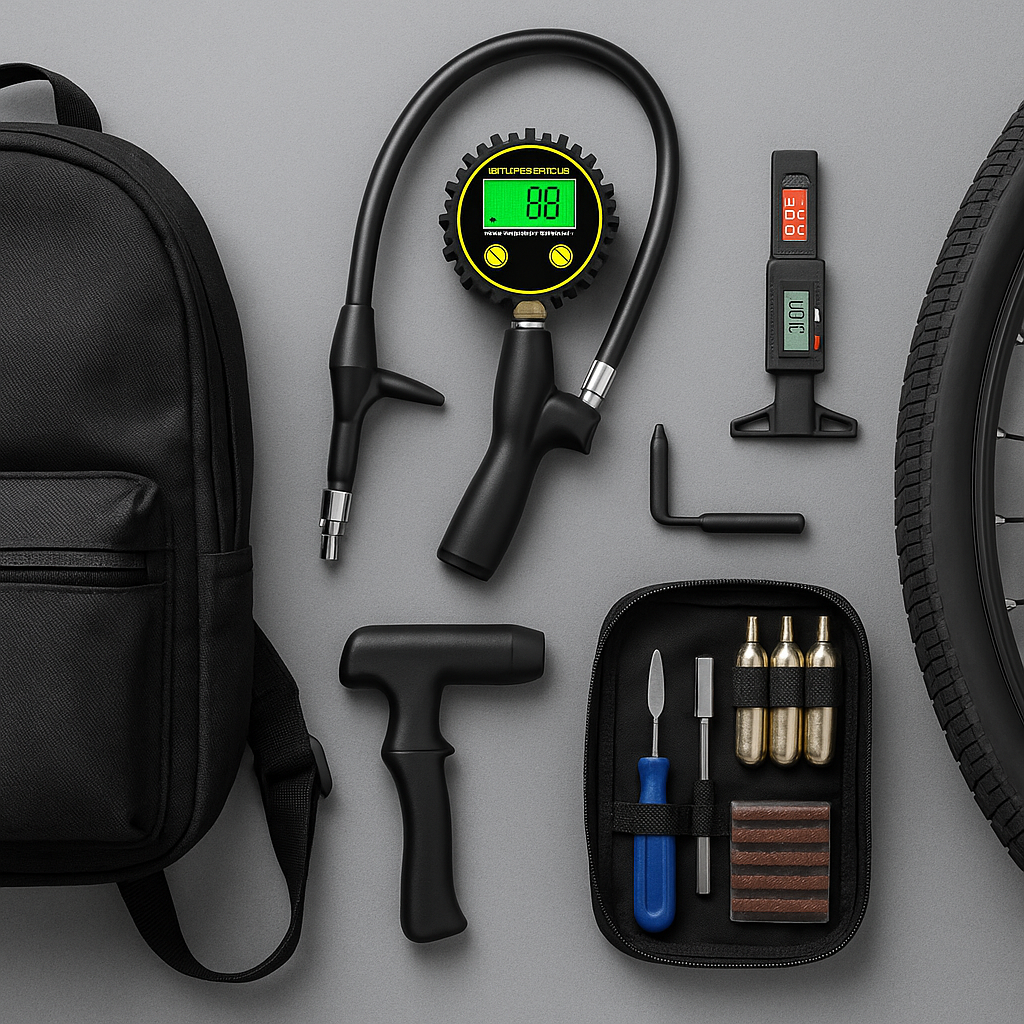
Many cyclists rely on a quick squeeze test to judge tire pressure, but this method is inaccurate. A digital tire pressure gauge ensures PSI readings are exact, which is crucial for road bikes (typically 80–120 PSI) and mountain bikes (25–40 PSI). Proper inflation not only prevents flats but also improves speed, comfort, and control. Compact digital gauges fit easily in a saddlebag, making them ideal for quick roadside checks.

Portable Inflators for Quick Adjustments

Cyclists know the frustration of riding miles with low tire pressure. A portable inflator gun makes on-the-go adjustments simple, restoring proper PSI in minutes. Unlike traditional mini-pumps, inflators with integrated gauges combine convenience with accuracy. For commuters, this means avoiding late arrivals; for long-distance riders, it’s about ensuring consistent performance throughout the trip.

Tread and Wear Checkers for Longevity

Though bike tires are smaller, monitoring tread wear is just as important as with cars. A tread depth gauge helps riders determine whether tires still have enough grip for wet surfaces or if replacement is needed. Worn tires are prone to punctures and skidding, especially during rainy rides. By checking tread depth at home weekly, cyclists can extend tire life and ride with more confidence.

Emergency Repair Kits for Unexpected Flats

Punctures are inevitable for cyclists. An emergency tire repair kit—including patches, plugs, and compact tools—ensures you can repair minor holes and get back on the road quickly. When paired with a digital gauge and inflator, these kits provide a complete solution for handling flats mid-ride. No more pushing the bike home or waiting for help.

Everyday Scenarios Where Tools Pay Off

  • Daily Commuters: A quick check before leaving home prevents mid-ride breakdowns.

  • Weekend Riders: Proper inflation boosts comfort and performance on long rides.

  • Mountain Bikers: Lower PSI is needed for traction—digital gauges ensure accuracy for rugged terrain.

  • Cycling Trips: Repair kits and inflators avoid costly delays in remote areas.

Why ATSAFEPRO Tools Support Cyclists Best

ATSAFEPRO designs compact, durable, and accurate tire tools that match the needs of modern cyclists:

  • Digital Gauges with high-accuracy PSI readings.

  • Portable Inflators small enough to carry but powerful enough for quick adjustments.

  • Tread Depth Gauges to monitor grip for wet-weather safety.

  • Emergency Kits built for practicality, covering multiple roadside repair scenarios.

Keep Riding Without Worry

Cycling should be about freedom and performance, not constant concerns over tire issues. By carrying essential tools—digital gauges, inflators, tread checkers, and repair kits—you gain independence and safety on every ride.

Explore ATSAFEPRO’s cycling tire tools or connect via Contact Us to find the kit that fits your riding style.
Featured Blogs

Tag:

  • Blog
Share On
Featured Blogs
ATsafepro Torque Wrench: What Buyers Should Check Before Ordering

ATsafepro Torque Wrench: What Buyers Should Check Before Ordering

1. ATsafepro torque wrench: what buyers should look for before they put one in a cart 2. 1. What the kit appears to be for 3. 2. What you can verify from the visible design 4. 3. Why socket material and markings matter 5. 4. Quick buyer checklist for an adjustable click-type torque wrench set 6. 5. Where buyers tend to get tripped up 7. 6. Practical notes for shops, fleets, and retail buyers 8. 7. Short takeaways for procurement teams 9. 8. FAQ: common questions buyers ask 10. 9. A sensible next step

ATsafepro Torque Wrench Review: What Buyers Should Check

ATsafepro Torque Wrench Review: What Buyers Should Check

1. A practical look at the ATsafepro torque wrench: what buyers are really checking 2. What stands out in the kit 3. How a click-type torque wrench helps in daily work 4. What the visible construction suggests 5. Where this kind of kit fits best 6. How buyers should evaluate it before purchase 7. Common mistakes buyers make with torque tools 8. A short interview-style takeaway from the shop floor 9. What to ask the supplier before you commit 10. Bottom line for buyers

ATsafepro Torque Wrench Review: Features, Uses, and Buyer Fit

ATsafepro Torque Wrench Review: Features, Uses, and Buyer Fit

1. Why buyers keep asking about the ATsafepro torque wrench 2. Quick take: what this set appears to be built for 3. Interview notes from a buyer’s point of view 4. What the visible design tells you 5. Socket set inclusion: where this package adds value 6. Selection criteria that matter more than the product photo 7. Common mistakes buyers make with torque tools 8. Practical use cases where this set looks sensible 9. Buyer-facing cautions worth saying out loud 10. FAQ 11. What a smart next step looks like

ATsafepro torque wrench: What this adjustable click-type kit offers

ATsafepro torque wrench: What this adjustable click-type kit offers

1. Why an adjustable click-type torque wrench kit matters in real shop work 2. What this kit appears to offer at a glance 3. How a click-type torque wrench works 4. Best use cases for a kit like this 5. Selection criteria buyers should check before specifying one 6. Common mistakes when using a torque wrench kit 7. What the visible construction suggests about durability 8. How to use the kit well in day-to-day work 9. Who should buy this type of kit 10. FAQ 11. What to do next

ATsafepro Torque Wrench: What Buyers Should Check Before Use

ATsafepro Torque Wrench: What Buyers Should Check Before Use

1. ATsafepro torque wrench: what buyers should look for before putting one in service 2. What this kit appears to be 3. Why torque control matters in the shop and garage 4. Quick buyer read: what matters most in a kit like this 5. How a click-type torque wrench is typically used 6. Materials and construction cues buyers can actually inspect 7. Common mistakes when buying a torque wrench kit 8. Practical selection advice for different buyers 9. FAQ 10. What a careful buyer should do next

ATsafepro torque wrench: what buyers should look for in a wheel-service kit

ATsafepro torque wrench: what buyers should look for in a wheel-service kit

1. What is in the kit? 2. Why the socket assortment matters 3. How a click-type torque wrench helps prevent damage 4. Material and construction: what the image suggests 5. Where this type of kit fits best 6. What buyers should verify before ordering 7. Common buyer mistakes with torque wrench kits 8. Quick buyer FAQ 9. Final buyer take