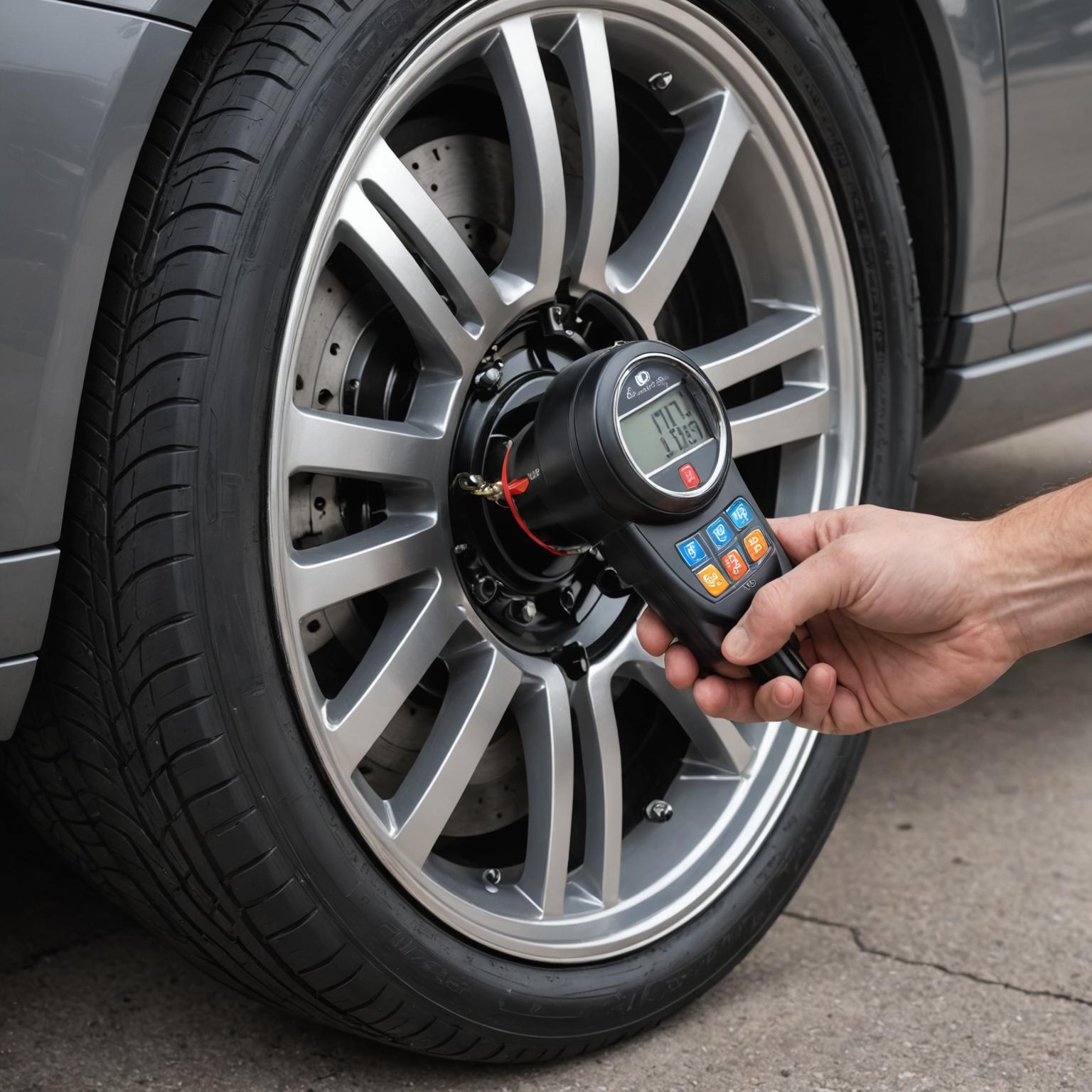
Tire Inflator with Gauge Manufacturer: Ensuring Precision and Safety
The Critical Role of Inflation Accuracy in Automotive Safety
In the automotive and fleet industry, tire inflation errors can lead to reduced traction, higher fuel consumption, and increased accident risk. Studies from the National Highway Traffic Safety Administration (NHTSA) show that underinflated tires are responsible for nearly 700 accidents each year in the U.S. alone.
For manufacturers, distributors, and workshops, precision is not optional—it’s essential. That’s why choosing the right tire inflator with gauge manufacturer becomes a strategic decision that affects not only tool reliability but also customer trust and long-term brand performance.
Engineering Standards That Define Professional Tire Inflators
Unlike consumer-grade inflators, professional tire inflation tools are built around industrial standards that ensure safety and consistency in high-demand environments.
ATSAFEPRO’s inflators integrate:
-
Calibrated precision mechanisms ensuring ±1 PSI accuracy even under continuous use.
-
Shock-resistant housings and reinforced hoses tested to handle thousands of inflation cycles.
-
Ergonomic air chucks and brass fittings that reduce air leakage and improve operator comfort.
-
Compatibility across pressure units (PSI/BAR/KPA) for global workshop operations.
These features make ATSAFEPRO’s tools reliable in automotive repair shops, fleet maintenance centers, and service chains where precision translates directly to cost control and safety assurance.
How Precision Translates Into Operational Value
| Operational Challenge | Risk | Solution Provided by ATSAFEPRO Tools |
|---|---|---|
| Inconsistent inflation readings | Tire wear and reduced mileage | ±1 PSI calibrated gauges with visual accuracy markers |
| Equipment downtime in workshops | Delays in service turnover | Durable mechanical design with minimal maintenance |
| Pressure variations between tools | Lack of quality control | Standardized production and factory calibration |
| Technician fatigue from repetitive use | Errors due to manual handling | Lightweight aluminum body and ergonomic grip design |
This focus on functional precision directly supports service consistency across multi-location auto chains and fleet operators.
Meeting ToB Buyers’ Priorities: Reliability, Certification, and After-Sales Support
Professional buyers—such as automotive distributors, fleet managers, and OEM tool importers—prioritize three factors when evaluating a tire inflator with gauge manufacturer:
-
Reliability Across Environments
Tools must withstand humidity, dust, and temperature extremes without compromising accuracy. ATSAFEPRO inflators are tested in simulated industrial conditions to guarantee stability. -
Certification and Compliance
Each inflator complies with international quality standards such as ISO 9001 and CE, ensuring compatibility with global automotive regulations. -
After-Sales Support and Customization
ATSAFEPRO provides OEM/ODM customization, allowing clients to brand and configure inflators to match their product lines—ideal for distributors and retail packaging.
Real-World Applications in Professional Service Networks
-
Fleet Maintenance Operations – Precision inflators reduce fuel costs by maintaining consistent pressure across large vehicle groups.
-
Workshop and Tire Centers – Technicians benefit from reliable mechanical gauges that cut down on recalibration time.
-
OEM and Export Partners – Branded inflators provide an immediate value-add for international tool portfolios.
-
Heavy-Duty and Industrial Use – Durable bodies and high-pressure tolerance make them suitable for commercial trucks, buses, and construction vehicles.
Buyer FAQ
Q: What’s the typical accuracy level for ATSAFEPRO tire inflators?
A: Each model is factory-calibrated to within ±1 PSI accuracy, suitable for both passenger vehicles and heavy-duty tires.
Q: Can ATSAFEPRO provide OEM customization for distributors?
A: Yes. We offer logo printing, packaging design, and PSI/BAR unit customization for global buyers.
Q: How long does a mechanical inflator last under workshop conditions?
A: With regular use, mechanical models typically serve 5–8 years with minimal maintenance.
ATSAFEPRO — Combining Precision, Safety, and Longevity
ATSAFEPRO’s manufacturing philosophy centers on three principles: engineering precision, safety assurance, and sustainable performance. Every tire inflator with gauge undergoes rigorous testing to ensure it performs consistently under professional workloads—whether in auto service chains, fleet depots, or industrial workshops.
Building Safer and Smarter Tire Care Systems
Precision tire inflation is more than a routine task—it’s an operational safeguard. With reliable mechanical calibration, durable structure, and universal compatibility, ATSAFEPRO’s inflators empower professionals to maintain tire safety with confidence.
Learn more about ATSAFEPRO’s professional tire care equipment on the homepage or contact our team via the contact page for tailored OEM or bulk solutions.