


Tire Gauges Without Battery: Reliable Pressure Checks Anytime, Anywhere
Why Choose a Tire Gauge Without Battery?
In many professional and off-road environments, relying on a tool that needs a battery can be risky. Extreme cold can drain batteries faster, high heat can shorten their lifespan, and storage for long periods can lead to leakage or corrosion.
A tire gauge without battery operates purely mechanically. Whether you’re in a busy workshop, a remote roadside, or a fleet depot, it’s always ready to use — no charging, no power loss, no downtime.
How Battery-Free Tire Gauges Work
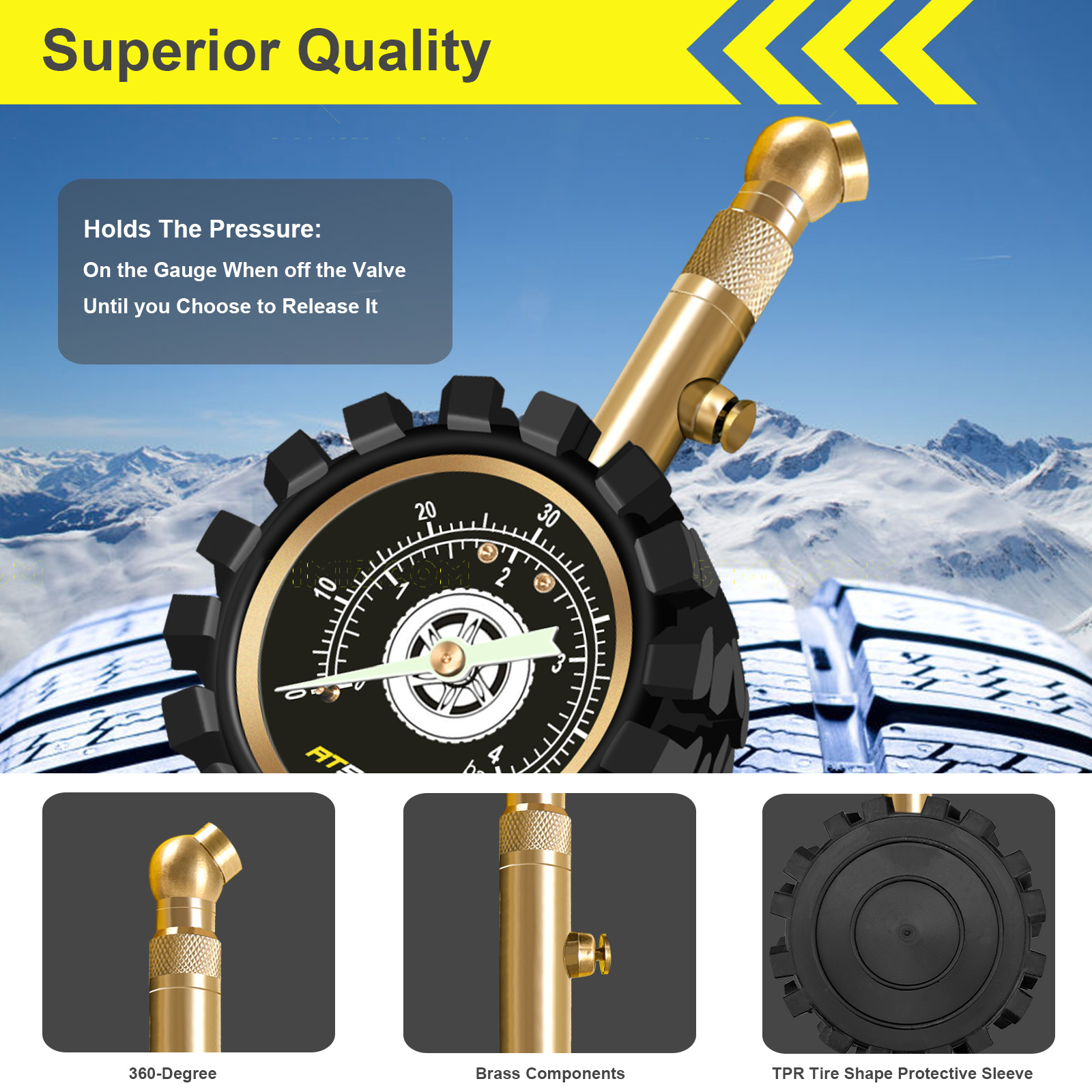
Battery-free tire gauges use mechanical pressure sensing, typically with a Bourdon tube or spring-loaded piston. When the gauge is pressed onto the tire valve, air pressure moves the mechanical components, and the needle or plunger indicates the exact pressure.
Key Characteristics:
-
Instant Readings – No boot-up time or battery check.
-
Consistent Performance – Operates accurately across a wide temperature range.
-
Long Service Life – Fewer parts susceptible to failure compared to electronic models.
-
Low Maintenance – Occasional calibration and cleaning are all that’s needed.
Scenarios Where a Tire Gauge Without Battery Excels
Long-Haul Fleet Maintenance
Drivers on extended routes can’t risk a dead battery in their tire gauge. A mechanical tire gauge ensures tire checks are possible even after weeks on the road without charging facilities.
Outdoor & Remote Service
Roadside assistance teams, agricultural machinery operators, and off-road enthusiasts often work in environments where electronic devices are exposed to dust, vibration, and extreme weather. A battery-free tire gauge withstands these conditions without losing reliability.
Heavy Equipment Workshops
In mining, construction, or industrial transport, the need for high-pressure readings is common. Many tire gauges without battery are built for pressures exceeding 150 psi, perfect for large machinery and trucks.
Personal Vehicle Preparedness
For everyday drivers, keeping a manual tire gauge in the glovebox means you can check tire pressure anytime, even if your vehicle is far from a service station or your digital gauge’s battery runs out.
Advantages of Using a Tire Gauge Without Battery
-
Always Ready – No downtime for charging or battery replacement.
-
Temperature Resilience – Functions reliably in sub-zero or high-heat environments.
-
Durability – Robust casing and shock-resistant components.
-
Simplicity – Easy for anyone to use, no learning curve.
-
Cost-Effective – Lower lifetime cost compared to digital models with battery replacements.
Battery-Free Tire Gauge Maintenance Checklist
Even though a tire gauge without battery is simple and robust, regular maintenance ensures consistent accuracy and extends its lifespan. Follow this checklist for best results:
-
Regular Cleaning
-
Wipe the nozzle and body after each use to remove dust, oil, and debris.
-
Avoid using solvents that can damage seals or markings.
-
-
Calibration Checks
-
Verify accuracy against a master gauge or calibrated shop equipment at least once a year.
-
In high-volume workshop use, check calibration every 6 months.
-
-
Seal and Valve Care
-
Inspect the rubber seals in the chuck for wear or cracks; replace if necessary.
-
Ensure the valve interface is free of dirt for a proper air seal.
-
-
Storage Practices
-
Store the gauge in its protective case or tool drawer to prevent impact damage.
-
Avoid prolonged exposure to direct sunlight or extreme temperatures.
-
ATSAFEPRO: Mechanical Reliability, Professional Accuracy
ATSAFEPRO tire gauges without battery are designed for accuracy and durability. Built with shock-resistant casings and precision-calibrated mechanical internals, they deliver dependable readings for both high-volume professional use and long-term personal reliability.
Whether you operate a fleet, manage a workshop, or simply want a dependable gauge in your personal car kit, ATSAFEPRO’s mechanical tire gauges provide a no-compromise solution for accurate tire pressure maintenance.Explore our complete selection of battery-free tire gauges on the ATSAFEPRO product page, or visit our homepage for more professional tire maintenance solutions. For distributor pricing or custom orders, contact us today.





