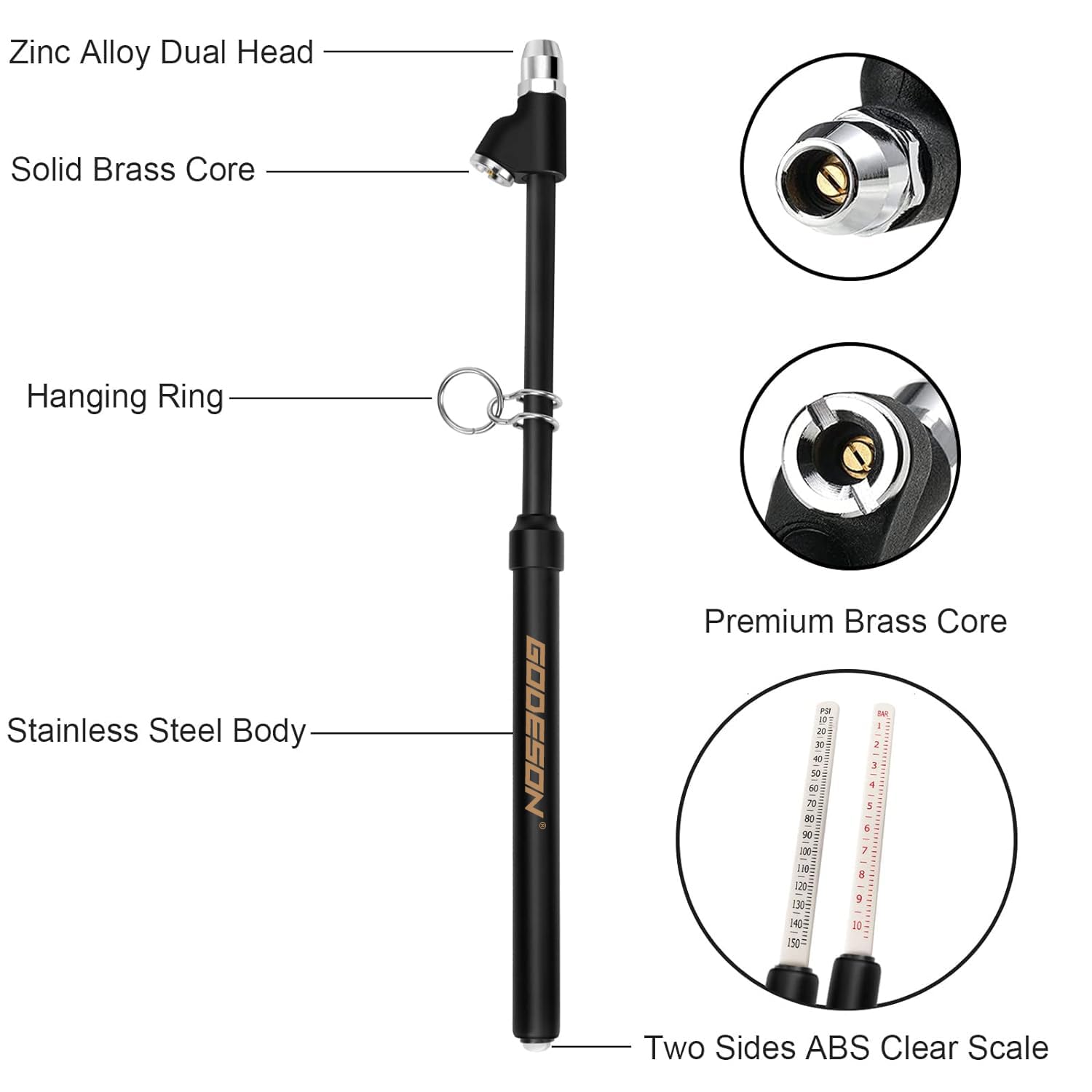
Understanding Pencil Tire Gauges: A Professional’s Guide to a Compact Classic

  • blog
Posted by ATSAFEPRO On Aug 09 2025

ATSAFEPRO pencil type tire pressure gauge with dual scale PSI/BAR reading

Understanding Pencil Tire Gauges: A Professional’s Guide to a Compact Classic

What Is a Pencil Tire Gauge?

A pencil tire gauge—also known as a pencil type tire pressure gauge—is a slim, pocket-sized mechanical tool for measuring tire pressure. Its name comes from its shape, resembling a thick pencil with a clip for easy storage in a shirt pocket or tool pouch.

Inside, a spring-loaded mechanism moves a measuring rod, which extends to show the pressure reading on a printed scale (often in both PSI and BAR). The design is straightforward, requiring no batteries or electronics, making it a favorite among field service technicians and fleet inspectors.

How a Pencil Tire Gauge Works

When pressed onto a tire valve stem, air pressure pushes against an internal piston connected to the scale rod. The higher the pressure, the further the rod extends. The reading is taken directly from the visible part of the rod, with markings for common units.

This simple mechanical process means the tool is:

  • Immune to electronic failure

  • Ready to use in all temperatures

  • Highly durable for workshop and roadside conditions

Why Professionals Still Choose Pencil Gauges

In an era dominated by digital and dial gauges, pencil tire gauges remain relevant for specific professional needs:

  • Portability: Fits easily in a pocket or small tool kit, ideal for technicians on the move

  • Speed: Provides an instant reading without powering on or waiting for a sensor

  • Durability: Resistant to shock, dirt, and moisture

  • Cost-Effectiveness: Affordable enough to issue to every member of a fleet inspection team

When to Use a Pencil Tire Gauge

Pencil gauges excel in:

  • Fleet Pre-Trip Inspections: Quick, repeatable checks before vehicles leave the depot

  • Field Service Work: For agricultural, construction, or mining equipment in remote locations

  • Busy Service Bays: Issuing each technician a personal gauge to avoid tool sharing delays

Quick Comparison to Other Gauge Types

  • Digital: Offers finer resolution and backlit displays, but requires batteries and can be damaged by moisture.

  • Dial/Mechanical: Larger and more precise for detailed adjustments, but bulkier to carry.

  • Pencil: Compact, simple, always ready—best for speed and portability over extended features.

Maintenance Tips for Long-Term Accuracy

  • Keep It Clean: Avoid letting dirt or grit enter the valve connection

  • Store Securely: Use the pocket clip to prevent drops or bending

  • Check Calibration: Compare readings with a master gauge annually

  • Avoid Overpressure: Do not exceed the tool’s maximum rated PSI

What Professionals Ask About Pencil Tire Gauges

Q1: Are pencil gauges accurate enough for workshop use?
Yes, high-quality models pencil tire gauge maintain ±2% accuracy when calibrated.

Q2: Can they measure truck tire pressure?
Yes, as long as the gauge’s pressure range covers heavy-duty PSI requirements (often up to 120–150 PSI).

Q3: Why choose a pencil gauge over a digital one?
For environments with dust, moisture, or extreme temperatures, the simplicity and reliability of a pencil gauge can be more valuable than extra features.

Compact Reliability for Professional Demands

For workshops, fleet managers, and industrial service teams, a best pencil tire pressure gauge from ATSAFEPRO delivers the right balance of portability, accuracy, and ruggedness. It’s the kind of tool that disappears into your pocket until you need it—and then delivers without fail.

Explore our complete line of pencil type tire pressure gauges on the ATSAFEPRO product page, or visit our homepage for more professional tire service solutions. For distributor pricing or fleet supply inquiries, contact us today.
Featured Blogs

Tag:

  • Blog
Share On
Featured Blogs
GODESON Disc Brake Rotor Micrometer: Features, Use, and Buyer Guide

GODESON Disc Brake Rotor Micrometer: Features, Use, and Buyer Guide

1. Why a disc brake rotor micrometer matters before you start replacing parts 2. Quick takeaways for buyers and technicians 3. What this type of micrometer is designed to do 4. Notable features visible on the GODESON unit 5. How brake rotor thickness checks fit into real maintenance 6. What buyers should compare before choosing a rotor micrometer 7. Common mistakes when measuring brake rotors 8. Who is likely to get the most value from this tool 9. A practical buyer note on packaging, calibration, and expectations 10. FAQ: what people usually ask about disc brake rotor micrometers 11. Bottom line for sourcing and shop use

GODESON Disc Brake Rotor Micrometer: What It Does and Why It Matters

GODESON Disc Brake Rotor Micrometer: What It Does and Why It Matters

1. Why a disc brake rotor micrometer matters in real workshops 2. What the tool is designed to do 3. Key visible features buyers will notice first 4. Where it fits in the inspection workflow 5. How to judge whether this style of micrometer is the right buy 6. Common mistakes when measuring rotor thickness 7. What makes this style of tool useful beyond brake work 8. Buyer’s checklist before placing an order 9. FAQ 10. A practical next step for buyers

GODESON Disc Brake Rotor Micrometer: Features, Uses, and Buyer Tips

GODESON Disc Brake Rotor Micrometer: Features, Uses, and Buyer Tips

1. Why a rotor micrometer is not just a “nice-to-have” in brake work 2. What the GODESON Disc Brake Rotor Micrometer is designed to solve 3. Key features visible on the tool 4. Where this type of micrometer fits in a shop 5. Why digital matters here 6. How buyers should evaluate a rotor micrometer 7. Common mistakes when using a disc brake rotor micrometer 8. What the package suggests about field use 9. Practical buying advice 10. Who this tool is best suited for 11. Next step for buyers

GODESON Disc Brake Rotor Micrometer: What It Measures and Why It Matters

GODESON Disc Brake Rotor Micrometer: What It Measures and Why It Matters

1. Why a rotor micrometer matters when a standard gauge stops short 2. What this tool is designed to do 3. Where this kind of micrometer fits in the shop 4. Key features buyers will notice first 5. How to judge whether it is the right tool for your application 6. Common mistakes when shopping for a specialized measuring tool 7. Practical buyer advice before you place an order 8. Small details that are easy to miss but worth caring about 9. Who is most likely to benefit from the GODESON Disc Brake Rotor Micrometer 10. What to ask the supplier before committing

GODESON Disc Brake Rotor Micrometer: What Buyers Should Know

GODESON Disc Brake Rotor Micrometer: What Buyers Should Know

1. Why a GODESON Disc Brake Rotor Micrometer matters in real workshop work 2. What this tool is designed to do 3. Quick reference: what to look for in a rotor thickness gauge 4. How the measuring design supports brake inspection 5. Where this type of micrometer fits in a purchasing decision 6. Common mistakes buyers make with brake rotor measurement tools 7. Practical buying advice for engineers and sourcing teams 8. How to use a rotor micrometer without introducing bad readings 9. FAQ: the questions buyers usually ask 10. What to ask before placing a purchase order 11. Next step for buyers

GODESON Tire Repair Tool: Your Ultimate Roadside Companion

GODESON Tire Repair Tool: Your Ultimate Roadside Companion

1.Discovering the Ultimate Tire Repair Companion 2.The Ingenious Design Behind GODESON's Innovation 3.Real-World Stories and Practical Benefits 4.Why Choose GODESON for Your Automotive Needs 5.Enhancing Your Driving Experience with GODESON