Mastering Tire Pressure in Off-Road Driving: The Key to Traction, Control, and Safety

  • blog
Posted by ATSAFEPRO On Aug 20 2025

ATSAFEPRO gauge measuring off-road tire pressure in rocky terra

Mastering Tire Pressure in Off-Road Driving: The Key to Traction, Control, and Safety

Why Tire Pressure Matters More Off-Road

On the highway, most drivers think of tire pressure as a routine maintenance task linked to fuel efficiency or tire life. Off-road, however, it becomes the single most critical factor. The wrong PSI can mean getting stuck in sand, sliding out in mud, or bouncing dangerously over rocks. Proper tire pressure allows the tire to adapt its footprint to the terrain, enhancing traction, stability, and safety.

According to field data from off-road driving schools, drivers who actively adjusted PSI for conditions reduced recovery incidents by nearly 50%. That’s not just a number — it’s the difference between finishing your trail run or calling for a tow.

How Tire Pressure Influences Off-Road Performance

Tire pressure directly affects how a tire deforms against the ground:

  • Low Pressure → increases the contact patch, allowing better grip on soft terrain like sand or snow.

  • High Pressure → stabilizes the tire for rocky surfaces or highways but reduces traction on loose ground.

  • Too Low → risks bead separation, sidewall collapse, and rim damage.

  • Too High → causes excessive bouncing, wheel spin, and loss of control.

The art of off-road driving lies in finding the sweet spot between grip and protection, and that balance changes with every surface.

Traction and Control Across Off-Road Conditions

Sand

Lowering PSI to 12–16 allows the tires to float, preventing them from digging in. Without adjustment, overinflated tires sink and strand vehicles within minutes.

Mud

A moderate PSI of 18–22 lets tires bite into soft mud while maintaining steering control. Too much pressure and you spin out; too little and the vehicle feels unstable.

Snow

Reducing PSI to 20–25 increases tire footprint, helping grip icy surfaces. However, underinflation risks sidewall failure in cold temperatures.

Rocks

Running 22–28 PSI protects wheels while providing enough flex to climb over obstacles. Excessive inflation causes bouncing, while too little risks rim and sidewall damage.

The Essential Role of a High-Quality Tire Pressure Gauge

All of these adjustments rely on knowing your PSI accurately. An unreliable gauge means guesswork, and in off-road conditions, guesswork leads to failure.

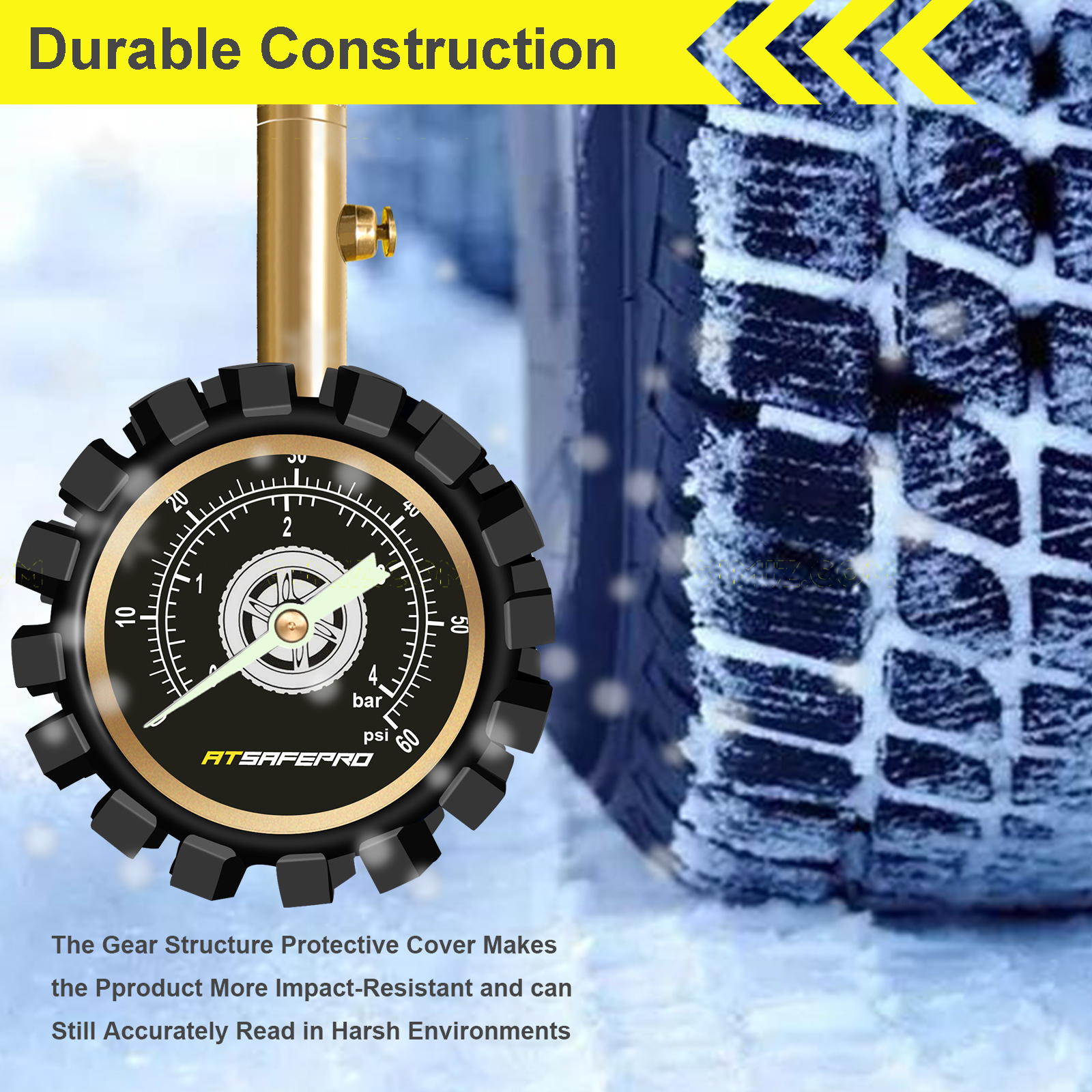
A rugged, high-accuracy tire pressure gauge ensures:

  • Consistent readings in extreme heat, cold, and dust.

  • Precise PSI control for different terrains.

  • Durability to survive trail conditions.

ATSAFEPRO designs both digital and mechanical tire gauges specifically for off-road drivers who can’t afford mistakes. Paired with deflators and portable inflators, these tools turn a difficult adjustment into a quick, reliable routine.

From Theory to Trail: Why Every Off-Roader Needs a Reliable Tire Gauge

Tire pressure is not just a number — it is the foundation of safe, controlled, and enjoyable off-road driving. By adjusting PSI for sand, mud, snow, and rocks, you gain better traction, protect your vehicle, and prevent costly recovery situations. But without a high-quality tire pressure gauge, even the best strategies fall apart.

Explore ATSAFEPRO’s off-road tire gauges and tools or contact us to build your complete kit before your next adventure.
Featured Blogs

Tag:

  • Blog
Share On
Featured Blogs
GODESON Tire Pressure Gauge: A Practical Guide for Everyday Use

GODESON Tire Pressure Gauge: A Practical Guide for Everyday Use

1. Why tire pressure still causes avoidable trouble 2. What this type of gauge is trying to solve 3. Key features visible in the GODESON setup 4. Mechanical gauge or inflator combo: what the buyer should infer 5. How to judge whether this style fits your operation 6. Selection criteria that matter more than marketing copy 7. Common mistakes buyers make with tire pressure tools 8. Practical buying advice before you place an order 9. FAQ 10. What this product is really good for

GODESON Digital Tire Tread Depth Gauge: A Practical Guide

GODESON Digital Tire Tread Depth Gauge: A Practical Guide

1. Why tread depth checks still matter when a tire looks “fine” 2. What this kind of gauge helps you decide 3. What the visible design tells you 4. Digital gauge versus simpler mechanical options 5. How to use a tire tread depth measuring tool without fooling yourself 6. What buyers should look for beyond the display 7. Common mistakes that lead to bad tire decisions 8. Where this tool fits in a shop or fleet workflow 9. FAQ for first-time buyers 10. Next step for buyers

GODESON Digital Caliper: A Practical Rechargeable Measuring Tool

GODESON Digital Caliper: A Practical Rechargeable Measuring Tool

1. Why a Digital Caliper Still Matters on the Shop Floor 2. What the Tool Is Built to Do 3. What Buyers Usually Need From a Caliper Like This 4. Where This Kind of Caliper Fits Best 5. Selection Criteria That Matter More Than Marketing Copy 6. Common Mistakes Buyers Make 7. What the Visible Construction Suggests About Manufacturing 8. Practical Buyer Advice Before You Place an Order 9. FAQ 10. A Sensible Next Step for Buyers

GODESON Digital Tire Tread Depth Gauge: What to Know

GODESON Digital Tire Tread Depth Gauge: What to Know

1. Why a digital tread gauge matters before the tire actually looks “worn out” 2. What this tool is, in practical terms 3. Digital versus mechanical tread gauges 4. What the visible design suggests about manufacturing and use 5. Who benefits most from a digital tread depth measurer 6. Selection criteria buyers should not skip 7. Common mistakes when measuring tread depth 8. Quick buyer takeaway 9. FAQ 10. A practical next step

GODESON Digital Caliper: What Buyers Should Compare Before Buying

GODESON Digital Caliper: What Buyers Should Compare Before Buying

1. GODESON Digital Caliper: what buyers should compare before they click “add to cart” 2. What the product image tells us, and what it does not 3. Digital caliper versus dial and vernier: a practical comparison 4. Where this type of caliper fits best 5. Selection criteria buyers should weigh before choosing 6. Practical cautions that buyers sometimes overlook 7. Who should choose this style, and who probably should not 8. FAQ buyers often ask 9. What a sensible buyer should do next

GODESON Digital Tire Tread Depth Gauge: A Practical Buyer’s Guide

GODESON Digital Tire Tread Depth Gauge: A Practical Buyer’s Guide

1. Why a digital tread gauge matters before the tire starts talking back 2. Quick takeaways for buyers 3. What the GODESON Digital Tire tread depth gauge is built to do 4. Where this kind of gauge fits in the real world 5. The practical features that matter most 6. How to use a digital tire tread depth gauge without fooling yourself 7. What a buyer should compare before choosing a similar gauge 8. Common mistakes when evaluating tread depth 9. Design notes that hint at manufacturing quality 10. Who is most likely to get value from this tool? 11. A short buyer’s checklist before ordering 12. FAQ 13. Final buyer note and next step