


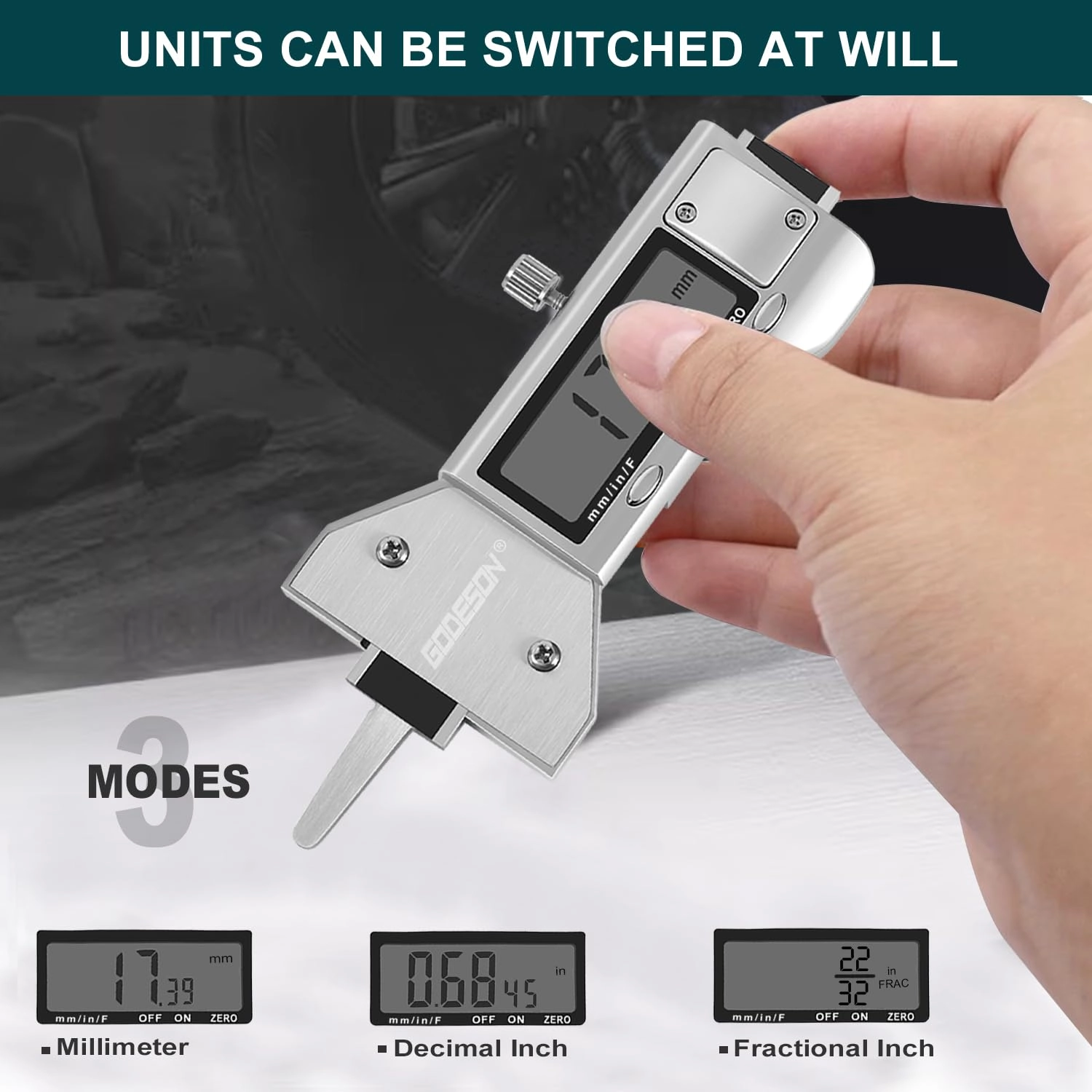
Metal Digital Tire Tread Depth Gauge: Professional Accuracy for Lasting Tire Safety
The Hidden Risks of Ignoring Tread Depth
Every driver knows the importance of brakes, suspension, and tire pressure, but tread depth is often overlooked. In fact, the U.S. National Highway Traffic Safety Administration (NHTSA) links tire wear to over 25,000 accidents each year. Worn tread reduces grip on wet roads, lengthens braking distances, and increases the chance of blowouts.
The problem is that visual inspection or using plastic gauges leads to guesswork. By contrast, a Metal Digital Tire Tread Depth Gauge provides objective, millimeter-level precision—an essential tool for drivers who value safety and for workshops where accuracy defines credibility.
Why Metal Digital Models Outperform Basic Gauges
Most low-cost tread gauges are plastic, which degrade quickly, lose calibration, and deliver inconsistent results. Metal construction changes the equation by offering:
-
Long-Term Accuracy – Steel components resist wear, keeping measurements precise.
-
Workshop Durability – Withstands daily use, oil exposure, and accidental drops.
-
Digital Precision – LCD readouts reduce human error compared to manual scales.
-
Professional Range – Measures from 0–25 mm, covering cars, trucks, and motorcycles.
-
Multi-Unit Display – Switch between millimeters and inches for regional compliance.
This combination of metal durability and digital clarity makes the gauge indispensable for both professional and personal use.
Common User Pain Points—and How the Right Tool Solves Them
| Pain Point | Impact | How a Metal Digital Gauge Helps |
|---|---|---|
| Relying on coin or matchstick tests | Inaccurate, unsafe assumptions | Provides exact digital readings in mm |
| Inconsistent plastic gauges | Leads to wrong replacement decisions | Steel construction ensures calibration stability |
| Uneven tread wear detection | Missed risks of alignment issues | Multi-point measurement across tire surface |
| Workshop credibility | Customers doubt visual checks | Digital display builds transparency and trust |
Real-World Applications of Tread Depth Gauges
-
Fleet Safety Management: Trucking companies must inspect dozens of tires weekly. A durable digital gauge reduces inspection time and improves reliability, directly lowering accident liability.
-
Professional Workshops: Mechanics can show customers exact tread depth readings, building trust and reducing disputes over replacement recommendations.
-
DIY Car Owners: Enthusiasts and daily drivers alike gain peace of mind before long trips, avoiding costly roadside emergencies.
-
Motorcycle Riders: With smaller tire surfaces, tread wear is even more critical. Precision gauges keep riders safer in wet or high-speed conditions.
Expert Advice for Accurate Tread Checks
-
Measure in Multiple Spots – Outer, middle, and inner grooves for each tire.
-
Check Monthly – Or more frequently in wet climates where tread wear accelerates.
-
Know Legal Limits – Many countries require replacement below 1.6 mm, but 3 mm is recommended for wet safety.
-
Use on Cold Tires – Heat expansion can slightly alter readings.
-
Document Results – Workshops and fleets should log data for compliance and audits.
Q&A: What Buyers Want to Know
Q: How is a digital gauge better than manual tools?
A: Digital readouts minimize human error and provide faster results, especially in busy workshops.
Q: Why invest in metal construction?
A: Metal housings resist wear, oil, and impact—maintaining accuracy far longer than plastic models.
Q: Can one gauge work across all vehicle types?
A: Yes. A professional gauge covers the PSI and tread depth ranges required for cars, SUVs, motorcycles, and trucks.
ATSAFEPRO’s Edge in Tire Maintenance
ATSAFEPRO’s Metal Digital Tire Tread Depth Gauge is engineered for professionals and safety-conscious drivers alike. With industrial-grade durability and high-precision sensors, it delivers trustworthy results in every inspection. By pairing accuracy with rugged build quality, ATSAFEPRO ensures that safety is not left to guesswork.
Precision That Protects Every Journey
When it comes to tires, small numbers have big consequences. Monitoring tread depth with a reliable Metal Digital Tire Tread Depth Gauge prevents accidents, extends tire life, and saves costs over time. Whether you run a workshop, manage fleets, or simply want safer family driving, investing in professional-grade tools is a decision that pays off in confidence and security.
Explore ATSAFEPRO’s complete range of tire tools on the homepage or reach out via the contact page for tailored solutions.





