Why a GODESON Digital Caliper Still Matters in a Shop Full of Machines
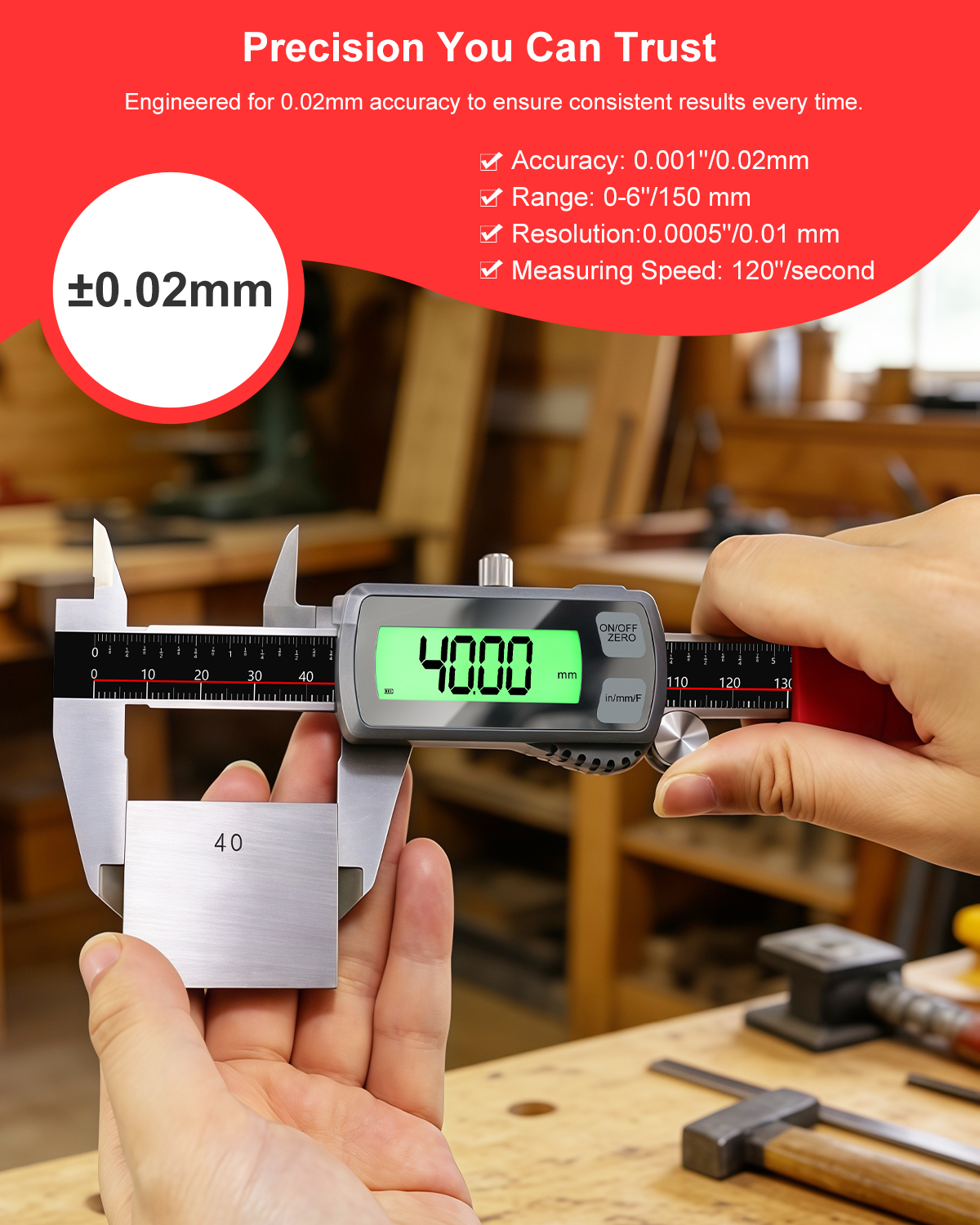
A GODESON Digital Caliper looks simple at first glance, but in machining, fabrication, repair work, and routine quality control, that simple tool often saves the most time. When a part needs to be checked quickly, or a dimension has to be confirmed before the next operation, a caliper gives you immediate feedback without setting up gauges or moving the job to a larger inspection station. For engineers and sourcing teams, that is the real value: a fast, readable measurement tool that can sit on a bench, travel in a kit, and handle more than one kind of check.
This particular digital caliper is positioned as a general-purpose electronic measuring instrument. Based on the visible product details, it is built for common shop measurements such as outside dimensions, inside dimensions, depth, and step measurements. The large LCD, metric/inch display, ZERO button, USB charging cable, and IP54 marking suggest a tool intended for everyday workshop use rather than a delicate lab-only instrument. That matters because most buyers are not looking for something exotic. They are trying to answer a practical question: will this caliper be readable, durable enough for normal use, and convenient enough that people actually pick it up and use it?
What the tool is designed to do
The basic job of a digital caliper has not changed much over the years. You open the jaws, place the part between them, and read the measurement directly on the screen. The GODESON Digital Caliper appears to follow the familiar four-function layout buyers expect from a shop caliper:
It measures external dimensions with the larger jaws, internal dimensions with the smaller upper jaws, depth with the probe at the end of the beam, and step measurements along the beam geometry. In practice, that means one tool can cover a broad range of quick checks on turned parts, machined blocks, housings, brackets, and wood or plastic components.
The box appears to indicate a range of 0–200 mm / 8 inch. That is the standard sweet spot for many workshops. It is large enough for everyday parts but still compact enough for pocket or toolbox carry. For sourcing managers comparing options, this range is often the baseline rather than the selling point. The real differentiators are readability, build feel, protection from dust and coolant, and whether operators can use the device without slowing down the job.
Why the display and controls matter more than buyers sometimes admit
A digital caliper lives or dies by the reading experience. A good beam is important, but if the display is hard to see, the tool becomes annoying quickly. The visible large LCD on this model is one of the more practical features. It reduces squinting, especially in a shop where lighting is not ideal or where a user is checking measurements at arm’s length instead of at a bench.
The visible ZERO button is equally important. On a shop floor, zeroing a caliper at a reference point is often the difference between a clean workflow and constant mental arithmetic. A machinist may zero on a fixture, a sample part, or a baseline dimension and then check variation from that point. That is routine practice, but it only works smoothly if the buttons are placed where the thumb can reach them naturally.
The metric and inch display is another detail that sounds minor until a mixed-team environment needs it. Many manufacturing groups work across drawing systems, suppliers, and legacy documentation. Being able to switch units without a second tool cuts down on mistakes, though it should not be treated as a substitute for disciplined drawing control. The display layout also shows Fahrenheit labeling, but from the product data available here, that should be treated cautiously; the image alone does not prove that the caliper actually measures temperature.
Material and structure: what you can infer, and what you should not
The visible body appears to use a metal beam with a matte black finish, silver jaws, and a red molded lower handle or cover. That combination suggests a tool intended to balance stiffness and handling comfort. In calipers, beam rigidity matters because flex can affect repeatability, especially over longer spans or when users apply inconsistent pressure. The jaw faces and beam alignment are the parts buyers tend to inspect first, even if they do not always say so aloud.
It is reasonable to describe the body as metal-based, likely stainless steel or hardened steel in appearance, but it would be a mistake to claim exact alloy details without confirmation. Likewise, the plastic-looking red end section seems to be part of the grip or protective housing, but its exact function should not be overstated.
One visible point that does deserve attention is the IP54 marking on the display. That suggests some resistance to dust and splashes, which is useful in environments where cutting fluid, workshop dust, or occasional moisture are part of daily life. Still, buyers should read that as practical protection, not a license to treat the tool like a sealed industrial gauge. A caliper with splash resistance can handle more than a bare-bones tool, but it is still a precision hand instrument that deserves normal care.
Where this type of caliper fits in real production work
A digital caliper is rarely the final authority on a critical tolerance, and that distinction matters. In many shops, calipers are used as go/no-go support tools, first-piece checks, in-process verification, and incoming inspection screening. They are fast, versatile, and good for identifying whether a part is obviously on target before tighter inspection happens.
For machining and fabrication, that means checking shaft diameters, plate thickness, hole sizes, slot widths, and step heights. In woodworking, it may be used for hardware fit, board thickness, or small component verification. In mechanical repair, a technician might use it to compare worn parts against replacements or confirm the size of a spacer, bushing, or housing feature.
The practical appeal of a rechargeable design is obvious in these settings. USB charging reduces the nuisance of disposable batteries, at least in theory, and removes one common failure mode from the purchasing list. That said, buyers should still ask a simple question before rolling a tool out across a team: how is charging managed on the floor, and who is responsible for keeping the gauge ready? A rechargeable device is convenient only when the charging habit is dependable.
How to compare digital calipers without getting distracted by small features
When buyers evaluate a digital caliper, the most useful comparison is not between packaging claims. It is between how the tool behaves in daily use.
Start with jaw feel. Do the jaws close smoothly, or do they bind? Smooth motion matters because operators will use a caliper more often if the action feels trustworthy. Then check display clarity. Can the reading be seen quickly at different angles? A large LCD helps, but viewing angle and contrast still matter.
Next, look at zeroing behavior. A caliper that zeroes reliably is easier to use for comparative checks. After that, consider the beam scale and general construction. If the etched or printed metric scale is clear, it gives users a quick visual reference even before the electronics are consulted.
Finally, think about the environment. Dusty benches, coolant mist, and frequent hand contact are normal in many shops. That is where the IP54-style protection and solid-feeling housing become more than marketing language. They help the tool survive ordinary abuse, which is the main reason budget and midrange measuring tools are replaced—or kept longer than planned.
A simple buyer-facing caution
If the caliper will be used for critical acceptance decisions, do not assume a digital display alone makes it suitable. The tool still needs to be checked against your internal inspection practice, and possibly against calibration expectations if your workflow requires traceability. A good digital caliper is useful; it is not a substitute for the right gauge in the right place.
Common mistakes teams make with digital calipers
The first mistake is treating every measurement as equally critical. A caliper is excellent for quick verification, but it is not always the right tool for final sign-off on tight tolerances.
The second mistake is rough handling of the jaws. Dropping the tool on a steel bench, clamping too hard, or using it as an improvised clamp can throw off alignment. The jaws are the business end of the instrument, and they deserve more respect than they usually get.
A third mistake is ignoring cleaning habits. Metal dust, chips, and oil film can all affect the feel of the slide and the accuracy of a reading. Even a tool with a dust/splash resistance mark is still better off being wiped down and stored clean.
Who should consider this style of caliper
This type of GODESON Digital Caliper is a sensible fit for machining departments, maintenance teams, prototyping shops, mechanical repair benches, and light inspection work. It also makes sense for sourcing teams that want a standard hand-measurement tool in a purchasing basket alongside other shop consumables.
It is less compelling for environments that demand highly specialized metrology or heavily documented calibration workflows, unless it is being purchased as a convenient general-use gauge rather than the primary acceptance instrument. That is not a weakness so much as a reminder that the tool has a clear lane.
What a practical purchasing decision looks like
If you are evaluating the GODESON Digital Caliper for your team, the decision should come down to three things: readability, everyday durability, and ease of use. The visible large LCD and metric/inch readout support readability. The metal-bodied construction, beam scale, and IP54 marking point toward everyday shop durability. The ZERO button and rechargeable design support workflow convenience.
Those are the features that usually matter most when a tool moves from the catalog to the bench. Fancy extras tend to matter less than whether the caliper gets used correctly, returned to the drawer, and trusted by the people who touch it all day.
FAQ
What can a digital caliper measure?
It is commonly used for outside diameters, inside diameters, depth, and step measurements.
Is the GODESON Digital Caliper suitable for workshop use?
Based on the visible features, yes. The large display, rechargeable design, and IP54 marking make it well aligned with general shop use.
Should it replace a micrometer or specialty gauge?
Not when tighter control is needed. A caliper is versatile, but it is not the final word for every tolerance.
What should buyers verify before purchase?
Confirm the measurement range, charging method, display readability, and whether your application needs formal calibration or traceability beyond what is shown in the product listing.
A sensible next step
If your team needs a general-purpose digital measuring tool for machining, repair, or inspection tasks, the GODESON Digital Caliper deserves a look. Review it the same way you would any shop instrument: not by the label alone, but by how it fits your workflow, your environment, and the level of measurement discipline your operation actually needs.