


Digital vs Mechanical Tire Gauges: Which One Fits You Best?

  • blog
Posted by ATSAFEPRO On Aug 18 2025

ATSAFEPRO digital tire gauge showing tire pressure on LCD

Digital vs Mechanical Tire Gauges: Which One Fits You Best?

How Tire Gauges Work and Why Accuracy Matters

A tire gauge measures air pressure inside a tire, usually expressed in PSI (pounds per square inch). Even a 2–3 PSI difference can affect fuel economy, braking distance, and tire wear. Studies show that underinflated tires account for over 600 accidents annually in the U.S. alone.

That’s why choosing the right tire pressure gauge matters. But should you go digital or mechanical? Let’s explore.

Digital Tire Gauges: Modern Convenience for Everyday Use

How They Work
Digital gauges use electronic pressure sensors and display results instantly on an LCD screen.

Advantages

  • High Precision: Often accurate to within ±1 PSI.

  • Easy to Read: Large backlit display, ideal for night or low-light conditions.

  • Compact and Portable: Fits easily in glove boxes or cycling kits.

  • Quick Results: No guesswork, numbers are displayed instantly.

Best For

  • Commuters who want quick, stress-free checks.

  • Families who share cars and need a user-friendly tool.

  • Cyclists who ride in varied conditions and require portability.

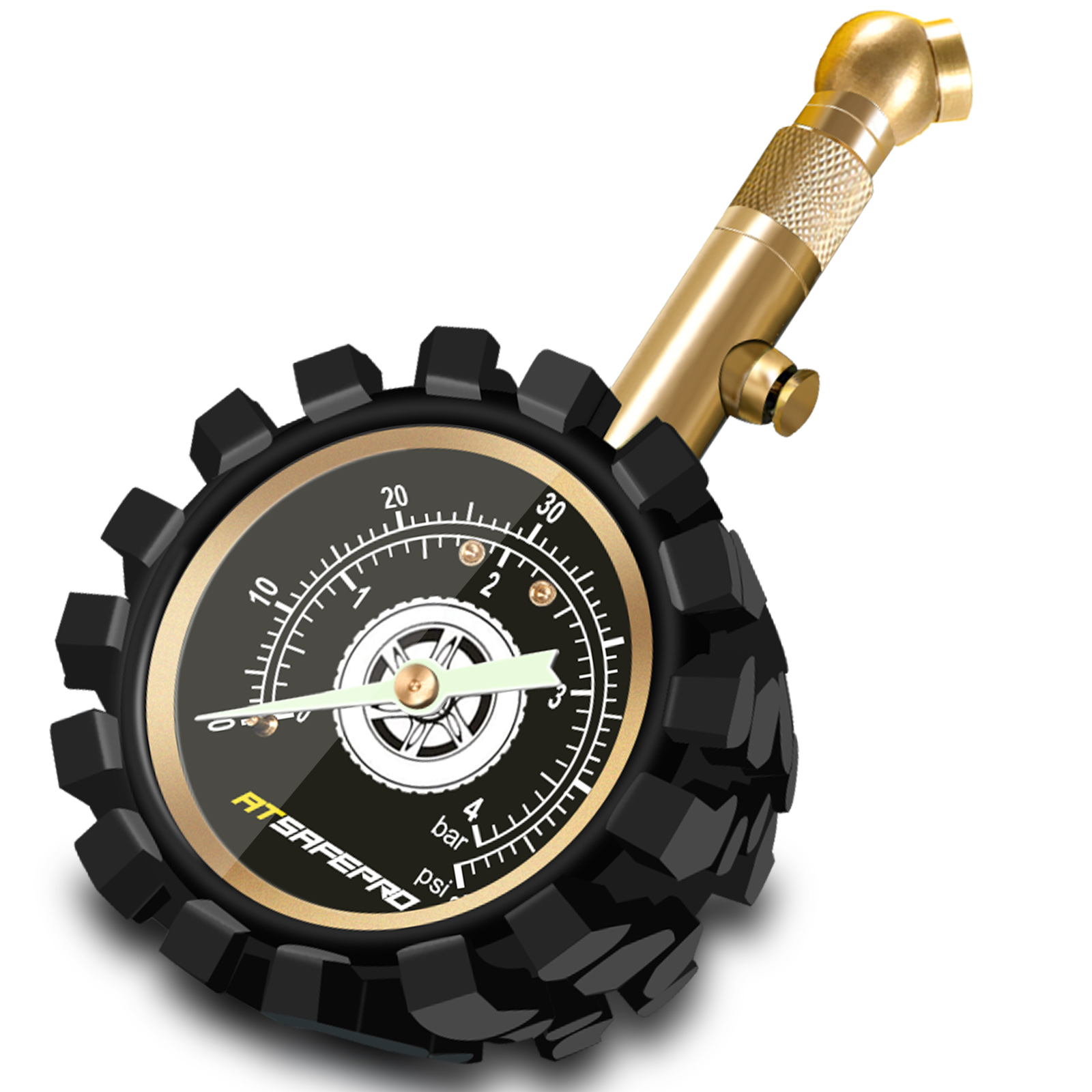
Mechanical Tire Gauges: Rugged Reliability for Professionals

How They Work
Mechanical gauges use a spring and needle dial (or bar in pencil gauges) to measure pressure.

Advantages

  • No Batteries: Works anytime, no electronics to fail.

  • Durable Build: Withstands drops, rough handling, and workshop use.

  • Long-Term Reliability: Stays consistent with proper calibration.

Best For

  • DIY car enthusiasts who maintain multiple vehicles.

  • Workshop mechanics needing rugged, daily-use tools.

  • Drivers who value a traditional, no-battery solution.

Choosing Based on Real-Life Needs

  • Daily Drivers → Digital gauge for convenience and quick results.

  • Road Trip Travelers → Digital gauge + portable inflator to ensure safety on highways.

  • Cyclists → Digital for accuracy and portability, pencil gauge as backup.

  • Garage Mechanics → Mechanical gauge for durability and long-term heavy use.

Side-by-Side Comparison

Feature Digital Tire Gauge Mechanical Tire Gauge
Accuracy ±1 PSI, consistent ±2 PSI, may vary over time
Ease of Reading LCD display, clear Needle dial, requires focus
Durability Sensitive to drops Very durable, workshop-ready
Power Source Battery required None
Portability Small, lightweight Larger, less pocket-friendly
Best User Commuters, cyclists Mechanics, DIY hobbyists

Accidents Prevented by the Right Tire Gauge

  • Highway Blowouts: Underinflated tires can overheat and explode at high speeds.

  • Poor Braking in Rain: Wrong pressure reduces tread contact, increasing hydroplaning risk.

  • Cycling Instability: Low pressure causes rim strikes and pinch flats, while overinflation reduces grip on curves.

  • Fuel Wastage: Driving with just 5 PSI too low can reduce gas mileage by 3–5%.

ATSAFEPRO: Helping You Make the Right Choice

Both digital and mechanical tire gauges have their place. What matters most is choosing the tool that fits your lifestyle. ATSAFEPRO offers a complete range — from compact digital gauges for cyclists to heavy-duty mechanical gauges for workshops — all built with accuracy and durability in mind.

Explore our products or contact us to find the tire gauge that matches your needs.

Featured Blogs

Tag:

  • Blog
Share On
Featured Blogs
ATsafepro torque wrench: what buyers should know before choosing a kit

ATsafepro torque wrench: what buyers should know before choosing a kit

1. Interview: what buyers really want from an adjustable torque wrench kit 2. First impressions from the bench 3. What a torque wrench kit is actually solving 4. What stands out in this kit 5. Quick buyer takeaway: where this type of kit fits best 6. How to evaluate the tool before buying 7. Materials and manufacturing, in plain language 8. Common mistakes shops make with adjustable torque wrenches 9. Interview note: what end users usually appreciate 10. FAQ 11. What a sourcing manager should request next

ATsafepro Torque Wrench Kit: What It’s Built For

ATsafepro Torque Wrench Kit: What It’s Built For

1. Why an adjustable torque wrench kit earns its place in the workshop 2. What the ATsafepro torque wrench set appears to be built for 3. The practical problem this tool solves 4. Quick buyer takeaways 5. How to read the value of the wrench body, not just the label 6. Why the case matters more than many teams expect 7. Material choices and what they suggest 8. Where this kit fits best 9. Common buying mistakes 10. How to evaluate this kind of kit before you buy 11. FAQ 12. What a buyer should do next

ATsafepro Torque Wrench: What Buyers Need to Know

ATsafepro Torque Wrench: What Buyers Need to Know

1. ATsafepro torque wrench: what buyers usually want to know first 2. What this kit appears to include 3. Why torque control matters more than “tight enough” 4. How the visible design supports daily use 5. Socket accessories: why the case matters as much as the wrench 6. What kind of buyer this wrench is suited for 7. Selection criteria buyers should not skip 8. Common mistakes when using a torque wrench kit 9. FAQ 10. Final buying advice

ATsafepro Torque Wrench Review: What the Kit Offers for Shop Use

ATsafepro Torque Wrench Review: What the Kit Offers for Shop Use

1. ATsafepro torque wrench vs. ordinary hand tightening: what changes in the shop 2. Quick comparison: torque wrench set, standard ratchet, and impact tool 3. What the visible kit suggests about real-world use 4. Why torque control matters more than many buyers expect 5. How this style of wrench compares with other common options 6. What to check before choosing a kit like this 7. Common mistakes buyers make with adjustable torque wrenches 8. Who this kind of kit suits best 9. Practical buyer advice before you order 10. FAQ 11. What to do next

ATsafepro Torque Wrench: What Buyers Should Check Before Ordering

ATsafepro Torque Wrench: What Buyers Should Check Before Ordering

1. ATsafepro torque wrench: what buyers should look for before they put one in a cart 2. 1. What the kit appears to be for 3. 2. What you can verify from the visible design 4. 3. Why socket material and markings matter 5. 4. Quick buyer checklist for an adjustable click-type torque wrench set 6. 5. Where buyers tend to get tripped up 7. 6. Practical notes for shops, fleets, and retail buyers 8. 7. Short takeaways for procurement teams 9. 8. FAQ: common questions buyers ask 10. 9. A sensible next step

ATsafepro Torque Wrench Review: What Buyers Should Check

ATsafepro Torque Wrench Review: What Buyers Should Check

1. A practical look at the ATsafepro torque wrench: what buyers are really checking 2. What stands out in the kit 3. How a click-type torque wrench helps in daily work 4. What the visible construction suggests 5. Where this kind of kit fits best 6. How buyers should evaluate it before purchase 7. Common mistakes buyers make with torque tools 8. A short interview-style takeaway from the shop floor 9. What to ask the supplier before you commit 10. Bottom line for buyers




