


Bike Tire Pressure Gauges: Why Every Cyclist Needs a Reliable Gauge

  • blog
Posted by ATSAFEPRO On Sep 15 2025

bike tire pressure gauge

Bike Tire Pressure Gauges: Why Every Cyclist Needs a Reliable Gauge

Tire Pressure as the Foundation of Cycling Safety

For cyclists, tire pressure is more than comfort—it’s a matter of control and safety. Underinflated tires make pedaling harder and increase the risk of pinch flats. Overinflated tires reduce grip, especially on wet or uneven roads, leading to dangerous slips. The right pressure ensures stability, efficient power transfer, and predictable handling. A bike tire pressure gauge gives riders the certainty they need before hitting the road or trail.

Different Cycling Scenarios, Different Pressure Needs

  • Urban Commuting: Higher tire pressure helps reduce rolling resistance and makes daily rides faster, but accuracy matters—too much air causes harsh rides on potholes.

  • Long-Distance Road Cycling: Consistent tire pressure minimizes fatigue and maximizes energy efficiency, making gauges indispensable for training and events.

  • Mountain and Off-Road Riding: Lower pressures improve grip on loose terrain, but they must be measured precisely to avoid rim damage. Here, a portable bike gauge ensures correct adjustments at the trailhead.

  • Leisure and Family Rides: Even casual cyclists benefit—proper inflation improves comfort and reduces unexpected tire issues on weekend rides.

Why Gauges Outperform “Thumb Testing”

Many cyclists still rely on squeezing tires by hand, but this method is unreliable. A tire that feels “firm” may be significantly underinflated, leading to wasted effort and increased risks. Accurate bike gauges, whether digital or mechanical, provide readings in PSI or bar, ensuring riders match manufacturer recommendations.

ATSAFEPRO Bike Tire Pressure Gauges in Action

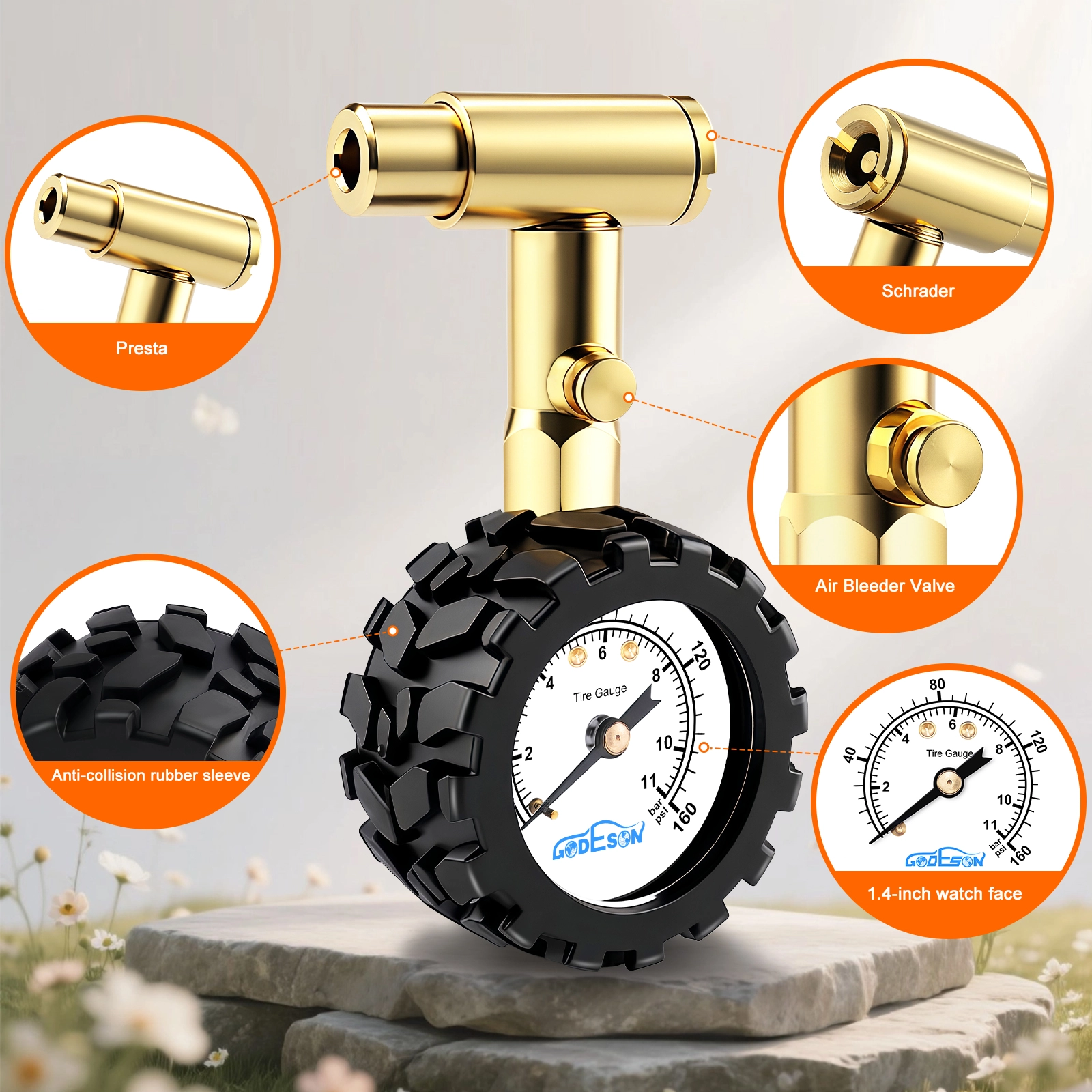
ATSAFEPRO designs gauges that balance accuracy, portability, and durability. Key features include:

  • Precise PSI Readings for both road and mountain bike tires.

  • Compact Design that fits easily in saddle bags or backpacks.

  • Clear Displays—digital options for quick checks, mechanical options for battery-free reliability.

  • Durability with reinforced housings built for outdoor use.

With ATSAFEPRO, cyclists can confidently adjust tires anywhere, whether at home before a ride or mid-route during long tours.

Real-World Benefits for Riders

  • Prevents flats and blowouts by catching low pressures early.

  • Improves handling on wet or uneven surfaces with precise adjustments.

  • Enhances speed and efficiency for road cyclists aiming for performance.

  • Extends tire lifespan, saving money in the long run.

Every check with a reliable gauge reduces uncertainty and adds confidence to the ride.

Simple Habits That Make a Big Difference

  • Check tire pressure before every ride—it only takes a minute.

  • Adjust according to terrain and rider weight for optimal grip and comfort.

  • Carry a portable bike tire gauge on long rides, especially in variable conditions.

  • Pair your gauge with a portable pump or inflator for quick roadside fixes.

Why Reliable Gauges Belong in Every Cyclist’s Kit

Cycling safety doesn’t come down to luck—it comes from preparation. A bike tire pressure gauge is a small tool with an outsized impact: better control, fewer accidents, and more enjoyable rides. With ATSAFEPRO bike gauges, riders gain not just numbers on a screen but peace of mind that every journey—whether a city commute or a mountain descent—is supported by accurate, dependable tire care.

Explore ATSAFEPRO bike tire tools or contact us via Contact Us to make safe cycling part of your daily routine.


Featured Blogs

Tag:

  • Blog
Share On
Featured Blogs
ATsafepro torque wrench: what buyers should know before choosing a kit

ATsafepro torque wrench: what buyers should know before choosing a kit

1. Interview: what buyers really want from an adjustable torque wrench kit 2. First impressions from the bench 3. What a torque wrench kit is actually solving 4. What stands out in this kit 5. Quick buyer takeaway: where this type of kit fits best 6. How to evaluate the tool before buying 7. Materials and manufacturing, in plain language 8. Common mistakes shops make with adjustable torque wrenches 9. Interview note: what end users usually appreciate 10. FAQ 11. What a sourcing manager should request next

ATsafepro Torque Wrench Kit: What It’s Built For

ATsafepro Torque Wrench Kit: What It’s Built For

1. Why an adjustable torque wrench kit earns its place in the workshop 2. What the ATsafepro torque wrench set appears to be built for 3. The practical problem this tool solves 4. Quick buyer takeaways 5. How to read the value of the wrench body, not just the label 6. Why the case matters more than many teams expect 7. Material choices and what they suggest 8. Where this kit fits best 9. Common buying mistakes 10. How to evaluate this kind of kit before you buy 11. FAQ 12. What a buyer should do next

ATsafepro Torque Wrench: What Buyers Need to Know

ATsafepro Torque Wrench: What Buyers Need to Know

1. ATsafepro torque wrench: what buyers usually want to know first 2. What this kit appears to include 3. Why torque control matters more than “tight enough” 4. How the visible design supports daily use 5. Socket accessories: why the case matters as much as the wrench 6. What kind of buyer this wrench is suited for 7. Selection criteria buyers should not skip 8. Common mistakes when using a torque wrench kit 9. FAQ 10. Final buying advice

ATsafepro Torque Wrench Review: What the Kit Offers for Shop Use

ATsafepro Torque Wrench Review: What the Kit Offers for Shop Use

1. ATsafepro torque wrench vs. ordinary hand tightening: what changes in the shop 2. Quick comparison: torque wrench set, standard ratchet, and impact tool 3. What the visible kit suggests about real-world use 4. Why torque control matters more than many buyers expect 5. How this style of wrench compares with other common options 6. What to check before choosing a kit like this 7. Common mistakes buyers make with adjustable torque wrenches 8. Who this kind of kit suits best 9. Practical buyer advice before you order 10. FAQ 11. What to do next

ATsafepro Torque Wrench: What Buyers Should Check Before Ordering

ATsafepro Torque Wrench: What Buyers Should Check Before Ordering

1. ATsafepro torque wrench: what buyers should look for before they put one in a cart 2. 1. What the kit appears to be for 3. 2. What you can verify from the visible design 4. 3. Why socket material and markings matter 5. 4. Quick buyer checklist for an adjustable click-type torque wrench set 6. 5. Where buyers tend to get tripped up 7. 6. Practical notes for shops, fleets, and retail buyers 8. 7. Short takeaways for procurement teams 9. 8. FAQ: common questions buyers ask 10. 9. A sensible next step

ATsafepro Torque Wrench Review: What Buyers Should Check

ATsafepro Torque Wrench Review: What Buyers Should Check

1. A practical look at the ATsafepro torque wrench: what buyers are really checking 2. What stands out in the kit 3. How a click-type torque wrench helps in daily work 4. What the visible construction suggests 5. Where this kind of kit fits best 6. How buyers should evaluate it before purchase 7. Common mistakes buyers make with torque tools 8. A short interview-style takeaway from the shop floor 9. What to ask the supplier before you commit 10. Bottom line for buyers



