Why a torque wrench like the ATsafepro model matters
A torque wrench is one of those tools that seems simple until a fastener fails, a wheel comes back loose, or a threaded part gets over-tightened and damaged. The ATsafepro torque wrench sits in that practical middle ground: a hand-operated, click-type tool meant to tighten fasteners to a preset torque value, with the kind of kit layout that makes sense for vehicle service and general maintenance. For engineers, sourcing teams, and workshop buyers, the real question is not whether the tool looks complete in a case. It is whether the design matches the job, the socket set is appropriate, and the adjustment method is good enough for repeatable work.
That is the decision this article helps with. If you are buying for wheel service, routine machinery work, or a mobile maintenance kit, the details that matter are visible in the tool set itself: a ratcheting head, an engraved torque scale, deep sockets in 17 mm, 19 mm, and 21 mm, plus a storage case and extension/adapter. Those are not glamorous features, but they are the ones that affect day-to-day use.
What is in the ATsafepro torque wrench set
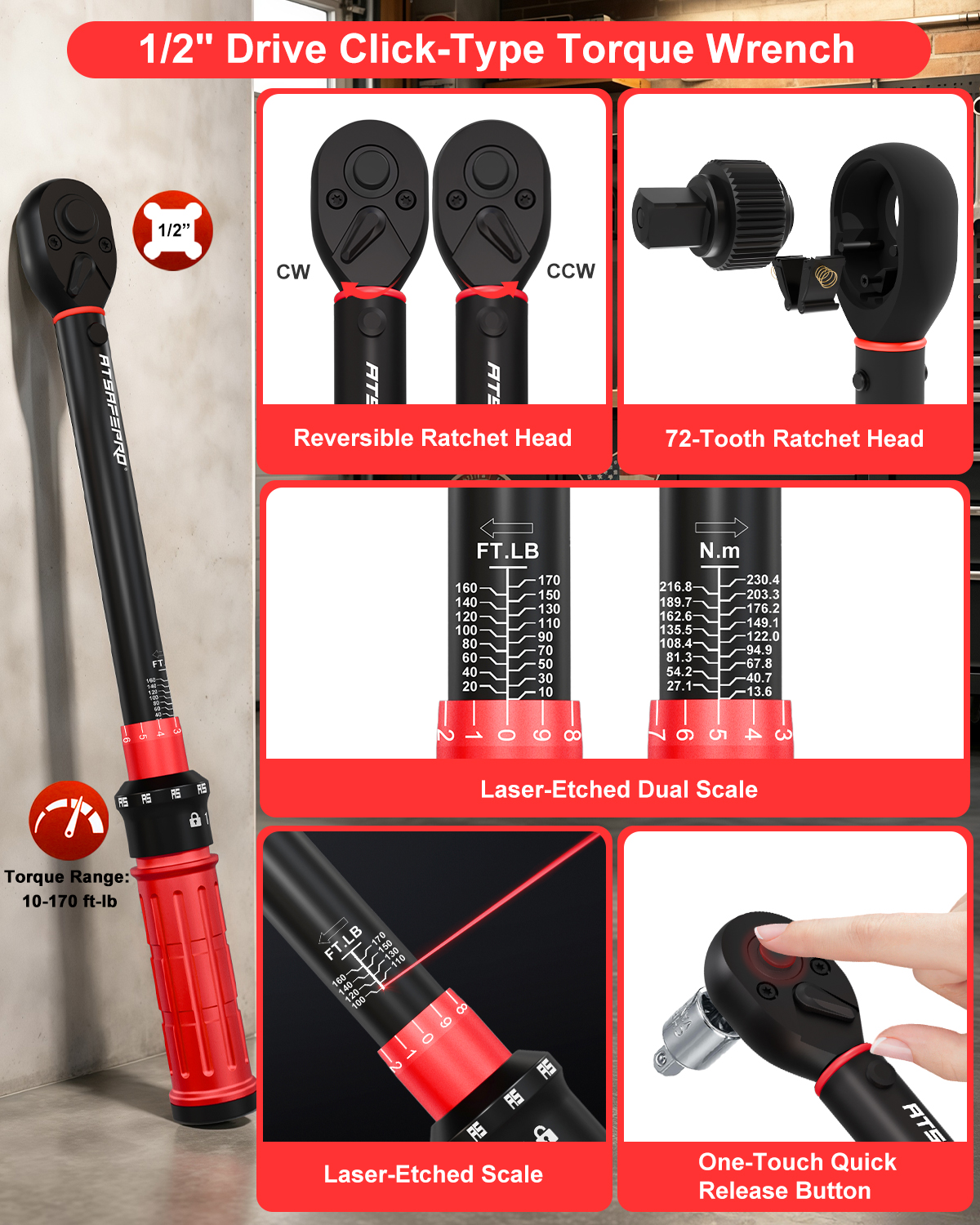
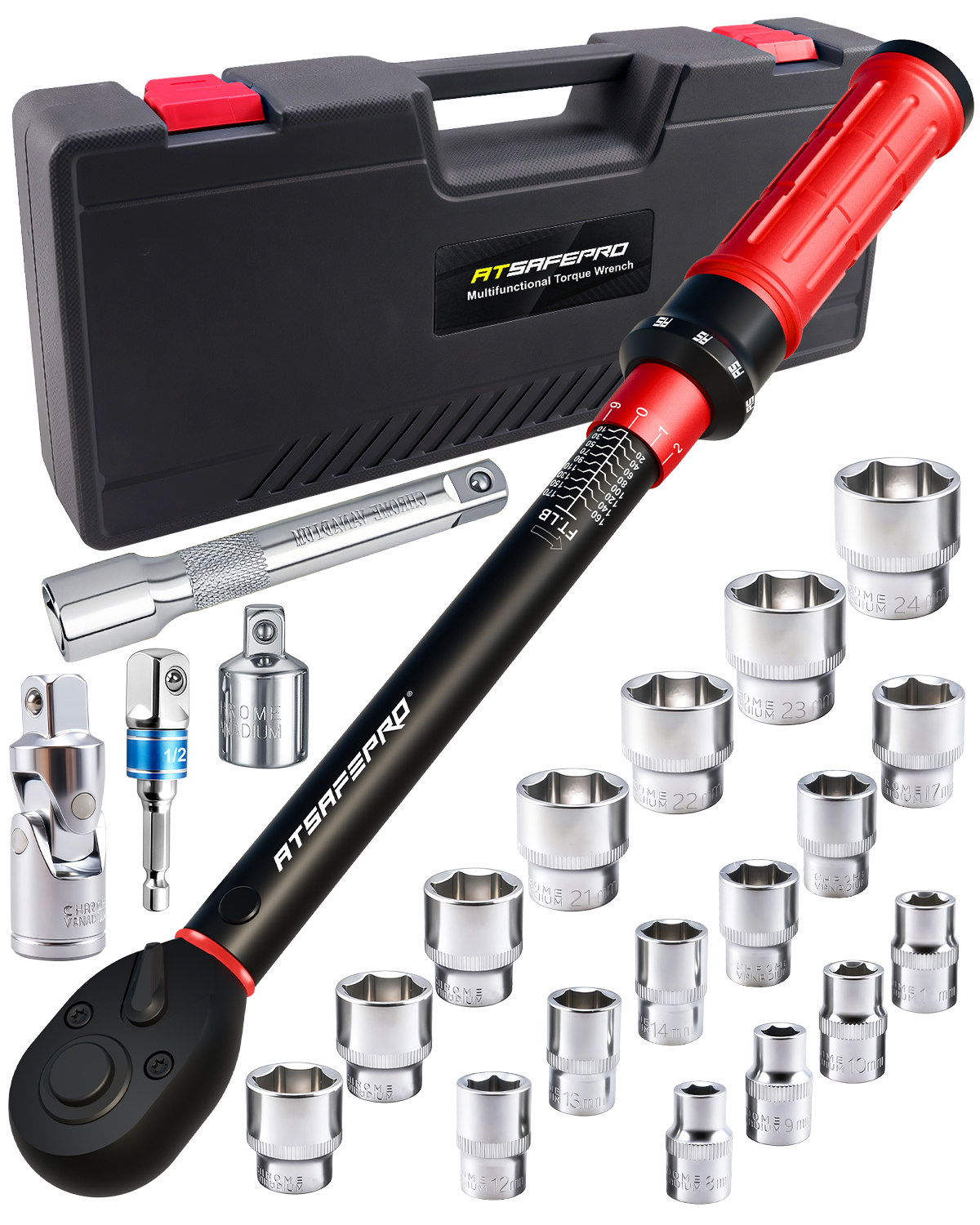
The kit shown is built around a long-handled torque wrench with a red metal body, black textured grip, and a black ratchet head. The shaft carries a visible torque scale, which indicates that the wrench is adjustable rather than fixed to one setting. That matters because most service work does not happen at one torque value. Wheel nuts, engine hardware, brackets, and service fixtures all ask for different tightening levels.
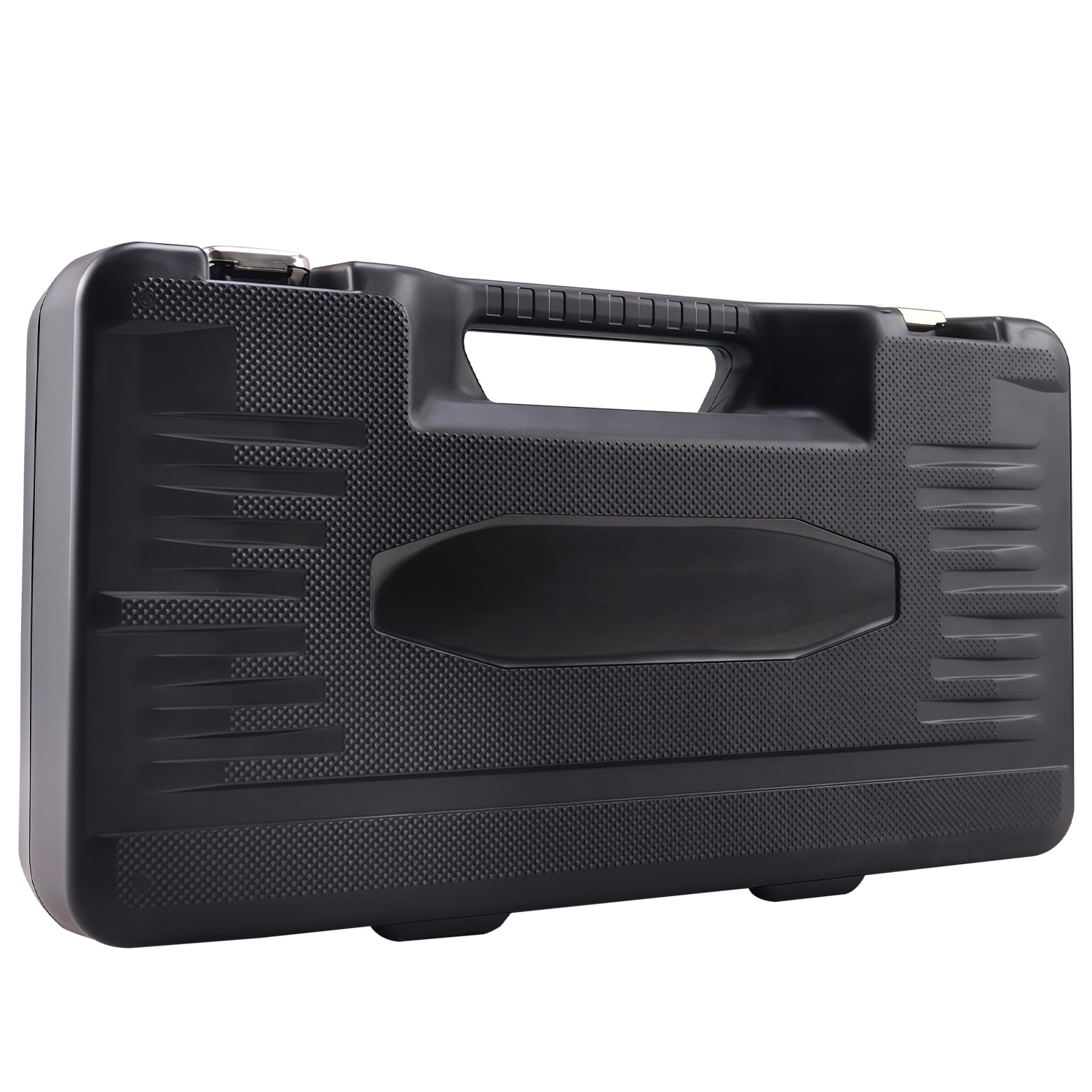
Alongside the wrench, the set includes a hard plastic carrying case, a chrome extension or adapter, and three deep sockets marked CR-MO 17 mm, 19 mm, and 21 mm. The sockets appear to use colored outer sleeves for quick size recognition. That is a small detail, but in a busy bay it saves time. The case also makes the set easier to issue, track, and store between jobs, which is useful if you are kitting tools for shared use.
Why these visible details are useful in real service work
For a torque wrench, the handle and head are only part of the story. A tool can look robust and still be awkward to use if the grip is poor or the scale is hard to read. In this set, the black textured grip suggests an attempt to improve control during adjustment and tightening. That may sound ordinary, but in practice it helps when hands are oily or when a technician is working in a tight wheel well and cannot afford a slip.
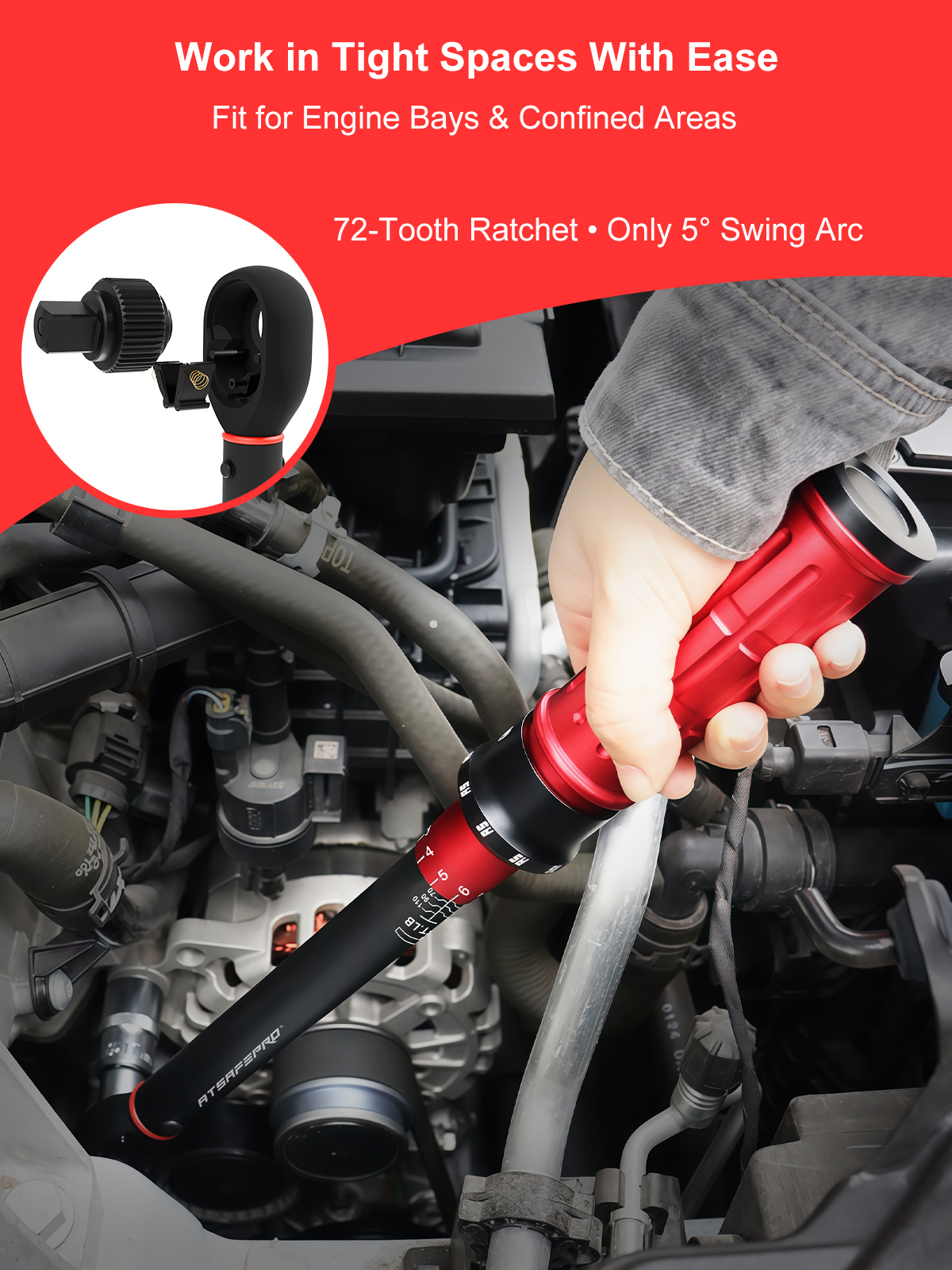
The ratcheting head is another practical feature. It allows the user to work in confined spaces without resetting the tool after every pull. That is especially useful for tire service and general vehicle maintenance, where access is often limited by suspension components, bodywork, or brake hardware. The long handle should also provide leverage, though the exact length is not supplied, so any comment about mechanical advantage has to stay general.
The CR-MO socket marking is worth noting. Chrome-molybdenum steel is commonly used where sockets need higher toughness than basic hand-tool steel. That does not automatically tell you everything about impact rating or finish quality, and it would be a mistake to read too much into the marking alone. Still, for wheel and service applications, CR-MO is a sensible material choice when durability and repeated use are part of the brief.
Where this tool set fits best
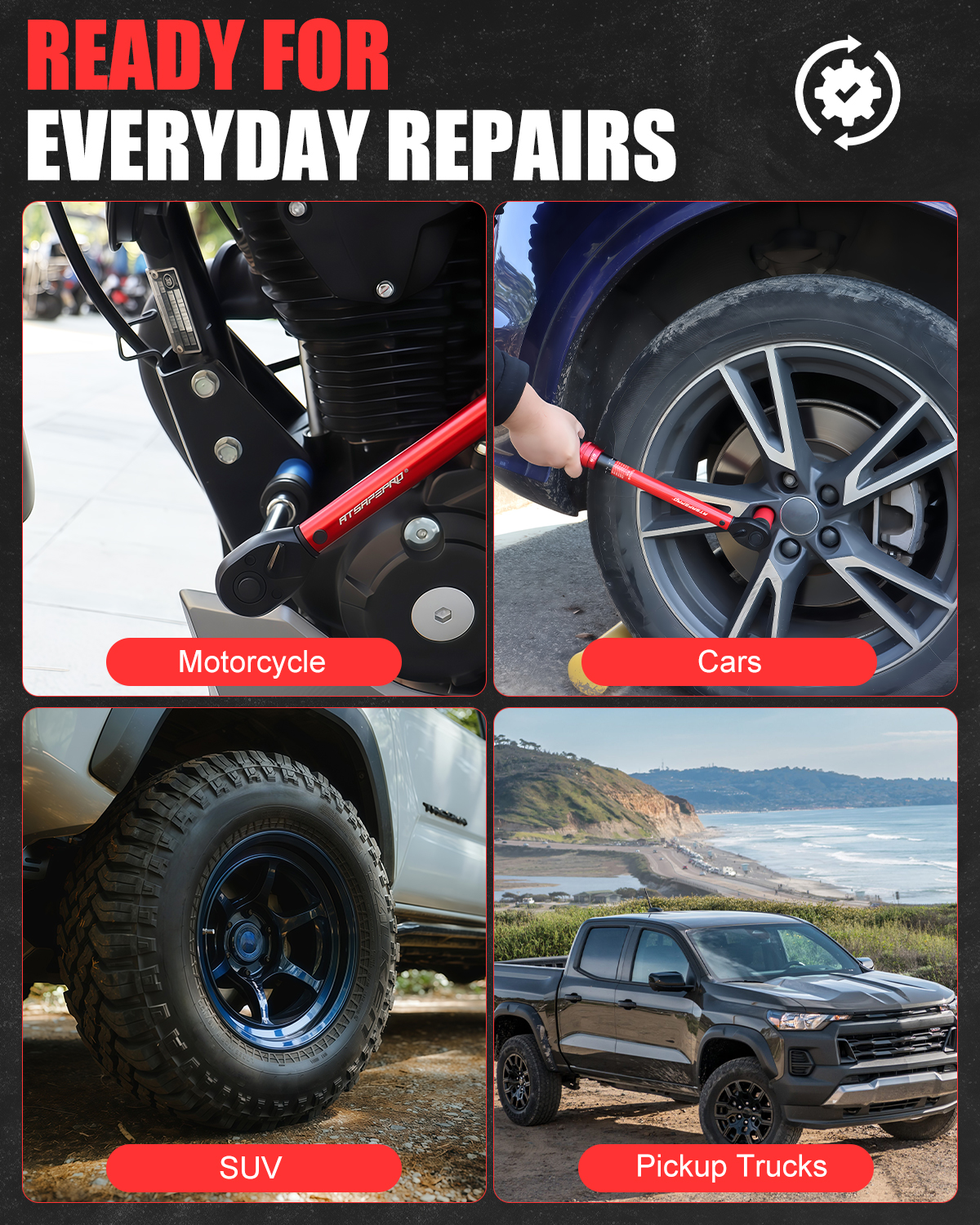
Automotive wheel service
The clearest use case is wheel lug nut installation and controlled tightening. The included 17 mm, 19 mm, and 21 mm sockets cover common wheel fastener sizes on many passenger vehicles and light-duty applications. The presence of a deep socket style also helps when studs protrude or when the lug nut sits recessed.
General machinery maintenance
For maintenance crews, a click-type torque wrench is useful whenever a joint needs repeatable tightening but the work does not justify a larger calibration-driven setup. Covers, brackets, guards, and light assembly work often fall into this category. The adjustable scale lets the user set one torque value for a batch of fasteners, then move to the next job without switching tools.
Mobile or shared tool kits
The case and accessory layout make this set easier to keep together than a loose wrench-and-socket collection. In a fleet environment, service truck, or shared workshop, that matters more than people admit. Tools disappear when they are not assigned a home.
Selection criteria buyers should actually check
When purchasing a torque wrench set like this, it helps to think in terms of job fit rather than feature count. A long accessory list can hide the fact that only two or three parts are truly useful for your operation.
First, confirm the fastener sizes you need. If your work is mostly wheel service, the included 17 mm, 19 mm, and 21 mm sockets may cover a large portion of the job. If your facility works across mixed vehicle platforms, you may need additional sizes, and a buyer should not assume the supplied set is enough for every fleet.
Second, inspect the adjustment method and scale readability. A torque wrench that is difficult to set accurately becomes frustrating very quickly. The scale on the shaft is visible in the product image, but the exact torque range is not clear. That means a buyer should verify range before ordering, especially if the tool will be used for sensitive tightening tasks.
Third, consider whether the wrench will be used primarily for installation or also for loosened fasteners. A click-type torque wrench is mainly a tightening tool. It is not the right instrument for breaking loose stuck bolts, and using it that way can damage the mechanism. That warning sounds basic, but it is one of the most common misuse issues in the field.
Common mistakes with torque wrench kits
One mistake is choosing a kit because it has sockets and a case, while ignoring the wrench specifications. The accessory set is convenient, but the core decision is still whether the torque wrench range, drive arrangement, and click feel suit the work. Another common mistake is treating every included socket as if it were identical. The visible socket sizes are useful, yet users still need to confirm compatibility with their fasteners and vehicle requirements.
Another practical problem is storage. A torque wrench should be stored properly, and many users forget to return it to its minimum setting after use. That habit helps preserve consistency over time. If the shop has a process for tool return and basic inspection, this sort of wrench set will serve better and longer than one tossed into a drawer.
What the product design suggests about manufacturing
Based on the visible construction, the wrench appears to combine forged or machined metal components with a coated or painted finish, a molded rubber grip, and a marked scale for setting torque. The sockets look like standard precision tool components with size identification sleeves. That is a familiar manufacturing path for hand tools: build the load-bearing pieces in metal, add a grip where the user interface matters, and package the set so the tool is ready for field use.
It is worth being careful here. From the image alone, exact material grades, calibration accuracy, and process details are not confirmed. Buyers who need controlled quality for production use should ask for the specifications that matter to them rather than relying on appearance. For many purchasing teams, that means confirming drive size, torque range, and any available calibration documentation before the order is approved.
Practical buyer advice before you place an order
If the ATsafepro torque wrench is being considered for workshop use, start with the job list. What fasteners will it touch most often? Are the supplied sockets enough, or will the set need expansion? Is the wrench intended for wheel service only, or will it be shared across maintenance tasks? Those answers should drive the purchase more than the presence of a polished case.
If you are sourcing for a team, ask for clear photos or a spec sheet that confirms the torque range and drive size. The product image does not make those details fully readable, and guessing is not good procurement. Also check whether your operation requires separate calibration controls or traceability. The product information provided here does not state certification details, so that should not be assumed.
For individual users, the best sign of a good fit is simple: the wrench should feel easy to set, the sockets should cover the work you do most, and the whole kit should be something you will actually keep organized. A well-made torque wrench that is left unused in a broken case is still a poor purchase.
FAQ
Is this set suitable for wheel lug nuts?
Yes, the included 17 mm, 19 mm, and 21 mm sockets make it clearly oriented toward wheel service and similar automotive work. Final suitability still depends on the vehicle and the required torque range.
Can it be used for loosening tight bolts?
A torque wrench should mainly be used for tightening to a set value. It is not the right tool for breaking loose seized fasteners.
Does the set include everything needed?
It includes the wrench, a hard case, a chrome extension or adapter, and the three visible deep sockets. Whether that is enough depends on your fastener sizes and torque requirements.
What should a buyer verify first?
Verify the torque range, drive size, and whether the included sockets match the work you intend to do. Those three points matter more than the packaging.
Choosing the right next step
If you need a compact, ready-to-store torque wrench kit for automotive service or general maintenance, the ATsafepro torque wrench presents a straightforward package: adjustable wrench, ratcheting head, common wheel socket sizes, and a case that keeps the set together. It is the sort of kit that works best when the application is clear and the buyer checks the missing specifications before purchasing.
For sourcing teams, that means asking for the details that are not visible in the listing. For technicians, it means matching the tool to the actual fasteners on the bench, not the other way around. That is usually where the difference lies between a useful hand tool and one that merely looks complete.