


Why a torque wrench is not just another socket tool
An ATsafepro torque wrench is the kind of tool that looks straightforward until a fastener comes loose, a wheel nut is over-tightened, or an assembly walks out of spec after a few cycles. In automotive and mechanical work, the difference between “tight enough” and “too tight” is not a matter of feel. It is a matter of load control, repeatability, and avoiding damage that can show up later as stripped threads, warped parts, or uneven clamping.
That is why buyers keep coming back to adjustable click-type torque wrench kits for wheel service, maintenance benches, and repair kits. The basic job is simple: set a target torque, apply force, and let the tool signal when that target is reached. The practical decision for an engineer, sourcing manager, or shop buyer is not whether torque control matters. It does. The decision is whether the tool design, materials, and accessory set fit the work you actually do.
What this type of wrench is built to do
The pictured ATsafepro torque wrench appears to be a long, red-bodied adjustable wrench with a black textured grip, a ratcheting head, and a visible torque scale on the shaft. That combination points to a common service-tool format: set the desired torque, engage the fastener, and use the click or release signal as the stop point. The fitted carrying case and included sockets suggest a kit intended for field use or storage in a garage where tools get moved around often.
For many buyers, that matters as much as the wrench itself. A naked hand tool can disappear into a tool chest. A cased kit with labeled socket pieces is easier to keep together, and easier to hand to a technician without an explanation about where the correct adapter went. Small thing, but in a busy shop, small things become labor time.
Quick reference: where this style fits best
This is the sort of torque wrench kit that makes sense when the work involves controlled tightening rather than high-speed production fastening. Typical uses include wheel lug nut tightening, motorcycle service, bicycle maintenance, and general mechanical assembly. It is also the right kind of tool for preventive maintenance and repair environments where the same hardware gets opened and reassembled repeatedly.
The included sockets shown in the image are labeled CR-MO 17 mm, 19 mm, and 21 mm, along with a silver adapter or extension piece. Those sizes are especially relevant for wheel service on many passenger vehicles and motorcycles, though actual fit depends on the specific application. A buyer should still confirm the drive interface and overall torque range before treating the kit as universal. That is a common mistake: assuming a wheel tool is a one-size-fits-all solution when the job’s torque demand and socket interface may vary.
Materials and construction: what the visible details suggest
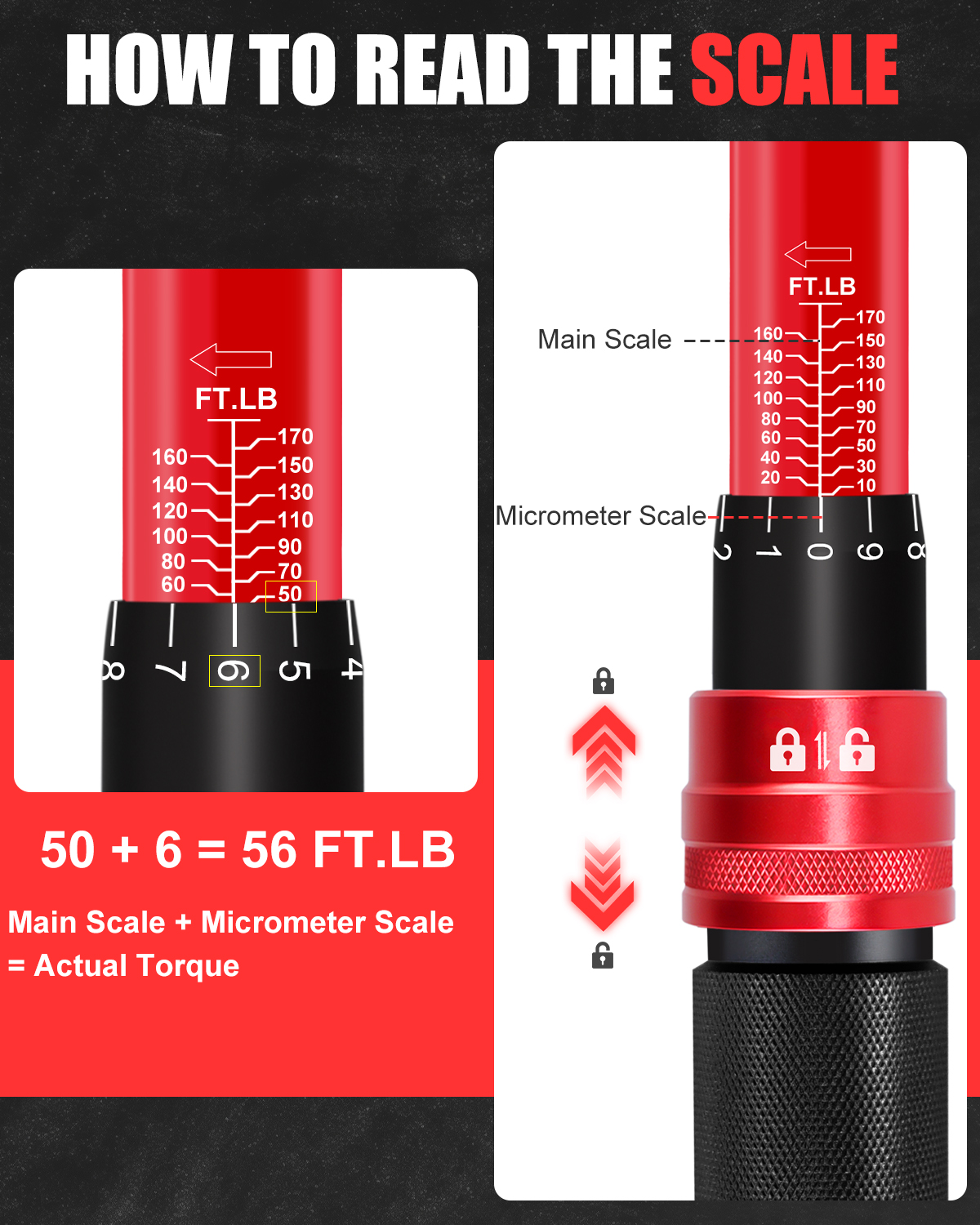
From the image, the wrench body appears to be a painted or coated steel or alloy construction, with a black textured handle area for grip. The ratcheting head includes a round selector or lever, which is typical of hand tools designed to move quickly on and off fasteners without repositioning the tool after every stroke. The torque scale is printed along the shaft, and while the exact numbers are not fully legible, the presence of a scale is essential for adjustable torque setting.
The sockets appear to be chrome-molybdenum steel, based on the CR-MO labeling. That choice is practical for impact- and service-style accessories because it tends to hold up better under repeated use than softer materials. The molded plastic case does the unglamorous part of the job: it keeps the set organized and protects the calibration tool from being tossed around with heavier hardware. In the real world, the case matters more than people admit. A torque wrench that gets stored loose in a drawer tends to get handled like a pry bar, and that is exactly what you do not want.
Why controlled torque matters in the shop
Over-tightening is the obvious failure mode, but it is not the only one. Under-tightening can be just as troublesome, especially on wheel fasteners, assemblies exposed to vibration, or joints that rely on consistent preload. Torque is not the whole story in mechanical fastening, but it is one of the few variables a technician can control directly and repeatably with a hand tool.
For sourcing teams, the value proposition is straightforward: a torque wrench kit helps reduce rework, protects mating parts, and supports more consistent maintenance procedures. For engineers, it is about process discipline. For shop managers, it is about fewer callbacks and less time spent checking why one corner of an assembly behaves differently from the others.
How to choose a kit like this
1. Confirm the torque range against the job
Do not assume the visible scale covers everything you need. The image does not provide a legible torque range, so the safe approach is to match the wrench’s specified range to the fasteners you service most often. A wheel lug application can sit in a very different band from small engine or bicycle work.
2. Check the drive and accessory compatibility
The socket set shown includes 17 mm, 19 mm, and 21 mm pieces, which is helpful, but the buyer still needs to verify the drive size, adapter fit, and whether the accessories are intended for the actual wrench head. A kit can look complete and still miss one interface detail that makes it awkward in use.
3. Look at the handle and head ergonomics
A black textured grip is more than a styling cue. It helps with hand placement and control when the tool is being pulled to a target torque. The ratcheting head also improves workflow in tight spaces. That matters in a wheel well or underbody environment where access is limited and hand repositioning costs time.
4. Think about storage and traceability
A molded case is not a luxury feature. It supports organization, reduces lost accessories, and makes it easier to spot if something is missing before the job starts. If the wrench is used in a service environment, a case also helps protect the adjustment mechanism from dirt and abuse between uses.
Common buyer mistakes with torque wrench kits
The most common mistake is treating the tool like a standard ratchet. A torque wrench is a measurement tool first and a fastening tool second. Using it to break loose stuck fasteners is a fast way to damage the mechanism, and sometimes the operator only finds out later when the next job no longer clicks the way it should.
Another mistake is ignoring calibration and verification practices. This article cannot claim any calibration standard for the ATsafepro torque wrench because none was supplied. If you are buying for professional or repeated use, you should ask the supplier how the tool is calibrated, whether documentation is available, and what the recommended check interval is. If the answer is vague, that is worth noting.
Finally, do not overestimate the role of accessories. The visible sockets and adapter make the kit more flexible, but they do not replace confirming the fastening spec for the actual machine or vehicle. A well-built kit still has to be used within the correct torque procedure.
Practical advice for automotive and mechanical buyers
If you are sourcing for a garage, fleet maintenance group, or retail tool line, this kind of kit has a clear place: controlled tightening with enough accessory coverage to handle common service sizes. The red body and fitted case also make the set easy to identify on a busy bench, which sounds minor until someone borrows a tool and returns the wrong one.
For DIY users, the biggest benefit is confidence. The wrench gives you a defined stop point instead of relying on hand feel, which is especially useful for wheel service and other safety-relevant joints. Just keep in mind that confidence should come from using the tool correctly, not from assuming every fastener wants the same torque.
FAQ
Is this tool suitable for wheel lug nuts?
It appears suited for wheel service applications, especially with the included 17 mm, 19 mm, and 21 mm sockets. The final answer depends on the vehicle’s required torque spec and whether the wrench range matches it.
Is it only for automotive work?
No. Tools in this category are also used on motorcycles, bicycles, and general mechanical assemblies where controlled torque matters.
What should I verify before purchase?
Confirm the torque range, drive compatibility, calibration details, and whether the included sockets match your fasteners. The visible kit features are useful, but specifications still decide whether the tool is actually fit for purpose.
A sensible next step
If you are evaluating an ATsafepro torque wrench for a workshop, a maintenance kit, or resale, start by matching the stated torque range and drive format to the jobs you already perform. Then look at the accessory set, the case quality, and how easy the tool is to store and keep in service. Those details tend to matter more over time than any flashy claim on the box.
For buyers, the right question is not whether you need a torque wrench. It is whether this specific kit gives you the control, socket coverage, and durability your work actually demands.





