ATsafepro torque wrench: what buyers should look for in a wheel-service kit
The ATsafepro torque wrench sits in a very practical corner of the hand-tool market: it is the kind of kit people buy when they need controlled tightening for wheels, suspension hardware, or general mechanical assembly, but do not want a bench full of separate tools. The appeal is straightforward. A torque wrench gives the user a measurable tightening value, which matters because under-tightening can loosen joints and over-tightening can distort parts, stretch fasteners, or make the next service job unnecessarily difficult.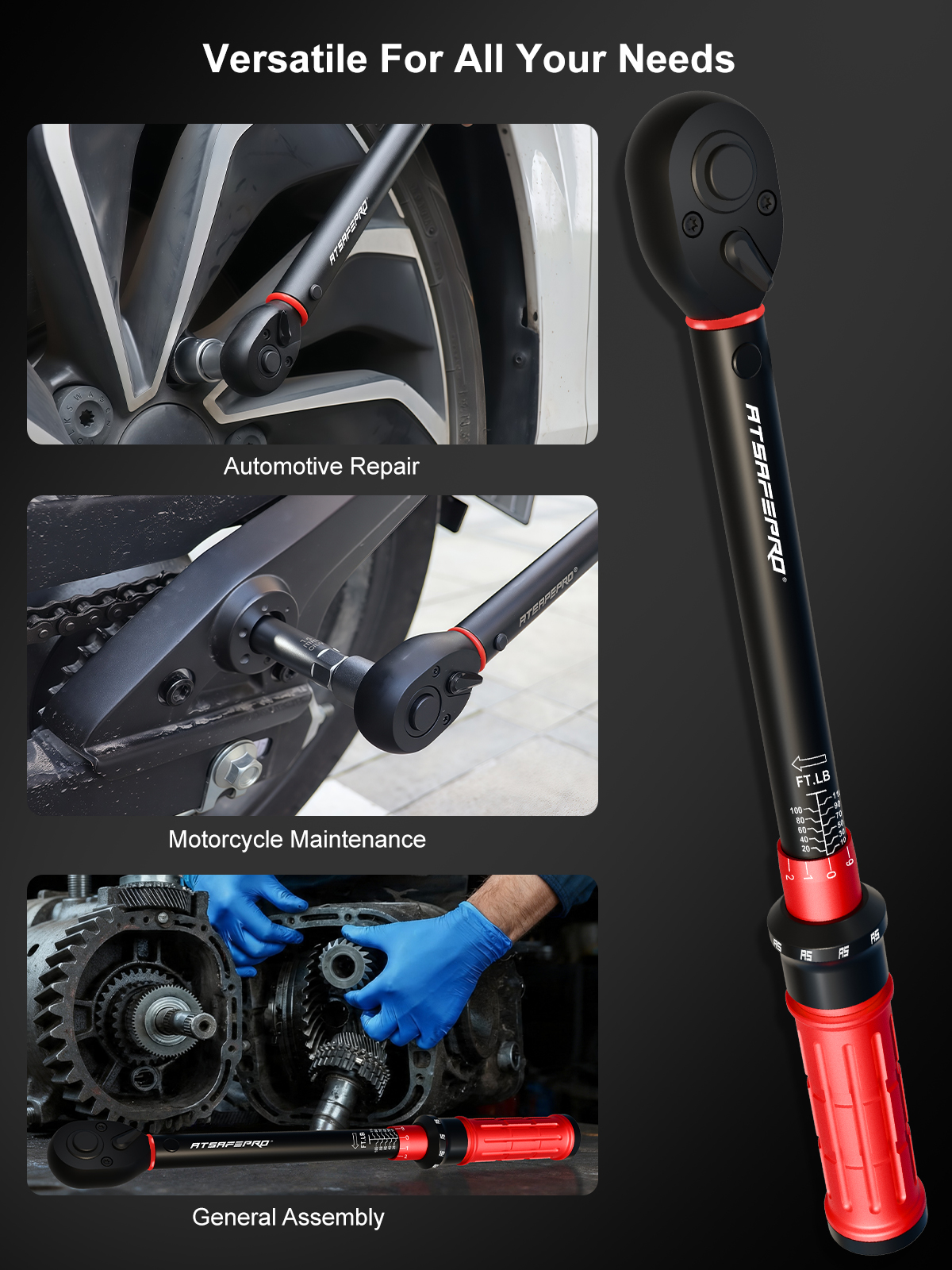
For sourcing managers and shop buyers, the question is not simply whether the kit looks complete. It is whether the tool set actually fits the work you do, whether the included socket sizes cover your common jobs, and whether the storage and accessory package makes sense for real workshop use. This article focuses on that decision point.
What is in the kit?
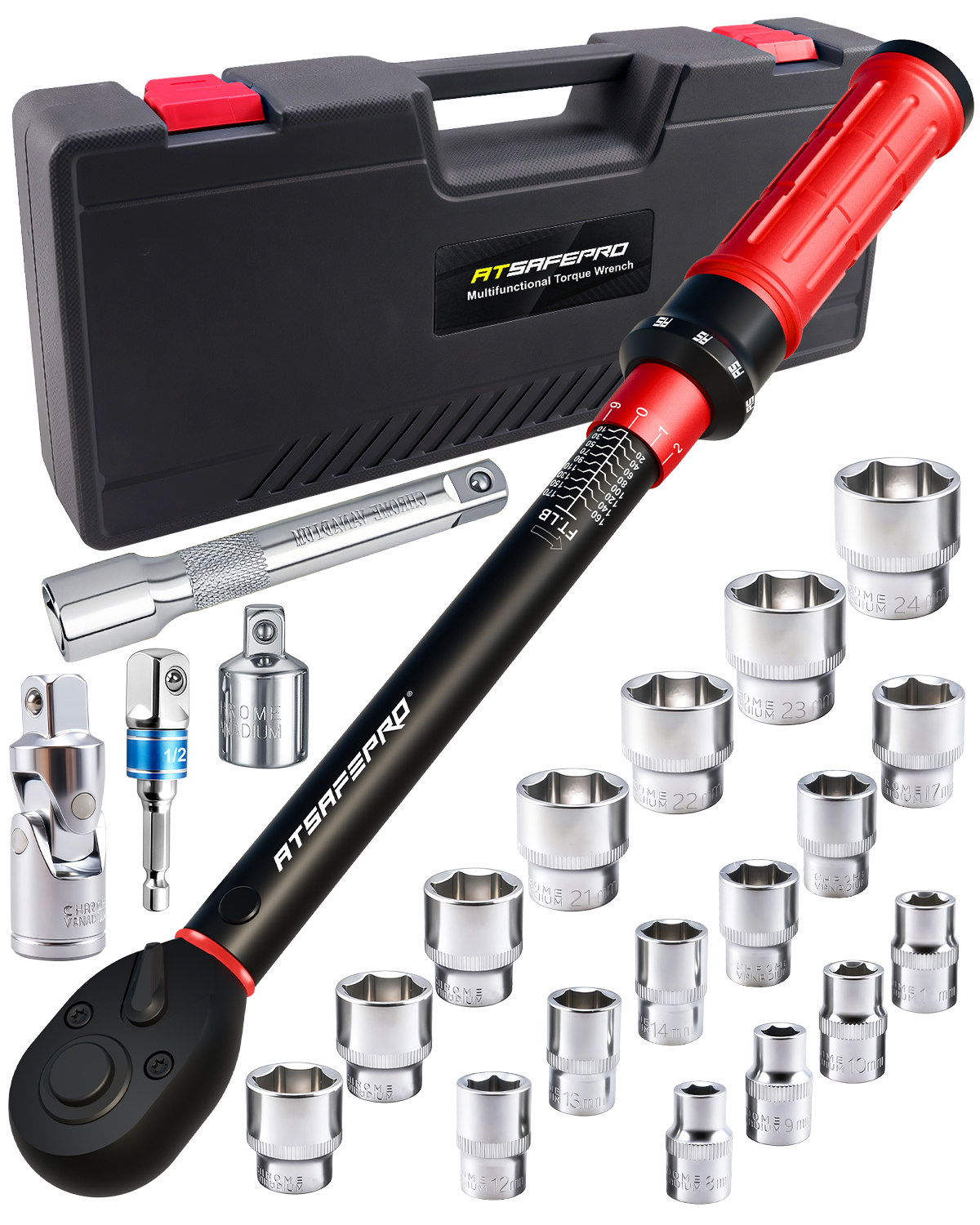
Based on the product information provided, the ATsafepro torque wrench is an adjustable click-type torque tool set supplied with interchangeable socket accessories in a molded carrying case. The visible layout is familiar to anyone who has handled service kits in automotive repair:
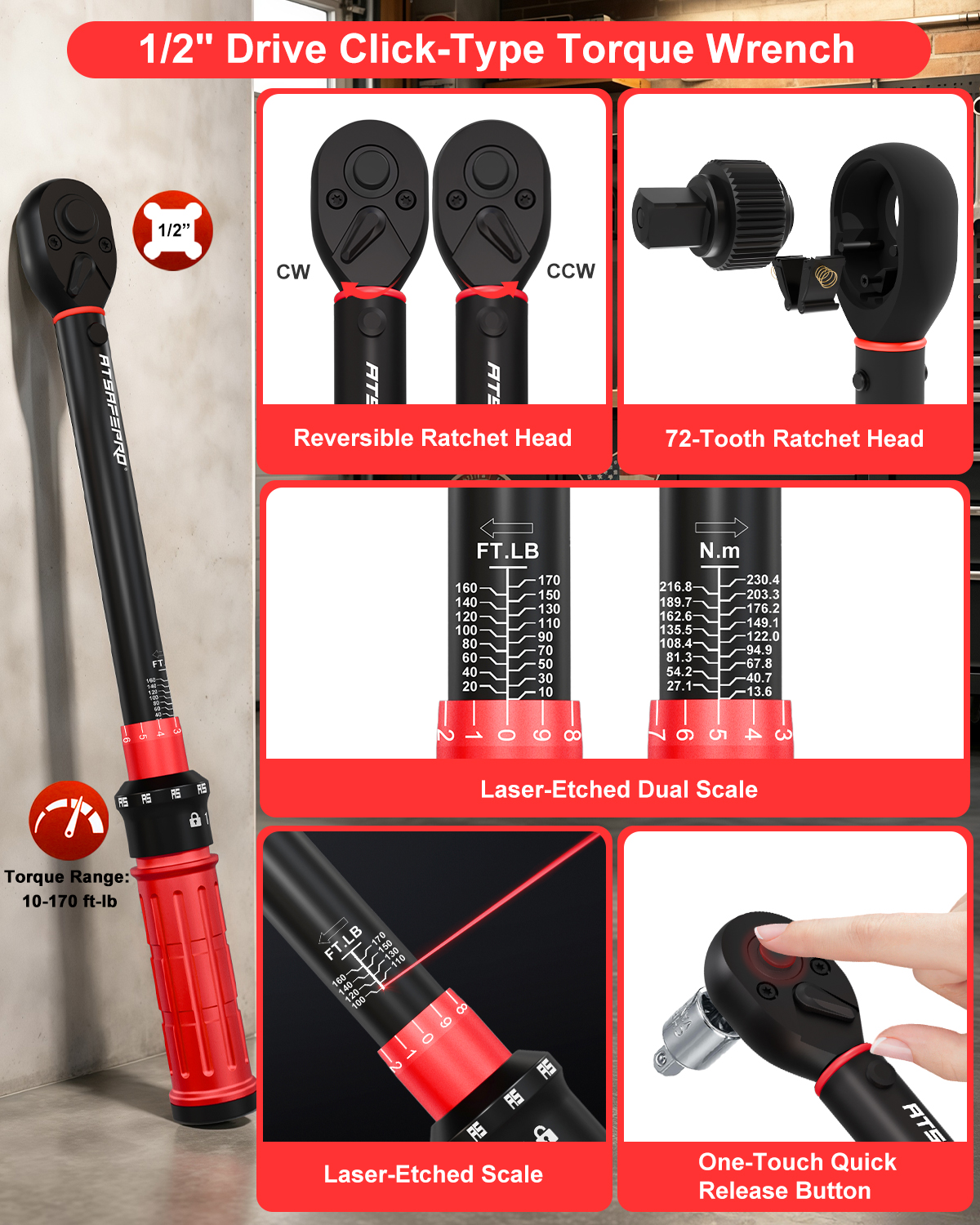
- A long red-and-black torque wrench body with a ratcheting head
- A printed torque scale on the shaft for setting the target value
- A textured black grip for better hand purchase
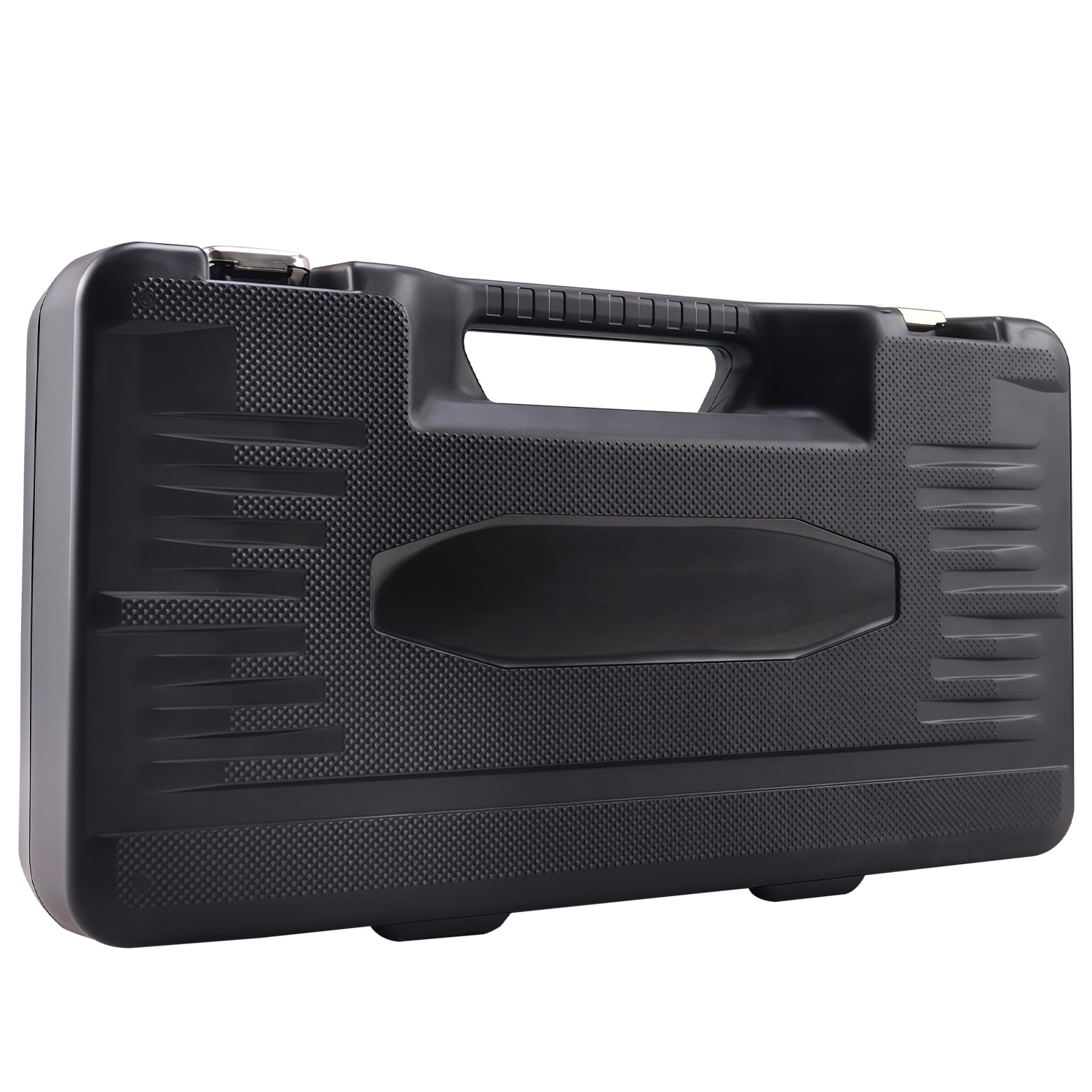
- A black plastic hard case with fitted interior
- Socket heads/adapters marked CR-MO 17 mm, 19 mm, and 21 mm
- A chrome adapter and a small extension/adapter piece
That combination points to a tool designed for portable service work rather than a single dedicated production line. It is the sort of package a technician can carry to a vehicle bay, a mobile tire job, or a light mechanical assembly station.
Why the socket assortment matters
The included 17 mm, 19 mm, and 21 mm sockets are not random additions. Those sizes are commonly seen in wheel-related service work, especially where lug nuts or wheel hardware call for those dimensions. In practice, buyers should pay attention to the socket mix because a torque wrench is only useful if the accessory set matches the fasteners in your fleet, shop, or customer base.
A compact kit like this can reduce tool swapping and cut down on “missing socket” downtime. It also keeps the torque wrench and the most-used sizes together in one case, which is better than relying on a drawer full of loose accessories. That said, a buyer should still confirm whether the 17 mm, 19 mm, and 21 mm sizes cover the full range of applications in the workshop. A tire shop, for example, may see very different demand than a general repair garage.
How a click-type torque wrench helps prevent damage
A torque wrench is not just about precision for precision’s sake. It is about repeatable fastening. In automotive and mechanical assembly, too much clamping force can be as problematic as too little. Wheel studs can be stressed, threads can gall, and future disassembly can become a fight. Too little torque, meanwhile, can allow movement under load.
Click-type tools are popular because they give the operator a clear signal when the preset value is reached. The exact click mechanism and calibration details for this specific ATsafepro torque wrench are not fully verifiable from the provided data, so it is wise not to overstate performance claims. Still, the basic working principle is well understood in the trade: set the target, tighten steadily, and stop when the tool indicates it has reached the selected torque.
One practical caveat: a torque wrench should not be used as a general breaker bar. That habit shortens tool life and can affect accuracy over time. Many service failures are caused less by the wrench itself than by poor handling.
Material and construction: what the image suggests
From the product description, the main wrench appears to be a metal tool with a painted red shaft, black finish on the head and grip areas, and knurled or textured grip surfaces. The sockets are marked CR-MO, indicating chrome-molybdenum steel, and they appear to have colored outer sleeves or coatings. The case is molded plastic with fitted compartments.
For buyers, these details are worth noting because they tell you something about intended use and presentation:
Torque wrench body
The long shaft offers leverage and a clear surface for torque markings. A visible scale is useful only if it is legible under workshop lighting and resistant to wear. Printed scales can be perfectly serviceable, but if the marking fades quickly, the tool becomes harder to set accurately.
Socket accessories
CR-MO sockets are often chosen for strength and durability in mechanical environments. The question to ask is whether the sockets are intended for general fastening or more demanding service conditions. The supplied information does not confirm impact rating, so buyers should avoid assuming these are impact sockets unless the supplier states that clearly.
Storage case
The molded case is not just packaging. In workshop settings it acts as part of the product. A fitted case helps keep the wrench, sockets, and adapters organized, which reduces loss and speeds up job setup. It also matters for mobile technicians, where tools get transported more often than they sit in a cabinet.
Where this type of kit fits best
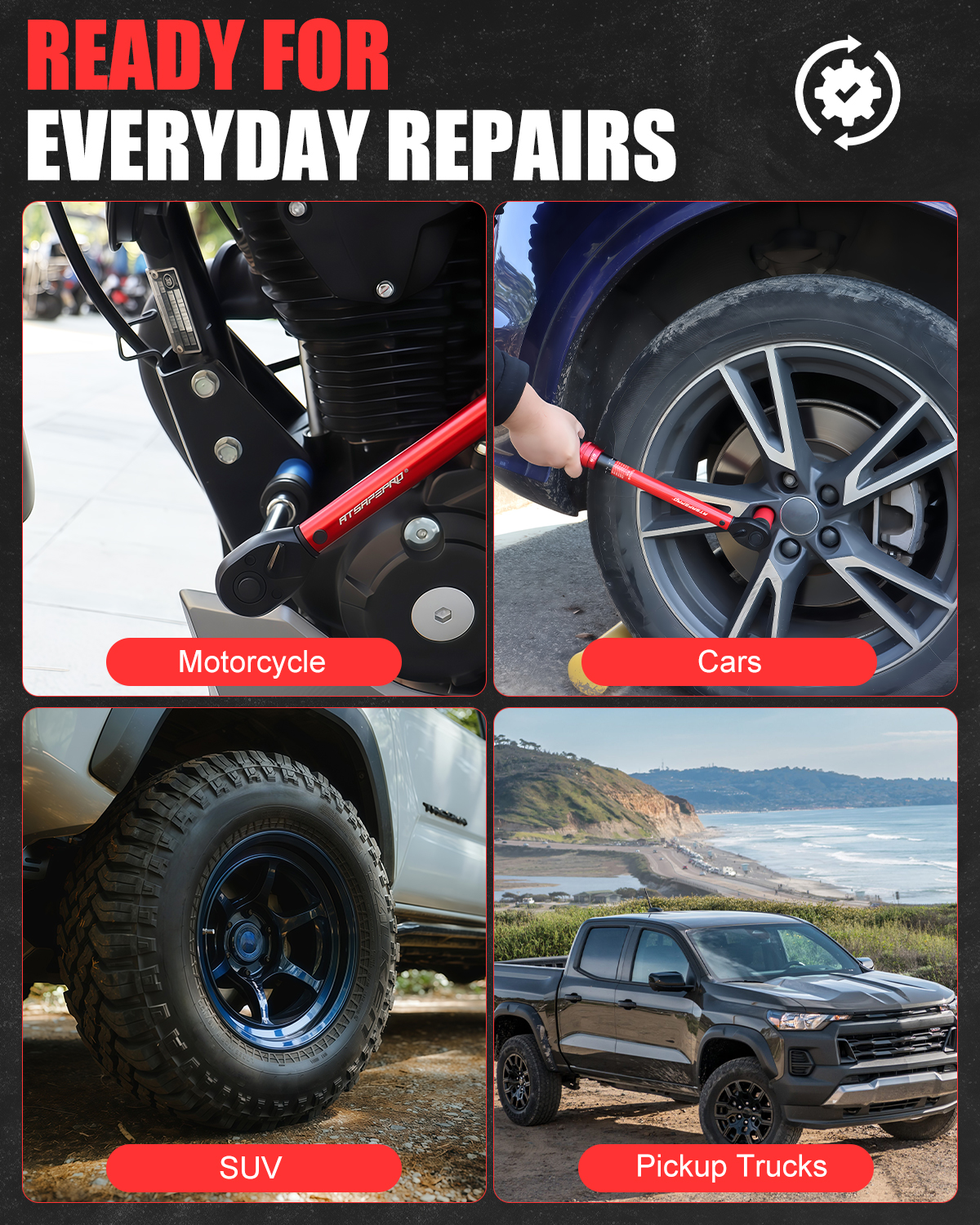
The ATsafepro torque wrench kit appears well suited to automotive maintenance, tire and wheel service, and general assembly tasks where controlled tightening is needed. It is a practical fit for:
- Service bays that handle wheel-related jobs
- Fleet maintenance teams
- Small workshops that value a portable all-in-one kit
- Assembly workstations where fastener consistency matters
It is less obviously aimed at precision lab work or high-end production fastening systems, and it should not be judged as such. The value here is convenience, common-size coverage, and controlled hand tightening in a field setting.
What buyers should verify before ordering
This is the part that often gets skipped, and it is where procurement mistakes start. A torque wrench kit can look complete in a photo while still being poorly matched to the application.
First, confirm the torque range. The product information does not provide a verified range, so it should be treated as an open question until the supplier documents it.
Second, check the drive size and compatibility with the sockets and adapters. The image suggests a configurable kit, but the exact drive configuration is not fully verifiable from the provided data.
Third, ask whether the wrench is supplied with calibration documentation or any stated accuracy specification. If that matters for your operation, do not assume it is included.
Fourth, verify the socket sizes against your real-world fasteners. A missing size can make a neat kit surprisingly inconvenient.
Common buyer mistakes with torque wrench kits
One mistake is buying for appearance instead of use. A bright tool and a fitted case can create a sense of completeness, but the actual test is whether the kit matches the fasteners and torque values used on your floor.
Another mistake is treating the included sockets as universal. Even within automotive service, fastener sizes vary. The 17 mm, 19 mm, and 21 mm set is useful, but it is not a blanket answer for every wheel or machine.
A third issue is storage discipline. Torque tools deserve a fixed home. If the wrench is tossed back into a drawer with heavy steel parts, the scale and mechanism can suffer unnecessary wear.
Quick buyer FAQ
Is the ATsafepro torque wrench suitable for wheel service?
Based on the visible 17 mm, 19 mm, and 21 mm sockets and the overall kit layout, it appears well aligned with wheel and tire-related work. Buyers should still confirm fit for their specific fasteners.
Does the kit include a storage case?
Yes. The product information indicates a black molded hard case with fitted interior.
Are the sockets made from CR-MO steel?
The sockets are visibly marked CR-MO, which commonly refers to chrome-molybdenum steel. Exact grade and treatment are not provided, so those details should be confirmed with the supplier if they matter to your application.
Can I assume the torque wrench is calibrated to a specific standard?
No. The exact calibration standard and accuracy tolerance are not supplied here. A buyer should request those details rather than infer them.
Is this a good choice for a portable workshop kit?
Yes, that is probably where it makes the most sense. The case, accessory set, and adjustable wrench format all point toward portable service use.
Final buyer take
If you are evaluating the ATsafepro torque wrench for procurement or shop use, the important question is not whether it looks like a standard torque kit. It does. The real question is whether the documented torque range, drive configuration, and socket coverage match your jobs. The visible 17 mm, 19 mm, and 21 mm accessories make it attractive for wheel and general mechanical service, while the hard case adds practical value for transport and organization.
For the next step, ask the supplier for the verified torque range, calibration details, and socket compatibility before placing a volume order. That small check can save a lot of friction later, especially in a workshop where tools are judged not by the box they came in, but by how consistently they hold up on the bench.