ATsafepro torque wrench: what buyers should compare before they click “add to cart”
The ATsafepro torque wrench sits in a crowded part of the hand-tool market: the place where automotive users, maintenance teams, and small workshops want a controlled tightening tool without paying for a top-tier professional nameplate. That makes the comparison task more important than it first looks. A torque wrench is not just a more expensive ratchet. It is a measuring tool, and the decision is really about whether the kit gives you repeatable tightening, practical socket coverage, and enough durability to survive routine service work.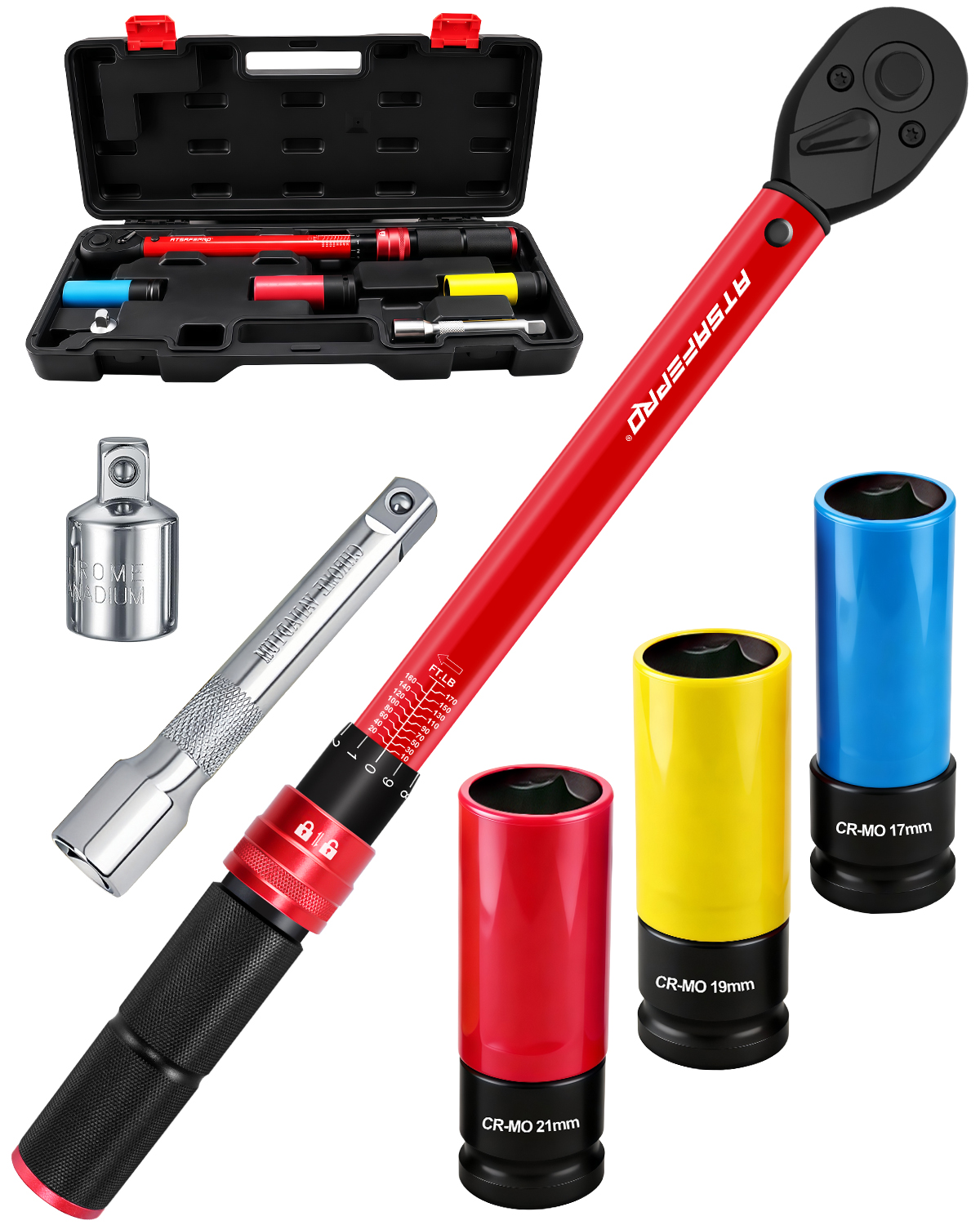
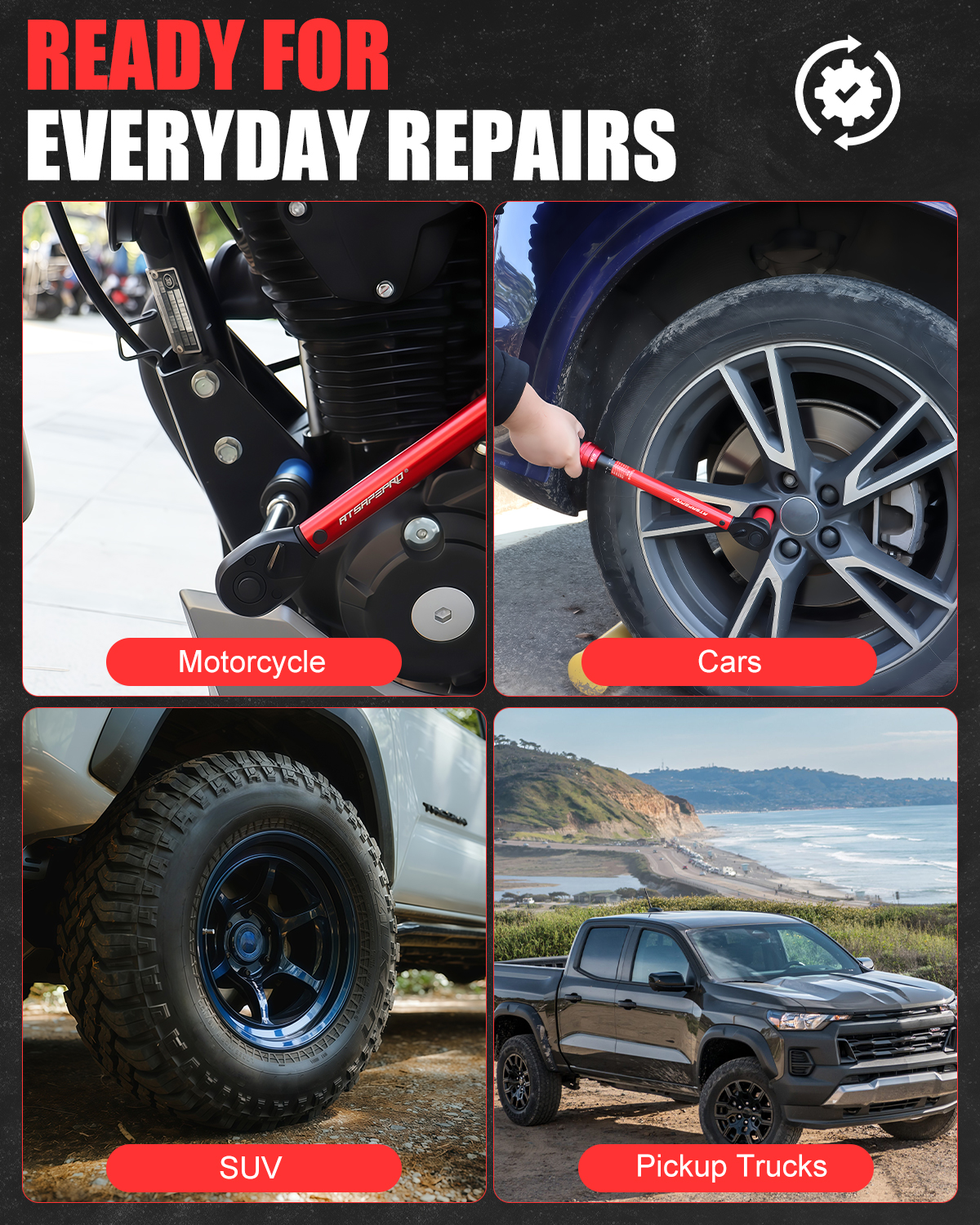
For tire changes, wheel work, and general mechanical assembly, the difference between “tight enough” and “over-tightened” is not academic. Fasteners can stretch, studs can gall, and uneven clamping can create bigger problems later. A kit like the ATsafepro torque wrench is aimed at users who need a straightforward way to apply a specified tightening torque and want the convenience of interchangeable sockets in one case.
What this type of kit is trying to solve
The basic problem is familiar to anyone who has worked on wheels or service assemblies: different fasteners need different tightening levels, but hand feel is an unreliable judge. A click-type torque wrench gives the user a mechanical signal when the preset torque is reached. That is the core value here, and it is the reason this product category remains popular in garages and maintenance departments.
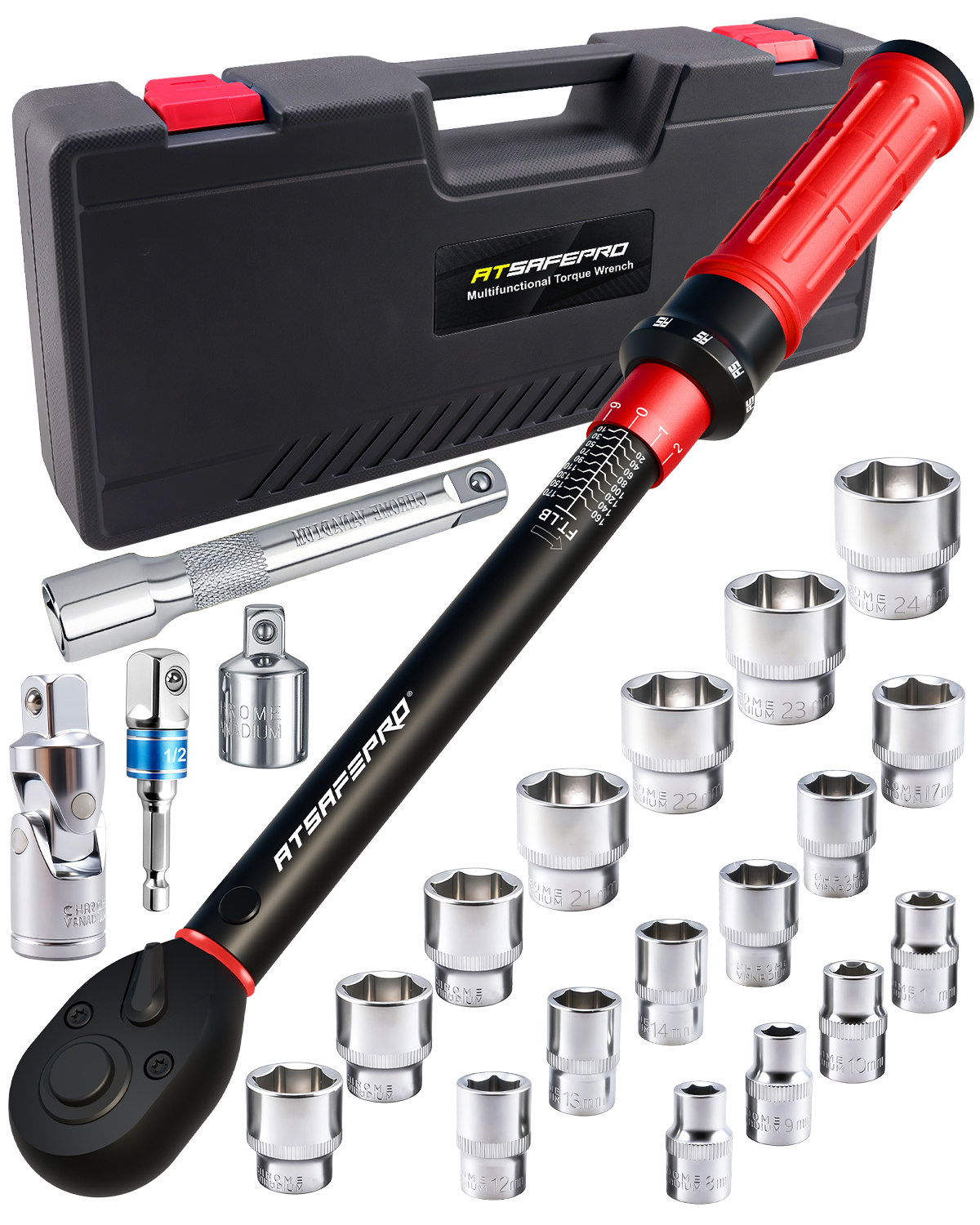
The ATsafepro torque wrench kit adds another layer of usefulness by bundling sockets and a storage case. That matters because many buyers are not looking for one tool only; they want a working set that can move from one service job to another without hunting for the right socket size. The visible inclusion of 17 mm, 19 mm, and 21 mm CR-MO sockets suggests the kit is oriented toward wheel and lug nut work, though it can also be used for other general fastening tasks where compatible sockets fit the square drive.
How the kit appears to be built
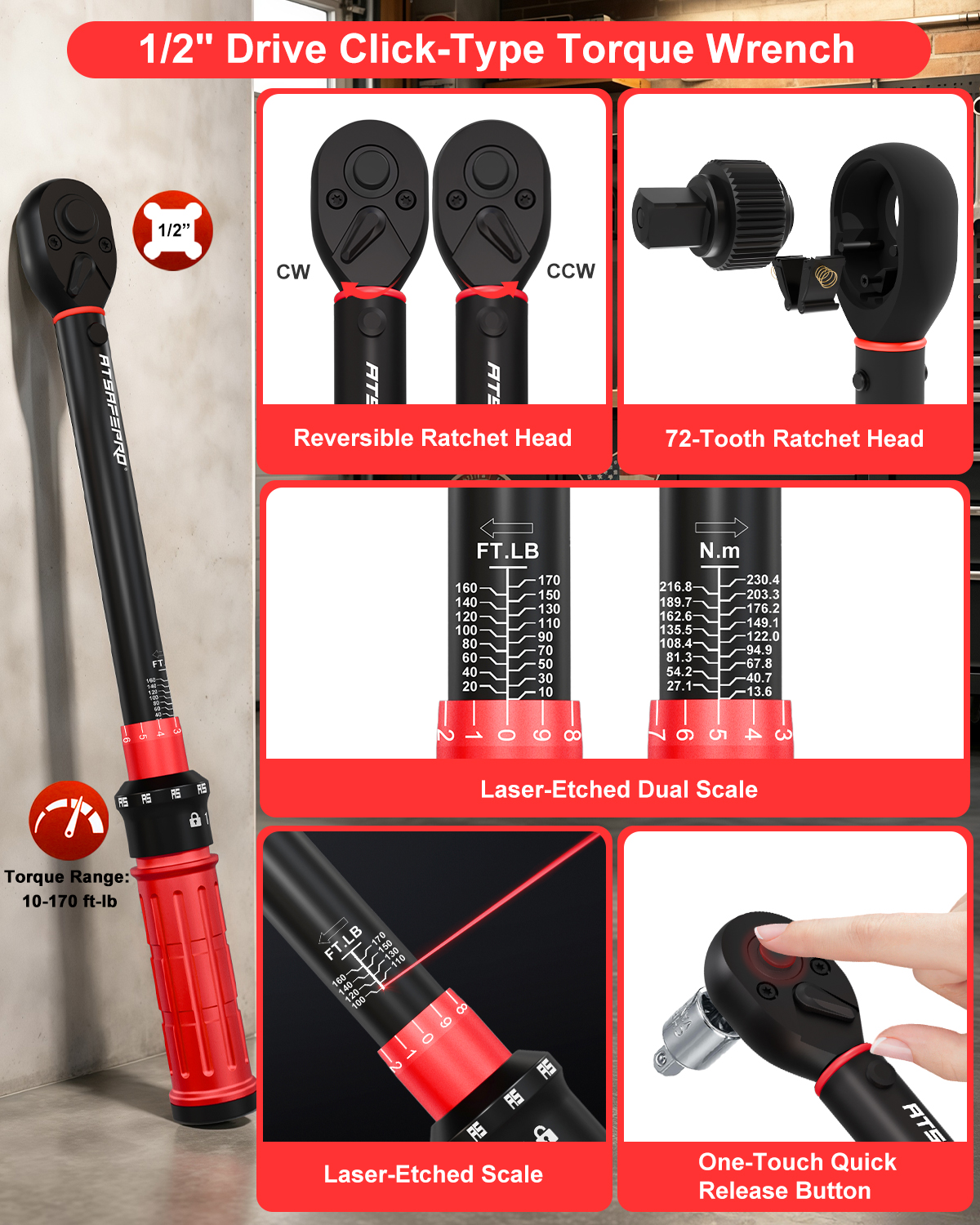
Based on the visible product details, the wrench has a steel metal body with a red-painted or anodized shaft, a black textured grip, and a black ratcheting head. That combination is common in adjustable click-type torque wrench designs because it balances visibility, grip, and a relatively compact head profile. The printed torque scale along the shaft is another standard feature, and it is the part buyers should inspect closely in any similar tool. If the markings are hard to read, or if the scale increments feel cramped, the wrench becomes slower to set and easier to misread in a busy shop.
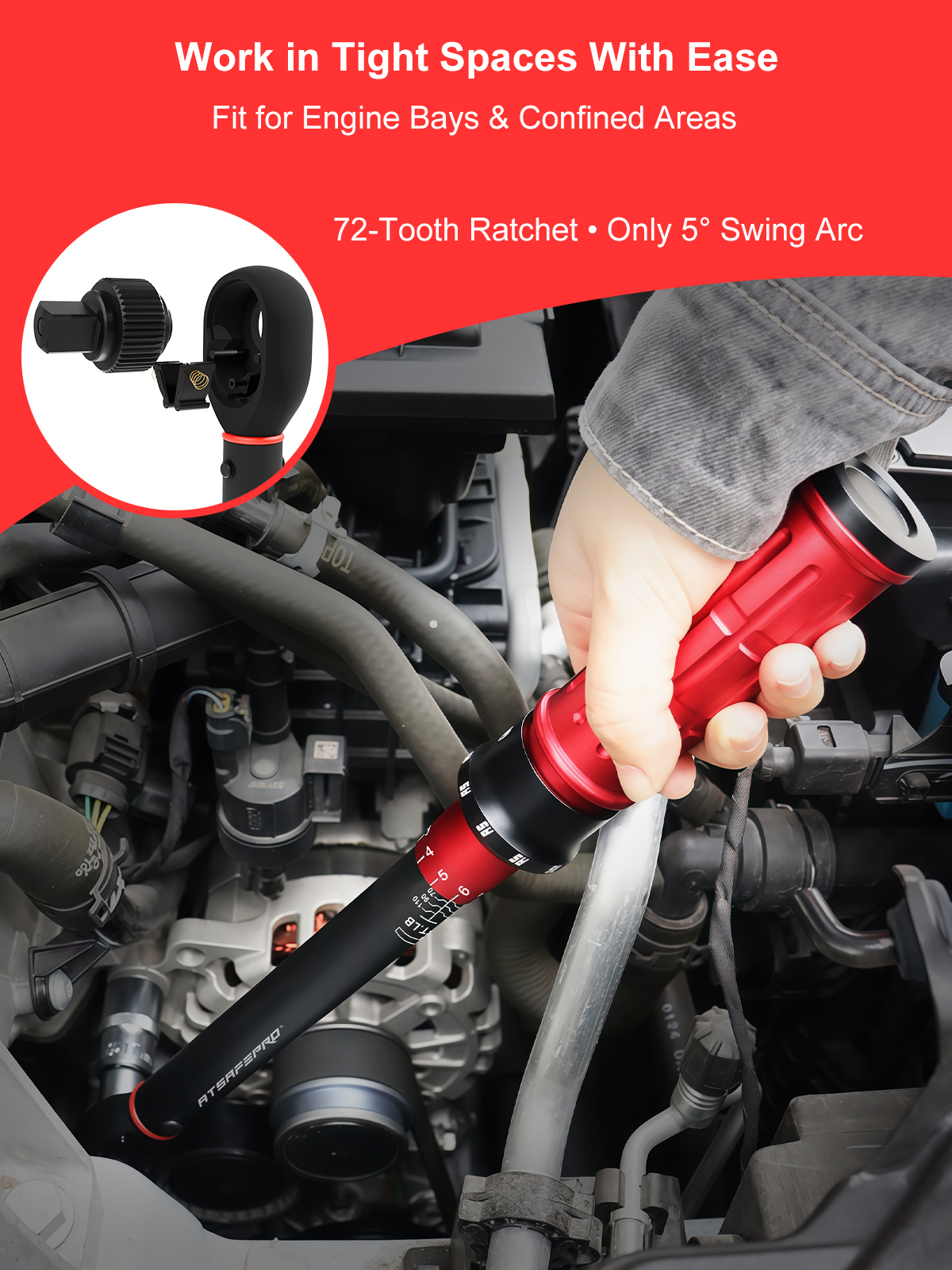
The head appears offset and oval-shaped, with a directional selector and square drive. Those are practical details, not cosmetic ones. A directional switch is useful when the wrench is being used as a ratcheting hand tool in confined spaces. It saves time and reduces unnecessary tool changes, especially when access around a wheel or bracket is limited.
The socket assortment looks like chrome-finished steel or chrome-vanadium steel, with several larger pieces marked CR-MO. That labeling usually points to chrome-molybdenum sockets, which are commonly associated with impact use. That said, buyers should not assume every accessory in the case shares the same duty rating or that all included pieces are intended for the same kind of load. It is worth checking how the seller specifies each socket type before using them across different applications.
Quick comparison: where this kit makes sense and where it does not
For a mechanic or sourcing manager, the real question is not whether the ATsafepro torque wrench exists as a usable tool. It is whether this style of kit fits the job profile better than a bare wrench or a premium standalone model.
A bare torque wrench usually makes sense when the workshop already owns a full socket system and wants only one calibrated tool. A bundled kit makes more sense when the buyer wants a ready-to-use package for tire service, field maintenance, or a general-purpose service cart. The hard case is part of that value. Tools stored loose in a drawer tend to get lost, and torque wrenches that are tossed around rarely stay in good condition for long.
Compared with higher-end professional models, a kit in this category is typically more about practicality than perfection. It is the right kind of purchase when the job is recurring, but not so demanding that a specialized premium tool is justified for every bench. For a fleet shop, hobby garage, or maintenance room, that is often enough. For calibration-critical environments, buyers may want stronger documentation and a more formal tool control process.
Selection criteria that matter more than the marketing photos
Torque wrench buying tends to focus too much on appearance. A polished case and a tidy socket layout are pleasant, but the working details are what matter.
First, check the readable torque scale. You need to be able to set the value quickly and confirm it at a glance. The ATsafepro torque wrench clearly shows printed increments on the shaft, which is a useful starting point.
Second, look at the head design and ratcheting action. An offset head and directional selector can improve usability, especially on wheel service jobs where space is awkward and repetition is high.
Third, consider the socket mix. The visible 17 mm, 19 mm, and 21 mm CR-MO sockets are useful for automotive work, but that does not automatically make the kit universal. If your service work uses mixed fastener sizes, a broader socket set may be more efficient than buying a tool and then building around it later.
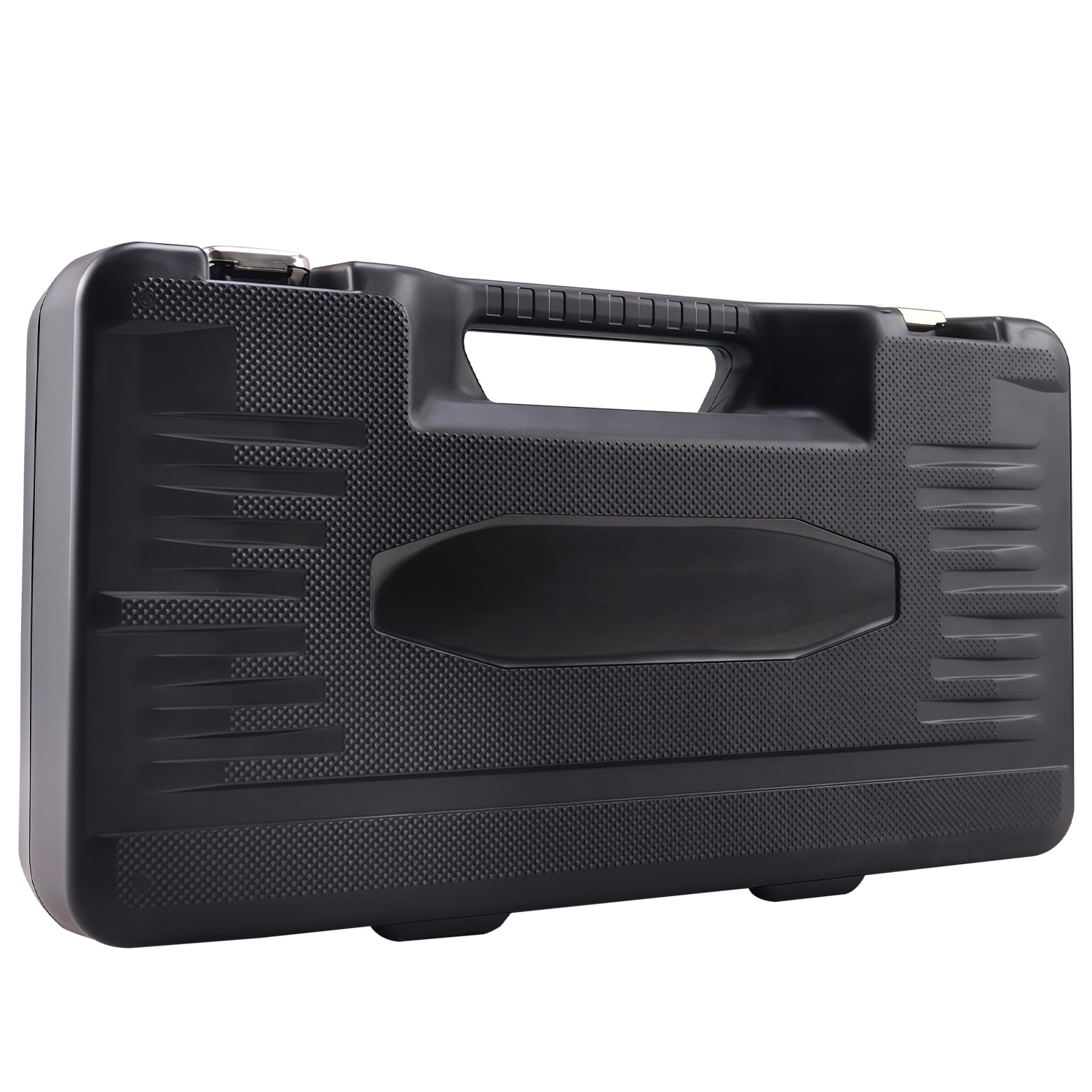
Fourth, assess how the tool will be stored. A molded hard case is not a luxury; it protects the calibration-sensitive wrench from abuse and keeps the socket set organized. In a shared workshop, that can be the difference between a tool that stays in service and one that disappears after a few months.
Common mistakes buyers make with torque wrench kits
The first mistake is treating every torque wrench the same. Adjustable click-type tools are convenient, but they still need sensible use. A torque wrench should not be used as a breaker bar, and it should not be left loaded after the job unless the manufacturer specifically says otherwise. That is basic shop discipline, but it gets ignored often enough to be worth saying.
The second mistake is assuming the sockets and the wrench are equally suitable for every fastening task. The CR-MO marking on some sockets suggests heavier-duty use, but that does not tell the whole story. Users should confirm which accessories are intended for impact loads and which are for hand-tool use only.
The third mistake is buying for torque range without thinking about application. A wheel service user may need a very different setup from a general maintenance technician. If the wrench’s usable range does not match the fasteners being serviced, the tool may technically work while still being the wrong choice.
What engineers and sourcing teams should ask before purchase
If you are buying this type of kit for a team, the useful questions are straightforward.
Is the torque range suitable for the fasteners you actually tighten most often?
Is the scale easy to read under workshop lighting?
Are the included sockets the sizes you need, or are they just a close match?
Is the case robust enough for daily handling?
Can the product listing clearly distinguish the wrench, the chrome sockets, and the CR-MO sockets?
Those questions may sound simple, but they separate a useful procurement from a drawer full of almost-right tools.
For sourcing managers, another practical consideration is consistency. In hand-tool manufacturing, visible finish and fit are only part of the story. The real issue is whether the product is assembled and calibrated in a way that supports repeatable use. The exact calibration standard for this ATsafepro torque wrench is not visible in the supplied information, so it would be sensible to request documentation if the tool is being purchased for controlled maintenance work rather than general repair.
Buyer-facing takeaway
The ATsafepro torque wrench looks like a practical kit for automotive tire service, workshop assembly, and maintenance tasks that benefit from controlled tightening plus a compact socket set. Its strengths are obvious ones: a click-type adjustable wrench, a visible torque scale, a ratcheting head with directional switch, multiple socket sizes, and a molded storage case.
Its limitations are the usual ones for this category: buyers still need to verify torque range, drive size, accuracy claims, and the suitability of each accessory for their actual work. That is not a flaw unique to this product; it is simply how torque tools should be bought.
FAQ
Is this mainly for automotive use?
That appears to be one of the main use cases. The visible socket sizes and the torque wrench format fit wheel and lug nut service well, though it can also be used for general mechanical fastening.
Does the kit include a storage case?
Yes, a hard plastic carrying case with molded compartments is shown.
Are the sockets all the same type?
No. The kit appears to include chrome-finished sockets and larger CR-MO sockets. Buyers should confirm the intended use of each one.
What should I verify before ordering in volume?
Ask for the torque range, drive size, calibration or accuracy documentation if needed, and a clear list of included accessories. For procurement, that paperwork matters as much as the product photo.
Next step
If you are comparing torque wrench kits for a workshop, fleet garage, or maintenance program, use this ATsafepro torque wrench as a reference point: practical, organized, and aimed at everyday controlled fastening. Then check the details that affect real use rather than shelf appeal. That is usually where the best purchasing decisions are made.