ATsafepro torque wrench: what buyers should look for before putting one in service
If you are comparing an ATsafepro torque wrench against other adjustable click-type tools, the real question is not whether it looks complete in the box. It is whether the wrench, sockets, and storage layout match the kind of fastening work you actually do. For automotive tire service, general mechanical assembly, and routine maintenance, a torque tool is there to make tightening repeatable, not just “tight enough.” That difference matters more than many first-time buyers expect.
A wheel fastener that is under-tightened can loosen. One that is over-tightened can stretch threads, distort mating surfaces, or make later service harder than it should be. So the decision is not simply about buying a wrench; it is about buying control. With a kit like this, buyers are usually balancing convenience, storage, and versatility against the one thing every torque tool must do well: apply a preset torque consistently.
What this kit appears to be
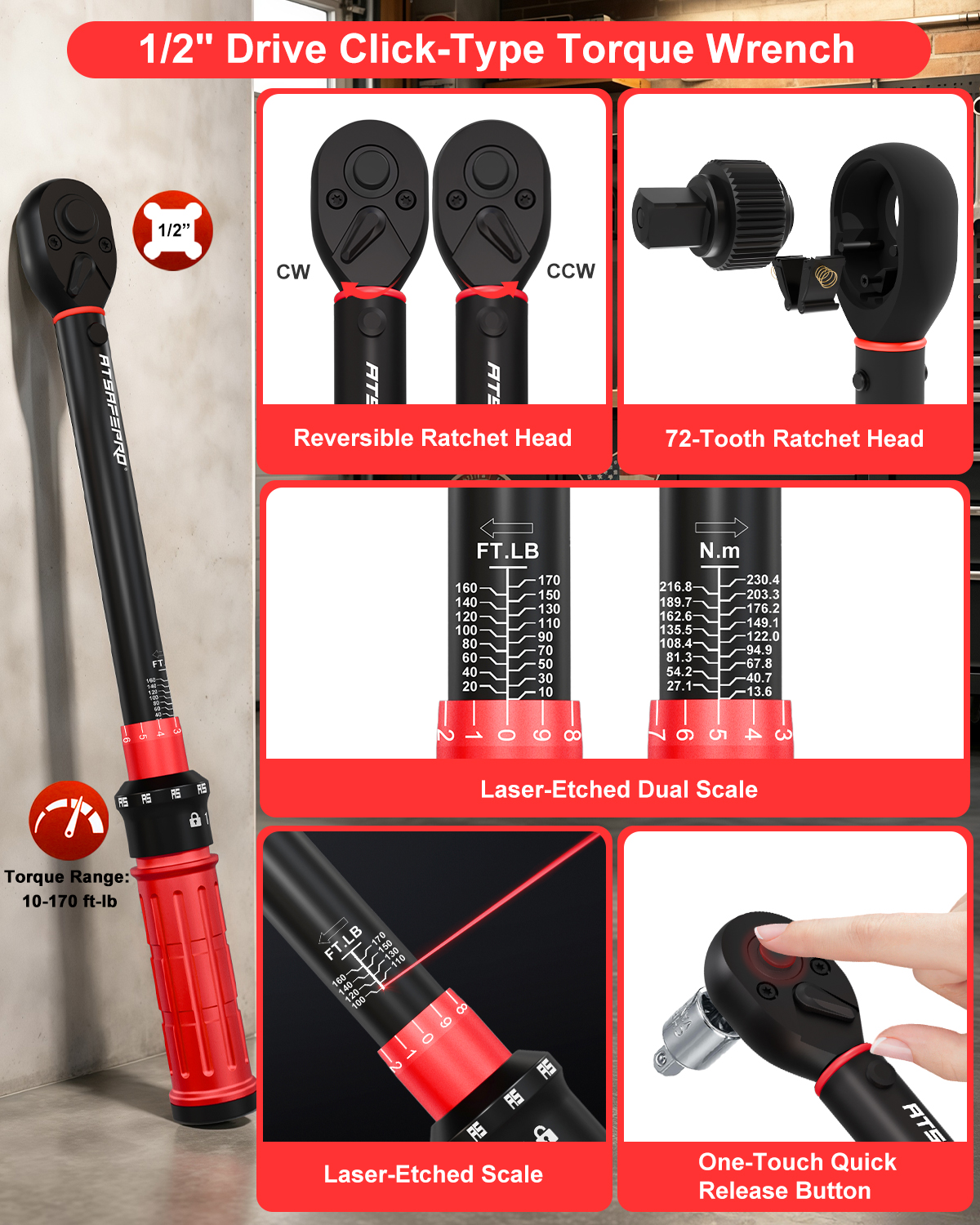
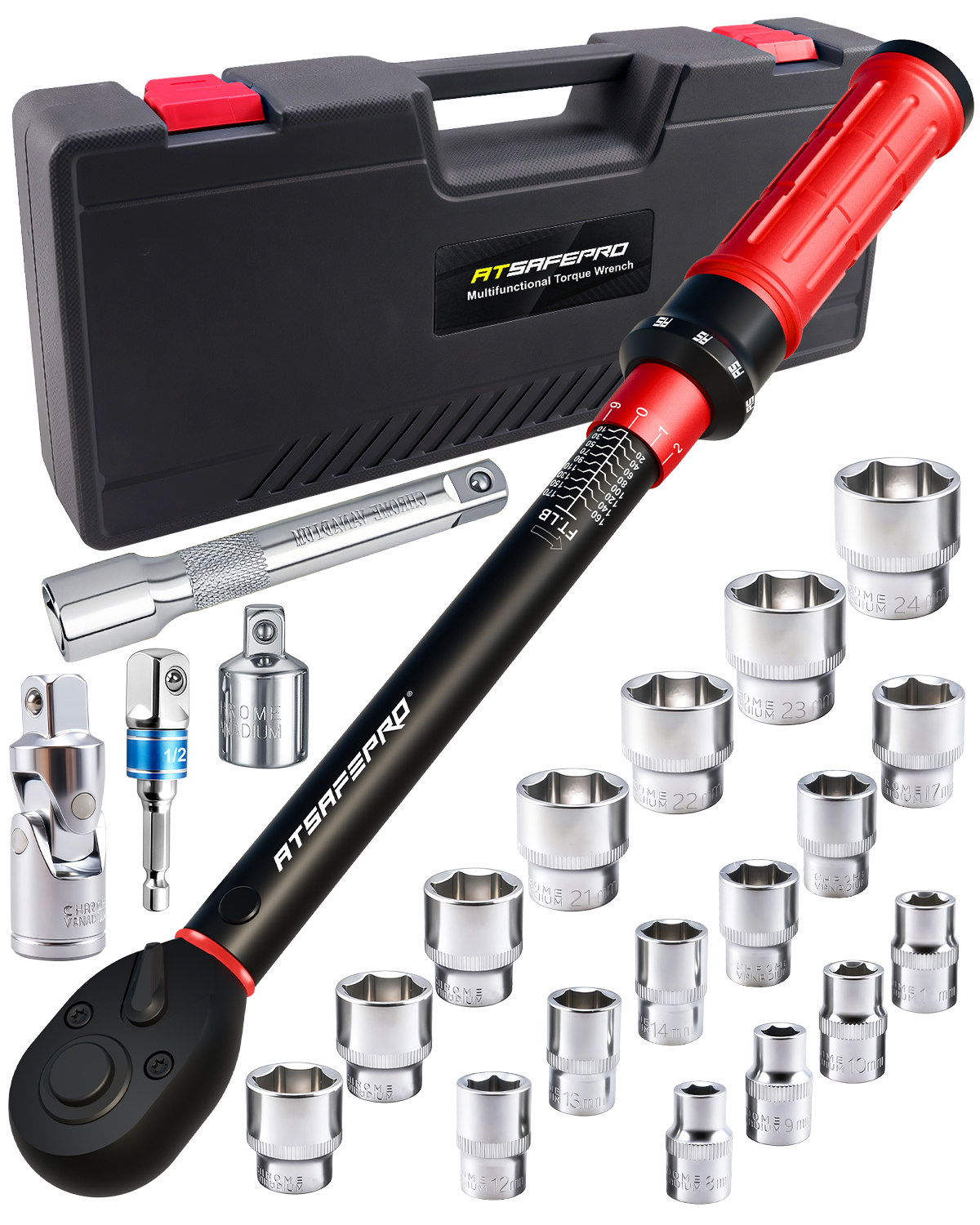
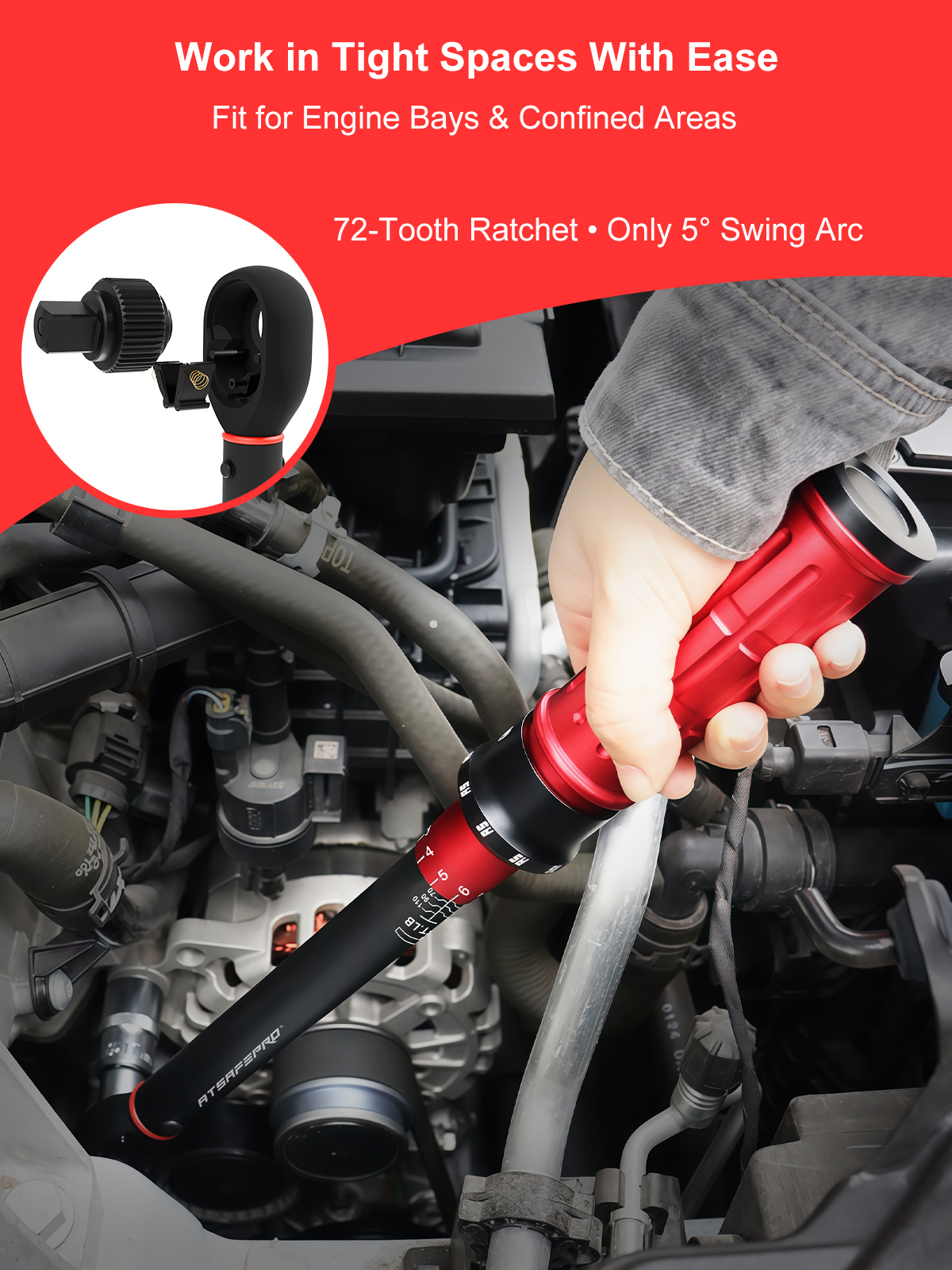
Based on the product details available, this is an adjustable click-type torque wrench kit with a socket set for automotive and general mechanical fastening. The wrench has a long red metal body, a black textured grip, and a ratcheting head. A torque scale is printed on the shaft, which suggests preset adjustment before tightening. The kit also includes a plastic storage case with molded compartments, several sockets, and a short extension or adapter piece.
A small but useful detail: the visible socket sleeves are marked CR-MO in the 17 mm, 19 mm, and 21 mm sizes. For buyers, that usually signals a kit aimed at wheel and lug-nut work, though the exact use still depends on the drive arrangement and the actual socket design. Since the drive size and torque range are not provided, it is best not to assume more than the listing shows.
Why torque control matters in the shop and garage
Torque tools are often treated as specialty items, but in practice they are basic quality-control equipment. Fasteners on cars, engines, brackets, and machinery are meant to hold parts together under vibration, temperature changes, and repeated service. A hand feel alone is a poor measuring instrument. It works until it does not.
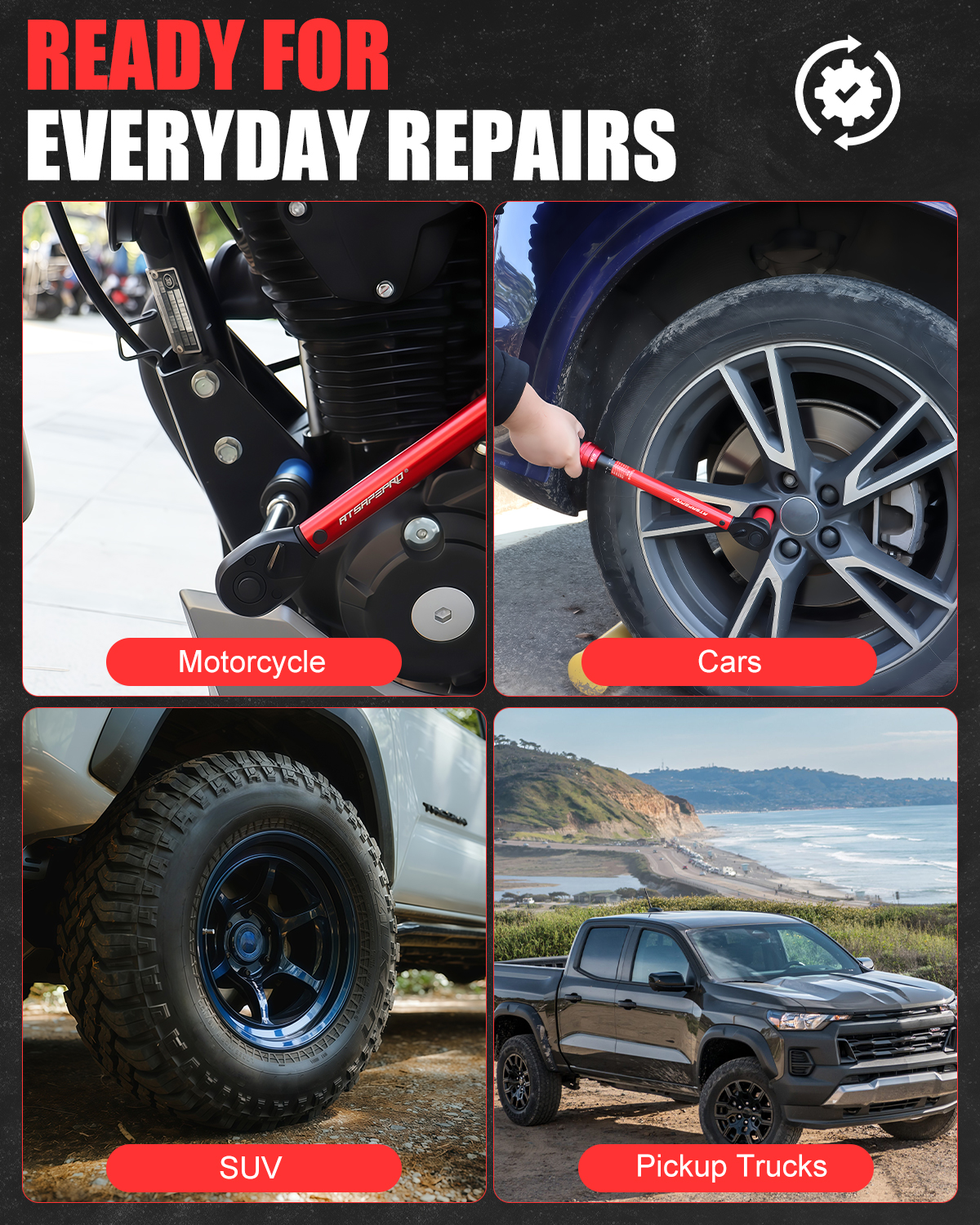
That is especially true in automotive work. Lug nuts tightened unevenly can create a headache during service, and uneven clamping can affect how a wheel seats. In other mechanical jobs, the consequences may be less dramatic but still costly: stripped threads, warped components, or repeated rework because a joint was tightened by guesswork. A torque wrench does not make the operator perfect, but it narrows the process enough to be dependable.
Quick buyer read: what matters most in a kit like this
1. The adjustment scale must be easy to read
If the torque scale on the shaft is hard to see in a dim bay or crowded garage, the wrench becomes less useful than it should be. Clear markings matter because presetting torque is part of the process, not an afterthought.
2. The ratcheting head should feel stable
For controlled tightening, the head mechanism needs to engage smoothly. A torque wrench is not just a handle with numbers on it; the head has to transmit force predictably while allowing the operator to work in a practical motion.
3. The included sockets should match real-world jobs
A set that includes 17 mm, 19 mm, and 21 mm sockets is immediately more relevant to tire and wheel service than a generic assortment of vague sizes. Buyers should still confirm whether those sockets are the exact fit they need for their vehicle fleet or service bench.
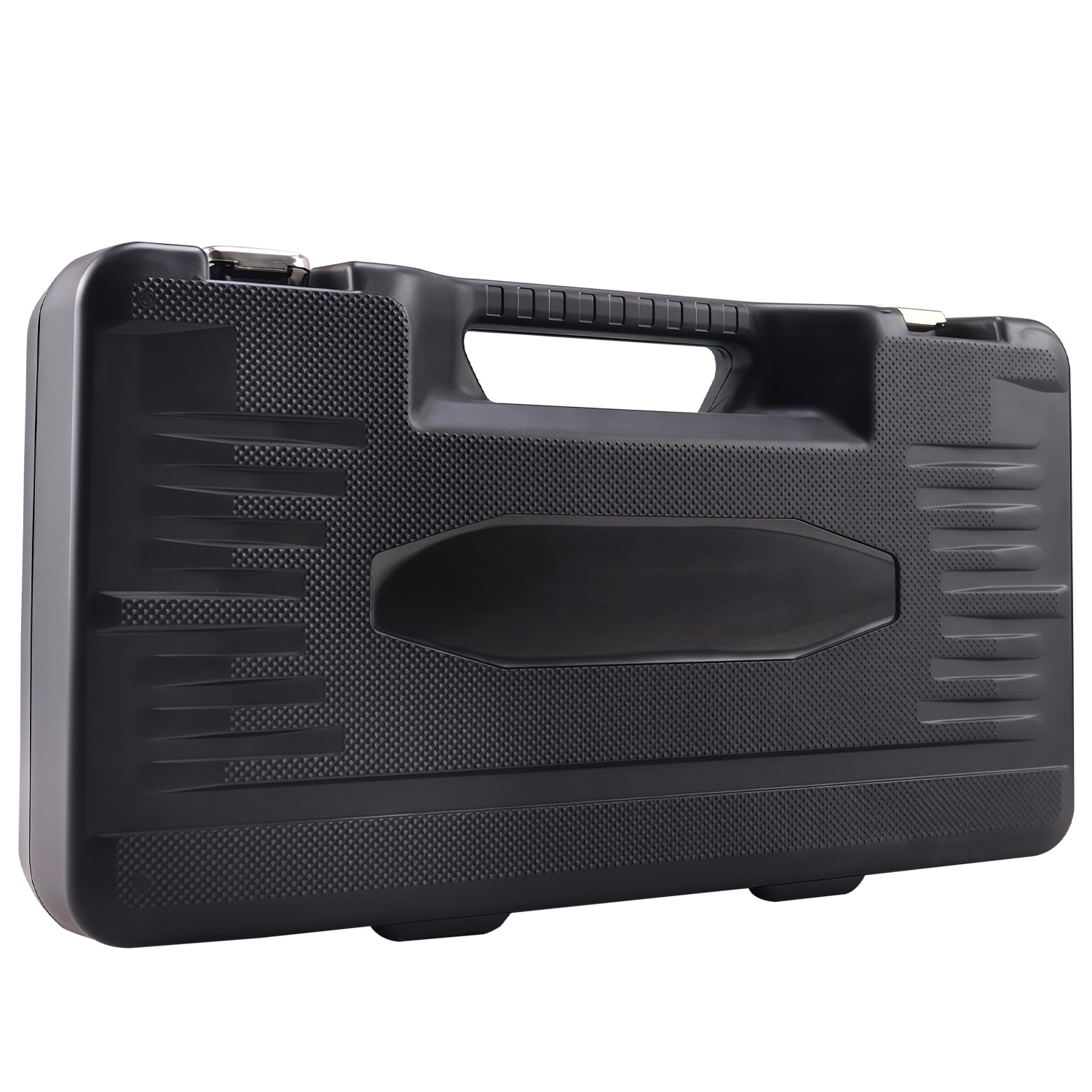
4. The case should protect the set, not just hold it
A molded plastic case may look like a simple accessory, but it matters in a shop environment. Proper storage helps prevent lost sockets, reduces clutter, and keeps the wrench from rolling around in a drawer where it can pick up damage.
How a click-type torque wrench is typically used
In normal use, the operator sets the desired torque on the scale, locks or confirms the setting if the design requires it, and then tightens the fastener until the wrench signals that the preset value has been reached. The “click” is the point. It tells the user to stop applying further force.
That sounds simple, but there is a practical caution here: a torque wrench is not a breaker bar. Using it to loosen seized fasteners or to power through stubborn rust is a good way to damage the tool or throw off its internal mechanism. Many shops keep torque wrenches for final tightening only, while heavier work is handled with other tools.
Another small but important point: torque tools are most reliable when used with a steady pull and with the correct hand position. Grabbing the end of the handle or adding a pipe for leverage defeats the purpose. It is the kind of shortcut that saves time once and costs time later.
Materials and construction cues buyers can actually inspect
The visible construction suggests a metal wrench body with a red painted or coated finish, a black-coated ratcheting head, and a textured grip area for handling. The sockets appear to be chrome-plated or otherwise coated metal, with marked sleeves. The case is injection-molded plastic.
For sourcing teams and product managers, these are useful clues because they point to the likely manufacturing steps involved: machining and assembly for the wrench body and head, surface finishing for corrosion resistance and visibility, coating or plating for the sockets, and molded packaging for storage. None of that automatically guarantees quality, but it does tell you what you are buying into.
If you are comparing suppliers, the questions worth asking are not dramatic ones. Ask how the torque scale is applied, how the head is assembled, whether the sockets are intended for standard or heavier-duty service, and how the tool is protected in transit. Those details often separate a usable kit from a disposable one.
Common mistakes when buying a torque wrench kit
One mistake is assuming that any kit with multiple sockets is automatically more valuable than a simpler wrench. Extra pieces help only if they are the right sizes, the right fit, and stored well.
Another mistake is focusing on appearance over function. A red handle and a polished case are pleasant enough, but they do not answer the main engineering questions: Is the adjustment range suitable? Is the scale readable? Is the ratchet stable? Can the tool be maintained and stored properly?
A third mistake is buying for occasional wheel changes and then trying to use the same wrench for every fastening task in the garage. That is not always efficient. Some jobs need a different drive arrangement, a different torque range, or a more compact tool body. One wrench can cover a lot, but not everything.
Practical selection advice for different buyers
For DIY users, the appeal of a set like this is straightforward: it combines the wrench, sockets, and a case in one purchase. That is helpful if storage space is limited or if the tool will move between home and a vehicle.
For repair shops, the main value is workflow. A dedicated case with named or visibly marked sockets reduces the chance that workers improvise with the wrong attachment. That matters when multiple people use the same bench.
For purchasing teams, the key decision is whether the kit fits the intended use case without padding the specification sheet. A larger accessory count is not always better. A cleaner, more relevant set can be easier to issue, track, and standardize across a shop floor.
FAQ
Is the ATsafepro torque wrench suitable for wheel service?
The kit appears well aligned with automotive wheel and lug-nut service because it includes 17 mm, 19 mm, and 21 mm sockets and a torque scale for preset tightening. The final fit still depends on the vehicle and the actual torque requirement, which is not provided here.
Can it be used for engine and general mechanical fastening?
Yes, that is one of the likely use cases. Any controlled fastening task that benefits from repeatable tightening may be a fit, provided the torque range and drive setup match the job.
Are the sockets impact-rated?
That cannot be confirmed from the provided information. Buyers should not assume impact rating unless it is explicitly stated. For heavy impact-tool work, that distinction matters.
Does the case matter if the wrench works fine?
It matters more than it seems. A proper case helps protect the tool, keeps the sockets together, and makes it easier to take the kit into the field or move it between stations.
What a careful buyer should do next
Before placing an order, match the wrench to the actual job list. Confirm the torque range, drive size, and socket fit if those details are available from the seller. If the kit is for service work, check whether the included socket sizes suit the vehicles or assemblies you handle most often. If it is for general maintenance, make sure the adjustment scale is readable enough for your lighting and workflow.
A torque wrench is one of those tools that pays for itself through fewer mistakes, not through flash. If the ATsafepro torque wrench is being considered for a bench, a truck kit, or a garage drawer, the right question is simple: does this set make controlled tightening easier to repeat on an ordinary Tuesday, when the work is dirty and nobody is standing around to admire the tool? That is usually the real test.