Why buyers keep asking about the ATsafepro torque wrench
In shops, warehouses, and home garages, the same question keeps coming up: is this the right tool for controlled tightening, or just another wrench with a scale printed on it? The ATsafepro torque wrench sits in that practical middle ground. It is presented as an adjustable, click-type torque wrench set with a ratcheting head, a marked torque scale, a molded storage case, and several socket accessories. For the buyer, that combination matters because the real decision is not only whether the tool can tighten a fastener, but whether it helps prevent under-tightening, over-tightening, and the sort of rework that burns time later.
That is the lens worth using here. If you are selecting tools for automotive service, equipment maintenance, or general assembly work, the important question is less about marketing language and more about fit: will the wrench cover your fastener sizes, can it be set quickly on the bench, and does the kit packaging support real-world use rather than cluttering a drawer? That is what this article is meant to help you decide.
Quick take: what this set appears to be built for
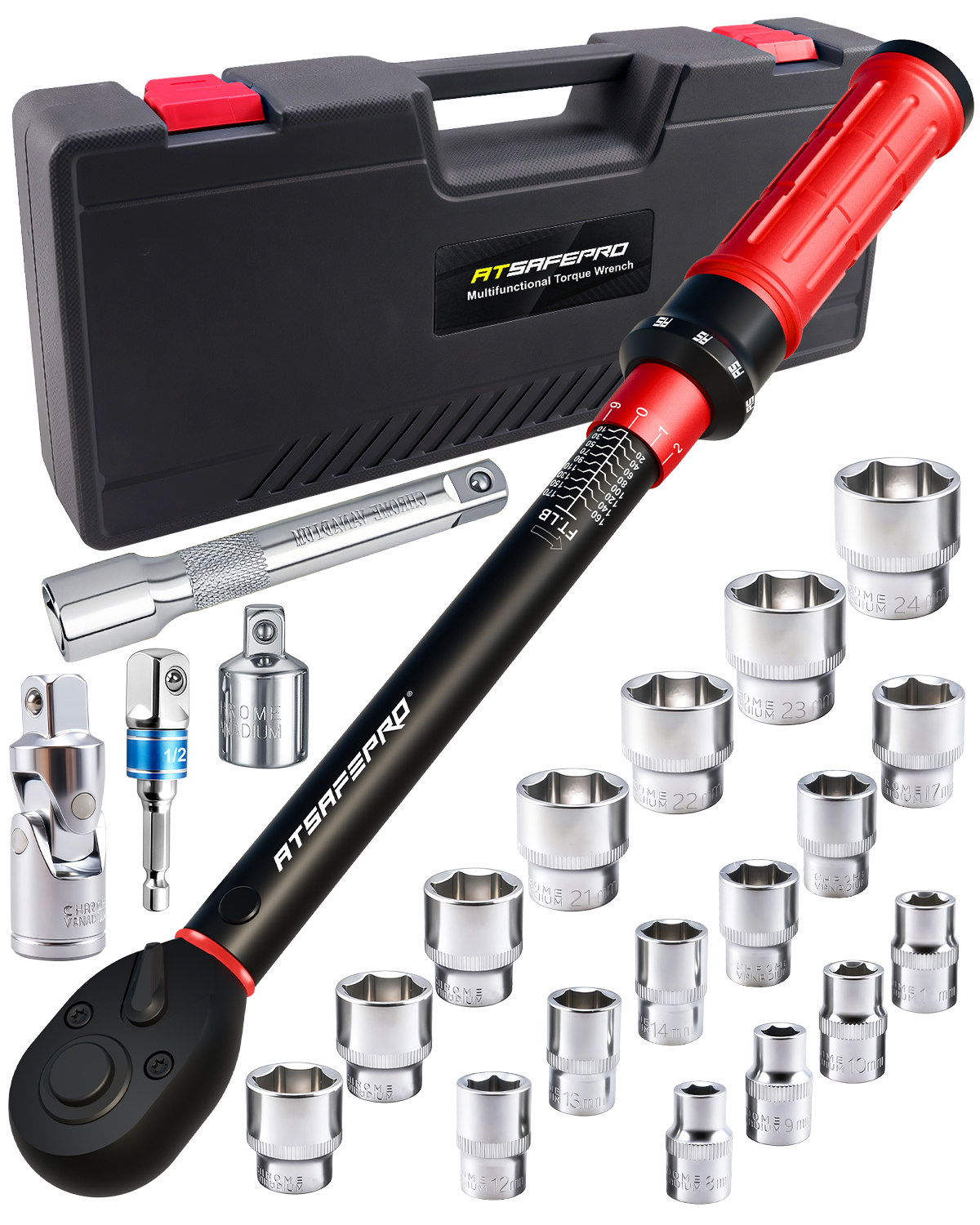
From the visible features, the ATsafepro torque wrench is aimed at controlled fastening work where repeatability matters more than brute force. The red-bodied wrench has a black knurled grip, a ratcheting head with a directional selector, and a torque scale on the shaft. That combination is typical of a click-type adjustable torque wrench used to bring fasteners up to a preset value and then indicate that the target has been reached.
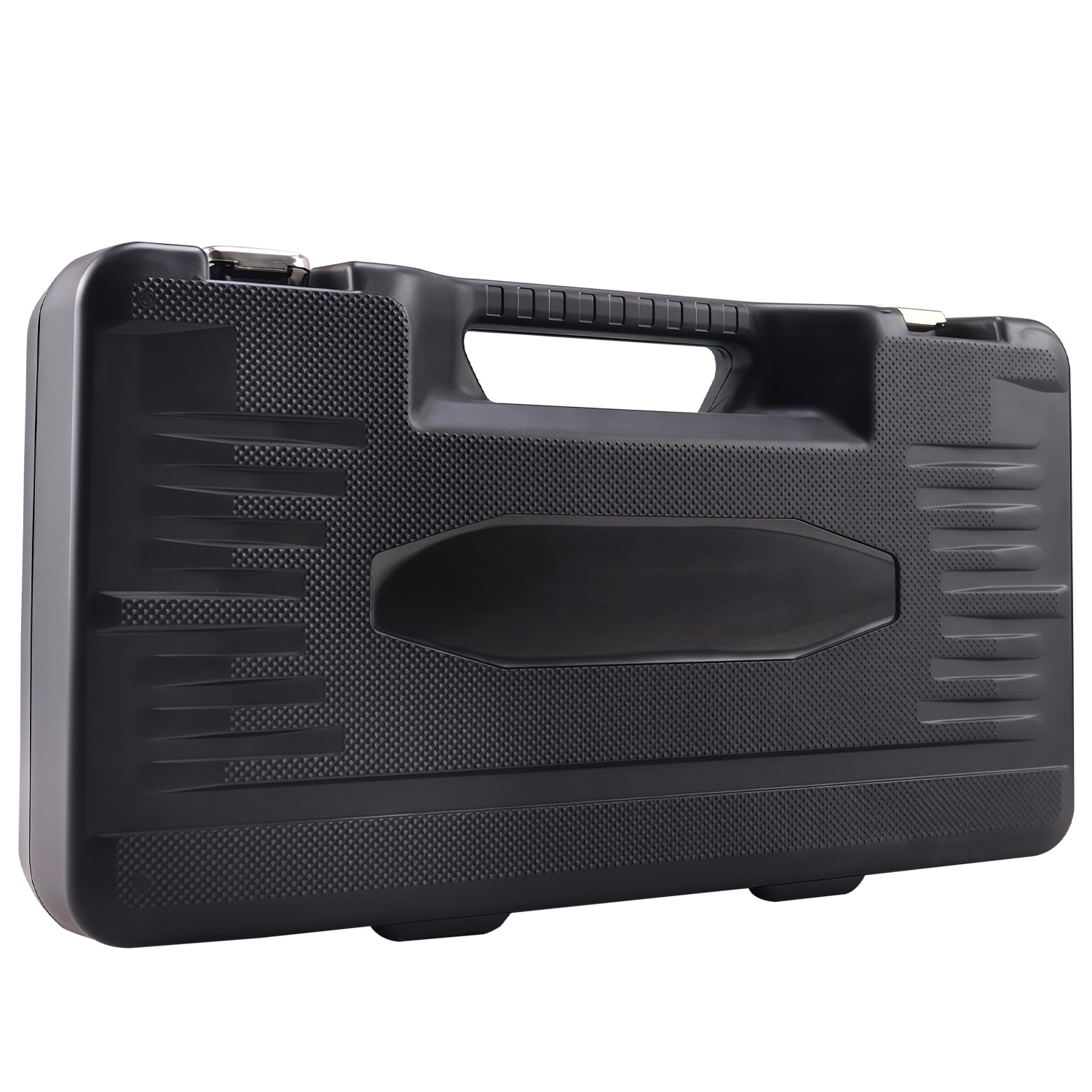
The included molded case is not just packaging. In practice, a fitted case helps keep the wrench and sockets together, which is one of those small shop details that often decides whether a tool gets used or disappears into a general tool bin. The visible socket accessories include chrome sockets and larger colored sockets marked 17 mm, 19 mm, and 21 mm, which points toward automotive wheel and lug-nut service or other larger fastener tasks.
Interview notes from a buyer’s point of view
Asked the way a sourcing manager would ask it, the evaluation starts with task fit. “What job is this set supposed to solve?” If the answer is wheel service, chassis work, engine bay assembly, or maintenance on equipment with common metric fasteners, the package makes sense. If you need a calibration-certified instrument for controlled production line work, that is a different discussion entirely, and this product description does not supply enough information to treat it as a metrology-grade tool.
That distinction matters. A torque wrench can be perfectly useful without being specified for every high-control manufacturing environment. But buyers should be careful not to assume the same level of traceability, calibration paperwork, or tight process controls unless those details are explicitly supplied.
What the visible design tells you
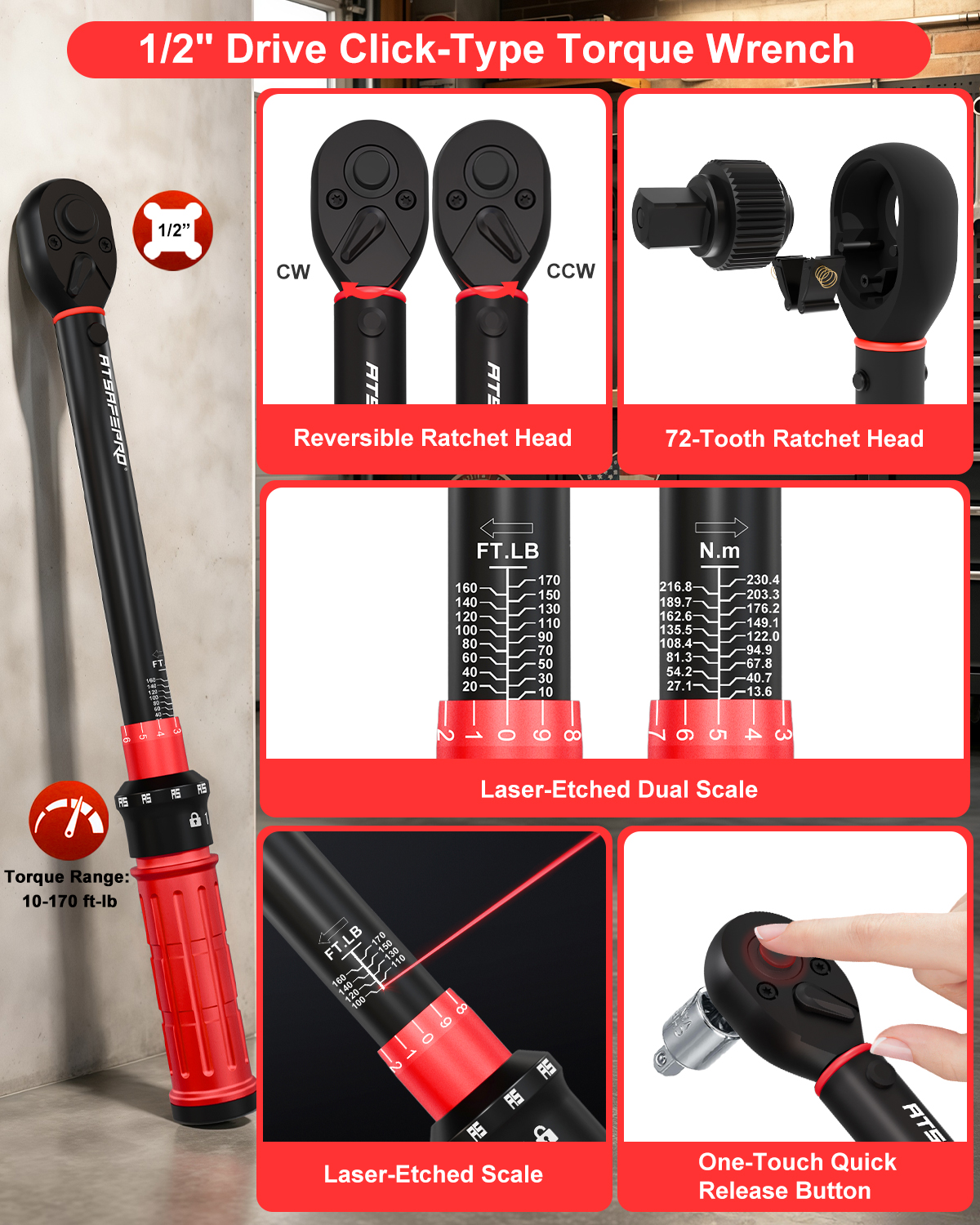
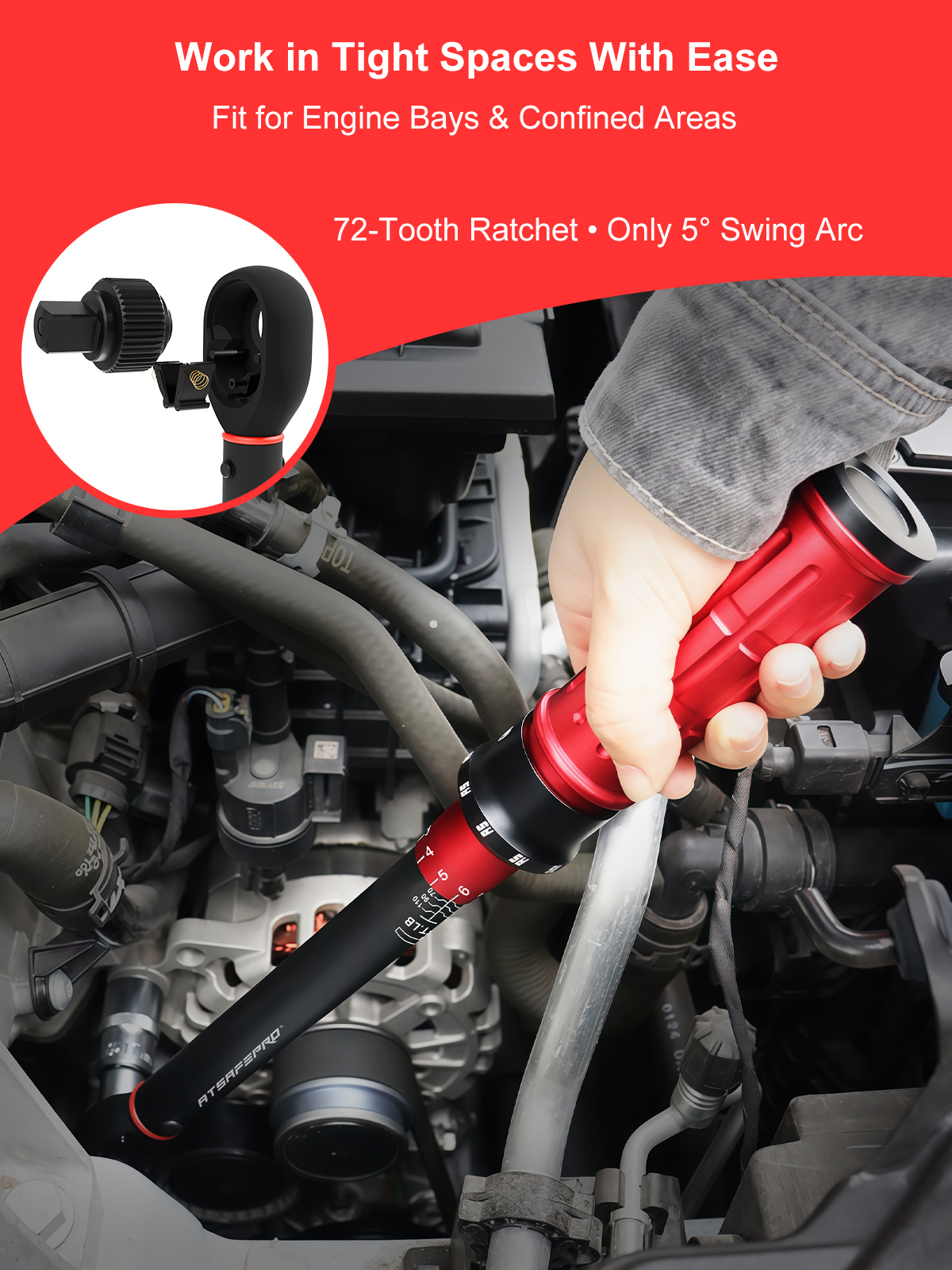
Ratcheting head and directional selector
The ratcheting head is one of the main convenience features. It allows the user to tighten without removing the wrench after every stroke, which saves time on repetitive fastener work. The directional selector visible on the head suggests it can be switched for clockwise or counterclockwise operation, though the practical use still depends on the specific task and the wrench’s operating instructions.
Torque scale on the shaft
The torque scale is the feature that actually turns the tool from a basic handle into a controlled fastening instrument. The buyer should look for scale readability, not just presence. In a busy shop, a scale that is easy to see and adjust quickly is worth more than an elaborate case. The product image shows a marked shaft, which is a useful sign for day-to-day use.
Handle and grip
The red shaft and black textured grip suggest a design meant for manual control and better purchase under oily or gloved conditions. That is the kind of small ergonomic decision that matters more than it sounds. Torque work is often about keeping the hand steady and the setting deliberate, not about speed alone.
Socket set inclusion: where this package adds value
One practical advantage of this kit is that it appears to arrive with multiple socket accessories rather than a bare wrench. The visible deep sockets are labeled 17 mm, 19 mm, and 21 mm, each in a different color finish. For automotive buyers, that is immediately familiar territory. Those sizes are commonly associated with wheel and lug work in many applications, though the exact fit always depends on the vehicle or machine being serviced.
The smaller chrome sockets and adapters also broaden the tool’s usefulness. A wrench by itself is one tool; a wrench with accessories becomes a small system. For a maintenance team, that can reduce the need to pull from multiple bins, which is often where workflow breaks down. Of course, if the sockets are going into heavy service, buyers should still confirm material suitability for the intended load and application. The image suggests chrome-molybdenum-style construction for the larger sockets, but exact specifications are not confirmed here.
Selection criteria that matter more than the product photo
When sourcing a torque wrench set, there are a few checks that matter more than decorative details.
First, confirm the torque range and the intended working range for your application. A wrench that looks robust on screen may be poorly matched if its range sits too high or too low for the fasteners you use most often.
Second, ask how the wrench is intended to be used in workflow. Is it for occasional maintenance, where a sturdy case and clear markings are enough? Or is it for repeated tightening in a production or fleet environment, where calibration practices and verification intervals need to be defined?
Third, look at the socket sizes and drive compatibility. The visible 17 mm, 19 mm, and 21 mm sockets are a practical clue, but they are not the whole story. Buyers still need to know how the tool interfaces with their existing equipment and whether the included accessories cover the range they actually use.
Common mistakes buyers make with torque tools
One mistake is treating all torque wrenches as interchangeable. They are not. Click-type tools, beam tools, and digital tools each have their place, and the right choice depends on how often you use the wrench, how much speed you need, and how disciplined your process is.
Another common error is buying a kit for the sockets and ignoring the wrench itself. The sockets are useful, but the wrench is what controls the fastening result. If the head action feels awkward, the scale is hard to read, or the setting mechanism is inconvenient, the tool can still become a shelf item.
A more subtle mistake is assuming that a storage case means industrial ruggedness. A molded case is helpful. It is not proof of calibration quality, material grade, or long-term retention of accuracy. It simply means the tool can be stored and transported more cleanly than a loose wrench and scattered sockets.
Practical use cases where this set looks sensible
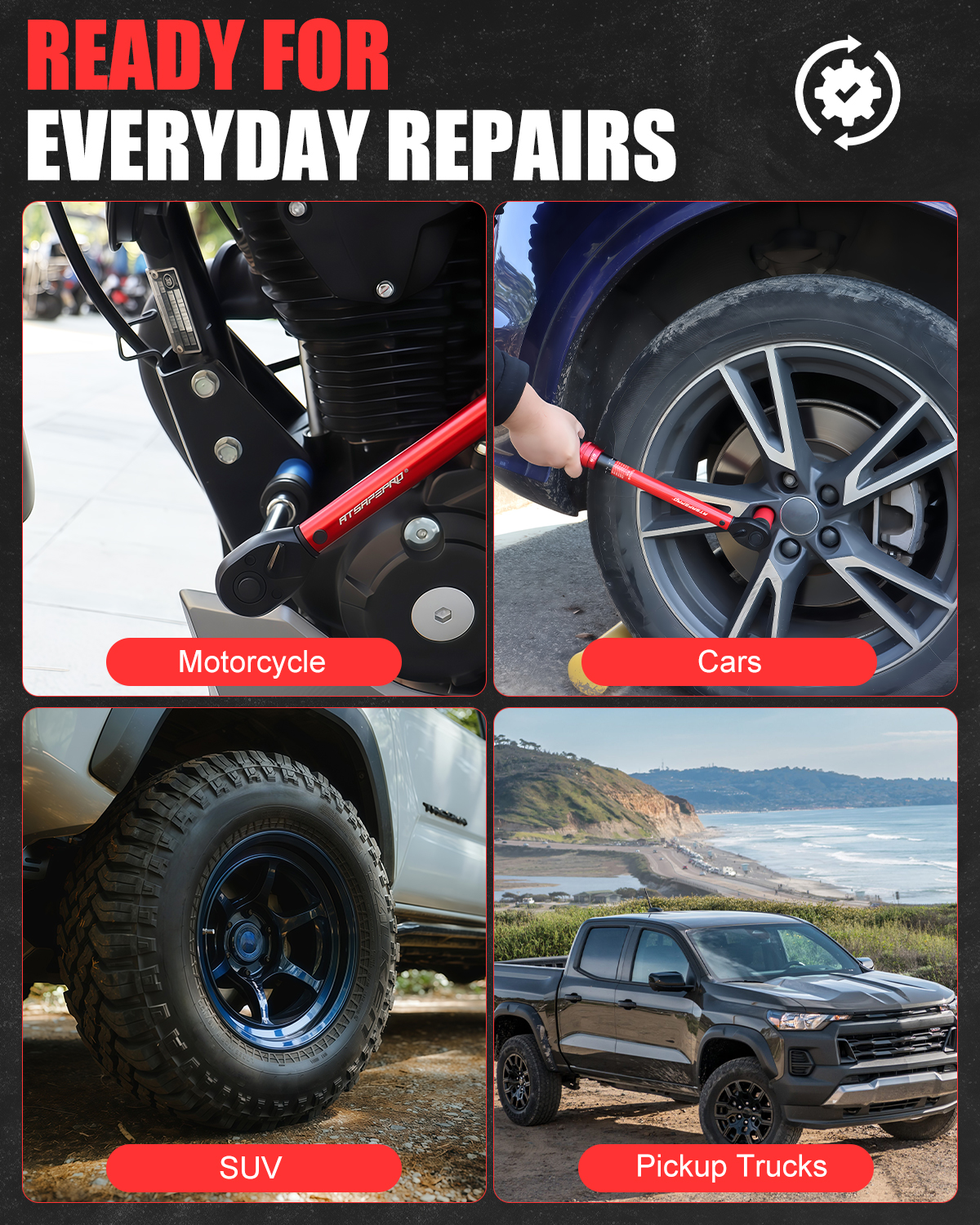
This kind of torque wrench kit makes sense in automotive service bays, bike shops, maintenance departments, and general mechanical repair spaces. The combination of adjustable torque control and multiple socket sizes supports jobs where fasteners need to be tightened with some discipline rather than guessed by feel.
For wheel and lug-related work, the larger labeled sockets are especially relevant. For machinery maintenance, the adjustable wrench and ratcheting action can help with repetitive assembly and reassembly. For product teams or purchasing staff, the value is in bundling: one packaged set may reduce missing-part issues compared with sourcing the wrench and sockets separately.
Buyer-facing cautions worth saying out loud
If your application depends on documented calibration, do not assume it from appearance alone. Ask for the data. If your use case involves high-cycle industrial fastening, confirm the durability expectations before making the wrench part of a standard kit. And if the sockets will see heavy-duty service, make sure the material and finish are appropriate for the load, especially when working around stubborn or corroded fasteners.
There is also a simple practical point: a torque wrench should be treated as a controlled instrument, not a pry bar. That sounds obvious, but shops sometimes forget it. Misuse is one of the fastest ways to turn a decent tool into a questionable one.
FAQ
Is the ATsafepro torque wrench only for automotive work?
No. Based on the visible configuration, it can suit automotive tasks, but also general maintenance, machinery work, and any application where controlled tightening is useful.
Does the set include sockets?
Yes, the visible package includes multiple socket accessories and clearly marked larger sockets in 17 mm, 19 mm, and 21 mm sizes.
Is it a click-type wrench?
The product description indicates a click-type adjustable torque wrench set, so that is the most reasonable reading here.
Can I rely on the case alone to judge quality?
No. The case helps with organization and transport, but it does not tell you enough about accuracy, durability, or calibration support.
What a smart next step looks like
If you are evaluating the ATsafepro torque wrench for procurement or shop use, start with the basics: torque range, drive compatibility, accessory coverage, and any documentation tied to calibration or quality control. Then compare the kit against the actual work you do most often. That is usually where the real answer emerges. A set like this can be a practical, well-organized choice for controlled fastening tasks, but only if its specifications line up with your process instead of your wish list.
If you need a torque wrench for routine mechanical tightening with a bundled case and socket assortment, this product configuration is worth a closer look. If your operation depends on formal verification, ask for the supporting paperwork before you buy.