Why an ATsafepro torque wrench kit matters in real shop work
If you are comparing an ATsafepro torque wrench against the loose mix of tools many garages end up with, the real question is not whether it looks ready for the job. It is whether it helps you fasten critical hardware with enough control to avoid guesswork. That matters on wheel service, maintenance work, and any assembly where under-tightening can loosen a joint and over-tightening can damage threads, distort parts, or make the next service job miserable.
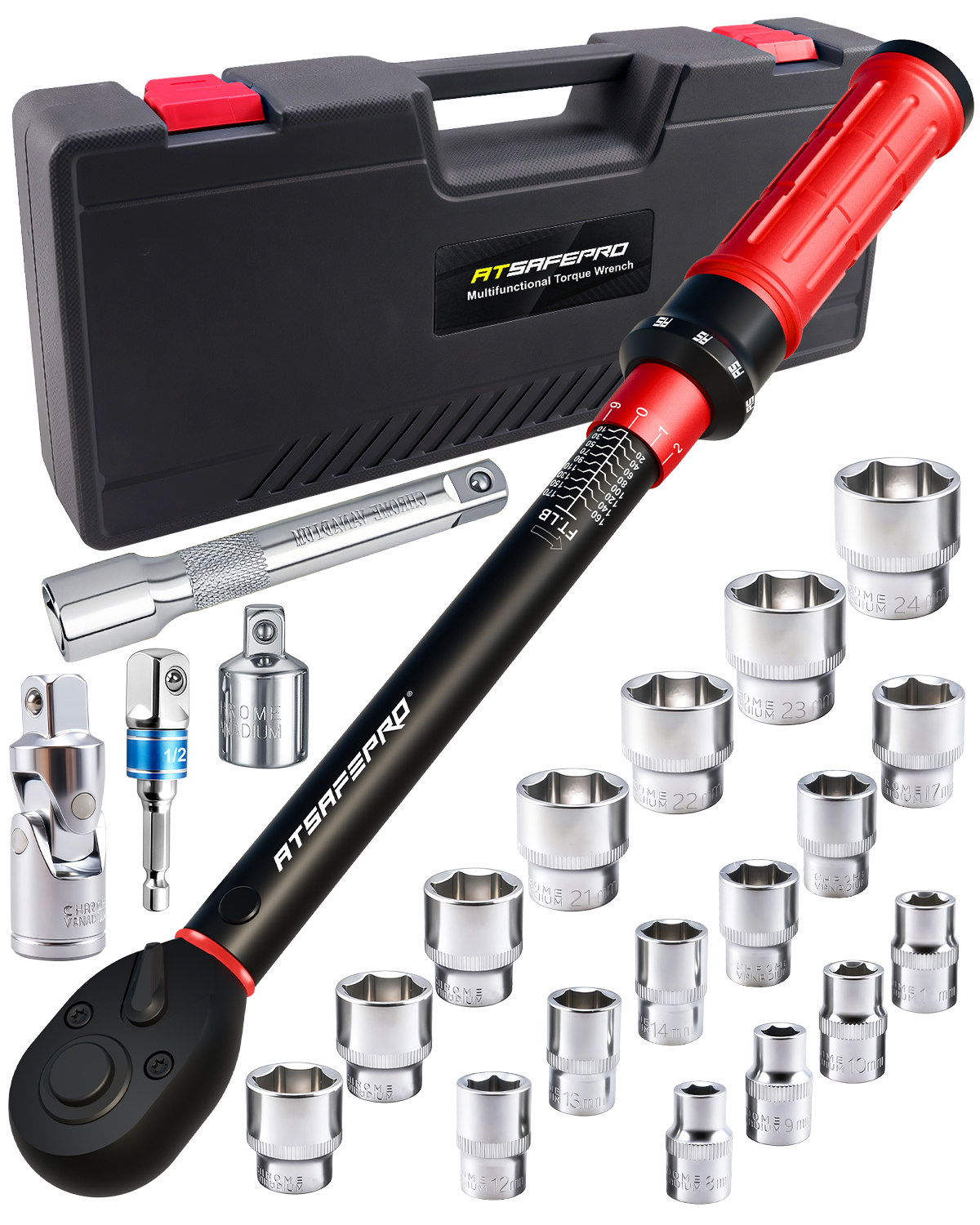
The kit format also changes the buying decision. You are not just picking a wrench; you are choosing a small system: the wrench body, the ratcheting head, the sockets, the adapter or extension, and the storage case that keeps the set together when it is thrown into a truck, drawer, or mobile service cart. For sourcing managers and shop owners, that combination is often more useful than a standalone tool with a vague accessory promise.
What is actually in the kit
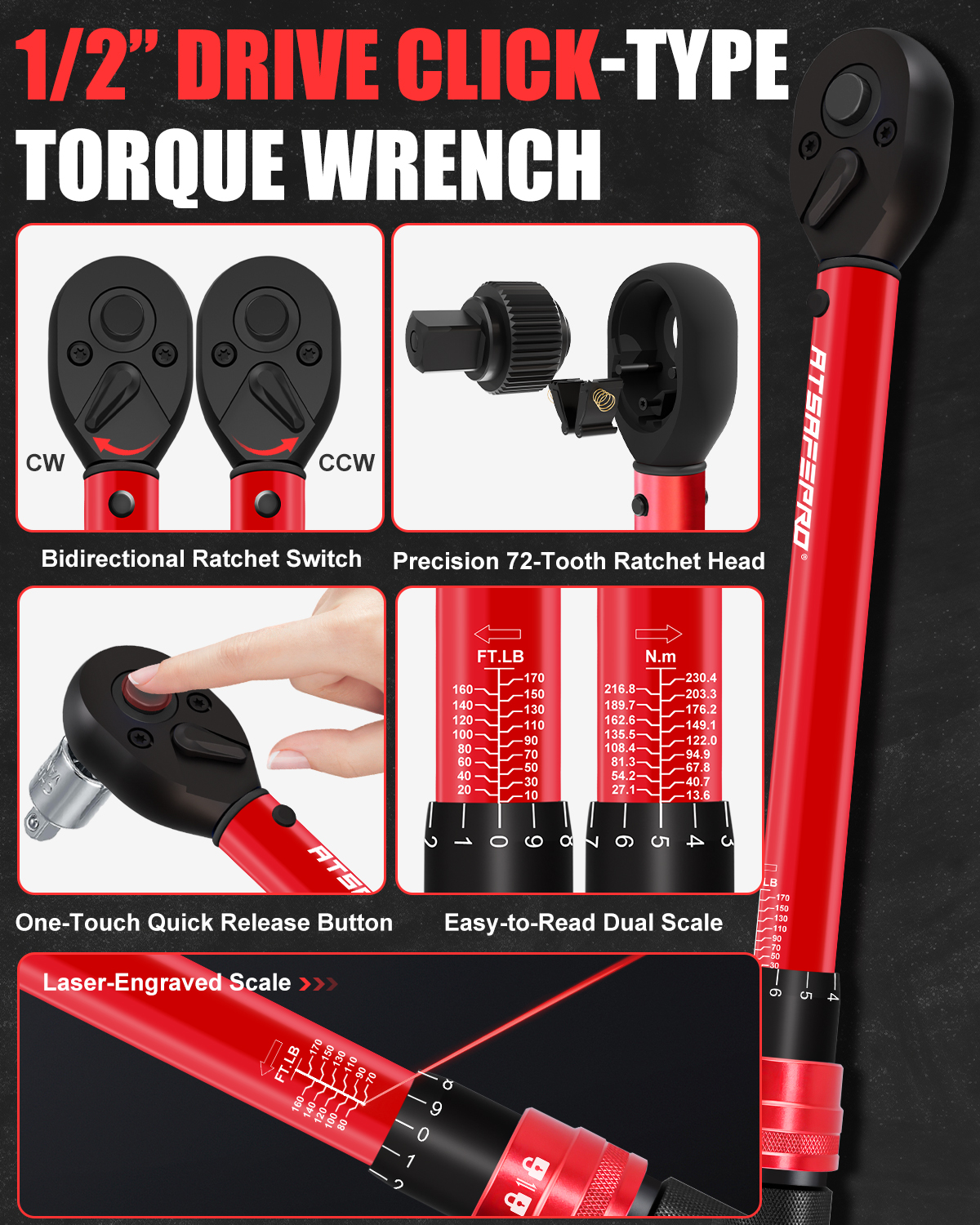
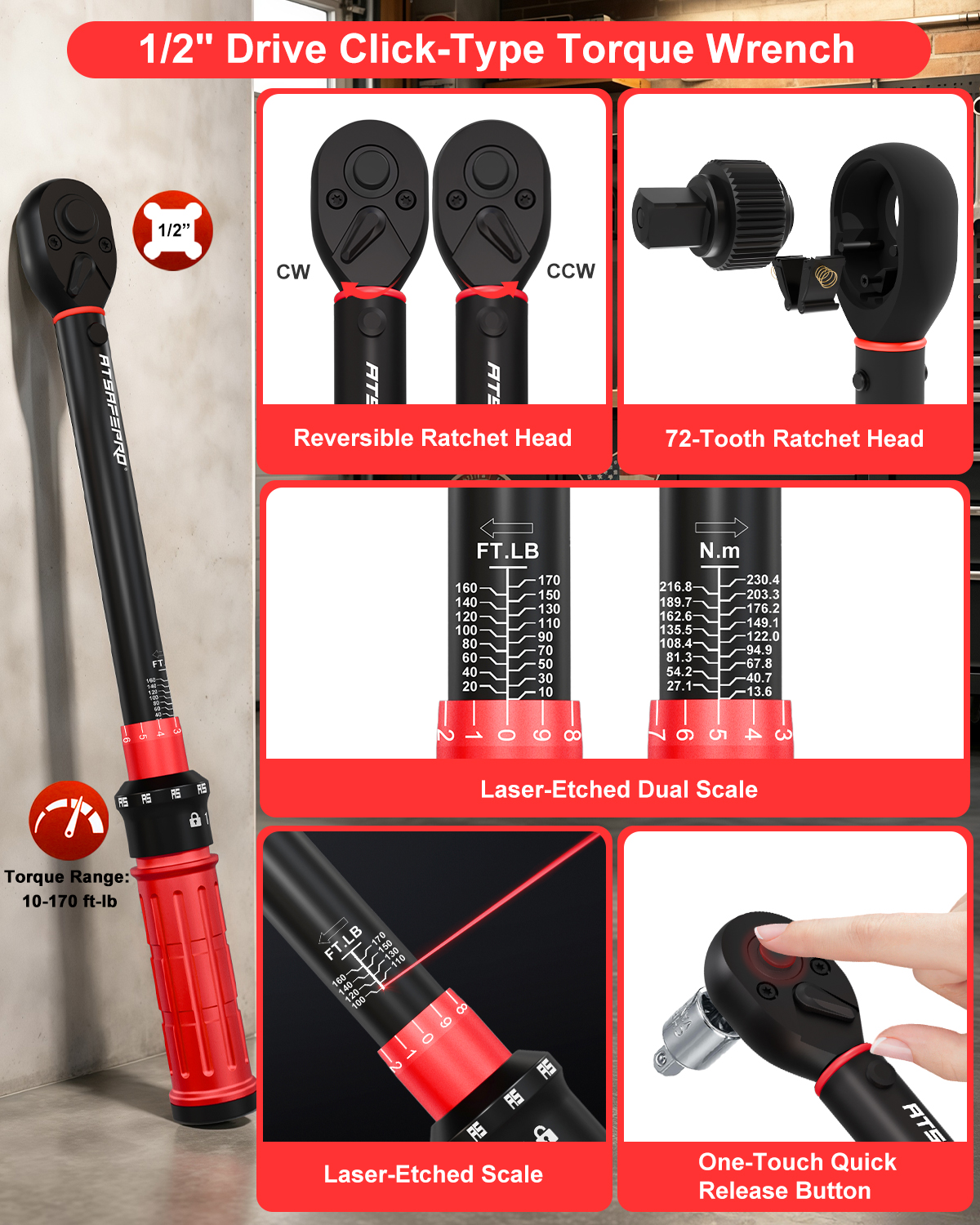
From the product details provided, this appears to be a handheld torque wrench set with a metal wrench body, a red handle, a black textured grip sleeve, and a black ratchet head. The shaft shows scale markings for adjustable torque settings, which is the feature that separates a true torque tool from a standard ratchet.
The set also includes a molded hard plastic storage case, a chrome adapter or extension, and multiple deep socket pieces. The visible socket sizes include 17 mm, 19 mm, and 21 mm, and the outer bodies appear to be marked CR-MO, a common chromoly designation used for durable socket construction. A 1/2-inch drive is implied by the overall tool style, though that should be confirmed from the product specification before purchase.
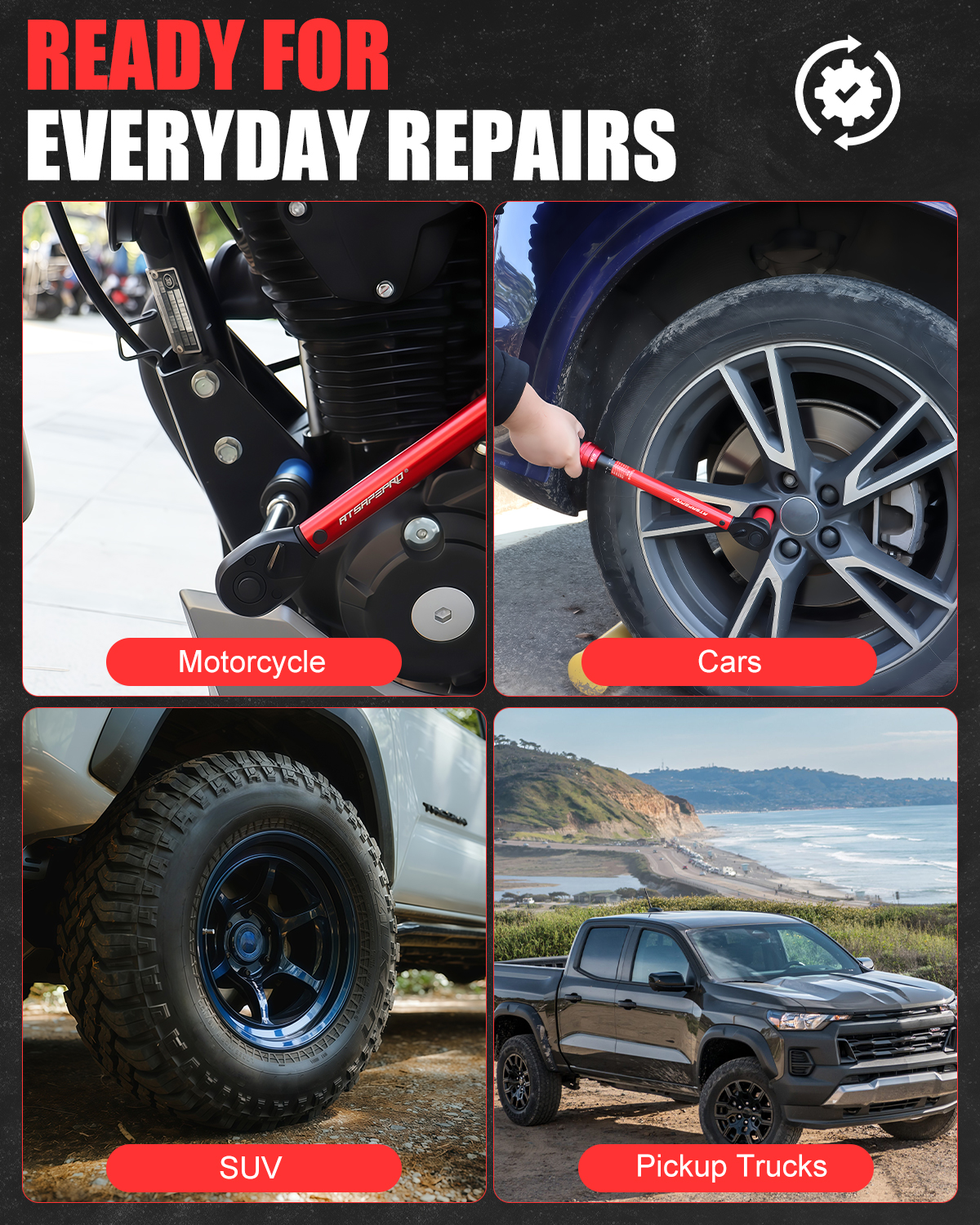
That mix points clearly toward automotive and light industrial use. Wheel service is the most obvious application, but the same kit format is useful in equipment maintenance and general fastening tasks where a controlled final tightening step is expected.
Where a torque wrench earns its keep
A lot of buyers treat torque tools as occasional-use items, which is fair enough, but the cost of getting torque wrong shows up later. Fasteners loosen because they were under-torqued. Flanges leak. Wheel nuts come back with uneven clamping. Or the opposite happens: a fastener is stretched too far and the next technician has to fight a damaged thread or a broken stud.
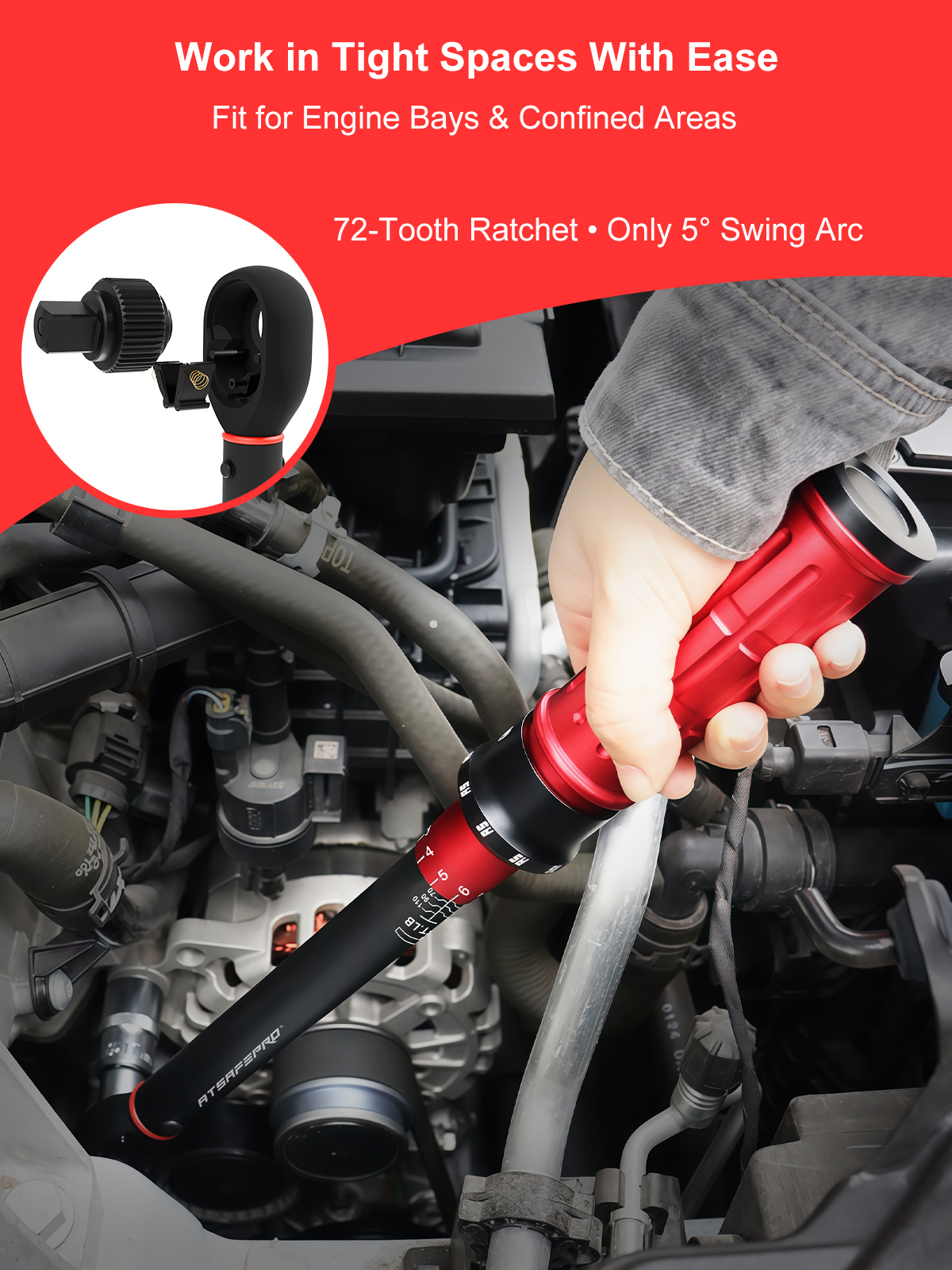
That is why a torque wrench is less about heroics and more about repeatability. The adjustable scale on the shaft gives the operator a target, and the ratcheting head helps keep motion controlled instead of jerky. For production teams, fleet maintenance, or workshop use, that consistency can matter more than shiny extras.
One practical note: if the tool will be used on vehicle wheels, make sure the wrench range actually covers the manufacturer’s specified torque. The product description here does not provide an exact range, so that check still needs to be done before the tool is approved for service.
How this style of wrench is typically used
The form factor suggests a click-type adjustable torque wrench, although that should be verified from the final specs. In normal use, the operator sets the desired torque on the shaft scale, fits the correct socket, and tightens until the wrench signals the set value has been reached. The result is not just convenience; it is a practical way to reduce variation between operators.
Common shop tasks
Wheel lug nut installation and tire changes
Routine equipment maintenance
General fastening where a defined torque is required
Service work involving 17 mm, 19 mm, or 21 mm fasteners
For buyers in automotive channels, the included deep sockets are especially relevant. Deep sockets can reach recessed fasteners better than shallow ones, which is often the difference between a quick job and one that needs extra accessories.
Materials and construction cues buyers should notice
The visible construction gives a few useful buying signals. The metal wrench body suggests the tool is meant for normal service use rather than a lightweight novelty piece. The red handle with a black textured grip sleeve is a practical touch, since torque work is usually done with oily hands, gloves, or in less-than-perfect lighting.
The sockets appear to be CR-MO marked, which is commonly associated with stronger socket construction. That does not automatically tell you everything about impact suitability or service life, but it is a meaningful clue that the accessory set is not just decorative chrome.
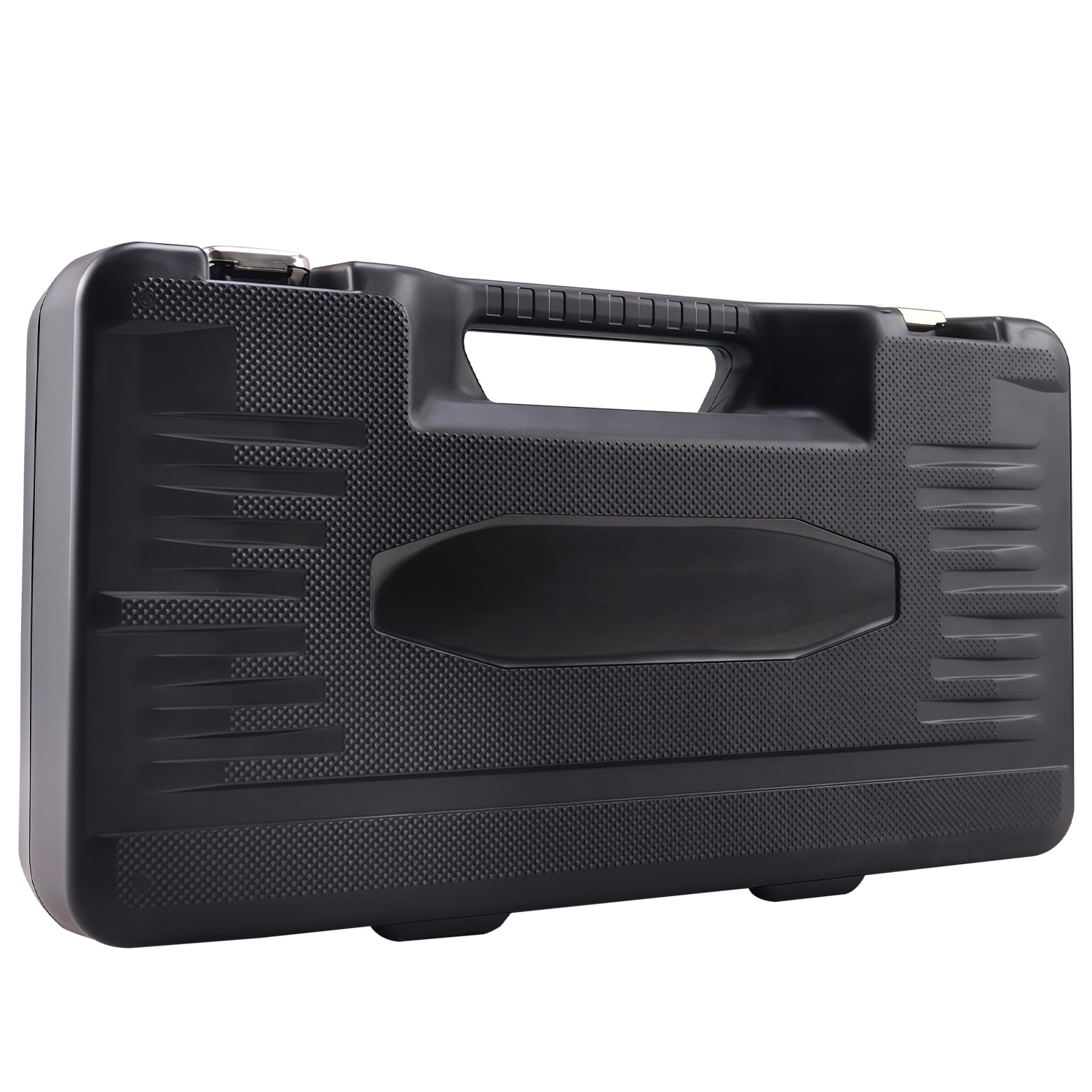
The molded plastic case is also worth more attention than many buyers give it. A torque wrench set without proper storage tends to get treated roughly, and rough treatment is how calibration drift, damaged scales, and missing sockets become part of the routine. A case will not solve every handling problem, but it reduces the chances that the set ends up scattered across a bench.
What to verify before you buy
This is the part many procurement teams skip when a product photo looks complete. Don’t.
First, confirm the torque range and drive size. Those two items determine whether the tool fits the actual work. Second, confirm accuracy or calibration information if your application needs it. The provided data does not include a tolerance, so it would be risky to assume one. Third, check whether the sockets are intended for hand use, impact use, or general service only. The CR-MO marking is helpful, but it is not the same thing as a full performance spec.
A final practical check: if this kit will travel between jobsites, ask whether replacement sockets or extensions are available. A well-balanced kit is only truly useful if the odd lost piece can be replaced without rebuilding the entire set.
How this kit compares with a bare wrench
A standalone torque wrench may be enough in a controlled environment where sockets are already organized and the application never changes. But in field service or mixed automotive work, the kit format is often the better buy. It reduces setup time, keeps the right sizes together, and gives the user a more complete starting point.
That said, kits can also hide compromises. Sometimes the wrench is good and the accessories are average. Sometimes the case is excellent and the tool itself is more basic than the photos suggest. That is why the accessory list and the actual product specs matter more than a polished hero image.
For sourcing teams, the useful question is simple: does this set reduce the number of separate purchases needed for the intended maintenance task? If yes, the kit has a legitimate place in the fleet.
Common buyer mistakes
The first mistake is buying for socket count instead of application. Three well-chosen socket sizes are more useful than a cluttered case full of pieces nobody needs.
The second is assuming every torque wrench is ready for any task. Torque range, drive style, and operating method all have to match the job.
The third is ignoring storage. Precision tools get abused when they are left loose in a box. The included case is not a luxury item here; it is part of the tool’s working life.
And one more, since it comes up often in workshop purchases: do not assume the visible chrome finish on accessories means every piece is meant for the same duty cycle. Read the actual product notes carefully, especially when fasteners are critical.
Who this type of kit fits best
This kind of torque wrench set is a sensible option for automotive technicians, tire service operations, maintenance crews, and workshop users who want one organized kit rather than piecing together separate components. It also suits buyers who need a practical, portable setup for controlled fastening without overcomplicating the purchase.
If your work requires documented calibration, a narrow accuracy band, or a very specific drive standard, you will need to verify those details before treating this as a formal production tool. That is not a flaw by itself; it is just the difference between general service equipment and a spec-driven procurement item.
FAQ
Is the ATsafepro torque wrench suitable for wheel work?
Based on the included sockets and overall kit style, it appears suited to wheel-related fastening tasks. Still, confirm the torque range and drive size before use.
Are the sockets impact-rated?
The sockets are marked CR-MO, which is a useful material cue, but that alone does not confirm impact rating. Check the product specification for that detail.
Does the kit include everything needed for basic service?
It includes the wrench, a case, an adapter or extension, and multiple sockets. For many common jobs, that is enough to get started, though exact coverage depends on your fastener sizes and torque requirements.
What should buyers ask the supplier?
Ask for the torque range, drive size, accuracy information, socket rating, and any maintenance or storage guidance. Those five answers usually tell you whether the kit fits the job or just looks complete.
A practical next step
If you are evaluating the ATsafepro torque wrench for shop use, start with the task, not the photo. Match the tool to the fastener sizes you actually service, confirm the torque range, and make sure the included sockets and case support the way your team works. That is usually the difference between a tool that gets used every week and one that sits in a cabinet until someone needs a missing 19 mm socket at the worst possible moment.