Why a torque wrench kit matters in the shop
An ATsafepro torque wrench is the kind of tool people buy for a very practical reason: fasteners need to be tight enough to hold, but not so tight that they distort, crack, or strip. That sounds obvious until you are dealing with wheel lug nuts, suspension hardware, or service work where one overzealous pull can turn a routine job into a repair. For engineers, sourcing managers, and maintenance teams, the question is rarely whether a torque wrench is useful. The real question is whether the kit on the bench is organized well enough to support repeatable work.
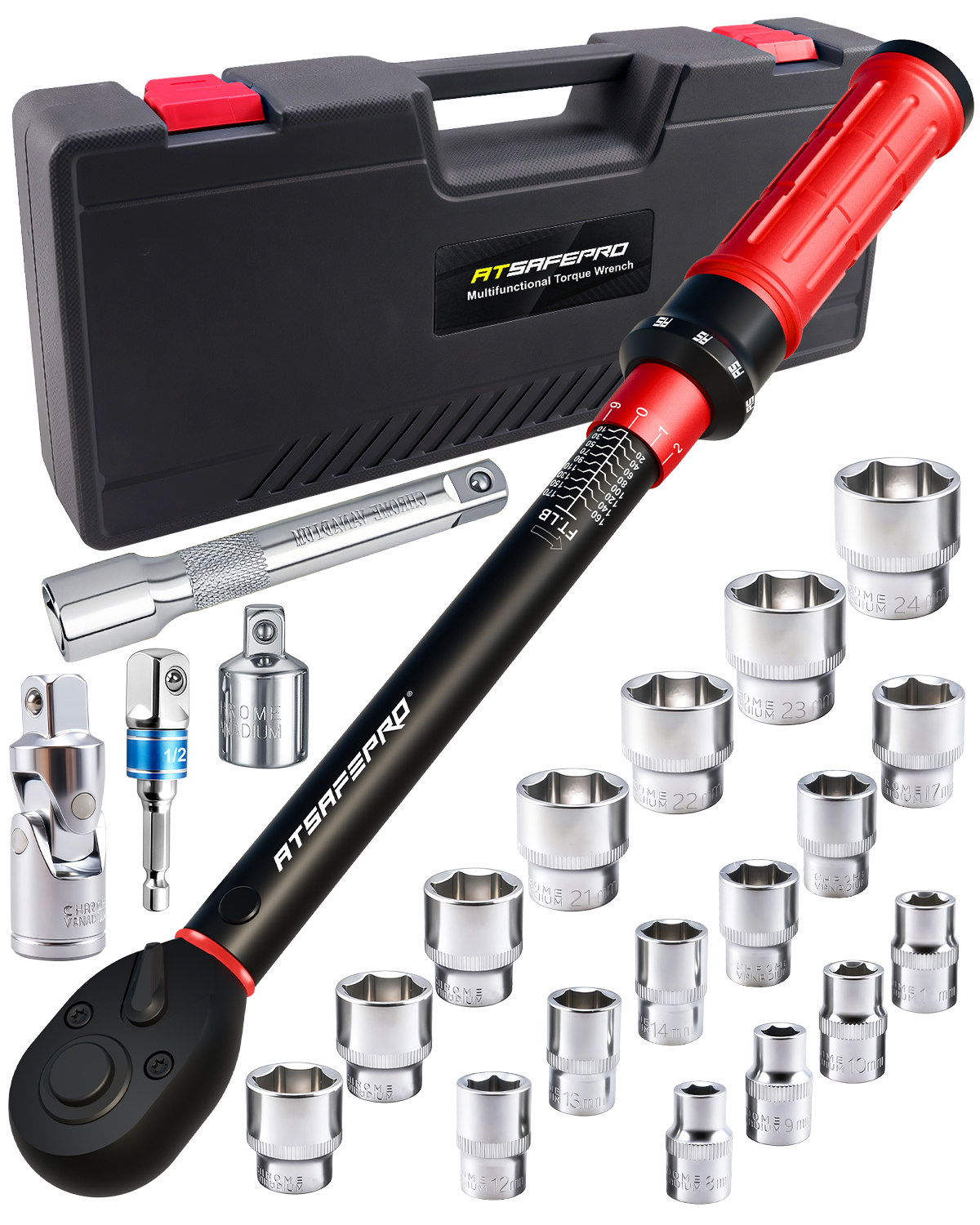
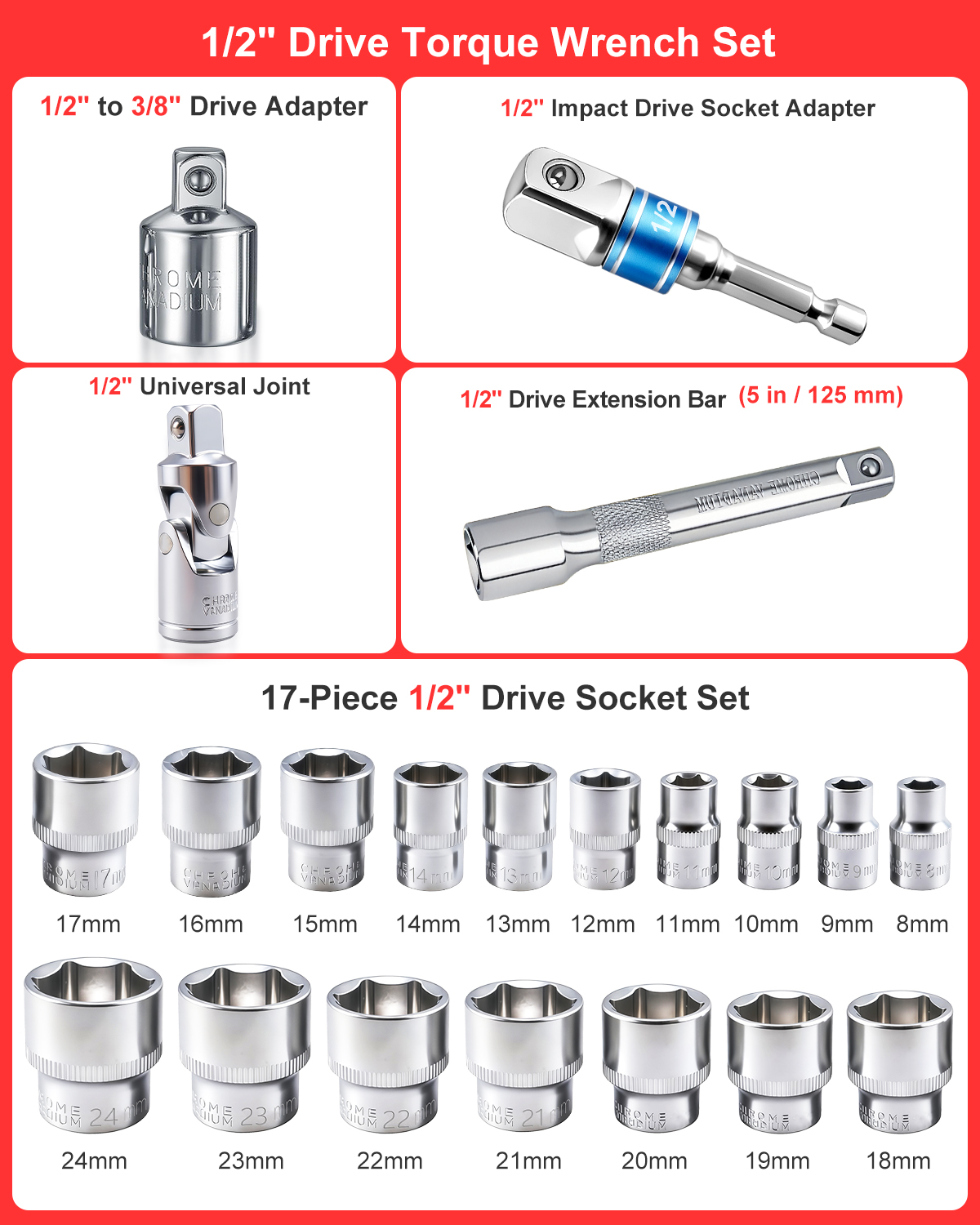
The version described here is a hand-operated adjustable torque wrench set with a red anodized metal body, a black textured grip, and a ratcheting head with a directional selector. It also comes with a molded hard plastic case and multiple sockets, including 17 mm, 19 mm, and 21 mm CR-MO pieces in color-coded sleeves. That makes it more than a single tool; it is a compact fastening kit aimed at controlled service work where socket changes and quick identification matter.
What the kit is designed to do
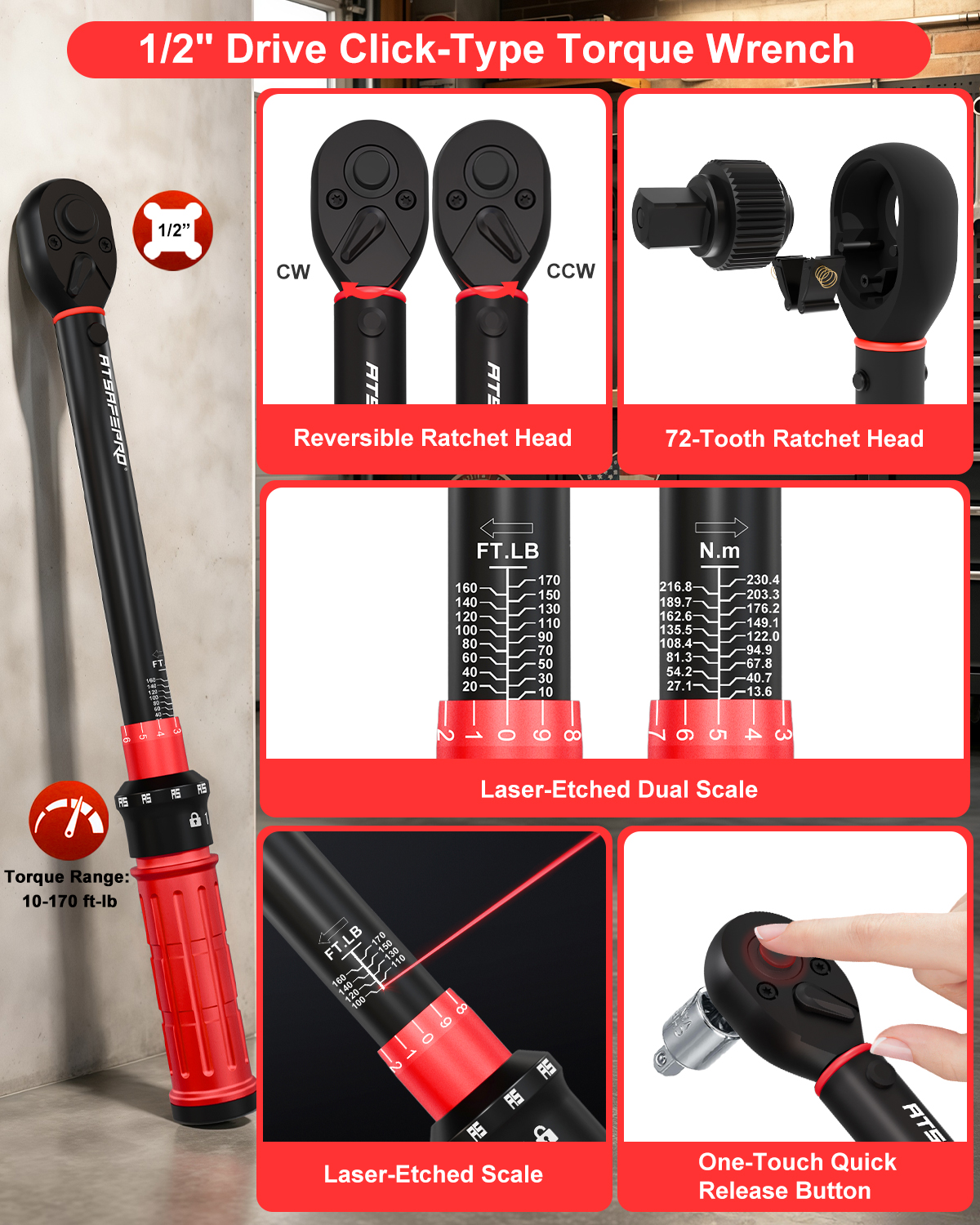
At a glance, this is a straightforward field-service package. The wrench itself provides the controlled tightening function, while the socket set supports common automotive fastening tasks. The visible torque scale is marked in ft-lb, which is helpful for shops that still work from imperial torque specifications or service manuals that present values in foot-pounds.
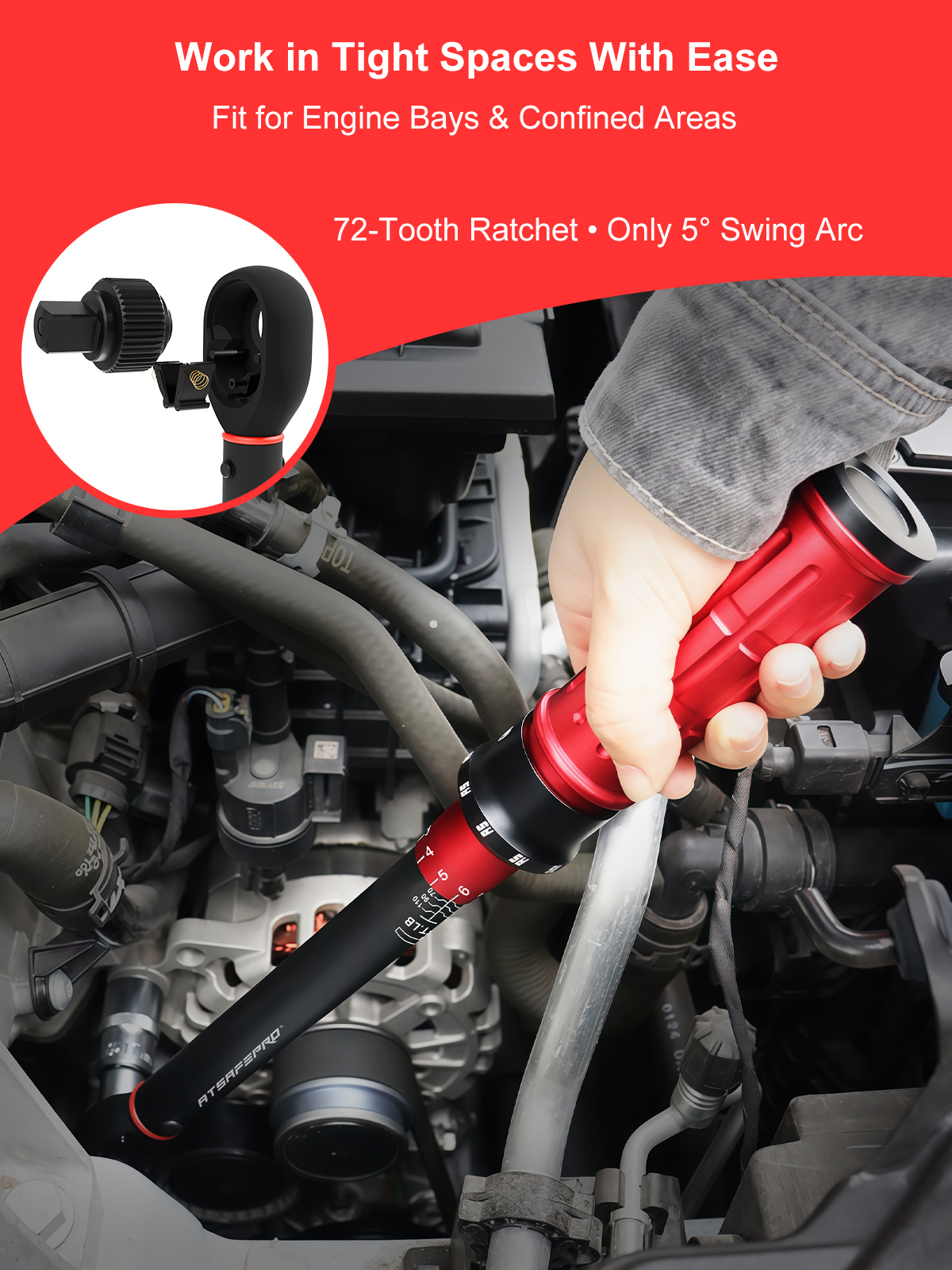
The ratcheting head is another useful detail. In practical terms, a ratchet-style drive head speeds up repeated fastening and loosening, especially in tighter spaces where removing the tool after every turn would slow the job. The directional selector is a small feature, but on a service bench it can save time and reduce confusion. It is the sort of detail people only notice when it is missing.
Quick takeaways for buyers
If you are evaluating a kit like this, a few points stand out immediately:
The adjustable torque scale suggests it is meant for controlled tightening rather than generic wrenching.
The included 17 mm, 19 mm, and 21 mm sockets point toward wheel service and other common automotive fastening sizes.
CR-MO labeling on the sockets is a useful sign for buyers looking at wear resistance and impact-tool compatibility, though the exact duty rating should still be verified against supplier documentation.
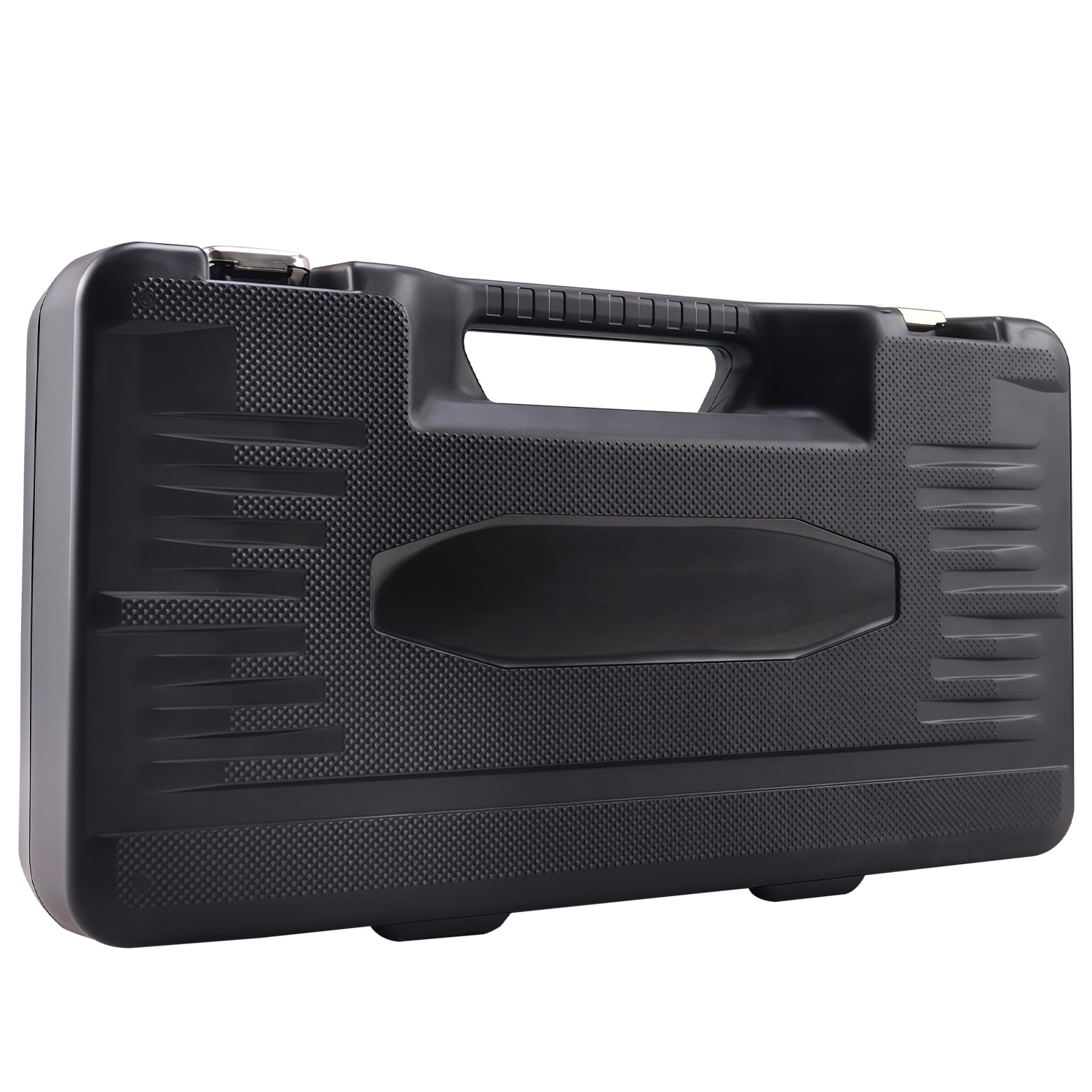
The molded case matters more than many people expect. It keeps the set together, protects the finish, and reduces the chance that one socket disappears between jobs.
Materials and construction: what the visible details suggest
The wrench body appears to be metal with a red anodized surface finish. That kind of finish is often chosen for visibility and corrosion resistance, while the black handle texture improves grip during hand adjustment or final tightening. The head appears to be black as well, which is common for tools that need a tougher-looking wear surface in the business end of the assembly.
The sockets are chrome and black, with color-coded sleeves in blue, red, and yellow. This is a simple but practical shop feature. Color coding does not make the tool stronger, of course, but it can help a technician identify sizes quickly when moving between vehicles or stations. In a busy service environment, shaving a few seconds off each selection is not trivial.
The case looks like injection-molded hard plastic with fitted compartments. That is a sensible choice for a kit that includes both a wrench and several accessories. Good fitment inside the case helps prevent rattling damage and keeps the set presentation-ready for service bays, mobile mechanics, or internal maintenance teams.
Where this kind of torque wrench fits in real work
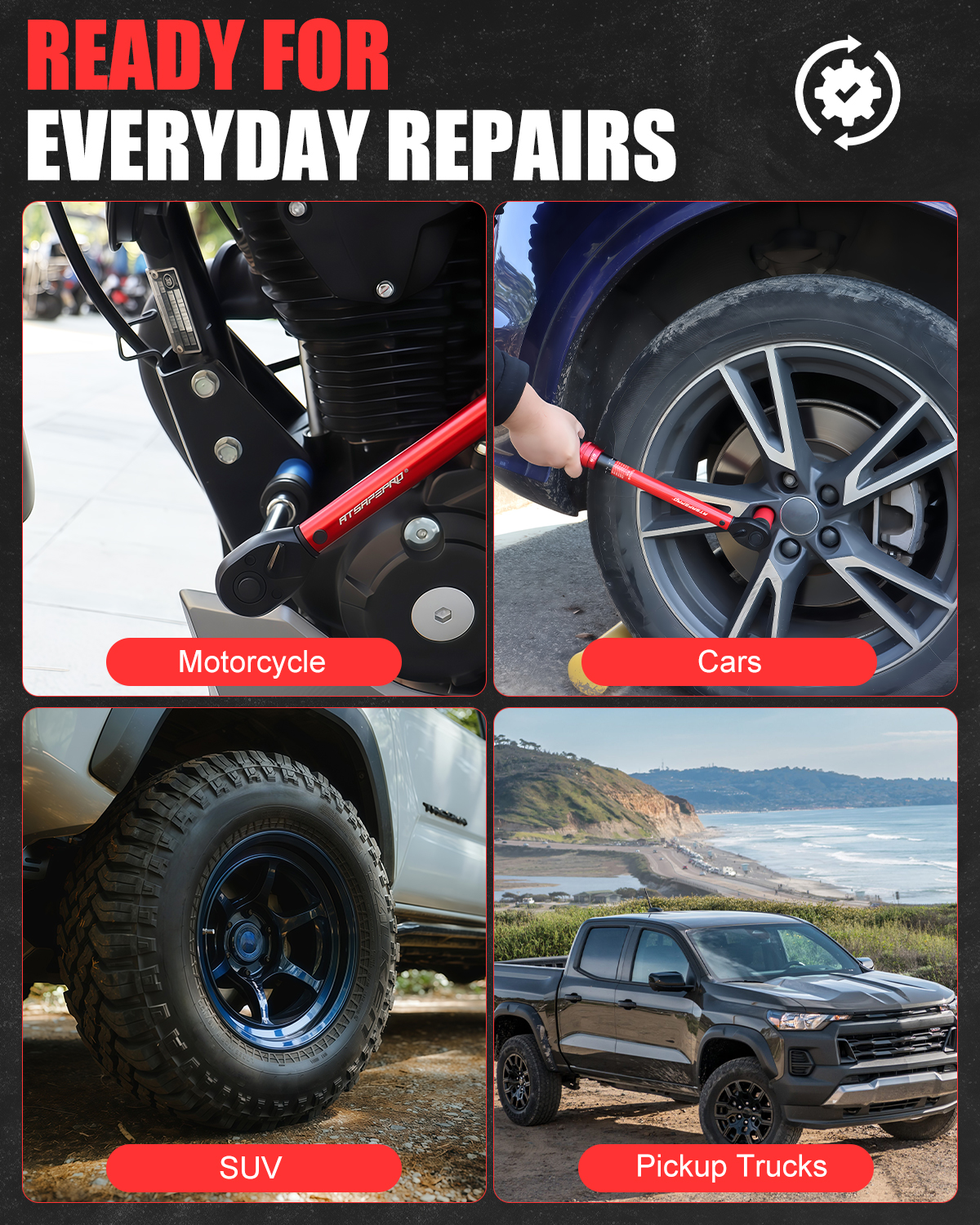
Most buyers will think first of wheel lug nut service, and that is fair. The combination of a ratcheting head, common socket sizes, and a visible ft-lb scale makes the set useful for tire changes, seasonal wheel swaps, and general vehicle maintenance. But the scope is wider than wheels alone.
In mechanical assembly, a calibrated-feeling hand tool with interchangeable sockets is useful wherever controlled clamping force matters. That can include brackets, service covers, fixture assemblies, and routine equipment maintenance. The exact suitability depends on the required torque range, drive size, and accuracy, none of which should be assumed unless the manufacturer publishes them. Buyers should resist the temptation to treat any adjustable torque wrench as interchangeable with any other. The details matter.
How to judge the kit before you buy
For sourcing teams and shop managers, the decision usually comes down to a few practical checks rather than flashy specs.
1. Confirm the torque range and measurement units
The scale is visible in ft-lb, but the actual range is not shown here. That is a major omission if you need the wrench for a defined service procedure. A wrench can look suitable and still miss the torque band you use most often. Make sure the published range covers the fasteners you tighten every day, not just the occasional job.
2. Verify the drive size and socket compatibility
The sockets are included, but the exact drive size of the wrench is not stated in the available information. That matters because compatibility with other socket sets and adapters depends on it. If your shop already stocks tools by a specific drive family, confirm the match before placing volume orders.
3. Check what the CR-MO marking actually covers
The sockets are labeled CR-MO, which generally indicates chrome-molybdenum steel. In many tool sets, that is associated with toughness under repeated use. Still, buyers should ask whether all sockets in the set are impact-rated or whether the label applies only to the material. Those are not always the same thing, and the difference can affect service life.
4. Look at storage and control
The hard case is not just packaging. In fleet maintenance, shared garages, and field service kits, tool control is part of uptime. A fitted case helps technicians return the right socket to the right place and makes missing-tool checks much easier. That is boring, until the missing tool stops a job.
Why the included socket sizes are practical
The visible 17 mm, 19 mm, and 21 mm sockets are familiar sizes in automotive work, especially around wheel-related service. Having those sizes in one organized kit reduces the need to hunt through mixed drawers or separate socket rails. The colored sleeves make them easier to distinguish at a glance, which is useful in low-light service areas or for technicians wearing gloves.
For purchasing teams, this kind of accessory bundle can be easier to justify than a bare wrench. It solves a complete use case. The buyer is not just acquiring a torque tool; they are getting a compact service set that can go into a vehicle, a service cart, or a tool crib with minimal additional setup.
Common mistakes buyers make with torque tools
One common mistake is focusing on appearance and ignoring the missing specification sheet. A torque wrench can look sturdy, polished, and professional, yet still be unsuitable if the range or calibration details do not match the application. Another mistake is assuming the included sockets are automatically suitable for every high-load use. Material marking helps, but it should not replace verification.
A more subtle mistake is overlooking ergonomics. A black textured grip sounds like a small feature, but in real use it influences how steadily a technician applies force. A handle that slips or feels awkward encourages hurried movement, and hurried torque work is often inaccurate torque work.
Finally, some buyers forget that storage affects tool life. If the case keeps the components organized, great. If not, the advantage fades quickly. A tool that lives loose in a drawer rarely stays nice for long, especially in shared facilities.
Practical buying advice for sourcing and maintenance teams
If you are buying this type of kit for a fleet shop or production maintenance room, ask for the published torque range, the drive size, the socket list, and any calibration or verification documentation the seller can provide. Do not assume these details from product images. If you are buying for general service use, check whether the ft-lb scale aligns with the procedures your technicians follow most often.
For distributors and procurement teams, the appeal of this set is its compactness. A wrench plus common sockets plus a case is easier to stock, ship, and issue than a loose mix of components. It is also easier for the end user to keep complete. Those logistics details often matter more than a flashy spec sheet.
FAQ
Is this torque wrench only for automotive use?
Not necessarily. The visible socket sizes and overall setup make it especially useful for automotive work, but any controlled fastening job that matches the wrench’s actual range and drive compatibility could be a fit.
Are the sockets definitely impact-rated?
The available information shows CR-MO labeling on the sockets, which is useful, but it does not prove impact rating by itself. Buyers should verify that detail before using the set in demanding pneumatic or impact-heavy environments.
Does the case add real value?
Yes. For a hand tool kit, the case helps protect the finish, keeps the sockets together, and improves tool accountability. That is especially important in mobile service or shared-shop settings.
A sensible next step
If you are considering an ATsafepro torque wrench kit for workshop, fleet, or maintenance use, treat it as a compact service solution rather than just a single wrench purchase. Confirm the torque range, drive size, and socket compatibility, then compare those details against the fastening tasks your team actually performs. The visible features are promising: adjustable torque scale, ratcheting head, fitted case, and useful socket sizes. The rest comes down to whether the specifications match the job.
That is the real buying decision here. Not whether the set looks complete, but whether it will help a technician tighten the right fastener to the right value, day after day, without fuss.