ATsafepro torque wrench buying guide: what this kit is for, and what to check before you trust it on a job
If you are looking at an ATsafepro torque wrench, you are probably not shopping for a fancy hand tool. You are shopping for control. On a wheel, a bracket, a machine cover, or a service fastener, the difference between “tight enough” and “too tight” is where stripped threads, warped parts, and callbacks begin. This kind of hand torque wrench set is meant to help the operator tighten fasteners to a specified torque without guessing, which is why it shows up in automotive repair, tire service, and general maintenance work.
This article is a practical buyer’s guide, not a spec-sheet recital. The kit shown appears to combine a click-type adjustable torque wrench with socket adapters and deep sockets in a molded case. That makes it useful for teams that need one kit for several fastening tasks, but it also means you should look carefully at fit, scale readability, and how the accessories are organized before putting it into production use.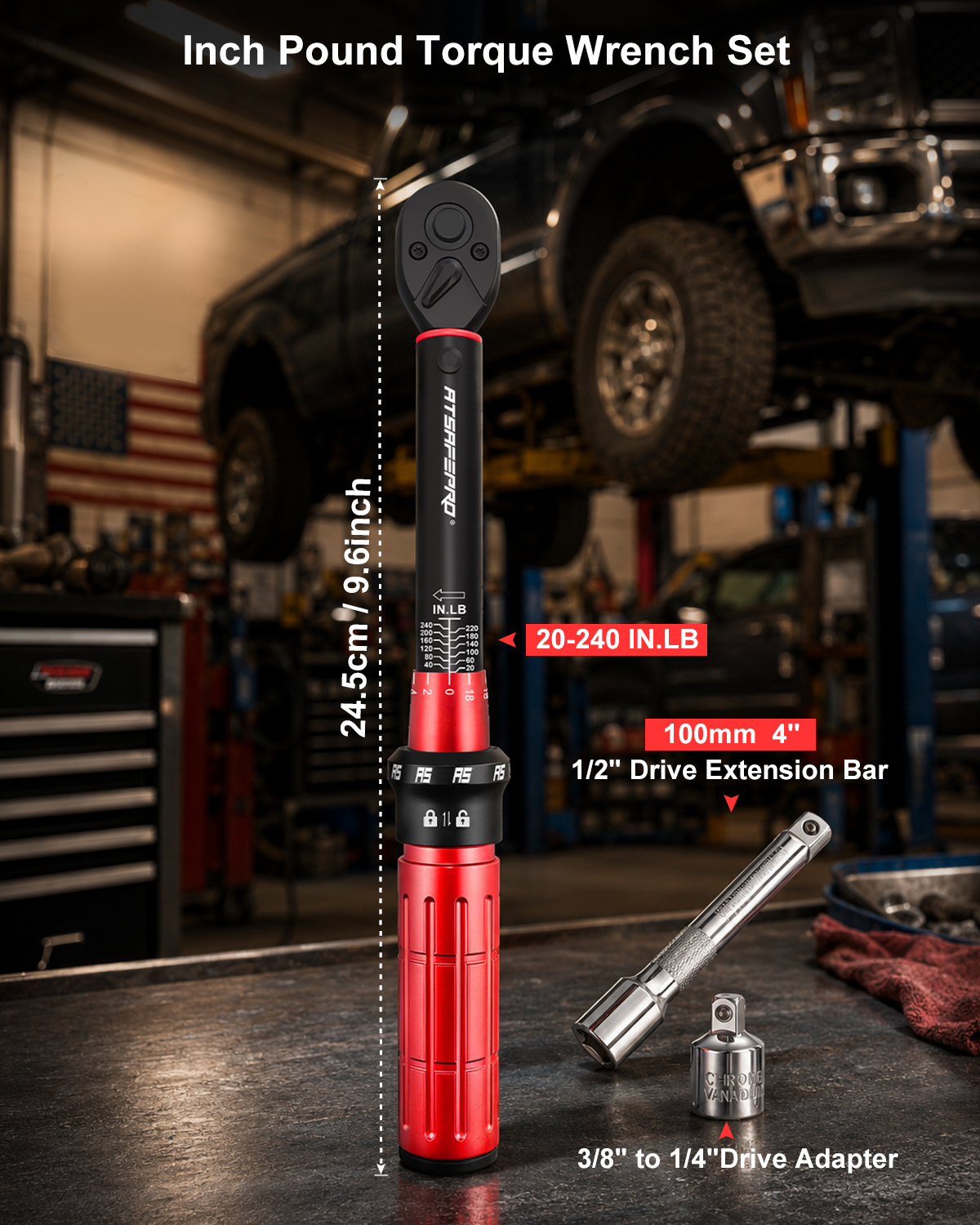
1. What is in the kit, and why that matters
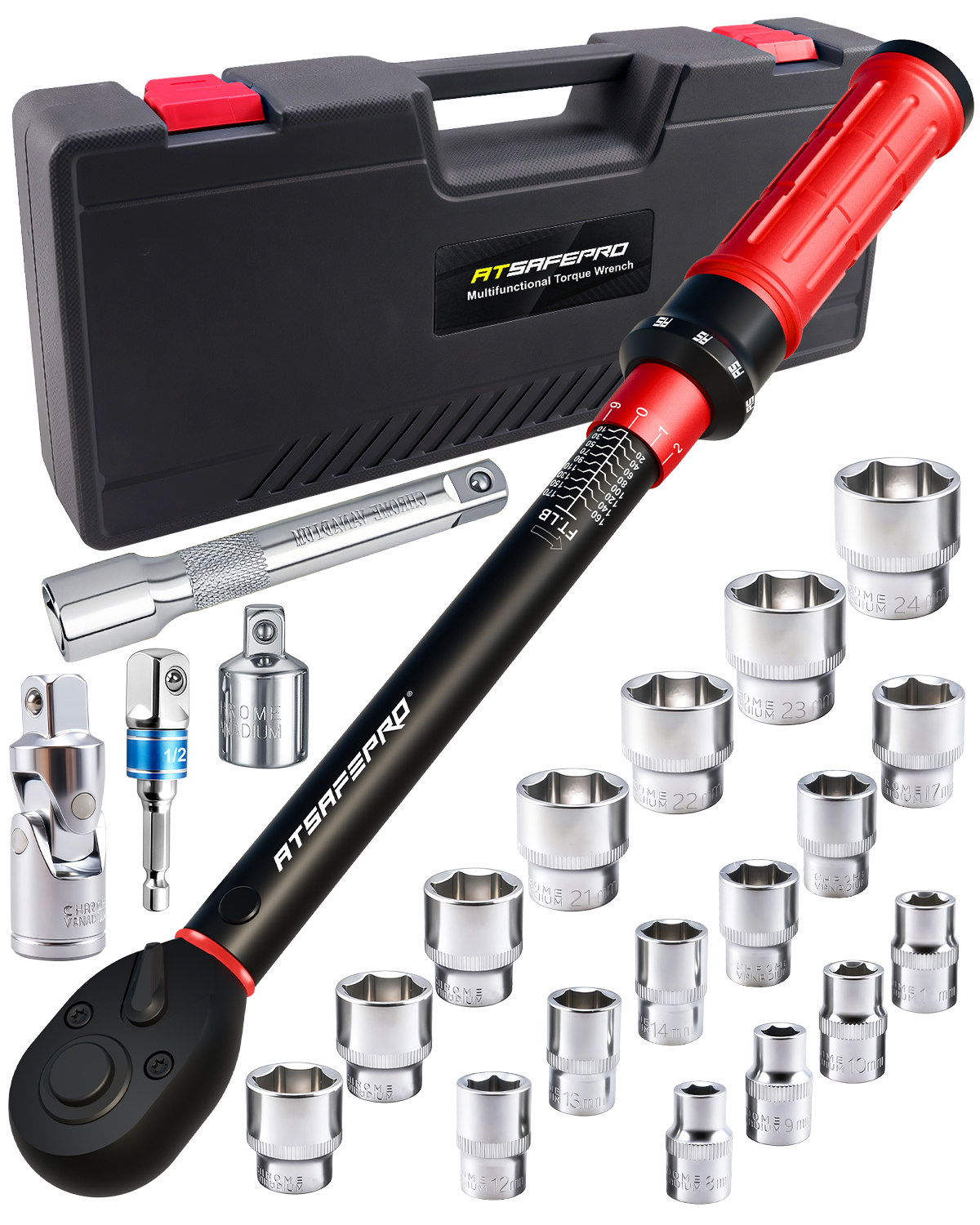
The visible package is more than a single wrench. It includes the main torque wrench, several socket accessories, and a hard storage case with shaped internal compartments. The sockets shown are marked 17 mm, 19 mm, and 21 mm, which points directly to wheel and automotive work, especially where service staff need common sizes close at hand.
That mix changes the value of the tool. A standalone wrench is fine if your shop already has a socket system and wants to standardize on one handle. A kit is better when you need portability, field service convenience, or a backup set that can travel with a tech truck. The molded case also matters more than many buyers admit; when the accessories have a fixed place, missing parts are easier to spot, and that saves time in a busy bay.
2. Why a controlled-torque hand tool still matters in everyday work
Most fastening problems are not dramatic failures. They are slow damage. A tech over-tightens a wheel fastener and the issue may not show up immediately. A maintenance crew crushes a gasket or stresses a housing, and the part starts leaking later. That is why a mechanical torque tool remains relevant even in shops that own powered equipment.
A torque wrench is especially useful when the assembly has a defined tightening requirement, when fasteners are reused, or when parts are made from softer materials that do not tolerate brute force. If the job is safety-sensitive, repeatability matters as much as speed. And while power tools are excellent for removal and rough assembly, final tightening is still where many teams reach for a hand tool.
3. Key features to inspect before you buy
Scale readability
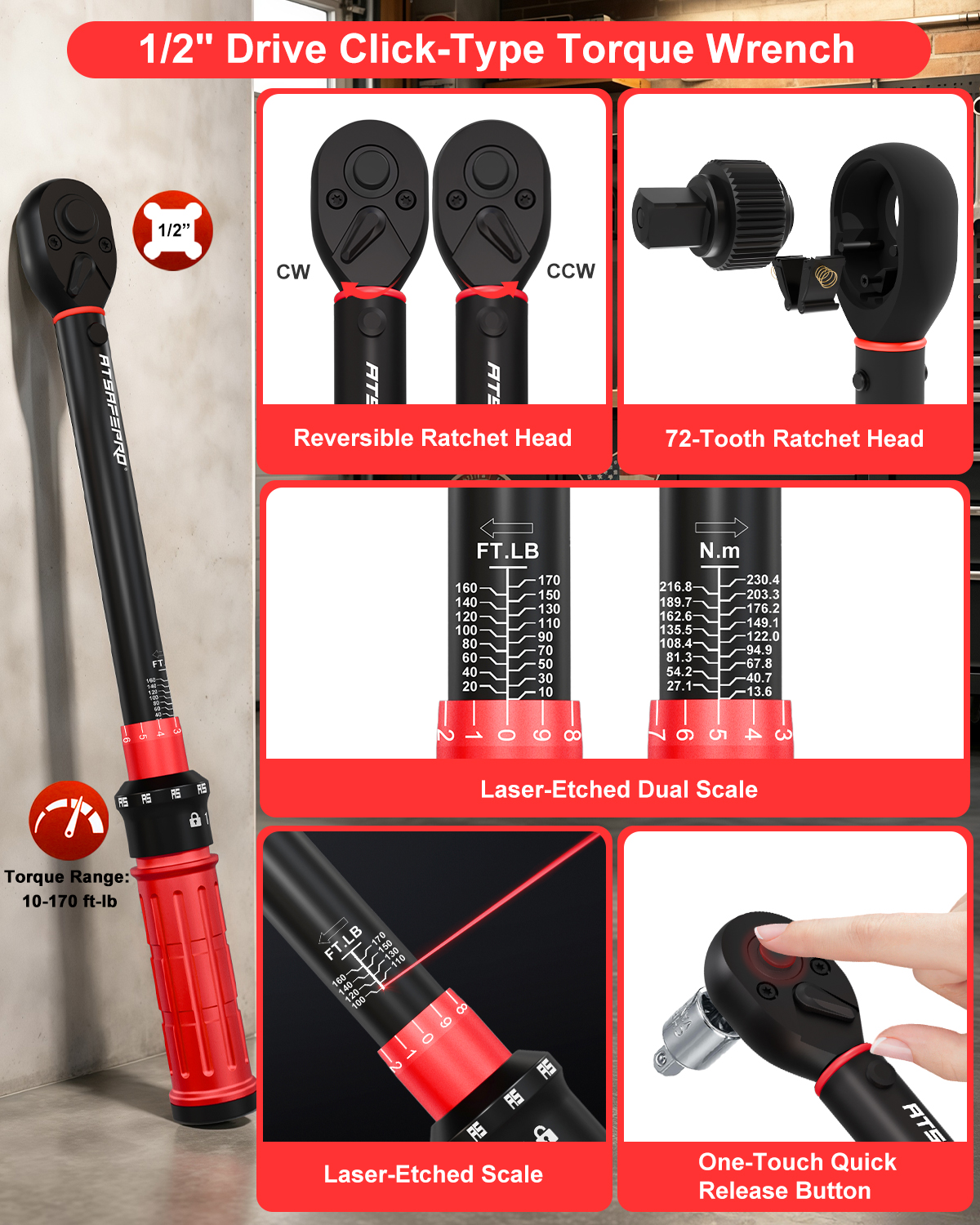
The shaft shows visible scale markings, which is a good sign, but buyers should still check whether the numbers are easy to read at a glance. In a shop, dim lighting and dirty hands are normal. If the markings disappear when the tool is used in real conditions, the setting becomes more error-prone.
Handle feel and grip security
The handle appears to use a black textured grip, which is exactly the sort of detail that looks small in a photo and matters in practice. A secure grip helps when a mechanic is setting torque deliberately rather than muscling through the job. It also reduces hand fatigue during repetitive tasks.
Head design and direction control
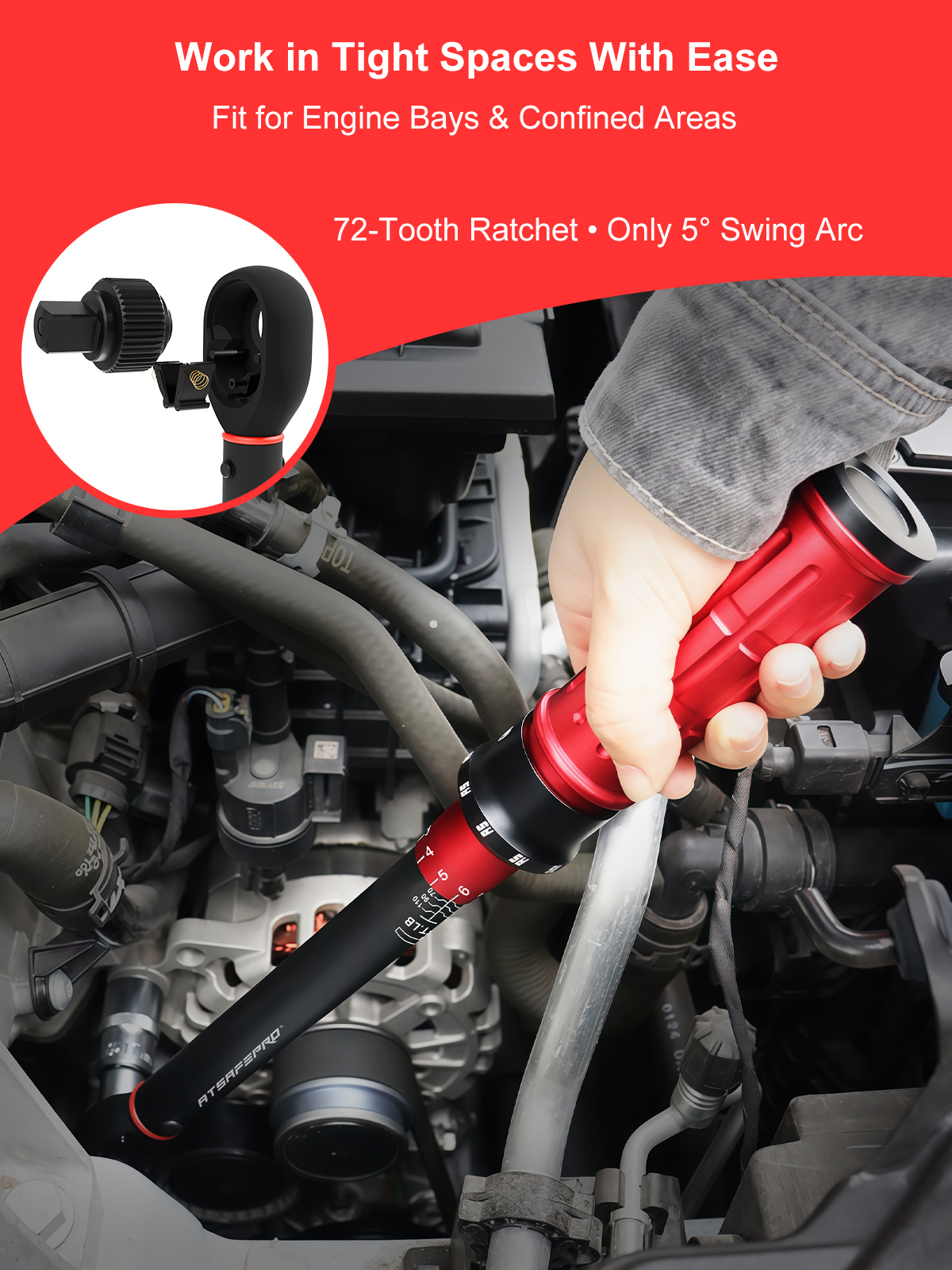
The ratchet head looks compact, rounded, and fitted with a directional selector. That is the right shape for a general-purpose service wrench because it can work in tighter spaces. Buyers should check whether the head size fits their clearance needs, especially around wheel wells, engine bays, and compact machine frames.
Accessory fit and organization
The included sockets and adapter suggest a kit designed for practical versatility. The real question is whether the accessories fit securely and are easy to identify. Colored sleeves in blue, yellow, and red help with size recognition, which is useful when multiple users share one case. In a service environment, visual sorting prevents slowdowns and avoids grabbing the wrong socket under pressure.
4. Where this type of torque wrench kit fits best
This is not the sort of tool you buy for one narrow application. It makes more sense in a multi-use maintenance environment.
Automotive repair
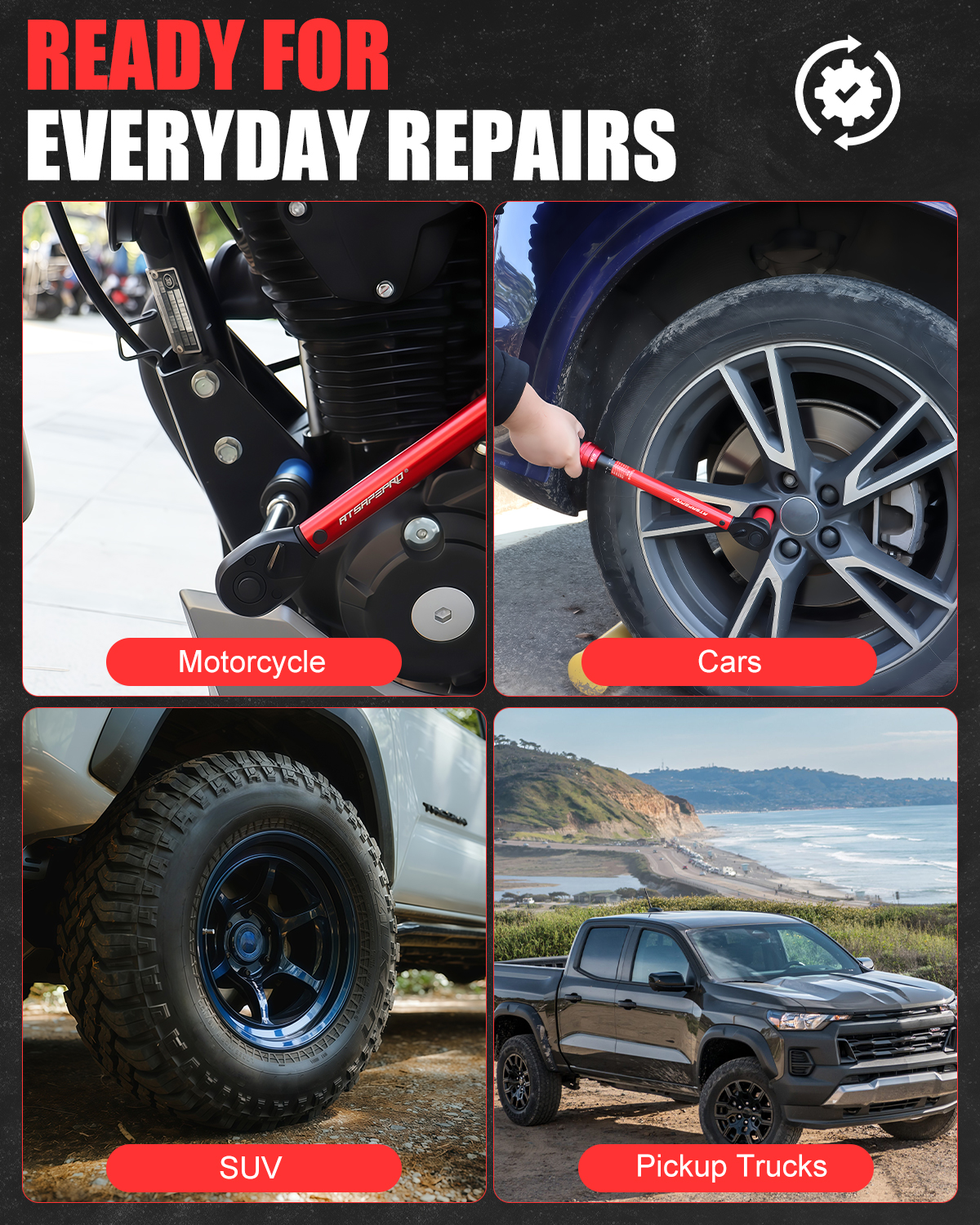
For technicians, a torque wrench kit is often about consistency. Brake work, wheel-related service, and general under-hood fastening all benefit from controlled tightening. The included 17 mm, 19 mm, and 21 mm sockets line up with common vehicle service needs, especially for wheel work.
Tire and wheel service
Wheel-related tightening is one of the clearest use cases. Teams want a tool that is portable, easy to store in the service vehicle, and quick to verify before use. A kit in a molded case is useful because it keeps the right accessories together, which sounds basic until you are looking for a missing socket before a road call.
Machinery assembly and maintenance
On equipment assemblies, a calibrated-feeling hand torque tool helps reduce damage from uneven or excessive tightening. That matters on covers, guards, small brackets, and maintenance-access fasteners. It is not a replacement for process control, but it is a practical layer of control at the point of use.
5. Material and build clues worth paying attention to
From the visible construction, the wrench body appears metallic with a red finish, paired with a black grip and a black ratchet head. The sockets look like alloy steel or chrome-moly style accessories with colored identification sleeves, while one extension or adapter is polished silver metal. That is a sensible combination for a shop kit: durable enough for repeated handling, easy to clean, and visually sorted.
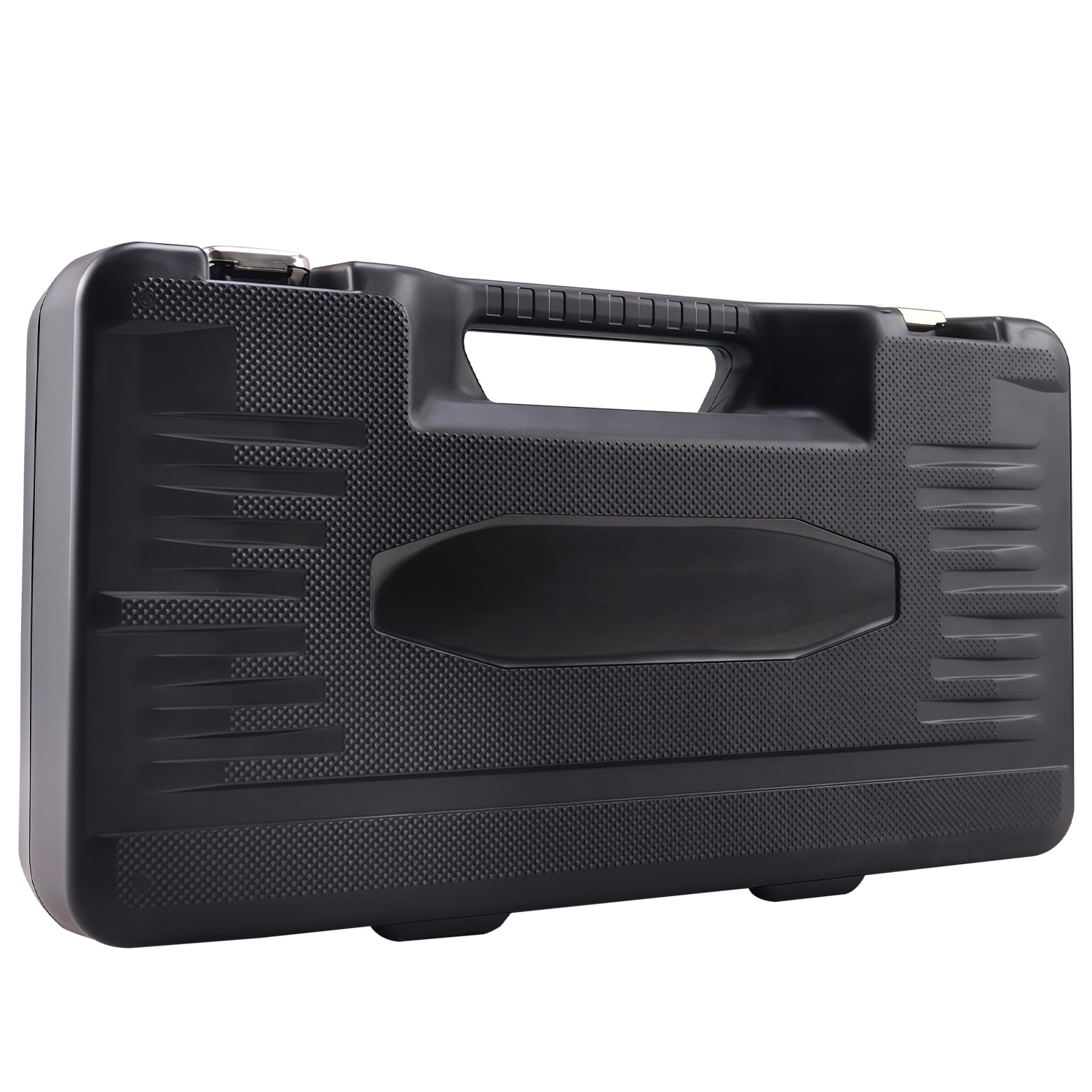
The hard case also deserves mention. A black molded plastic case with red latches is not just packaging; it is part of the tool’s service life. It protects the wrench from damage in transit and gives the end user a simple way to store the set properly after use. Cheap tools often fail the storage test before they fail the mechanical test.
6. Common mistakes buyers make with torque wrench kits
One common mistake is assuming every torque wrench is equally suitable for every task. That is not how shop work goes. The right range, the right drive, and the right accessory set all matter. The exact torque range of this ATsafepro torque wrench is not clearly readable from the image, so buyers should verify it before specifying the tool for a particular process.
Another mistake is overlooking calibration and maintenance needs. Even a good mechanical torque tool should be used with care, stored correctly, and checked periodically according to the user’s quality system. If a shop treats it like an ordinary ratchet, the whole point of controlled torque is lost.
A third mistake is buying for the picture instead of the workflow. A kit looks complete, but if your team needs a different drive size, different socket depths, or a broader torque range, the nicest case in the world will not solve the mismatch.
7. Practical buyer checklist
Use this quick list before placing the tool into production or service use:
- Confirm the torque range and units for the actual application.
- Check whether the scale is easy to read in shop lighting.
- Verify the drive size and socket compatibility with your existing tool system.
- Make sure the included 17 mm, 19 mm, and 21 mm sockets match your common tasks.
- Inspect the case layout so the wrench and accessories return to the same place after use.
- Ask whether the tool will be used for wheel service, assembly work, or general maintenance, then buy accordingly.
8. Who should consider this kit, and who should look elsewhere
This kit makes sense for service teams that want a portable, mechanical, multi-piece solution for controlled tightening. Fleet maintenance departments, automotive workshops, and machinery service crews are the obvious users. It also has value for purchasing managers who want one organized kit rather than a drawer full of mixed loose tools.
If your process demands documented calibration, a verified accuracy band, or a defined industrial compliance package, you will need to confirm those details directly with the supplier. The image alone does not prove those points. That is not a weakness of the tool so much as a normal reality of sourcing from product imagery.
9. FAQ
Is this ATsafepro torque wrench suitable for wheel work?
The included socket sizes and the general kit layout suggest yes, it is intended for automotive and wheel-related service. You should still confirm the torque range before using it on a specific vehicle or procedure.
Does the kit include enough accessories for general maintenance?
For many common jobs, yes. The wrench, adapters, and multiple sockets make it a flexible field kit. For specialized industrial assemblies, you may need additional sockets or a different torque specification.
Should a buyer rely on the case alone to judge quality?
No. A good molded case is useful, but it is not a substitute for checking the wrench mechanism, markings, socket fit, and the supplier’s technical information.
10. A sensible next step for buyers
If you are evaluating the ATsafepro torque wrench for shop or fleet use, start with the application first and the hardware second. Match the tool to the fastening task, not the other way around. Ask for the actual torque range, confirm accessory compatibility, and make sure the kit supports the sizes and workflows your team uses most often.
For sourcing teams, that is the cleanest way to avoid an attractive but mismatched purchase. For technicians, it is the difference between a tool that sits in a case and a tool that actually earns its place on the bench.