Digital vs. Analog: Choosing the Right Tire Inflator With Gauge for Long-Term Reliability
Why Tire Inflation Accuracy Matters
Tire inflation is one of the most critical aspects of vehicle maintenance, yet often underestimated. Incorrect tire pressure can reduce fuel efficiency by up to 11%, shorten tire lifespan, and increase the likelihood of accidents. Underinflated tires generate heat that may cause blowouts, while overinflation reduces traction and makes braking less effective.
For this reason, the reliability of a tire inflator is not just a matter of convenience—it is a safety requirement. Whether you choose a digital or analog gauge will determine how consistently you can maintain the correct pressure for years to come.
Key Differences Between Digital and Analog Inflators
While both types measure tire pressure and assist with inflation, they differ in technology, usability, and lifespan.
| Feature | Digital Tire Inflator With Gauge | Analog Tire Inflator |
|---|---|---|
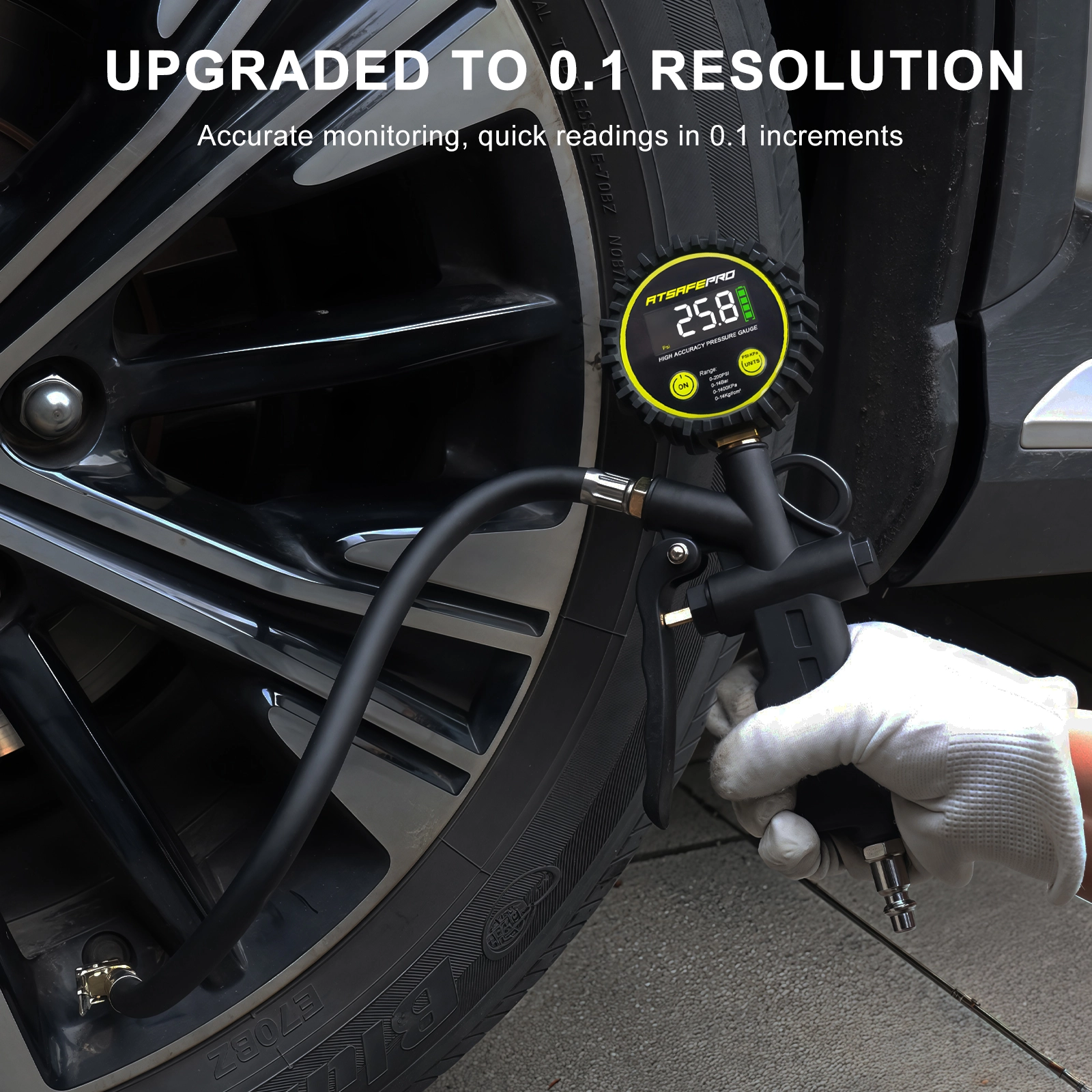
| Accuracy | Displays readings with 0.1 PSI precision; excellent for sensitive vehicles | Accuracy depends on needle alignment and dial size |
| Readability | Backlit LCD ensures visibility in low light or night use | Needle can be hard to read, especially for small increments |
| Durability | Electronics need protection, but metal housing offers long service life | Simpler build, fewer failures, but plastic dials wear out |
| Functions | Auto shut-off, unit conversions (PSI/Bar/kPa), memory functions | Limited to basic PSI display |
| Best Fit | Professional workshops, fleets, precision-focused drivers | Backup option, budget-conscious buyers, emergency kits |
What Users Really Experience
-
Digital Advantages: Users appreciate the confidence of seeing exact PSI readings. Features like auto shut-off prevent accidental overinflation, making them especially valuable for drivers with little technical experience.
-
Analog Advantages: Mechanics often keep analog inflators as backups, since they do not rely on batteries and function reliably even in harsh environments.
-
Long-Term Trends: Surveys from automotive service providers show that over 70% of professional workshops now prefer digital inflators due to speed, precision, and customer trust.
Real-World Scenarios: Who Benefits from Which Type?
-
DIY Drivers: A digital inflator minimizes errors at home and is perfect for ensuring family car safety.
-
Fleet Managers: Checking dozens of vehicles weekly requires consistency; digital models cut inspection time and improve reliability records.
-
Professional Workshops: Accuracy builds credibility—customers are more likely to trust a printout or digital display than a quick glance at a needle.
-
Off-Road and Emergency Use: Analog inflators still excel in rugged outdoor conditions where battery replacement might be inconvenient.
Practical Tips for Reliable Tire Inflation
-
Match Tools to Usage: Use a Digital Tire Inflator With Gauge for daily or frequent checks, and keep an analog tool in the glove box for emergencies.
-
Check Calibration: Digital models should be recalibrated annually, while analog models require visual inspection for needle accuracy.
-
Consider Vehicle Type: High-performance cars or fleets demand digital precision, while motorcycles or farm vehicles may still rely on analog tools.
-
Protect Electronics: Store digital inflators in dry conditions to extend lifespan.
-
Routine Checks: Test tire pressure at least once a month and before long trips to maintain safety and fuel efficiency.
Q&A: Common Buyer Concerns
Q: Do digital inflators drain batteries quickly?
A: Most digital inflators have energy-efficient designs, and batteries last months to years depending on use.
Q: Can analog models be as reliable as digital ones?
A: They can be dependable for basic needs, but they lack the fine accuracy and features of digital models.
Q: Are digital inflators more fragile?
A: Not necessarily. High-quality metal-bodied digital inflators are designed for workshop-level durability.
Why ATSAFEPRO Delivers Long-Term Reliability
ATSAFEPRO combines the best of both worlds. Our Digital Tire Inflator With Gauge is engineered with precision sensors, durable housings, and intuitive displays, making it the first choice for professionals and careful drivers. At the same time, we offer analog inflators built with rugged components to serve as reliable backups in demanding conditions.
This dual offering ensures that no matter the preference, drivers and workshops have access to tools that extend tire life, improve safety, and reduce maintenance costs.
Matching Tools to Needs
Choosing between digital and analog inflators is less about which is “better” and more about which suits your usage. Digital inflators excel in accuracy, usability, and professional credibility, while analog models remain dependable as simple, battery-free backups.
With ATSAFEPRO, you can trust tools designed for long-term reliability, whether you are a daily driver, a workshop professional, or a fleet manager.
Explore more solutions on our homepage or reach out directly through the contact page.