Why a torque wrench kit is more than a box of sockets
The ATsafepro torque wrench is the kind of tool buyers usually notice only after a joint fails, a wheel is over-tightened, or a maintenance crew spends an afternoon chasing inconsistent fastening. On paper it looks simple: a long adjustable wrench, a couple of chrome adapters, a hard case, and a calibration certificate. In practice, that combination matters because controlled torque is one of the few ways to make fastening repeatable across shifts, technicians, and equipment.
For engineers, sourcing managers, and repair teams, the decision is not just “does it tighten bolts?” It is whether the wrench gives a usable torque window, whether it is packaged for field work, and whether the documentation is good enough for an internal quality file. That is especially relevant for automotive repair, machinery assembly, and routine maintenance where over-tightening can distort parts and under-tightening can loosen them later.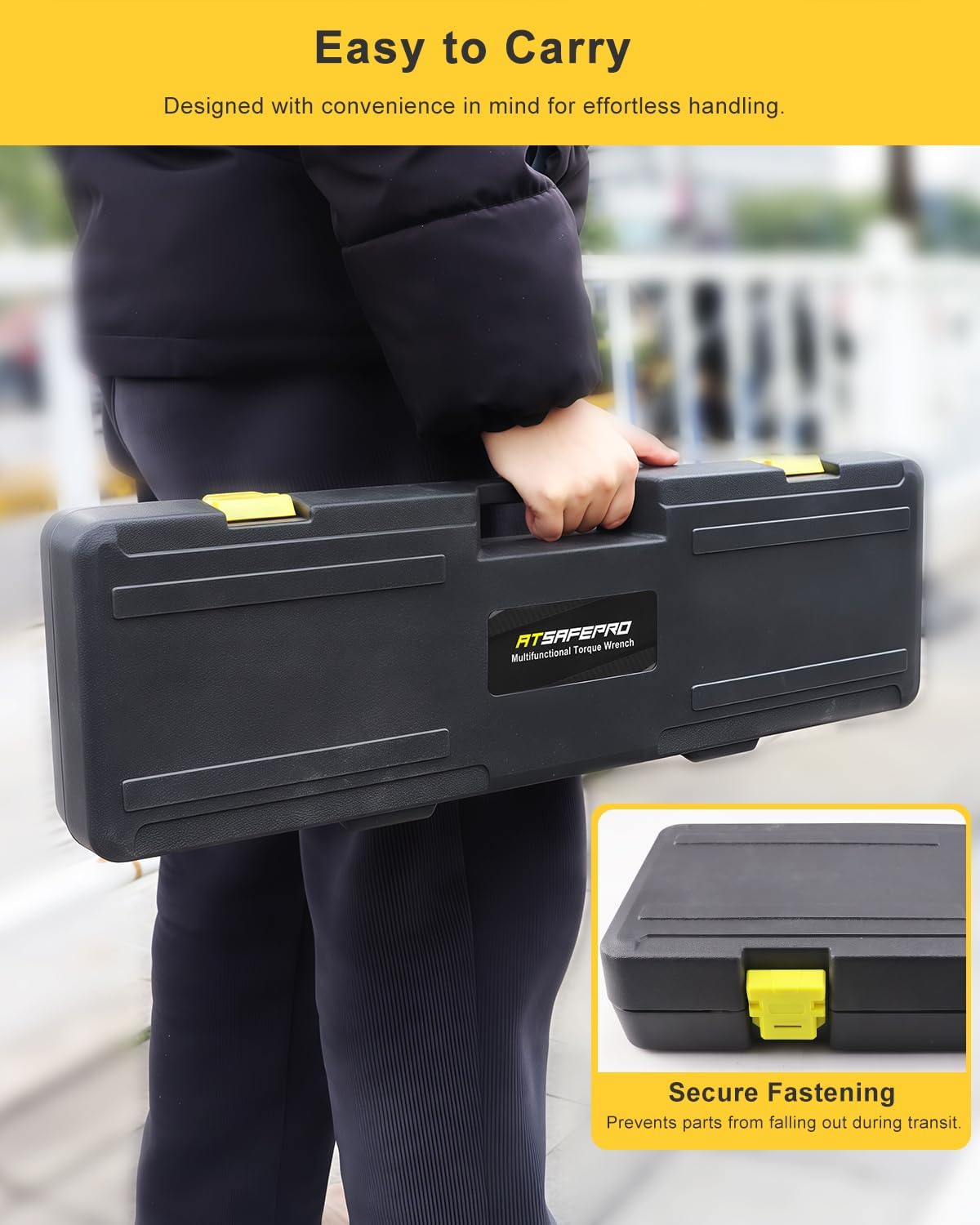
Quick takeaways for buyers
1. The visible torque range is practical for general service work
The certificate shown with the kit lists a range of 10–110 ft-lb and a 3/8" drive. That puts the tool in a useful middle ground. It is not a specialized high-torque wheel gun replacement, and it is not a tiny instrument for delicate electronics. It sits in the shop-friendly zone where many automotive and light industrial fasteners live.
2. The included certificate adds real value
A calibration certificate is not just paperwork for a drawer. It helps teams document that the wrench was checked at the point of supply. Buyers still need to manage calibration intervals internally, but having a certificate on hand lowers friction when tools are added to a maintenance program.
3. The case and adapters make it a kit, not just a wrench
The molded storage case and two chrome adapters suggest a product meant to be carried, not parked on a bench. That matters for service vans, plant maintenance teams, and anyone who needs the wrench to arrive intact and stay organized.
What the ATsafepro torque wrench appears designed to do
This is an adjustable mechanical torque wrench kit built for controlled tightening. The long handle gives the user leverage, while the torque scale and rotating collar near the grip indicate preset adjustment. That is the basic mechanical logic of most click-style shop torque wrenches: set the target torque, tighten the fastener, and stop when the tool signals the set value has been reached.
The visible construction supports that use case. The body appears to be a metal lever arm with a black coated shaft and a red handle/adjustment section. The head and adapters are polished chrome or steel finish, which is what most buyers expect from a field tool that will be swapped between fasteners and stored in a box when the shift ends.
For the buyer, the main point is not style. It is whether the tool’s geometry and range match the fastening jobs at hand.
How to judge whether this kind of kit fits your work
1. Match the drive size to the application
A 3/8" drive is versatile, especially for service work, machinery upkeep, and many automotive fasteners. It is often the right compromise between reach and control. If your operation mainly handles smaller fasteners, it may be more tool than you need. If your maintenance tasks regularly call for heavier torque, you may need a larger drive size as well.
2. Check the torque range against the actual fastening list
The 10–110 ft-lb range should be compared against your real torque specs, not a generic idea of “repair work.” Teams often make the mistake of buying one wrench and expecting it to cover everything. It won’t. The useful question is whether most of your recurring fasteners sit comfortably inside the middle of the scale, where a mechanical wrench is easier to control and less likely to be used at the edge of its range.
3. Consider the workflow around the tool
A torque wrench is part of a system. If your technicians need to swap between sockets, the included adapters help. If the wrench will travel from bench to vehicle to field site, the case matters more than people like to admit. A loose tool in a drawer tends to get lost, abused, or used when it has not been checked.
What the kit includes that buyers should actually notice
The visible package is straightforward:
- A long adjustable torque wrench
- Two chrome adapter sockets or attachments
- A calibration certificate
- A hard plastic storage case
That lineup is modest, but it is sensible. The wrench does the core job. The adapters expand its usefulness without forcing the buyer to source extra pieces immediately. The certificate supports procurement and maintenance records. The case keeps the kit together, which is more important than it sounds when a shared tool crosses departments.
One small caution: buyers should not assume all included adapters are specific socket sizes unless that is clearly verified in the product listing or packing sheet. Adapters can be useful, but they are not a substitute for confirming drive compatibility with the fasteners you actually maintain.
Where this type of torque wrench is commonly used
Automotive repair
The most obvious use is automotive service. Wheel work, engine components, suspension-related fasteners, and general repair tasks all benefit from controlled torque. A wrench in the 10–110 ft-lb range is especially relevant where technicians need consistent fastening without going into heavy-duty truck territory.
Machinery assembly and maintenance
In plant settings, repeatable torque is not about perfection for its own sake. It helps reduce variation between operators and protects mating parts from damage. A compact kit with a case is handy for maintenance crews that move between machines rather than working at a fixed bench.
General shop fastening
Any application where the assembly depends on a documented tightening value can use a tool like this. The exact fit depends on the required torque range and the fastener sizes in the bill of materials, but the underlying logic is the same: controlled force, repeatable results, fewer surprises later.
Common buyer mistakes with adjustable mechanical torque wrenches
Buying for the wrong torque band
This is the most expensive mistake in practice. A wrench outside the normal working range can be awkward to use and may encourage bad habits, like “just snug it and hope.” If the majority of your fasteners live well below or above the stated range, pick another tool.
Ignoring storage and handling
Mechanical torque wrenches are not garage hammers. They should be stored carefully, especially after use. A hard case is useful because it reduces casual damage and makes it easier to keep the tool assigned to a specific job or shift.
Forgetting calibration discipline
A certificate at purchase is helpful, but it does not replace a calibration schedule. Teams with quality systems should treat the wrench as a controlled instrument, not an ordinary hand tool. If the tool is used for critical fastening, the maintenance interval needs to be defined internally.
Practical questions to ask before placing an order
Before buying any torque wrench kit in this category, it helps to ask a few plain questions:
- Is the required torque range truly covered by the tool’s scale?
- Does the drive size match the sockets and attachments already in inventory?
- Will the wrench be used in production, service, or occasional maintenance?
- Does the team need a certificate for incoming inspection or audit support?
- Is the case durable enough for your storage and transport habits?
These are not glamorous questions, but they save time. A wrench that looks right but does not fit the workflow will end up forgotten in a cabinet.
What makes the ATsafepro torque wrench kit useful for procurement
From a sourcing perspective, this kit is attractive because it bundles the functional parts of a usable torque setup. There is the wrench itself, the basic accessories, and the document trail. That means less piecemeal purchasing and fewer gaps when the tool arrives at a shop floor or service bay.
It also seems suited to teams that need one dependable hand tool for controlled fastening rather than a broader tool system. That is not a limitation so much as a practical definition. Not every buyer needs a premium lab-grade instrument. Many need a sturdy mechanical wrench with a sensible range and enough documentation to support routine quality control.
A final buyer note before you compare options
If you are evaluating the ATsafepro torque wrench against other adjustable mechanical torque wrench kits, the useful comparison points are straightforward: torque range, drive size, included accessories, storage, and calibration documentation. Everything else is secondary unless your application has a special requirement.
If you need a controlled fastening tool for automotive repair, machinery maintenance, or general workshop use, this kind of kit deserves a close look. If your job involves very high torques, very low torques, or a formal metrology program, then the next step is not a faster purchase. It is to match the exact specification to the actual fastening list and make sure the wrench sits where your work really is.
For procurement teams, the safest next step is to compare the listed range and drive size against your most common torque specs, then confirm how the certificate will be filed and when the tool will be rechecked. That small bit of discipline is often what separates a useful kit from one more item that looks right in the case and gets used only occasionally.