ATsafepro torque wrench: what buyers usually want to know first
If you are looking at an ATsafepro torque wrench, the first question is rarely about the paint color or the case. It is usually simpler: will this kit help me tighten fasteners consistently without overdoing it? For automotive work, motorcycle maintenance, and general assembly jobs, that matters more than most product pages admit. A fastener that is too loose can back off. One that is too tight can stretch, distort, or strip. Both mistakes are expensive in different ways.
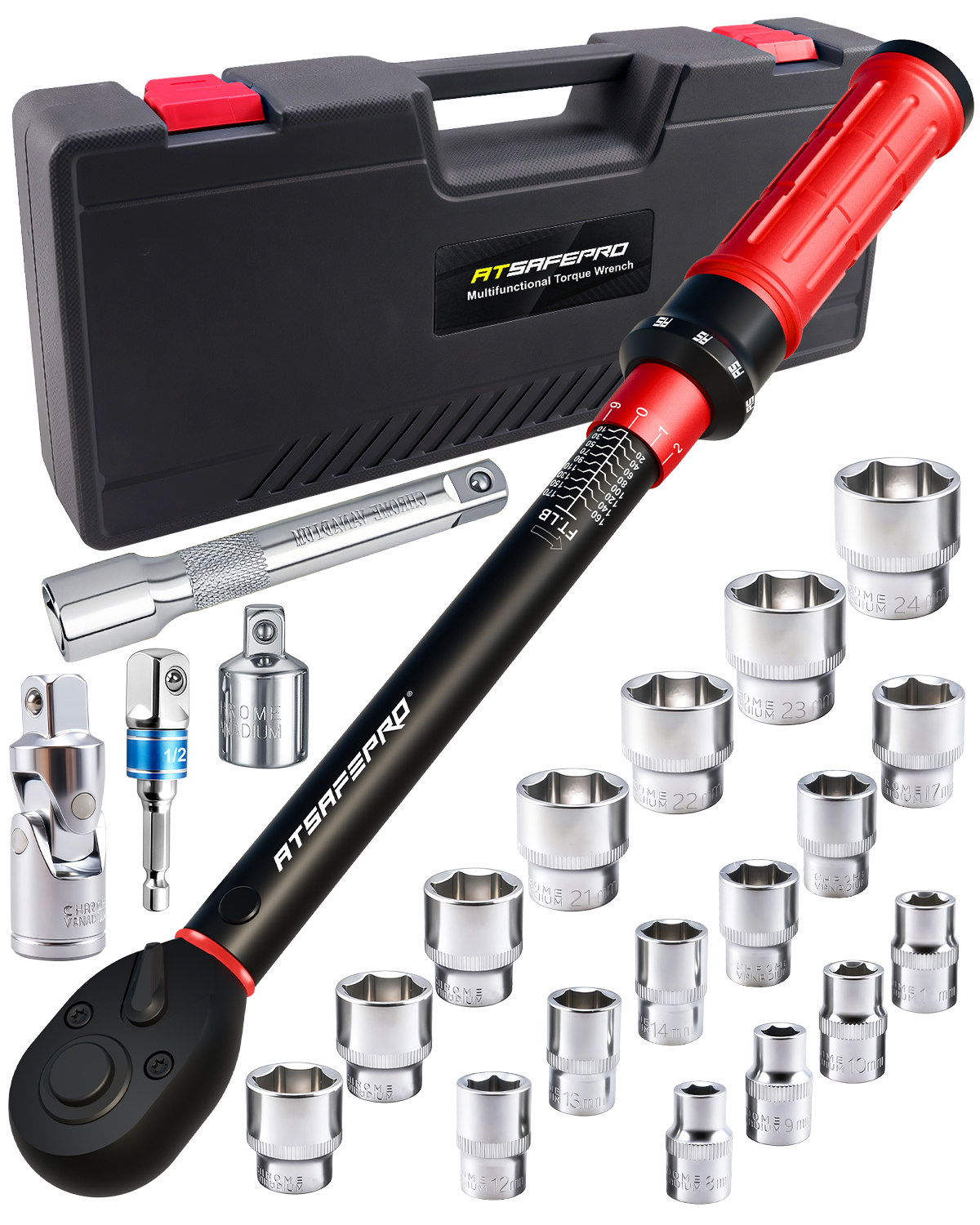
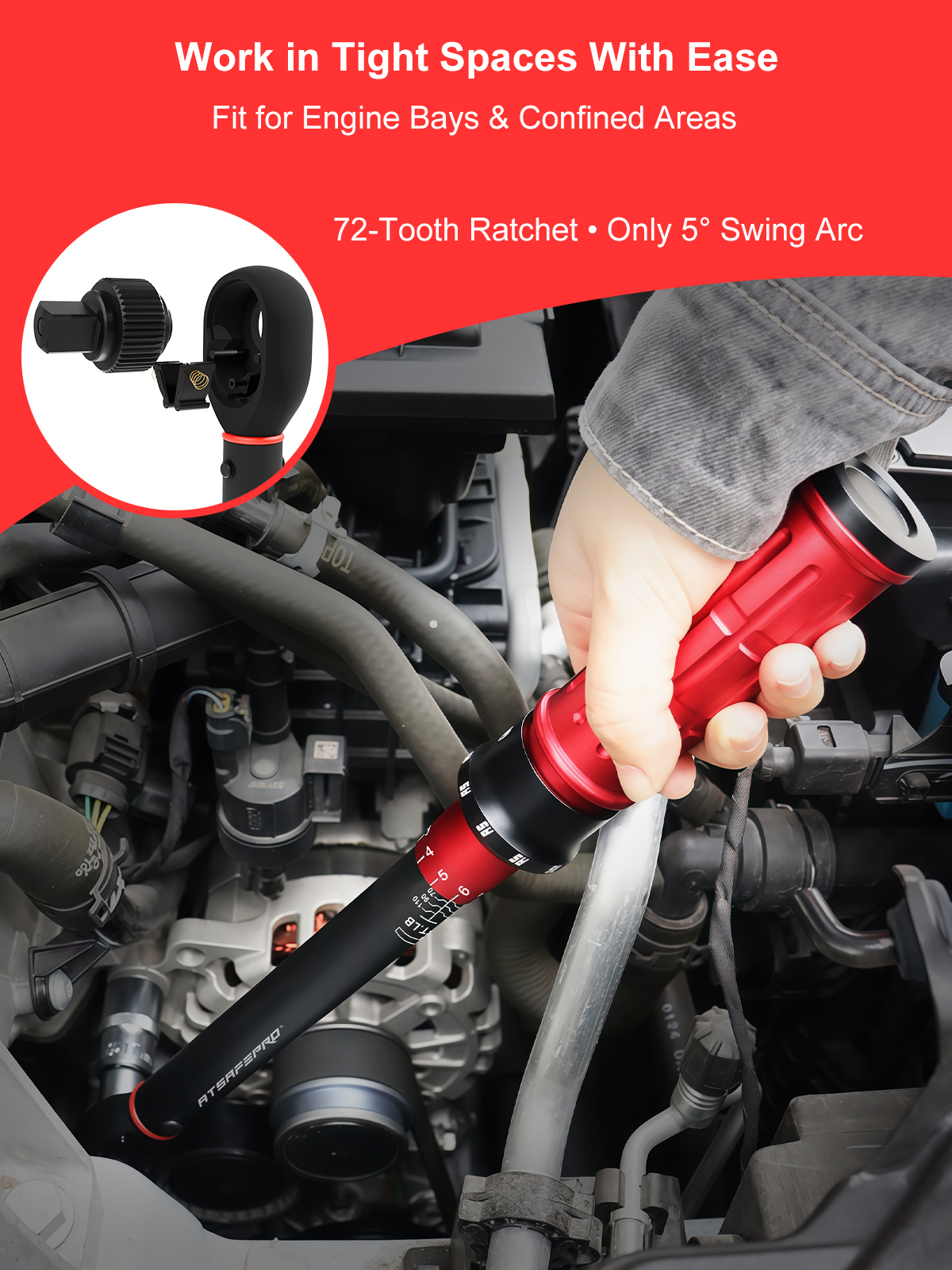
This kind of hand-operated torque wrench kit is aimed at controlled tightening, not speed. The visible setup suggests a click-type adjustable wrench with a ratcheting head, a printed torque scale on the shaft, and a lock or direction collar near the head. That is a familiar format in workshops because it is straightforward to use and easy to store with the included molded case and socket accessories.
What this kit appears to include
Based on the visible product details, this is more than a bare wrench. The kit seems built for practical, general-purpose use:
- A long red metal wrench body with a black textured grip
- A black ratcheting head
- An adjustable torque scale printed on the shaft
- A directional or lock adjustment collar near the head
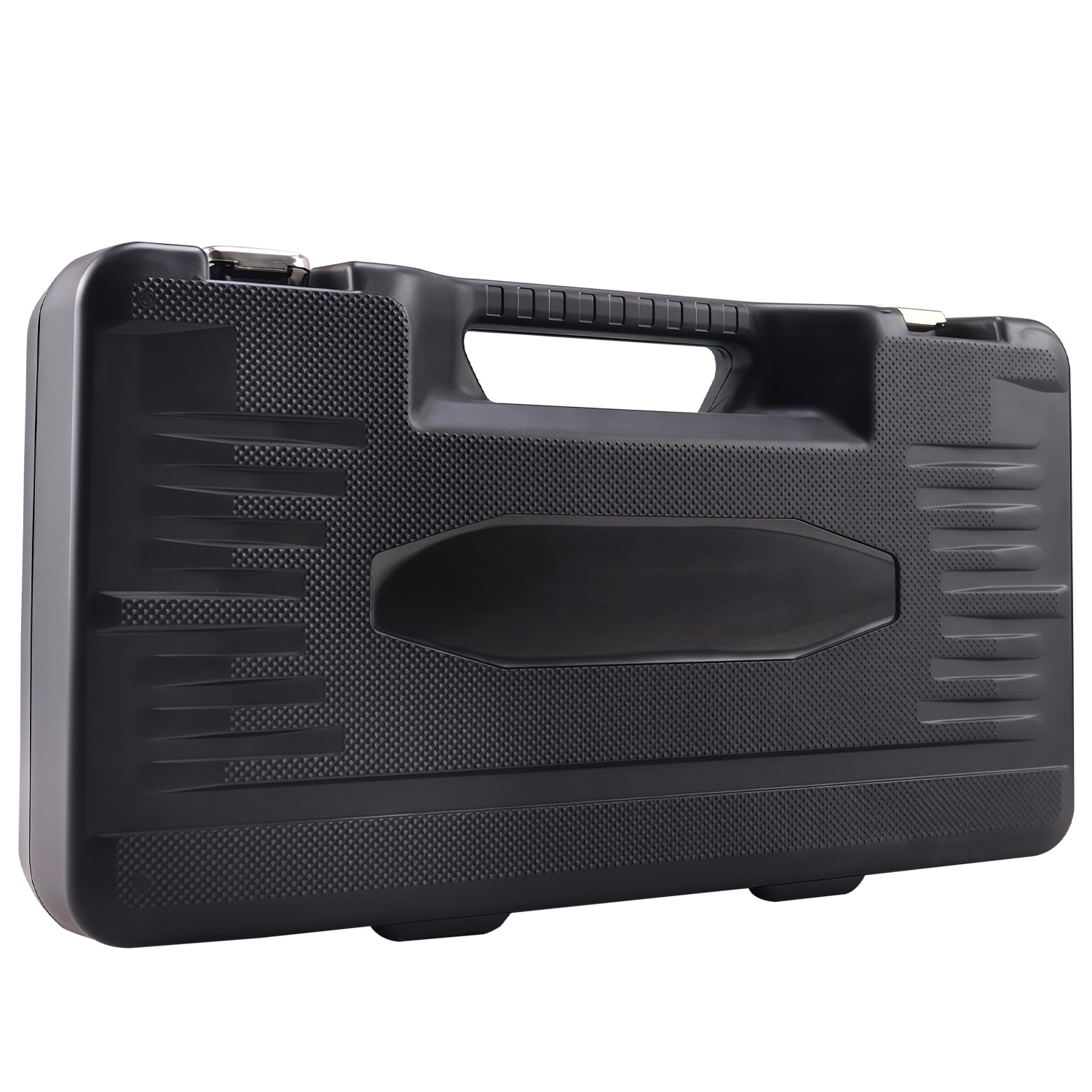
- A molded storage case
- Multiple socket accessories, including visible 17 mm, 19 mm, and 21 mm pieces
- At least one silver adapter or accessory socket piece
That mix points to a buyer who wants a compact kit for wheel service, light mechanical work, or assembly tasks where the fasteners are known and repetitive. The included sockets are particularly relevant for automotive lug nut work, since those sizes are commonly encountered in wheel service depending on vehicle and hardware.
Why torque control matters more than “tight enough”
A lot of workshop damage comes from vague tightening habits. People lean on a breaker bar or a standard ratchet and judge by feel. That can work for non-critical fasteners, but it is a weak habit around wheel nuts, engine covers, brackets, and other parts that depend on predictable clamping force.
A torque wrench gives the user a target. That is the real value. It helps answer a sourcing or maintenance question: do we need a simple tightening tool, or do we need repeatable assembly control? In most production-minded environments, repeatability wins. Even on a home garage bench, it prevents the slow accumulation of avoidable failures.
There is a small caution here. Torque wrenches are useful, but they are not magic. The wrench has to be set correctly, used on the right fastener, and handled with some discipline. If the tool is stored poorly, used beyond its range, or forced like a breaker bar, results become less trustworthy.
How the visible design supports daily use
The red anodized-looking handle/body is more than a visual detail. A long handle gives leverage and better control, while the black textured grip should help with hand placement and comfort. In real shop use, that matters when a technician is moving fast or working with oily gloves.
The black ratcheting head is another practical feature. It allows tightening in a confined area without removing the socket every turn. That is especially helpful around wheels, underbody brackets, and mechanical assemblies where clearance is limited. The directional collar near the head suggests the user can switch direction or lock settings, which makes the tool more adaptable during setup.
The printed torque scale is central to the whole design. Buyers should check that the scale is easy to read and, more importantly, that the intended torque range matches the jobs they actually do. The visible product data does not show the range, so that is something to confirm before purchase. If you are tightening wheel fasteners on passenger vehicles, you want a wrench that covers the necessary spec without living at the extreme top or bottom of its range.
Socket accessories: why the case matters as much as the wrench
A torque wrench kit is only useful if the right accessory is close at hand. The molded case is not a luxury item; it is part of the working system. It keeps the wrench body and sockets organized, and it reduces the odds that someone grabs the wrong piece or leaves the tool rolling around in a drawer.
The visible socket sizes — 17 mm, 19 mm, and 21 mm — are a practical mix for wheel service and similar mechanical jobs. The silver adapter piece adds flexibility, though its exact function is not fully visible. For buyers, this raises a useful procurement question: does the kit cover the jobs you expect, or will you still need to source extra sockets and adapters separately?
That is often where lower-cost kits either prove convenient or become clutter. If the included pieces match the work, the package is efficient. If not, you end up buying a second set anyway.
What kind of buyer this wrench is suited for
This type of kit usually fits three buyer profiles.
1. Automotive users
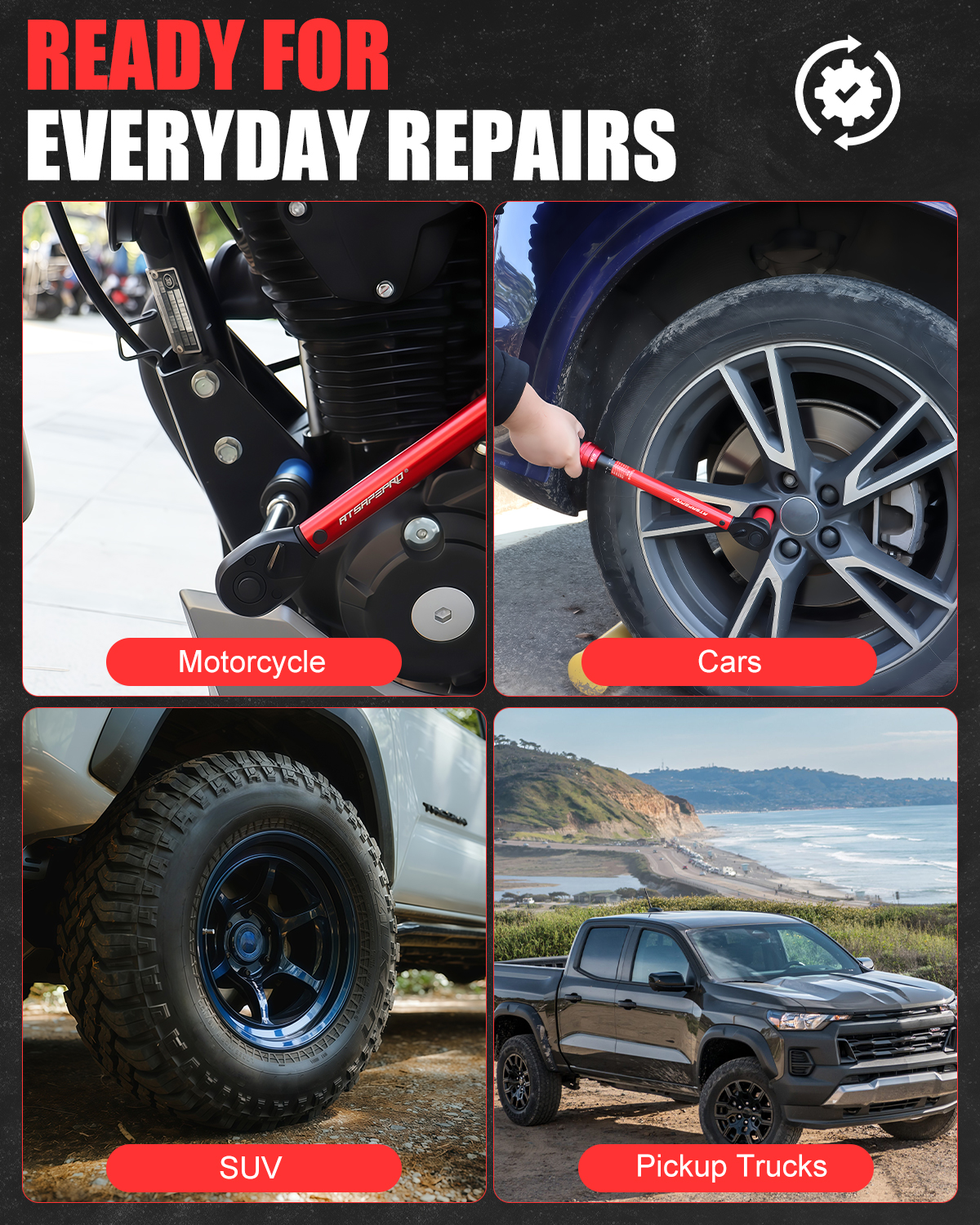
For wheel lug nut tightening, a torque wrench is one of the most useful tools in the box. It helps avoid uneven tightening and supports proper reassembly after tire changes, brake work, or suspension work. The included socket sizes make this use case especially obvious.
2. Motorcycle and small machine maintenance
Motorcycles often involve narrower clearances and more frequent fastener access. A ratcheting head and a manageable kit with sockets and a case can save time. The caveat is simple: confirm the drive size and torque range before assuming the set suits a specific bike platform.
3. General assembly and service work
For light mechanical assembly, benches, service carts, and maintenance departments, a controlled-torque hand wrench is a sensible tool to keep nearby. It helps standardize fastening when several operators are involved.
Selection criteria buyers should not skip
If you are evaluating an ATsafepro torque wrench for purchase, the visible features are only part of the picture. The missing specifications matter just as much.
Torque range
This is the first spec to verify. A wrench can look well made and still be wrong for the job if the range is too narrow or too broad.
Accuracy and calibration information
The available product details do not show a calibration standard or accuracy tolerance. That does not automatically mean the product is unsuitable, but it does mean a serious buyer should ask for documentation if the tool will be used in a shop or quality-controlled environment.
Drive size and socket compatibility
The kit includes accessories, but the actual drive size is not visible. Confirm that the sockets and adapters match your workflow. A mismatch here creates avoidable delay.
Handle comfort and visibility
The long red body and black grip are promising for usability, but in day-to-day work, the most important question is whether the scale can be read clearly under shop lighting.
Storage and transport
The included case is a practical plus for field work, fleet service, and mobile maintenance. Tool retention inside the case is worth checking, because a loose kit tends to lose parts quickly.
Common mistakes when using a torque wrench kit
A few errors come up again and again.
One is using the wrench like a regular ratchet to loosen stuck fasteners. That is rough on the tool and usually the wrong job for a torque wrench. Another is ignoring the torque setting after the job is done. Leaving the wrench under tension is not a good habit; the setting should be returned to its storage position if the manufacturer’s instructions call for that. A third mistake is assuming every fastener on a vehicle or machine should be tightened to the same number. They should not.
There is also a buyer mistake before the first use: buying a kit because it has a good-looking case and a few sockets, without checking whether the torque range, drive format, and accessory list actually fit the intended work.
FAQ
Is the ATsafepro torque wrench good for wheel lug nuts?
It appears intended for that kind of work, especially because the kit includes 17 mm, 19 mm, and 21 mm sockets. Still, the exact torque range should be checked before use to confirm it matches the vehicle specification.
Does the kit look ready for workshop use?
For general maintenance and light service work, yes, it looks organized and practical. The case, sockets, and adjustable wrench design are all useful features. For controlled production or calibration-sensitive work, buyers should ask for the missing technical documentation.
Are the materials fully identified?
Not completely. The visible parts suggest a metal wrench body with a coated or painted finish, plus coated or chrome-moly-style sockets, but the exact alloy and treatment are not confirmed in the supplied data.
What should I check before placing a bulk order?
Confirm torque range, accuracy information, drive size, socket compatibility, and whether the kit is pre-calibrated. If the tools are for shop distribution or service fleets, ask how the case holds the components during transport.
Final buying advice
If your work involves routine fastener tightening and you want a straightforward kit with a wrench, sockets, and storage case, the ATsafepro torque wrench format makes sense on paper. It looks practical rather than fussy, which is usually what technicians want. Just do not skip the technical questions that matter: range, accuracy, and compatibility.
For engineers and sourcing teams, the decision is less about appearance and more about fit for use. If the spec sheet lines up with your application, this kind of kit can be a sensible, low-friction addition to the tool crib. If not, it is better to keep looking than to buy a set that only seems complete at first glance.