Why an adjustable torque wrench kit earns its place in the workshop
When a fastener is only “tight enough by feel,” the result is often a repair that looks fine on the bench and fails later in service. That is the basic reason an ATsafepro torque wrench matters. For automotive work, light machinery, and general maintenance, controlled tightening is not a luxury; it is how you protect threads, gaskets, wheel studs, and the people who rely on the assembly holding together.
The useful thing about this style of tool is that it solves two problems at once: it gives the operator a measured tightening value, and it packages the wrench with the sockets and storage case needed for real shop use. That combination is what buyers usually want, even if they do not say it that way. They are not shopping for a single tool in isolation. They are buying a small system for repeatable fastening.
What the ATsafepro torque wrench set appears to be built for
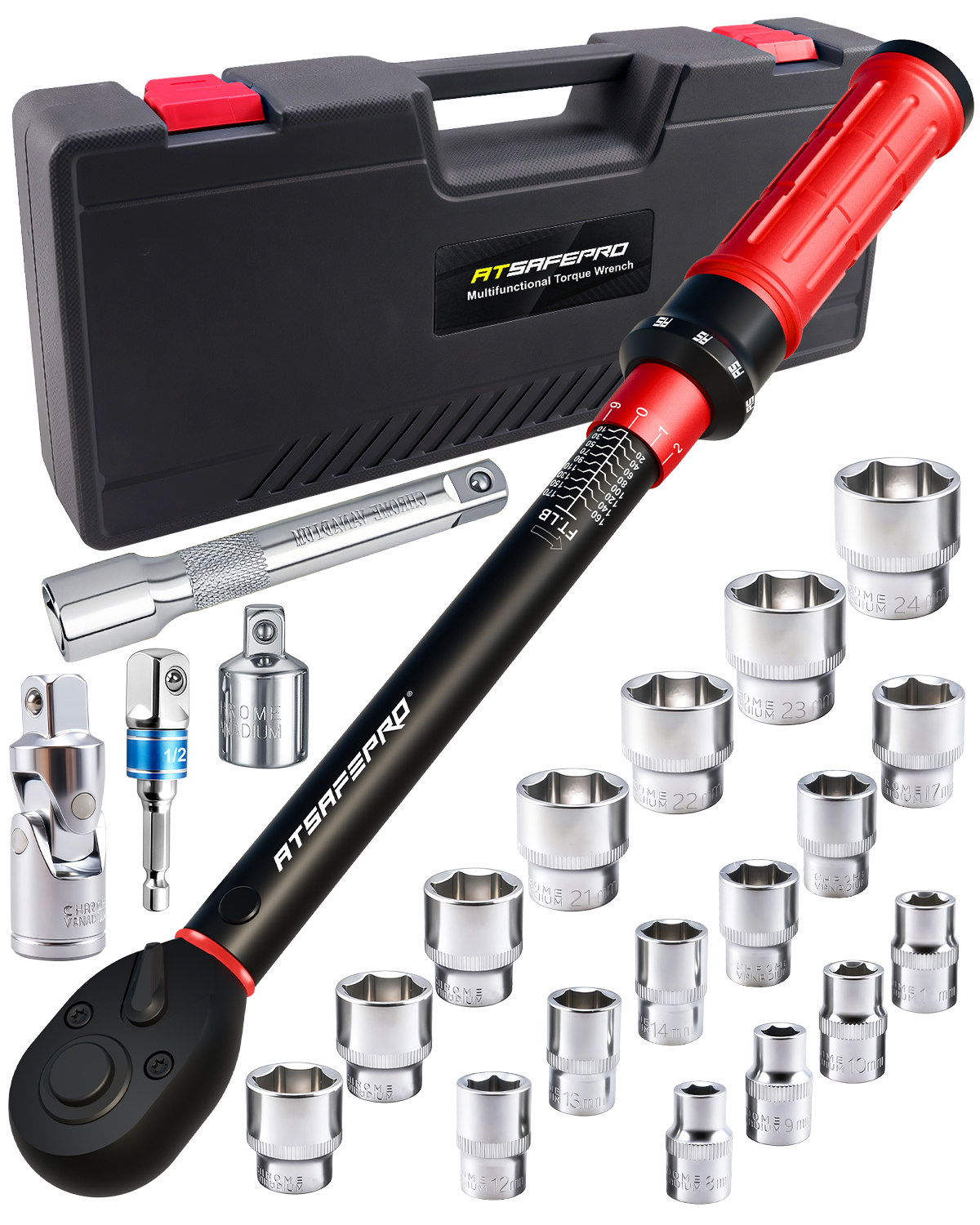
From the visible product details, this is an adjustable torque wrench kit with a long red-and-black metal wrench body, a ratcheting head, and torque scale markings on the shaft. The handle is knurled for grip, which is a practical detail that matters more than it sounds like it should. A smooth handle can become a nuisance when hands are oily, damp, or gloved.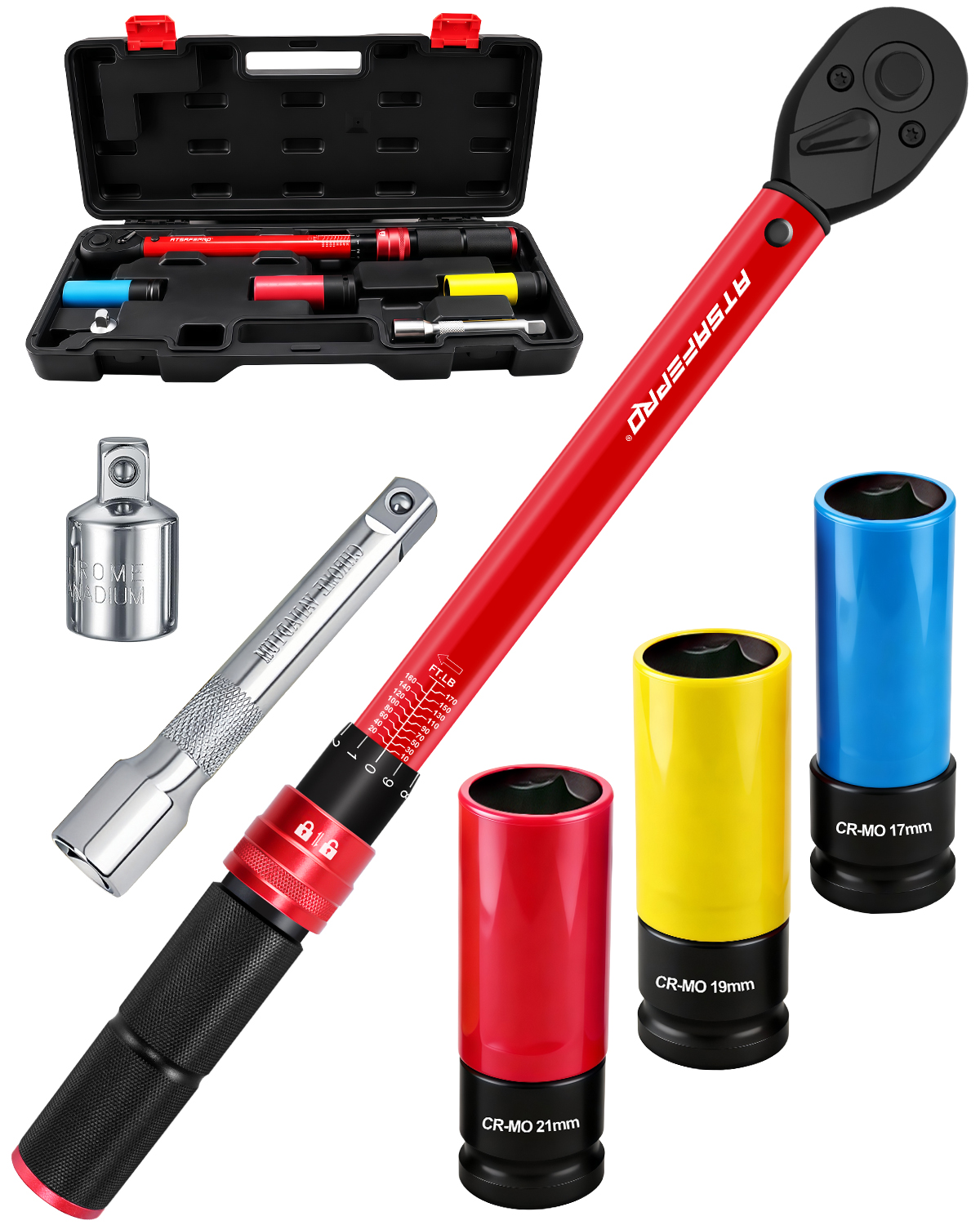
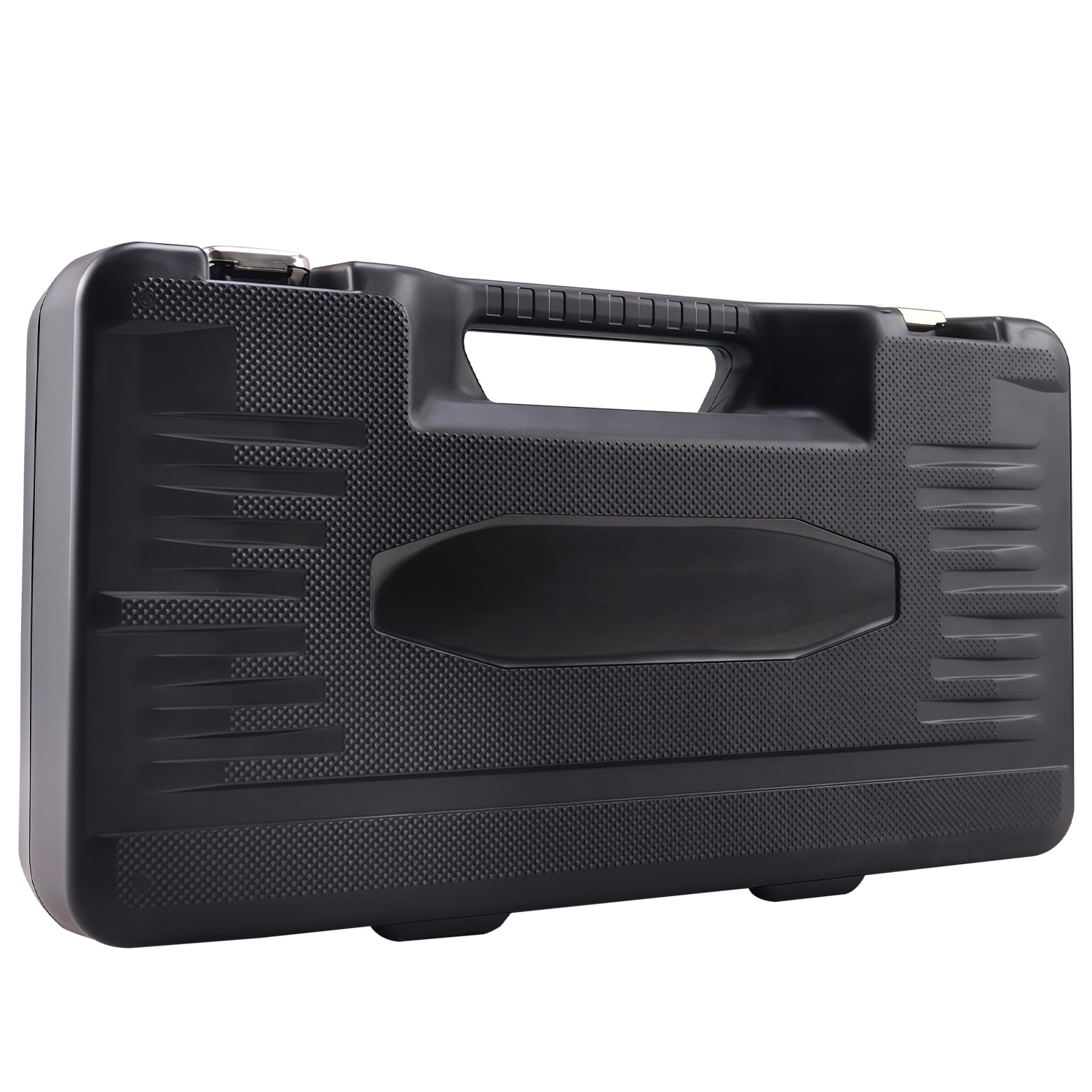
The set also includes a hard plastic carry case with molded slots, plus several sockets and adapters. Visible socket sizes include 17 mm, 19 mm, and 21 mm, which makes the kit immediately relevant to wheel and lug-nut work. The sockets are marked CR-MO, indicating chrome molybdenum steel. That material choice is common in heavy-duty sockets because it handles demanding service better than softer alternatives, though the exact performance depends on the specific manufacturing and heat treatment, which are not provided here.
The practical problem this tool solves
A fastening problem is rarely just “too loose” or “too tight.” In the field, it is usually one of three things:
The fastener was tightened inconsistently across multiple points, so a wheel, bracket, or cover sits unevenly.
The thread or stud was damaged by over-tightening, which creates hidden rework later.
The technician had the right socket but no controlled way to stop at the specified torque.
An adjustable torque wrench helps prevent all three. That is particularly important on wheels, suspension hardware, engine covers, machine guards, and assemblies where torque values are part of the design, not a suggestion. A buyer may think the main question is whether the wrench “feels solid.” More often, the real question is whether it will encourage consistent use by technicians who need fast, obvious operation.
Quick buyer takeaways
For sourcing or workshop planning, a set like this is most attractive when you need:
A torque wrench that can be set for repeated use rather than a fixed preset tool
A selection of sockets for common automotive sizes
A storage solution that keeps the wrench and accessories together
A kit that can move between shop, mobile service, and roadside use
If your use case is precision assembly in a controlled manufacturing line, you may want more detail on calibration, accuracy, traceability, and drive size than what is visible here. That is a small but important caveat. For field service and general mechanical maintenance, a durable kit with common socket sizes is often the more practical purchase.
How to read the value of the wrench body, not just the label
With torque tools, buyers often focus on the printed torque scale and ignore the rest of the build. That is a mistake. The long shaft, ratcheting head, and grip texture tell you how the tool will behave in day-to-day use.
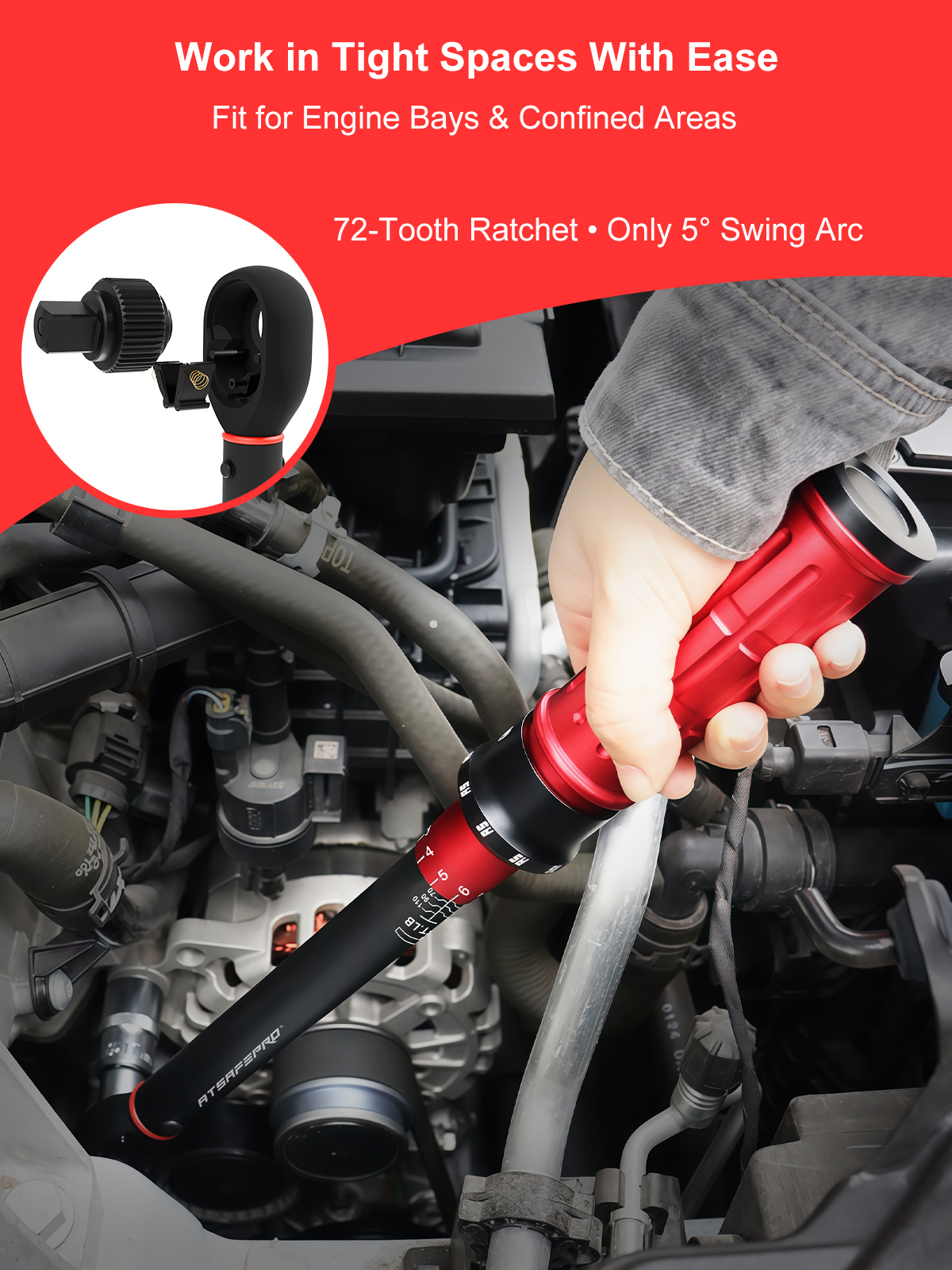
A long wrench body usually gives better leverage, which can make it easier to approach a torque setting smoothly. The tradeoff is that a longer tool can be less convenient in tight engine bays or cramped machinery. The ratcheting head is useful because it reduces repositioning during assembly, but the actual feel of the ratchet cannot be judged from an image alone. Likewise, the scale markings are necessary, yet the exact torque range is not clearly readable from the product data provided. Buyers should verify that range against their most common fastener requirements before placing a bulk order.
Why the case matters more than many teams expect
A hard case looks like a minor add-on until you start moving tools between jobs. A torque wrench that gets tossed into a drawer or left loose in a truck bed is more likely to be knocked out of calibration or damaged at the head. The molded case in this kit is not just packaging; it is part of how the tool stays organized and available. In a service environment, lost sockets and missing adapters are a constant drain on time.
Material choices and what they suggest
The visible materials suggest a fairly standard but sensible construction. The wrench body appears to be metal, likely steel, with a red coated shaft and black head and grip. That is consistent with many general-service torque wrenches meant for hand use. The sockets appear to be chrome molybdenum steel, which is a practical choice for stronger, harder-wearing socket applications.
There is one thing to keep in mind: CR-MO marking alone does not confirm impact rating or a specific service class. It signals a material family, not a full specification. Buyers who expect regular use with power tools should not assume compatibility unless the supplier states it clearly. For hand torque application, though, CR-MO sockets are a familiar and credible choice.
Where this kit fits best
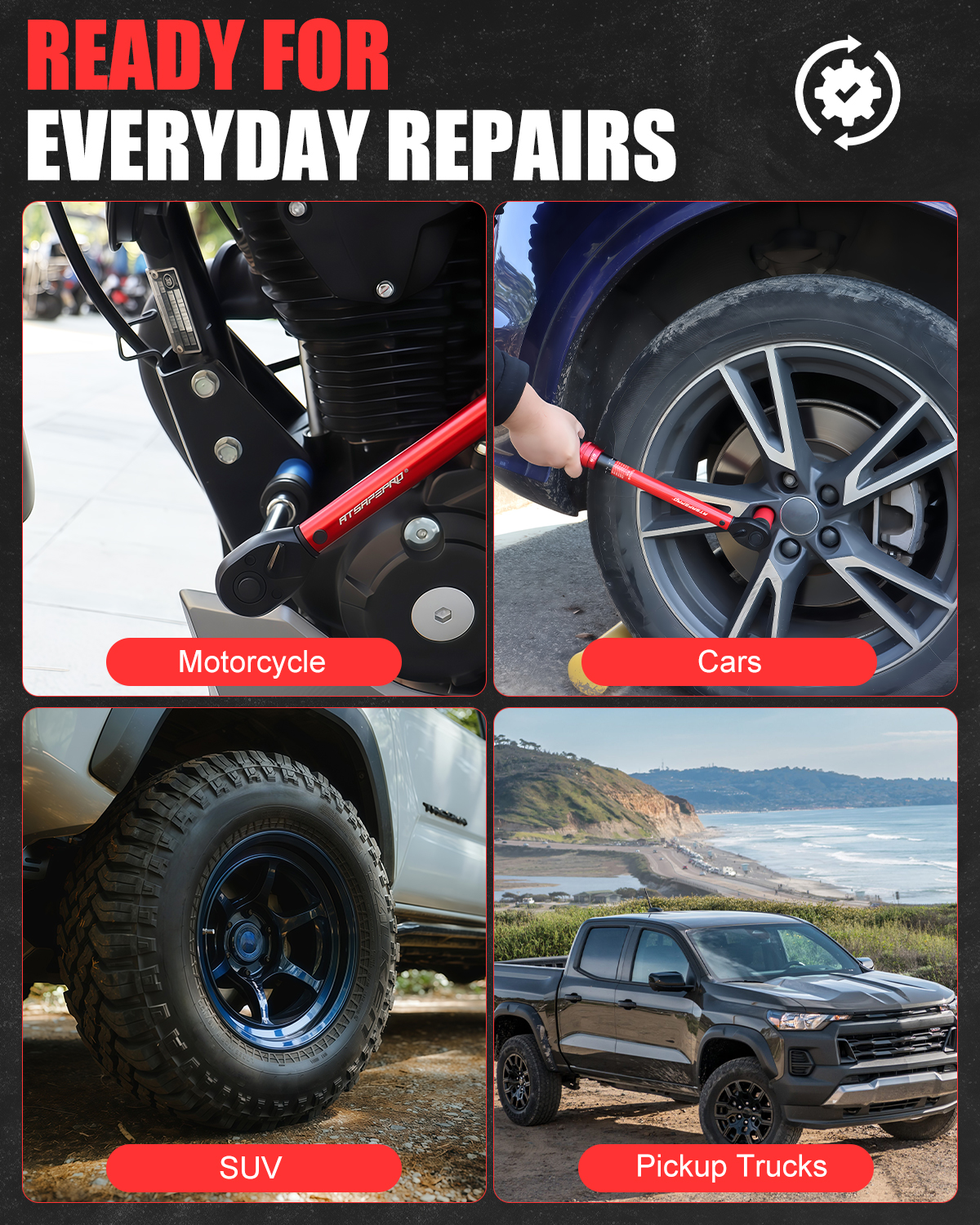
This type of torque wrench kit is a natural fit for tire shops, repair garages, fleet maintenance teams, small machine shops, and equipment owners who do their own upkeep. It is especially useful where technicians need to torque common fasteners without building a separate socket set around a bare wrench.
The included 17 mm, 19 mm, and 21 mm sockets point directly toward automotive wheel service. Those sizes are not unusual in that setting, and having them in one case reduces the chance that a technician reaches for an ill-fitting substitute. On a production floor, the kit can still be useful, but it is more of a service tool than a line-side precision instrument unless further documentation supports that use.
Common buying mistakes
One common mistake is buying by appearance alone. A robust-looking wrench is not automatically the right wrench. The first check should always be torque range. The second should be drive compatibility and accessory fit. The third should be whether the kit includes the socket sizes the team actually uses.
Another mistake is assuming every torque wrench should be treated the same way. If this tool is meant for repeated controlled tightening, it should be used as a torque tool, not as a breaker bar. That sounds obvious, but it is one of the fastest ways to shorten tool life or create bad readings.
A third mistake is skipping the question of calibration and verification. The product data here does not supply accuracy claims, so a buyer should ask for documentation before using the wrench in any process where traceability matters. That is a normal procurement step, not a sign that the product is weak.
How to evaluate this kind of kit before you buy
Start with the fasteners you actually service most often. If your work centers on wheel service, check whether the visible socket sizes cover your common lug sizes. If you handle machinery or general assemblies, check whether the torque range includes the middle of your working values, not just the extremes.
Then look at the handling details. The grip texture, the ratcheting head, and the case layout all affect throughput. In the field, convenience becomes compliance. A tool that is awkward to set or annoying to store tends to be used less carefully.
If you are comparing suppliers, ask for the exact torque range, the intended drive size, the calibration information, and any accessory list beyond what is visible in the image. Those are the practical purchasing questions. Everything else is decoration.
FAQ
Is this wrench only for automotive use?
No. The visible configuration suits automotive work well, especially wheel service, but the same kind of adjustable torque wrench is also used in machinery maintenance and general assembly work.
Does the kit include enough sockets for shop use?
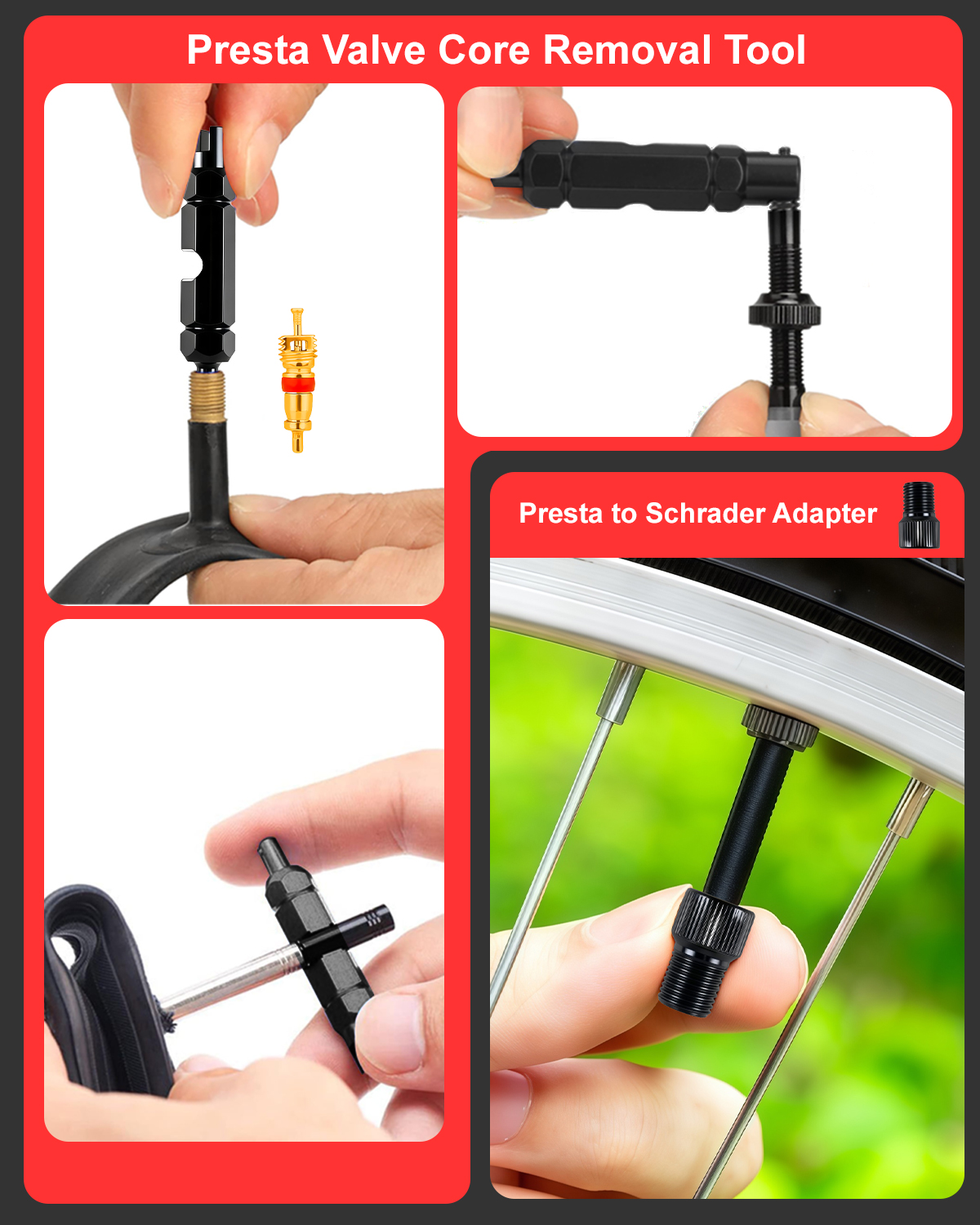
It includes several visible sockets and adapters, with 17 mm, 19 mm, and 21 mm clearly shown. Whether that is enough depends on the shop’s fastener mix. For many tire and service jobs, it is a useful start.
Can I use it for precision manufacturing assembly?
Possibly, but only if the supplier provides the torque range, accuracy, and calibration details required by your process. Those specifics are not confirmed in the provided data.
What a buyer should do next
If you are sourcing a workshop-ready torque wrench kit, this one is worth reviewing as a practical service set rather than just a single hand tool. The strongest signals are the adjustable torque wrench body, the molded storage case, the CR-MO socket material, and the inclusion of common automotive sizes.
The next step is simple: confirm torque range, verify socket compatibility with your most-used fasteners, and ask for any calibration or specification sheet before purchase. That is the difference between buying a useful kit and buying a tool that only looks ready for work.