Why a GODESON Digital Caliper Still Matters in a Shop Full of “Smart” Tools
A GODESON Digital Caliper looks simple at first glance, and that is part of the appeal. In a workshop, machine shop, or inspection bench, the real job is not to look advanced; it is to give a measurement quickly, repeatably, and without making the operator fight the tool. For engineers and sourcing teams comparing hand tools, this is where a digital caliper earns its keep. It measures external, internal, step, and depth dimensions, which makes it a practical catch-all for day-to-day dimensional checks.
The point is not just convenience. In fabrication and maintenance work, a small measurement error can turn into a rework issue, a bad fit, or a part that should never have left the bench. If you are choosing a caliper for production support, incoming inspection, or general workshop use, you are really deciding how much durability, readability, and environmental protection you need in one handheld instrument.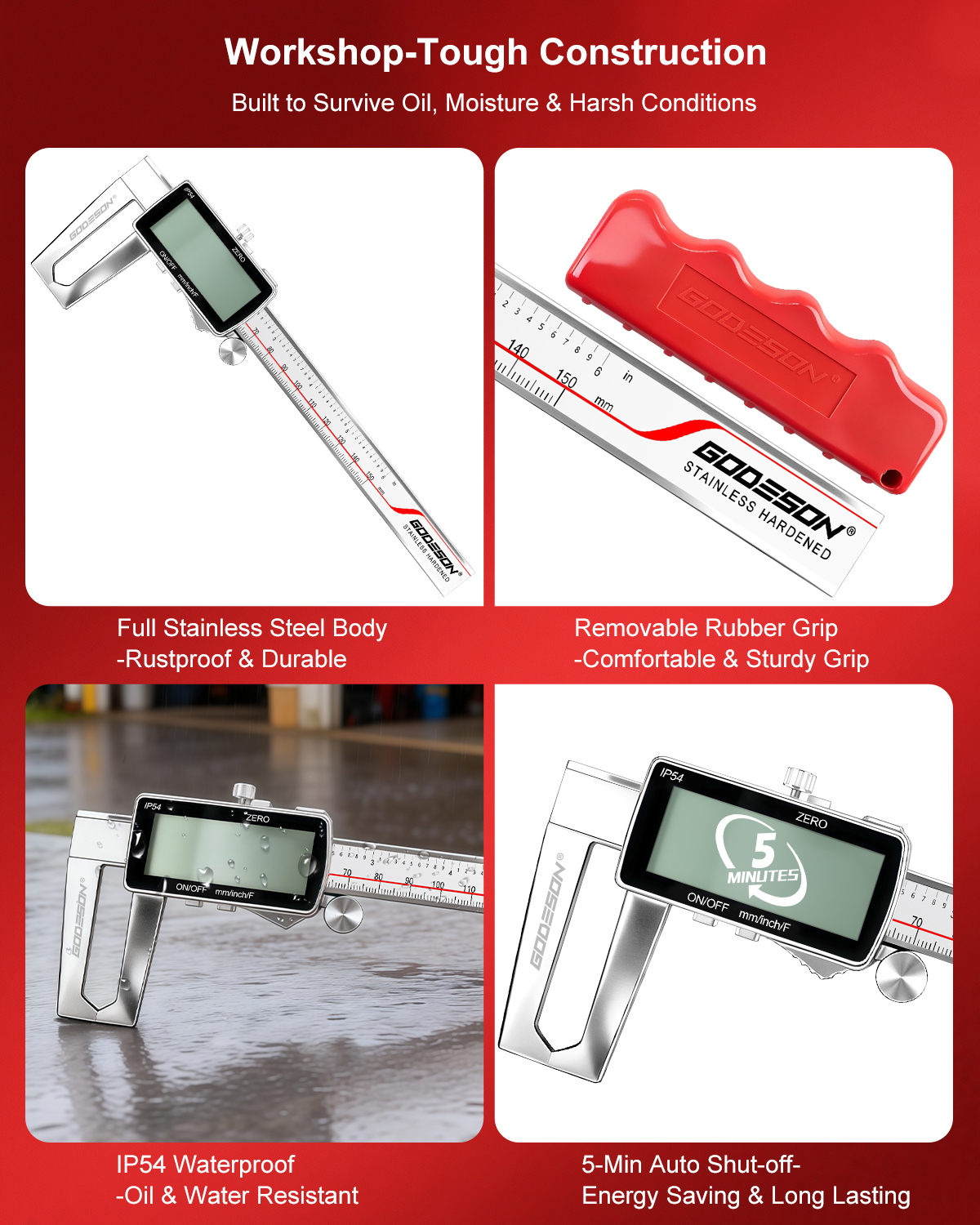
What the tool is built to do
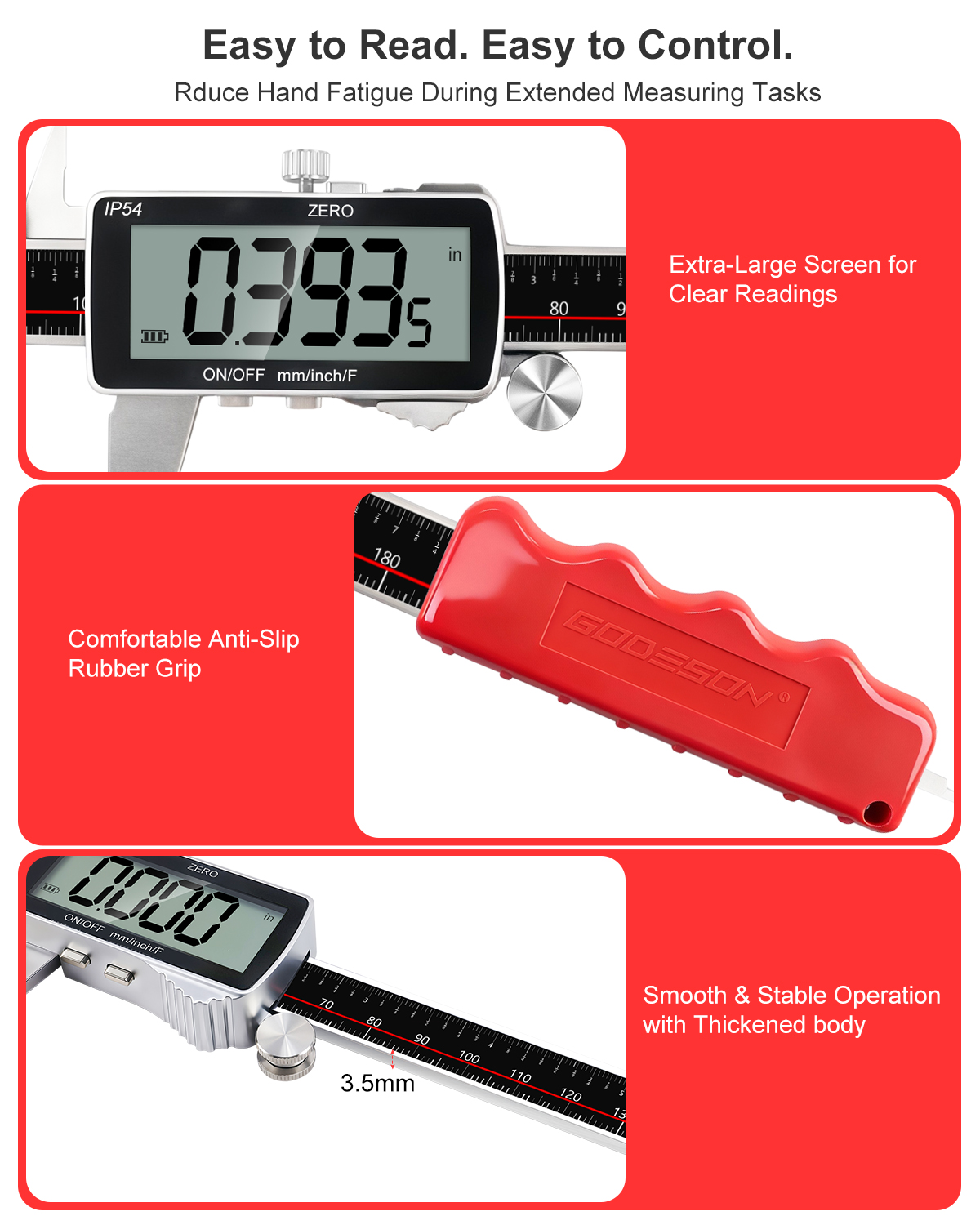
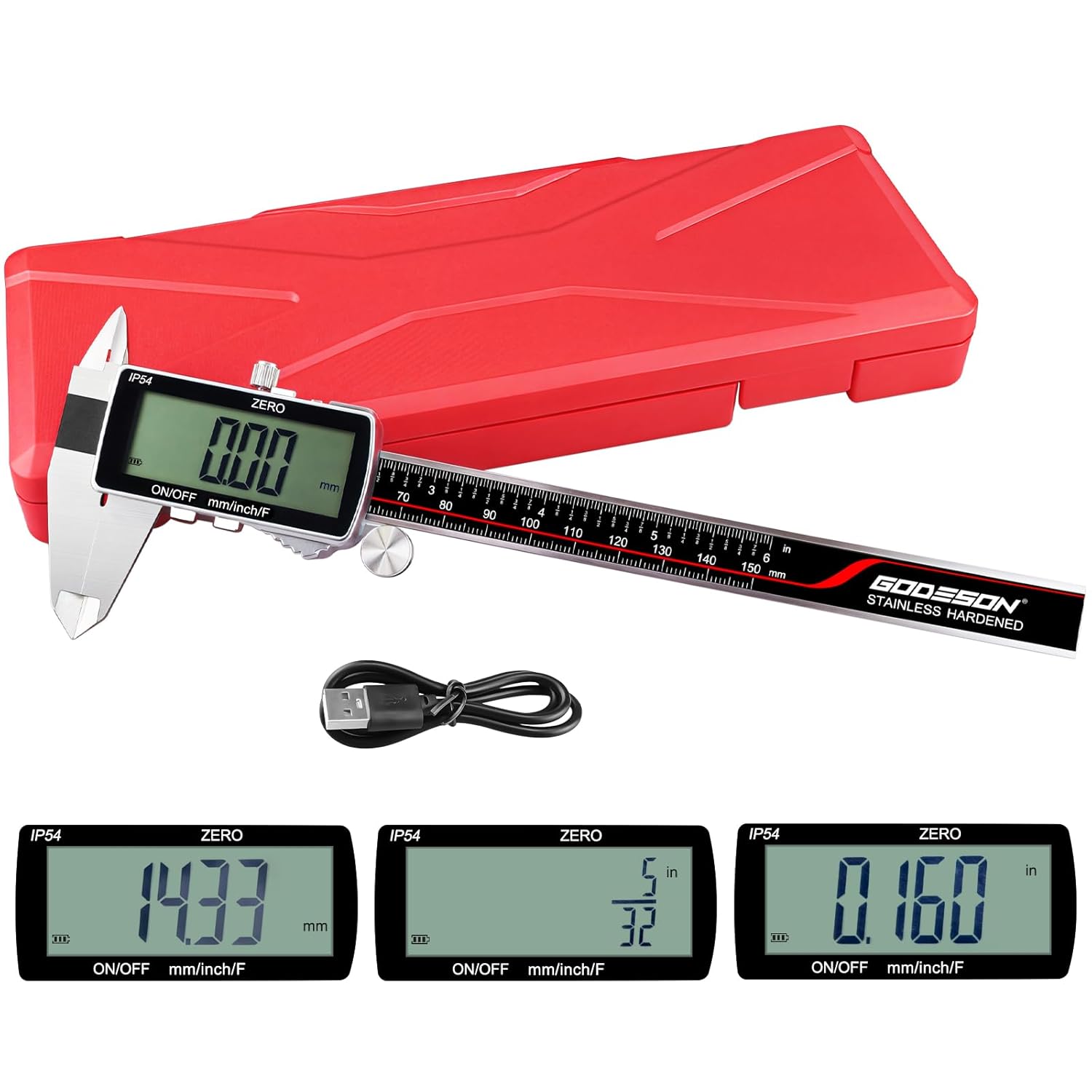
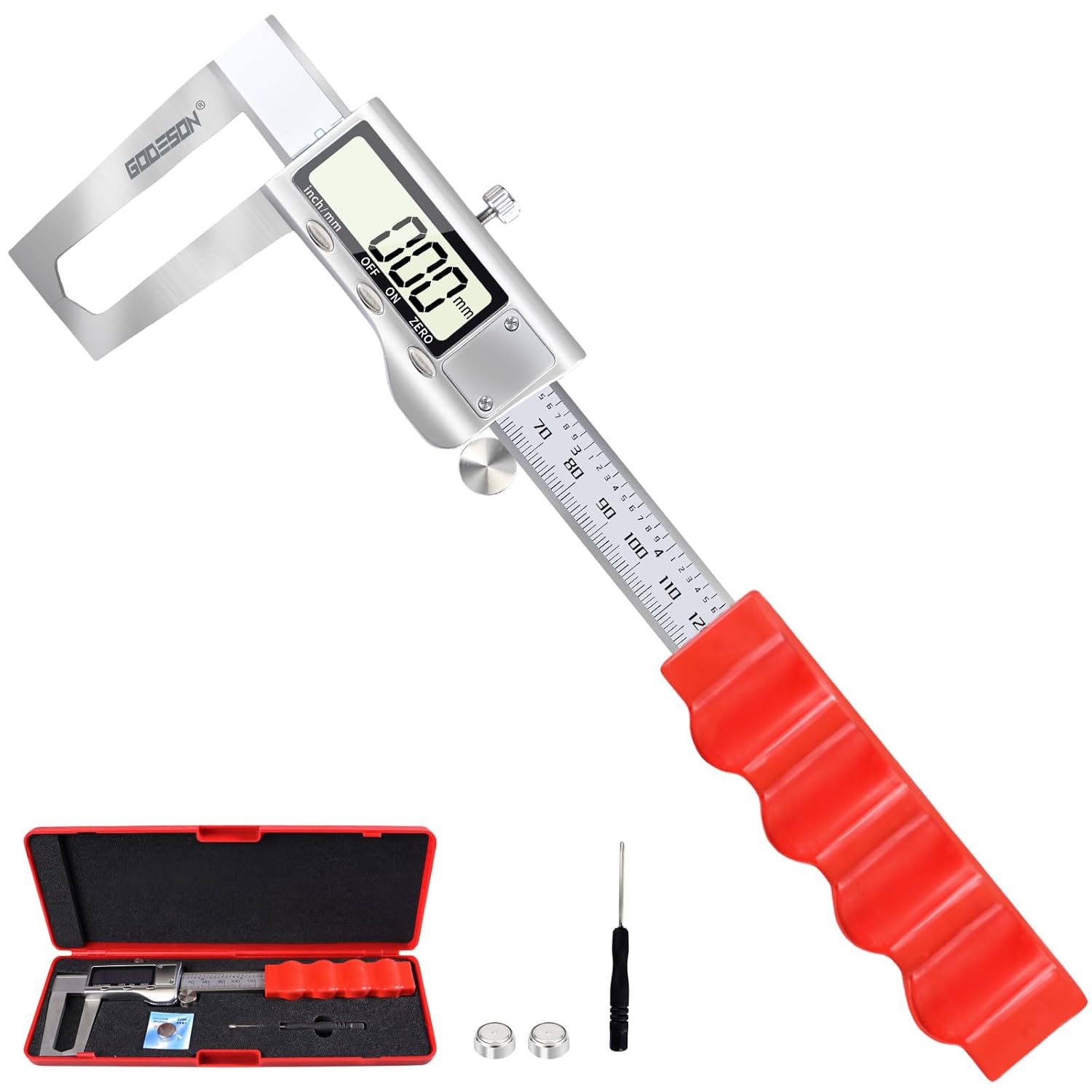
This type of digital caliper is a precision measuring instrument with a long linear beam, a sliding carriage, fixed and movable jaws, and an LCD display. The image and product notes indicate a stainless-steel construction with a brushed metal finish, a visible metric scale, and an IP54 marking. That combination tells you a lot about the intended use case even without a full spec sheet.
It is designed for measurements that come up constantly in the shop:
- Outside diameter or thickness of a part using the external jaws
- Inside width or bore size using the internal jaws
- Step dimensions on shoulders, flanges, and recesses
- Depth measurements for slots, holes, and cavities
That versatility is why calipers tend to sit on benches where parts are still in flux. A machinist may use one to verify a turned diameter. A fabricator may check stock thickness before cutting. Maintenance teams often use them for replacement parts that are close but not identical to the original.
Why the stainless-steel body and IP54 marking matter
For many buyers, the headline feature is not the display. It is the body. Stainless steel construction is a practical advantage in real shop conditions because calipers are handled constantly and often live near coolant, oil mist, and metal dust. The notes provided describe the body and jaws as stainless-steel-looking, with a brushed surface. The exact alloy is not stated, so it is better to treat that as a material cue rather than a manufacturing guarantee, but the intent is clear: this is aimed at tougher work than a light-duty plastic caliper.
The IP54 marking is also worth attention. In plain language, it suggests a degree of protection against dust and splashing water. That is useful in machining, fabrication, and maintenance settings where a tool may be exposed to airborne grit or an occasional splash. It does not mean the caliper should be abused, washed down, or treated like a sealed industrial sensor. Still, compared with an unprotected budget caliper, that level of environmental resistance can make the tool more believable in day-to-day shop use.
One small caution: IP54 tells you the product is designed with some protection in mind, but the exact test standard and certification details are not shown in the provided data. Buyers who need formal compliance should ask for documentation rather than assuming the marking covers every procurement requirement.
How to evaluate it against other digital calipers
When sourcing a digital caliper, the decision usually comes down to more than price. The easiest comparison is to look at four practical questions.
1. Will it survive the environment?
If the caliper will live in a clean metrology room, a lighter tool may be fine. If it will be used near coolant, chips, and occasional contamination, a stainless-steel body and IP54-rated protection start to matter more.
2. Is the display easy to read in real work?
A visible LCD display helps reduce operator hesitation. That matters when teams are moving fast or sharing tools across shifts. Readability is not a luxury feature; it is part of measurement discipline.
3. Does the beam length suit the work?
The product image suggests a longer beam and therefore an extended measurement range, but the exact range is not readable with confidence. That is an important unknown. Do not assume a “long” caliper automatically covers your largest parts. Check the actual range before buying.
4. Can the tool handle mixed measurement tasks?
A caliper that can do external, internal, step, and depth readings can replace several less flexible tools at the bench. That can simplify training and reduce clutter, though it does not replace micrometers or bore gauges where tighter control is required.
Where this type of caliper fits best
A GODESON Digital Caliper is most useful where speed and versatility matter more than ultra-specialized metrology. In practice, that means:
- Machine shops checking machined parts during setup and first-article work
- Metalworking and fabrication teams verifying stock and cut dimensions
- Maintenance departments identifying replacement parts and wear dimensions
- Inspection stations handling routine go/no-go-adjacent dimensional checks
- General workshop measurement where the tool may see dust or light splashes
It is less appropriate when the measurement task is narrow and demanding, such as very small bore work, tight tolerance verification, or controlled laboratory inspection. A caliper is a versatile shop instrument, but it should not be asked to do a micrometer’s job.
Common mistakes buyers make
The first mistake is treating all digital calipers as interchangeable. They are not. A tool that looks similar may differ in beam length, resolution, material quality, display clarity, and environmental resistance. If the procurement team only compares photos and price, the result is often a drawer full of tools that are fine on paper but inconvenient in use.
The second mistake is overreading the IP54 marking. It is a useful clue, not a promise of indestructibility. A caliper still needs normal care: wipe it down, store it properly, and avoid leaving chips in the beam.
The third mistake is assuming the visible metric scale is a substitute for checking the digital readout. It is not. The scale is useful for reference and backup, but the reading workflow depends on the LCD and the smooth movement of the slide.
The fourth mistake is forgetting the basics of handling. A caliper with stainless-steel jaws can still be knocked out of alignment if it is dropped. In the shop, the softest part of the process is often the operator’s attention, not the tool body.
How to specify one for purchasing
If you are buying for a team rather than a single bench, write the requirement around use conditions instead of brand language. That keeps the discussion practical.
A workable spec would cover:
- Measurement types required: external, internal, step, depth
- Body material preference: stainless steel or equivalent shop-duty construction
- Environmental exposure: dust, coolant mist, light splash resistance
- Scale system: metric, or metric plus imperial if needed
- Beam length or measuring range needed for your largest parts
- Display readability and operator ergonomics
For this particular product, the stainless-steel construction and IP54 marking are the visible selling points. The product image also shows a knurled thumb wheel or lock area, which is a useful detail because a positive-feeling slide and lock make bench work less frustrating. That kind of tactile feedback matters more than marketing copy usually admits.
Practical buying advice for engineers and sourcing teams
If you are evaluating a GODESON Digital Caliper for workshop deployment, ask for the numbers that are not visible in the image: exact measuring range, resolution, accuracy, battery type, and any formal test documentation tied to the IP54 claim. Those are not minor details. They determine whether the tool fits a production line, a maintenance cart, or just a general-purpose bench drawer.
For a buying team, it also helps to define the use case in plain language. For example: “routine dimensional checks in a metalworking environment with coolant exposure” is more useful than “precision caliper required.” The first phrase helps the supplier propose the right tool; the second invites guesswork.
If the caliper is for shared shop use, consider whether operators need a simple, durable unit more than a feature-heavy one. In many plants, the best tool is the one people actually trust and keep using.
FAQ: quick questions buyers usually ask
Is this caliper only for metric work?
The visible scale is metric. If imperial use is required, confirm whether a dual-scale version exists rather than assuming it does.
Can it be used around coolant or dust?
The IP54 marking suggests some protection against dust and splashes, which makes it more suitable for shop environments than a basic open caliper. That said, it is still a measuring tool, not a sealed industrial instrument.
Does stainless steel automatically mean better accuracy?
Not automatically. Stainless steel mainly helps with durability and wear resistance in practical handling. Accuracy depends on the full design and manufacturing quality, which are not fully verifiable from the image alone.
Is this a replacement for micrometers?
No. It is a flexible general-purpose measuring tool, but micrometers and specialized gauges are still the better choice when tolerances get tight.
What to do next
If your team needs a rugged everyday caliper for workshop and industrial measurement, the GODESON Digital Caliper is worth a closer look because it combines a stainless-steel body, digital readout, metric scale, and IP54-level environmental protection cues in one tool. Before purchase, verify the exact range and measurement specifications, then match the tool to the environment and the parts you actually measure. That simple check prevents a lot of buyer’s remorse later, especially when the caliper has to earn its place on a crowded bench every single day.