What problem does an ATsafepro tire pressure gauge solve?
An ATsafepro tire pressure gauge sits in a very practical corner of the workshop: it helps a driver, technician, or fleet operator check tire inflation without guessing. That sounds ordinary until you remember how many tire complaints begin with the same small problem: a tire is not quite where it should be, and nobody notices until wear, fuel use, handling, or heat becomes an issue. In that sense, this kind of mechanical gauge is less about gadgets and more about control.
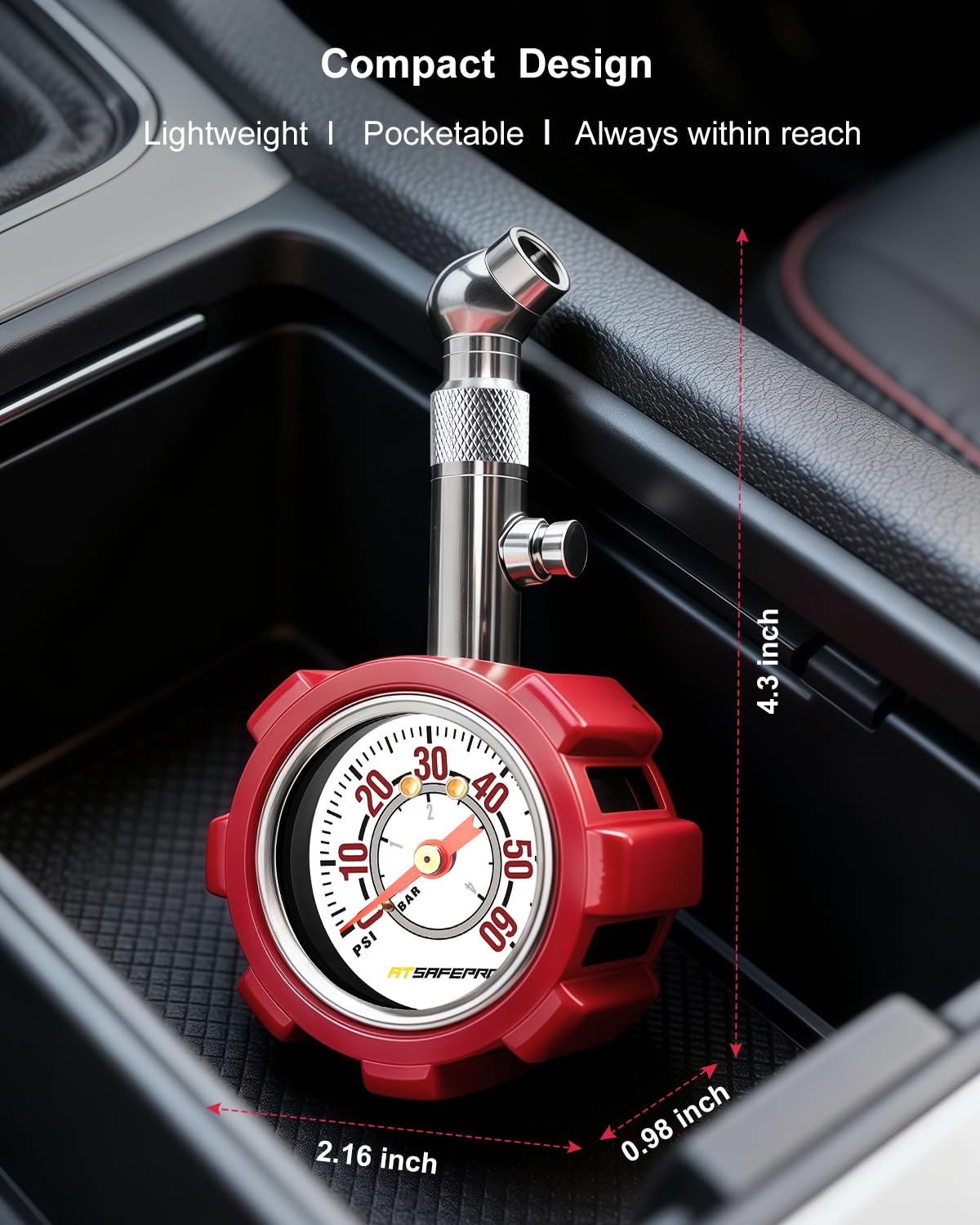
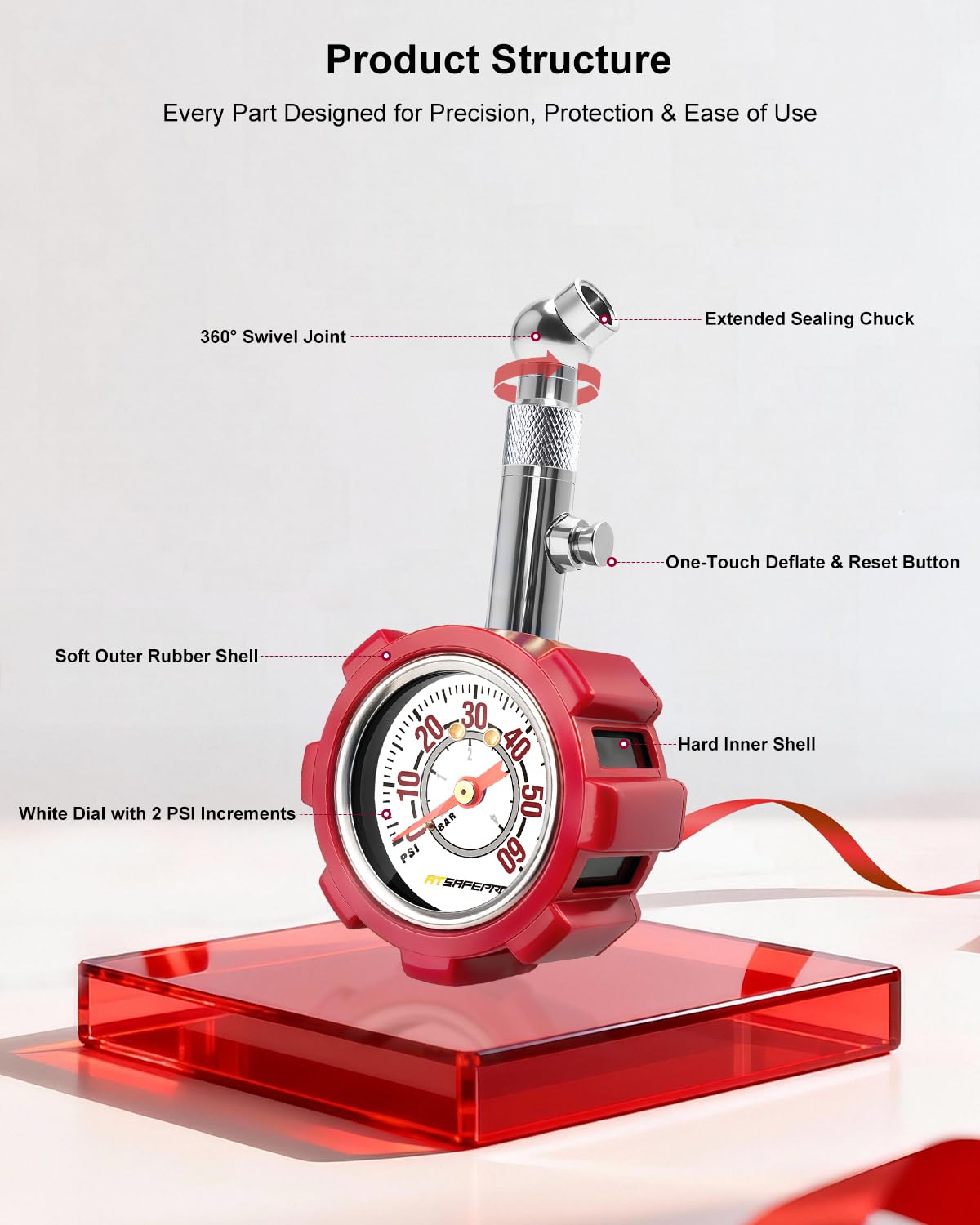
From the visible design, this model appears to be an analog tire pressure gauge or air inflator gauge with an angled chuck head, a round dial, and a side-mounted plunger or button that likely supports controlled bleed-off. The dial shows both PSI and BAR, with the outer scale visible up to 60 PSI. That makes it useful for everyday vehicle pressure checks, topping off tires, and possibly releasing excess air during service. Exact accuracy class, calibration status, working pressure rating, and hose details are not confirmed here, so buyers should not assume more than the visible features suggest.
Why do shops still use analog gauges?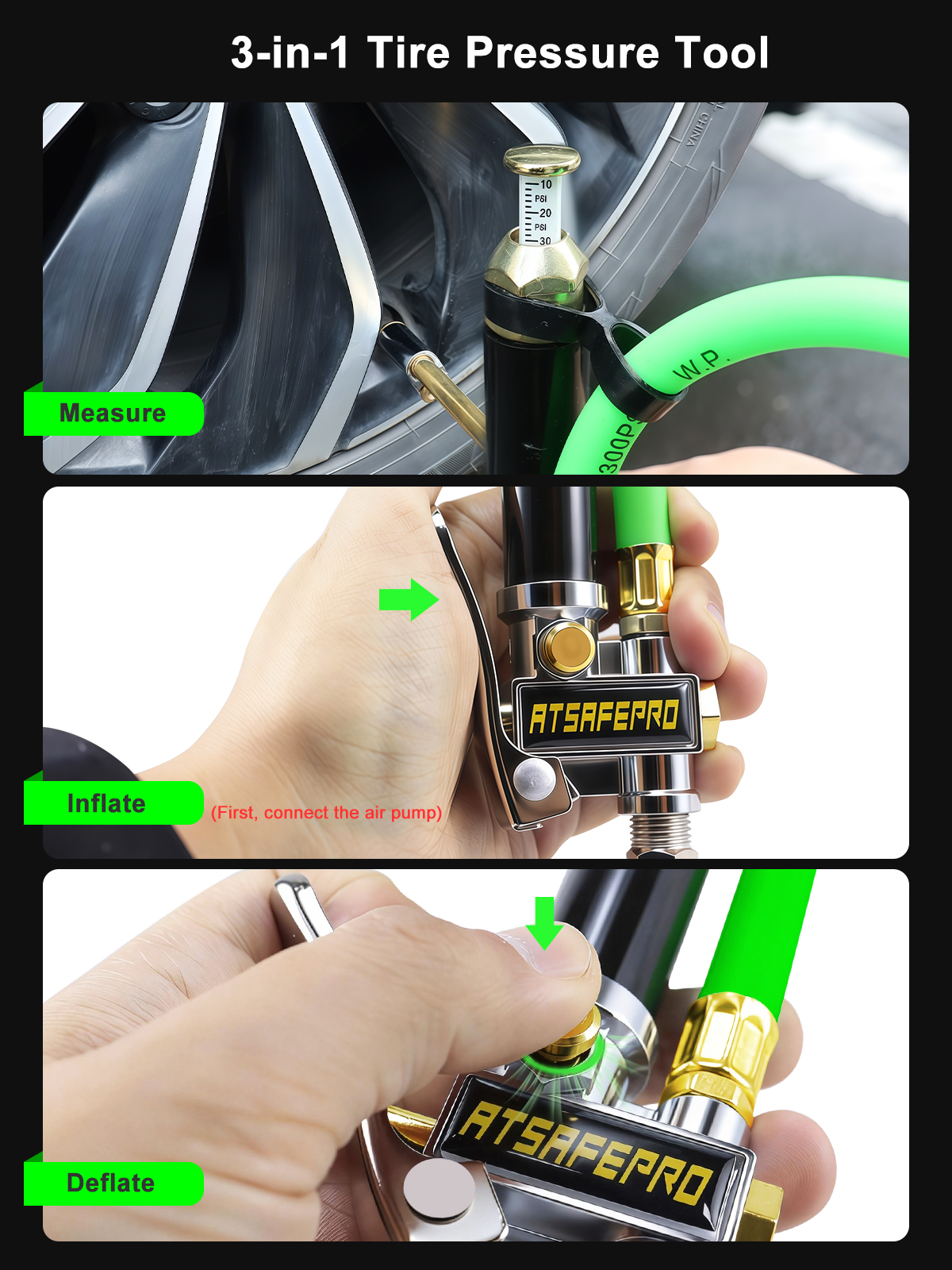
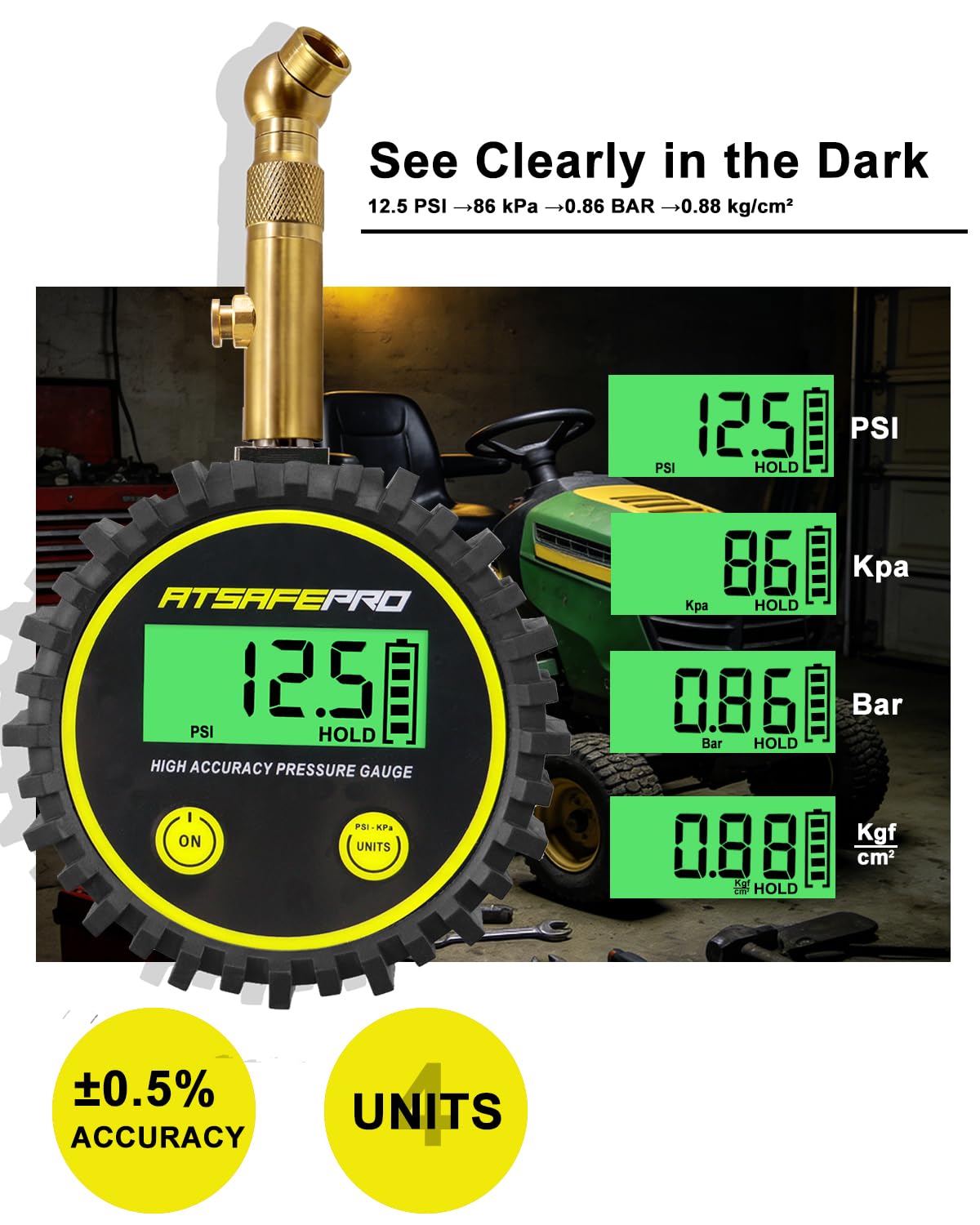
Digital tools get most of the attention, but analog pressure-measurement hardware keeps a firm place in garages and tire service bays. The reason is simple: a dial gauge is immediate, durable in the right setting, and easy to read at a glance when a technician is already standing at the wheel. There is no battery to manage and no menu to scroll through.
For tire shops, compressor accessories, fleet maintenance, and general automotive service, that can be enough. A shop often needs a gauge that is physically robust, quick to deploy, and familiar to different operators. The polished metal stem, knurled grip section, and protective lobes on the housing suggest a tool meant to survive daily handling, not sit in a drawer like a specialty instrument. Of course, analog does not automatically mean better. It means simpler, and sometimes that is exactly the point.
What should buyers notice first on this gauge?
The first thing is the dial layout. A dual-scale face with PSI and BAR is helpful because it reduces conversion mistakes, especially in mixed-service environments or in shops that work with vehicles from different markets. A clear face also matters more than many buyers expect; if the markings are crowded or the pointer is hard to distinguish, the gauge loses value fast.
The second thing is the chuck head. An angled connector can make access easier around tight wheel spokes and awkward valve positions. That is a small detail until you use the tool all day. The third thing is the bleed control. If the side button is indeed a release valve, then the gauge may support controlled deflation when pressure comes in too high after inflation. That is useful in tire service, but it also means the user needs a steady hand. Overcorrecting pressure by repeatedly bleeding and refilling wastes time and can lead to sloppy results.
How is this type of gauge typically used?
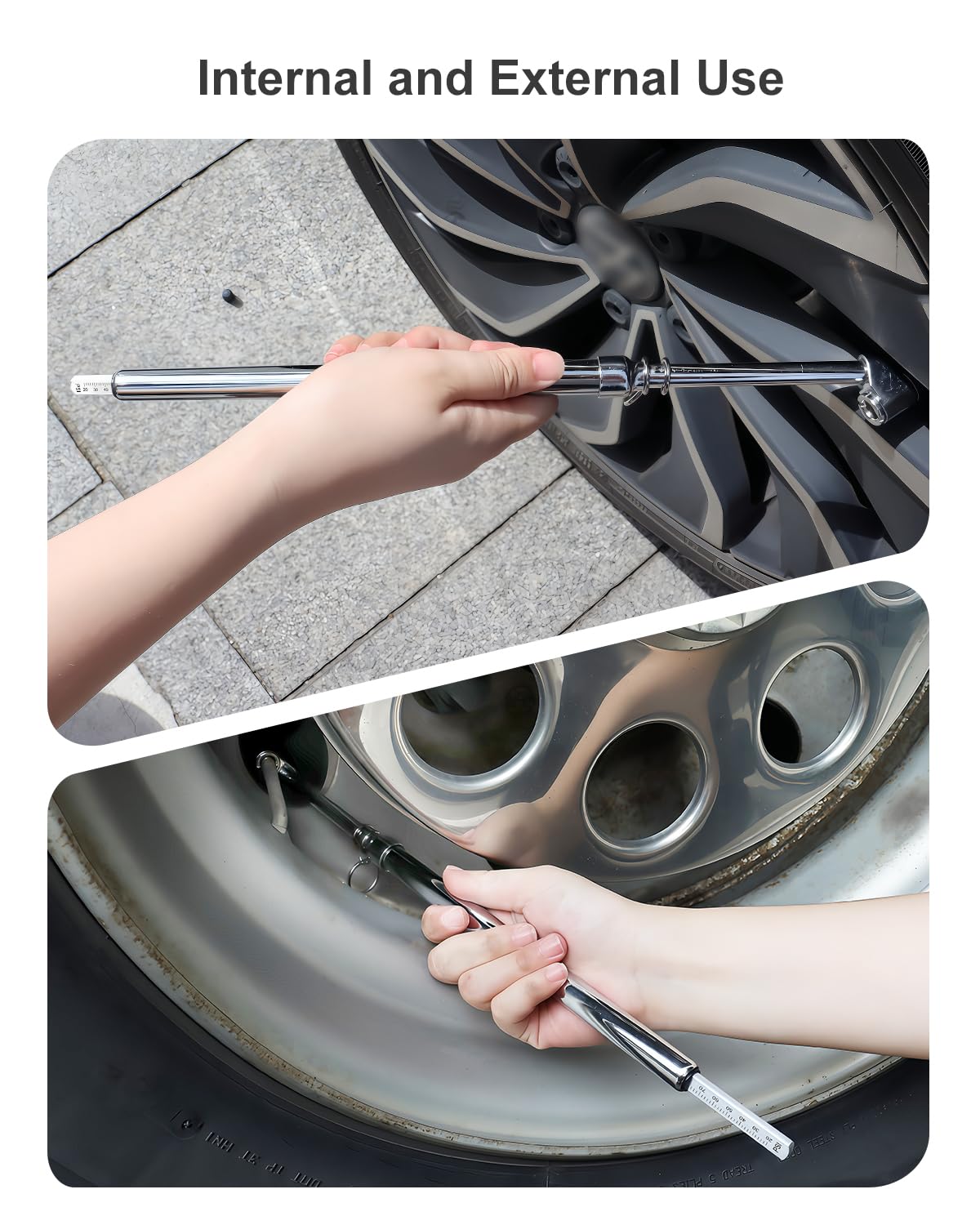
The basic workflow is straightforward. The chuck is aligned to the valve stem, the reading is taken, and the operator decides whether to add air, leave it alone, or bleed off pressure. In a shop setting, this is often done as part of a broader inspection routine rather than as a standalone task. Tire condition, load, and operating environment still matter, so a reading should be interpreted in context, not treated as a magic number.
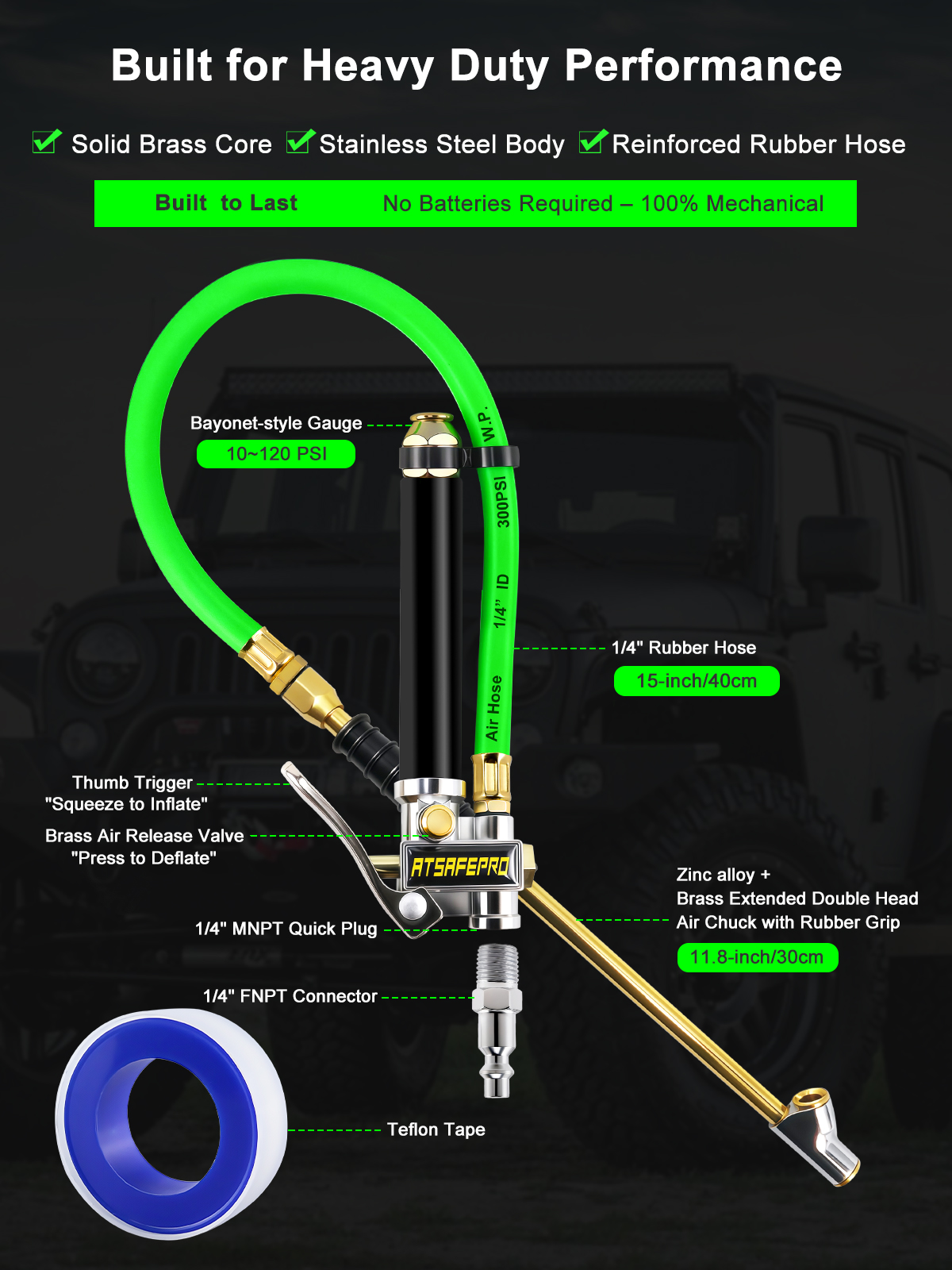
If the tool is used as an inflator gauge, it may be paired with a compressor line or service hose in a garage environment. That makes the angle and grip design more than cosmetic. When an operator is crouched beside a wheel, holding a hose, and trying to read the dial without twisting the wrist too far, ergonomics matter. A gauge can be technically adequate and still annoying to use if the body shape is awkward.
What makes PSI and BAR both useful?
PSI remains the most familiar unit for many vehicle owners and service teams, especially in North American contexts. BAR is common in many other regions and is often used in specifications, service sheets, and equipment settings. A dual-scale gauge lets the user work in either system without mental conversion or a phone lookup. That saves time, but more importantly, it lowers the chance of a simple reading error.
There is a practical caution here: dual-scale dials are only helpful if the marks are legible and the pointer is easy to see. If the scale is cramped, or if glare from the lens makes the face hard to read, the convenience drops off quickly. The visible clear lens on this unit should help protect the dial, but lens quality and readability still deserve a close look in person.
Who is this tool best suited for?
Its strongest fit is in environments where tires are checked frequently and speed matters. That includes tire shops, garages, fleet maintenance operations, and general automotive service bays. It also makes sense as a compressor accessory for users who want one hand tool that can help with checking, topping off, and possibly releasing pressure. For private vehicle owners, it could still be useful, but the value proposition is stronger when the tool is used often enough to justify a more rugged manual instrument.
For sourcing managers and product teams, the important question is not only whether the gauge reads pressure. It is whether the assembly feels suited to repeated shop use: can the lens resist scratches, does the metal stem stay secure, and does the control button feel reliable after many cycles? Those are the kinds of details that determine whether a tool becomes a daily fixture or ends up as a backup.
What are the common mistakes when buying a tire pressure gauge?
The first mistake is shopping by appearance alone. A glossy red housing and polished fittings can look impressive, but surface finish is not the same as instrument quality. The second mistake is ignoring the application. A gauge intended for casual tire checks may not be the best choice for heavy use in a busy service bay. The third mistake is assuming that any dual-scale face automatically makes the tool more accurate or easier to use.
Another common slip is not checking whether the gauge is intended as a standalone tool or part of a larger inflator assembly. The visible angled chuck and side button suggest an integrated service tool, but that needs to be confirmed before purchase. Buyers should also ask basic questions that are easy to overlook: what connection standard is used, how the tool is calibrated, whether the scale range matches the target vehicle types, and how the housing stands up to dust, drops, and compressor vibration.
What should engineers and buyers ask before ordering?
Start with the measurement range and the user environment. If the outer scale only reaches 60 PSI, that may be enough for many passenger vehicle applications, but it may not suit every service need. Then ask how the gauge is calibrated and what documentation is available. Since no certification details are provided here, that should not be assumed.
Next, look at the mechanical interface. Is the chuck compatible with the valves used in your market? Is the side plunger meant for bleed control, or does it perform another function in the assembly? Is the grip comfortable with gloves on? These are ordinary questions, but they save a lot of frustration after the first production run or field trial.
FAQ: Is an analog gauge still worth it in a digital world?
Yes, when the job calls for speed, durability, and easy reading. A well-made analog gauge can be perfectly appropriate for routine tire service, especially where the tool will be used constantly and handled roughly.
FAQ: Can this kind of gauge be used for deflation?
If the side-mounted control is a bleed or release button, then it may allow controlled deflation. That feature is useful, but it should be verified with the supplier before purchase rather than assumed from the exterior design.
FAQ: What is the main buying takeaway?
Judge the ATsafepro tire pressure gauge by the full working setup, not just the dial. Readability, chuck design, bleed control, and build quality matter as much as the face markings. If those elements match the intended service environment, the tool can be a practical and durable choice. If not, it is just another gauge with a bright finish.
Next step
If you are comparing pressure gauges for workshop or fleet use, verify the scale range, connection type, and intended application with the supplier before placing an order. A quick check at that stage is easier than replacing the wrong tool after the first round of field use.