What this gauge is really for
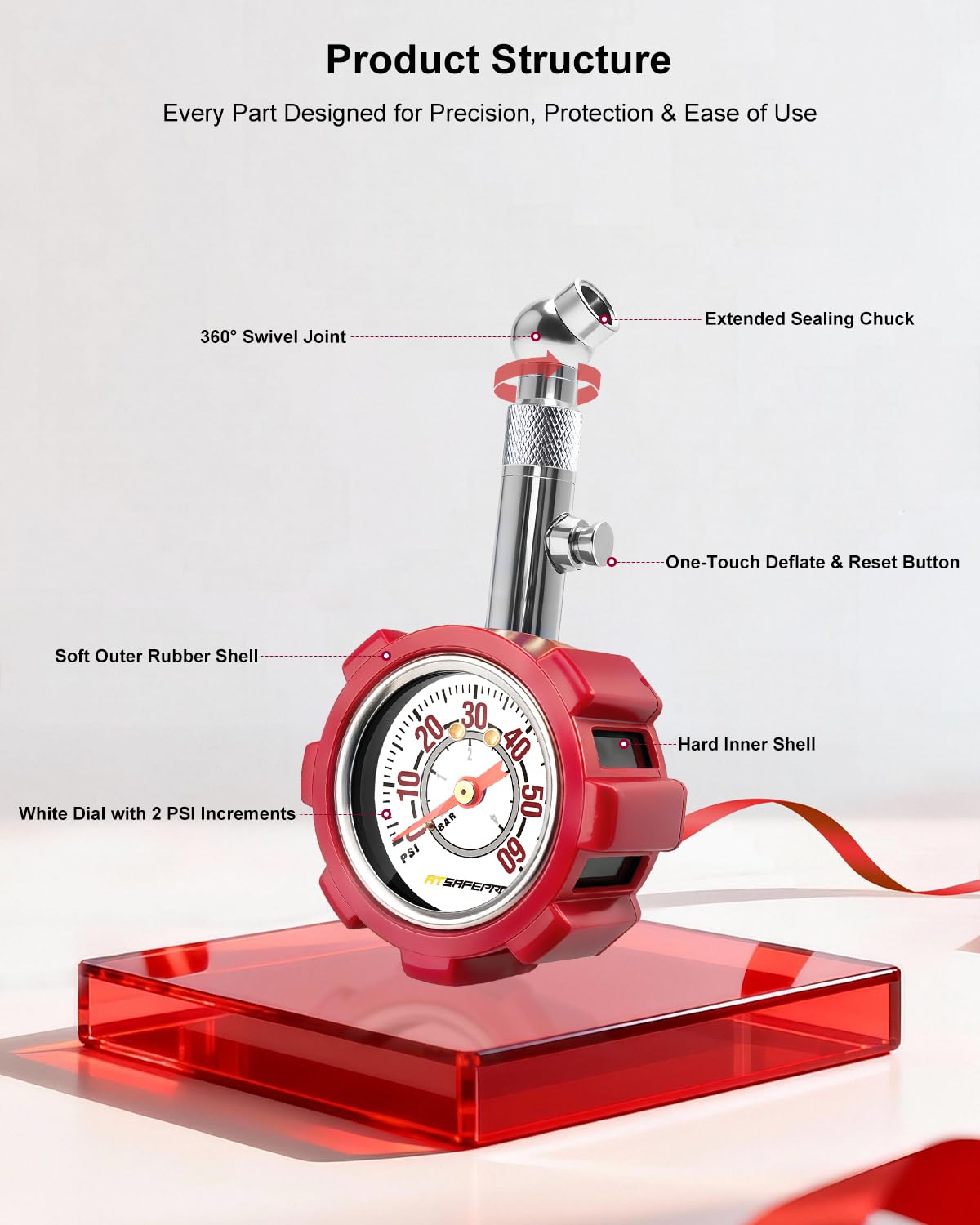
The ATsafepro tire pressure gauge sits in a very practical middle ground: it is not just a readout tool, and it is not a bare-bones inflator either. Based on the visible build, it combines an analog dial, an integrated air chuck, and a side control that likely lets the user bleed air or release pressure. That makes it the sort of tool a shop can grab for fast checks and quick adjustments without switching between separate devices.
That matters because tire pressure work is rarely about theory. It is about speed, visibility, and not making the same job twice. A gauge that reads clearly but cannot help you adjust pressure leaves one hand on the tool and another on a separate inflator. A separate inflator may be fine for some setups, but it slows down routine work. The ATsafepro tire pressure gauge appears to be designed for the more efficient workflow in garages, tire bays, fleet maintenance, and everyday vehicle upkeep.
Analog tool versus digital tool
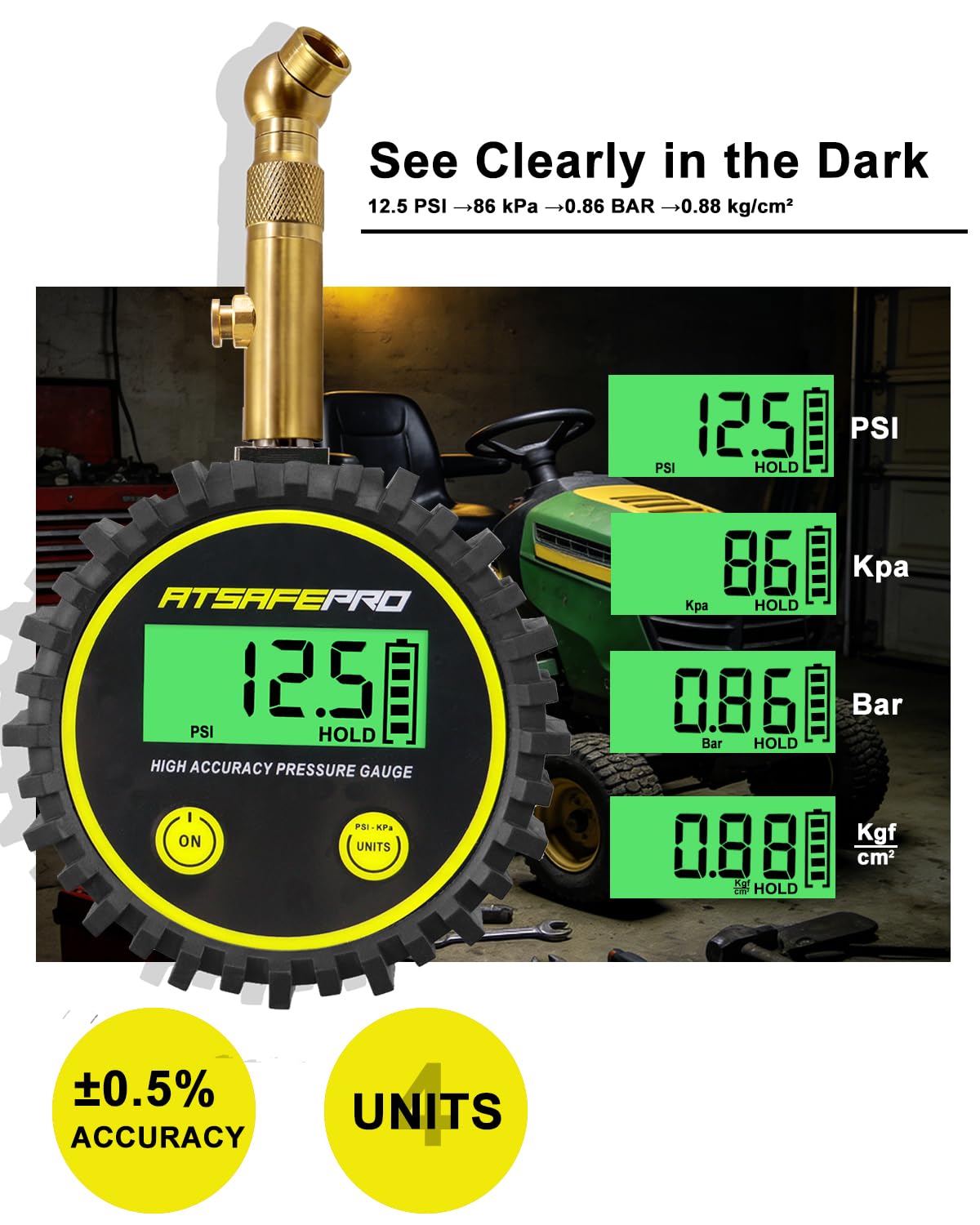
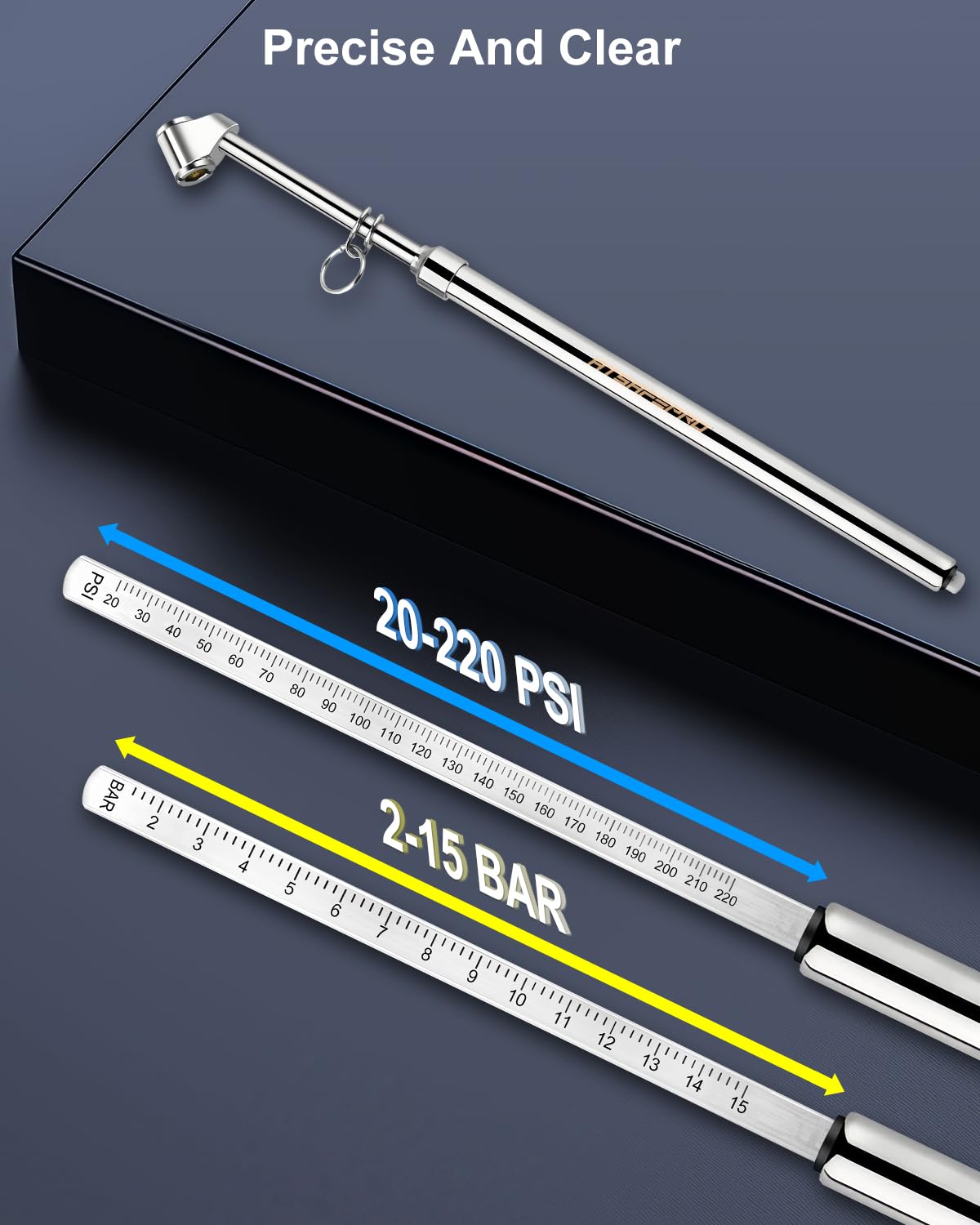
The first comparison most buyers make is analog versus digital. A digital gauge can be easy to read in low light and may appeal to users who like an instant number on a screen. But digital tools also introduce batteries, electronics, and screen durability concerns. In a service bay, that is not a small detail. Tools are dropped, tossed into drawers, and used with gloved hands. A large mechanical dial can be more forgiving in that environment.
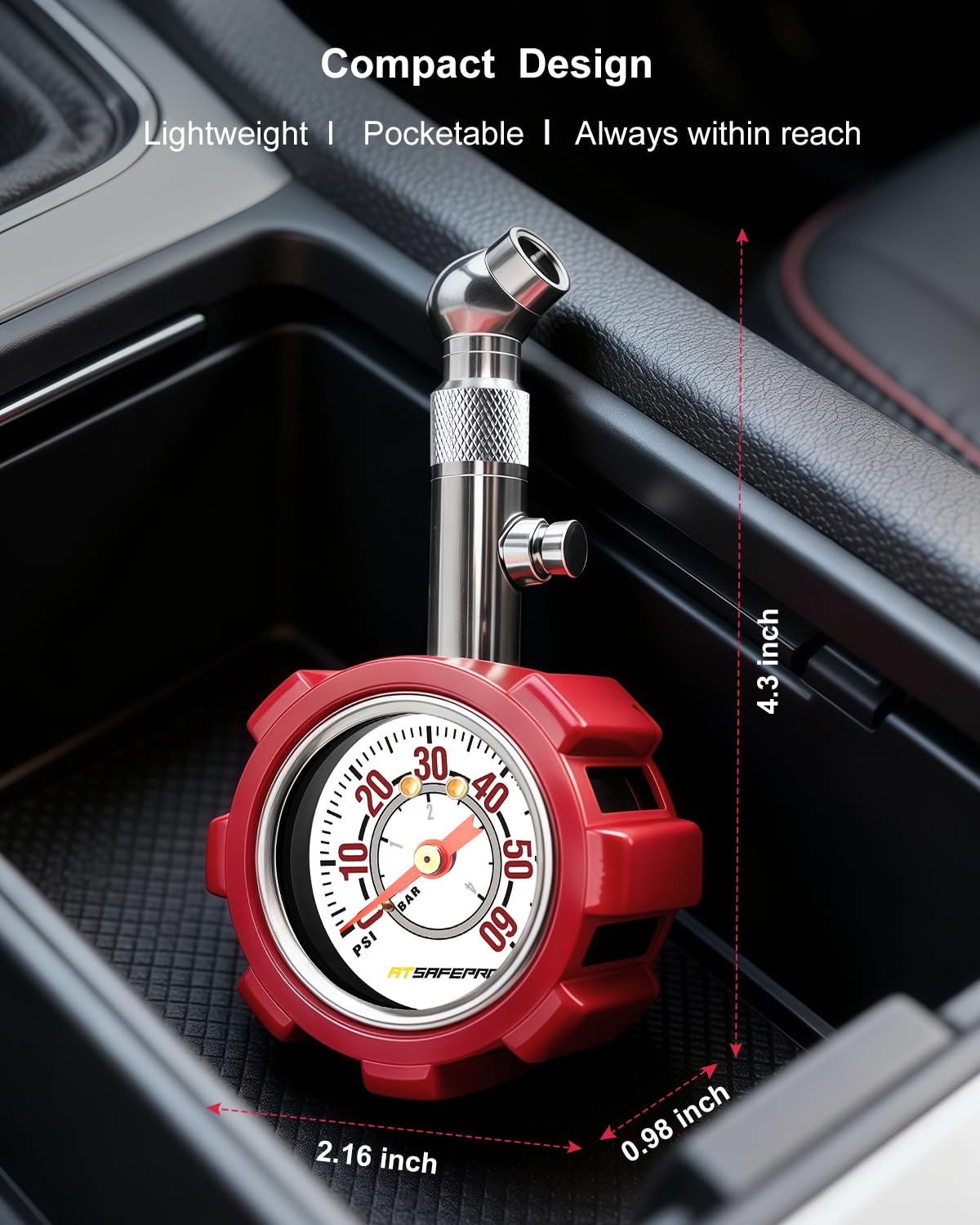
The visible dial on this model is a useful clue. It shows both PSI and BAR, which is helpful when a shop works with different specs or when a buyer simply wants to avoid converting units in their head. The outer PSI scale appears to run to 60 PSI, which suggests a focus on common automotive tire work rather than specialized high-pressure applications. That is not a flaw; it is a sign that the tool is aimed at routine tire service where quick readability matters more than exotic range.
Digital gauges can feel more exact because they display numbers cleanly, but an analog gauge often wins on immediacy. You can glance at the needle, compare it with the target, and keep moving. For many technicians, that is enough. The real decision is whether the buyer values battery-free simplicity and rugged handling more than display features and extra functions.
Gauge-only and inflator-gauge designs are not the same
Another useful comparison is between a simple tire pressure gauge and a tire inflator gauge. A gauge-only tool is good when the goal is measurement alone. It is usually lighter and sometimes cheaper. A tire inflator gauge, by contrast, combines reading and adjustment. That can save time, especially when pressure needs to be topped up or corrected in small increments.
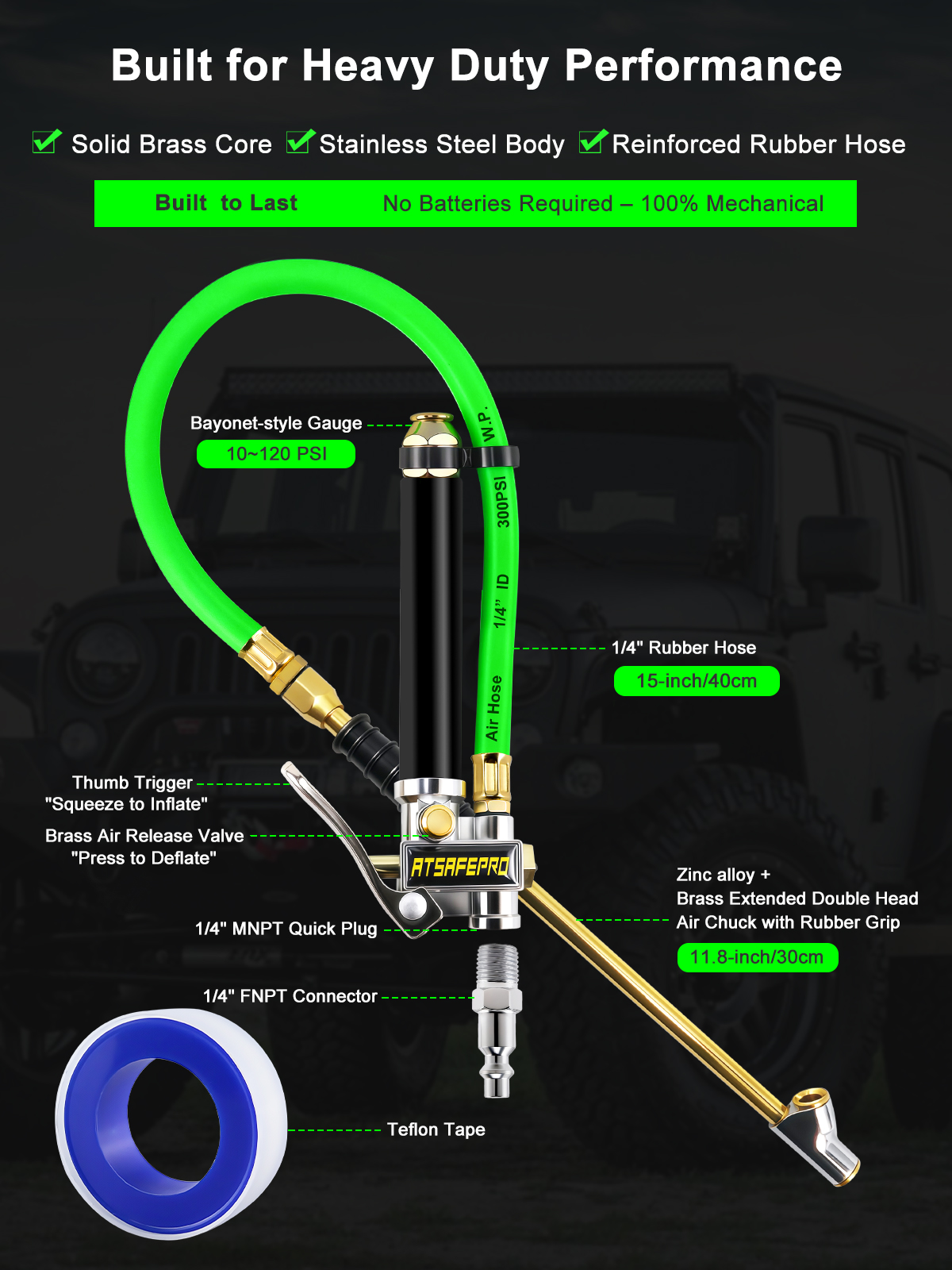
The ATsafepro tire pressure gauge appears to belong in the second category. The angled metal chuck and side-mounted control suggest that the user can check a tire, add air, and likely release excess air without changing tools. That is valuable in real shop conditions, where workflow often matters more than elegance. It also reduces the chance of misplacing a separate gauge during a busy day.
There is a tradeoff, of course. An integrated tool can be bulkier than a pocket gauge, and some users prefer a separate precision gauge for final verification after inflation. That is a sensible habit. Even when a tool is convenient, a second check with a dedicated gauge can be the right move if the application is sensitive or if the shop wants a consistent verification step.
Why the visible construction matters
The physical design gives more clues than the branding alone. The large round dial sits in a red protective housing, which suggests the manufacturer is trying to shield the face from bumps and repeated handling. That matters in a garage far more than it does in a product photo. A gauge with a fragile face may look neat on a shelf, but it tends to age badly once it starts bouncing around with other hand tools.
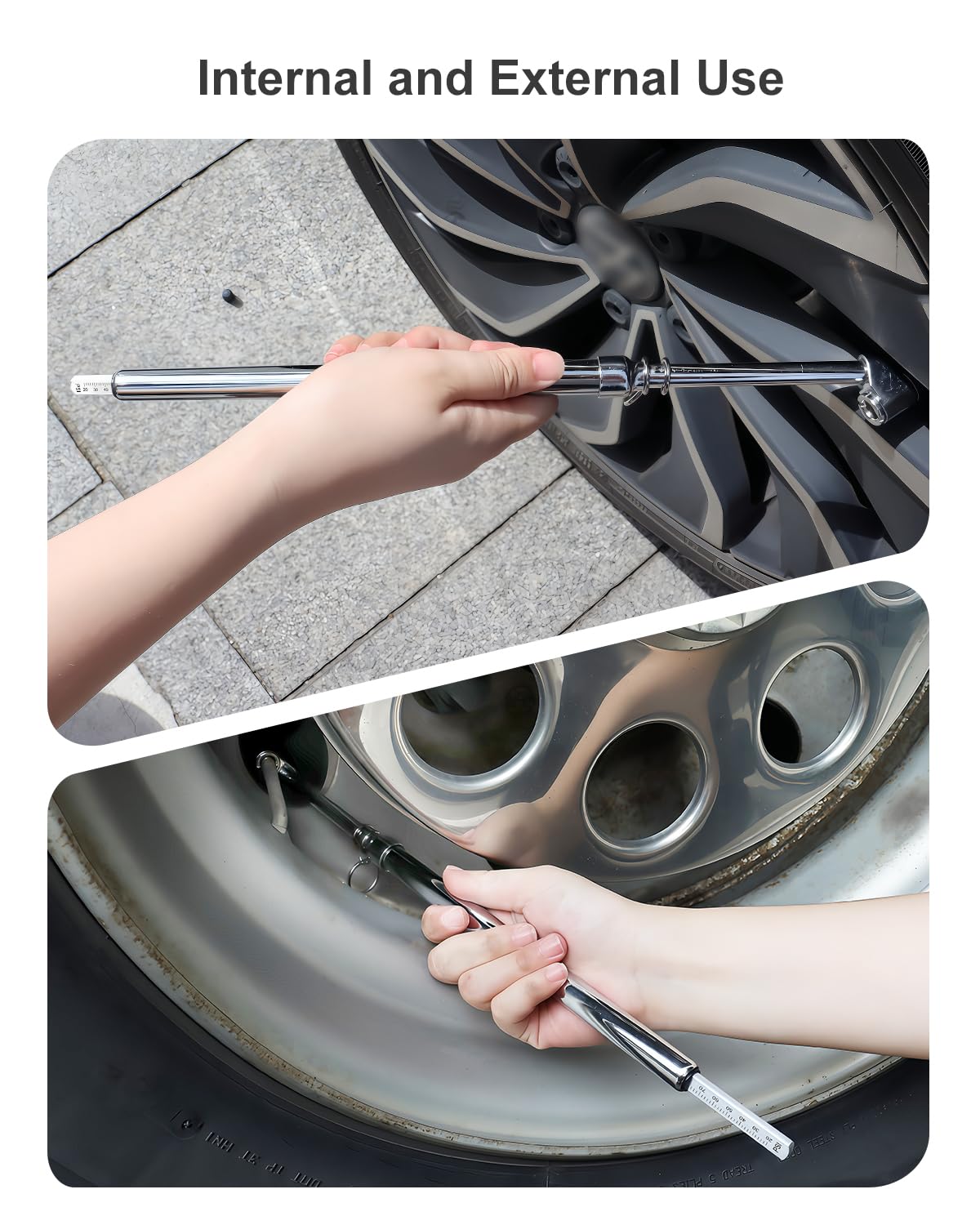
The chrome-finished upper assembly, knurled grip section, and metal stem point toward a tool meant to feel solid in the hand. Those features usually matter to the user more than the catalog copy does. A knurled grip can improve control with oily fingers or gloves. A sturdy stem helps the chuck seat more securely. The angled chuck head is another practical detail: valve stems are not always easy to reach straight on, especially on wheels with limited clearance. An angled head can make a small but real difference during repeated use.
There is also a quiet benefit to the molded housing. If it is indeed a rubber-like or plastic protective shell, that may help with impact resistance and shop handling. It will not make the tool indestructible, and buyers should not assume that. But for a bench tool or service-bay tool, that kind of housing often signals a more workmanlike design than a polished showpiece.
Where it fits best, and where it may not
This kind of tire pressure tool makes the most sense in automotive maintenance, tire shops, service bays, and fleet settings where repeatability matters. It is especially useful when a technician wants to check pressure and make a correction in one motion. For passenger vehicles, that workflow is hard to beat.
It may be less compelling for users who only check tires occasionally and want the smallest possible tool in the glovebox. A compact pen-style or pocket gauge can be easier to store if the task is occasional rather than routine. On the other hand, a fleet operator or shop manager may prefer the integrated design precisely because it cuts down on steps. In that setting, a slightly larger tool is often a worthwhile exchange for speed and consistency.
One caution is worth stating plainly: the visible information does not tell us the exact accuracy class, calibration standard, hose length, connector type, or working pressure rating. Buyers should not assume those details. If the tool is being considered for more demanding service, those specifications should be confirmed before purchase. That is standard procurement discipline, not nitpicking.
What buyers should compare before choosing
If you are deciding whether this type of gauge is the right fit, compare it against three alternatives: a basic handheld gauge, a digital gauge, and a full inflator system. A basic handheld gauge is simplest and often cheapest. A digital gauge may offer a cleaner display and extra features. A full inflator system can be better for shop infrastructure but less portable.
The ATsafepro tire pressure gauge appears to target the middle. It offers the convenience of inflation and the fast read of an analog dial without depending on electronics. For many buyers, that is the sweet spot. For others, it may be slightly more tool than they need, or not specialized enough if they want a dedicated pressure verifier only.
Think also about how the tool will live in the real world. Will it be handed among technicians? Stored in a drawer? Hung near an air line? Used on cars all day or only during maintenance days? Those usage patterns matter more than marketing language. A tool that looks good on paper can be awkward in practice if the interface is fussy or the chuck is hard to seat.
Common mistakes buyers make
The first mistake is buying by scale only. A dial that looks large and easy to read is useful, but readability alone does not tell you how the tool handles under pressure. The second mistake is assuming every integrated gauge/inflator behaves the same. In reality, the feel of the chuck, the stiffness of the release control, and the visibility of the dial can change the user experience dramatically.
Another common oversight is ignoring the pressure range. If the outer PSI scale only runs to 60, that may be perfectly appropriate for passenger-vehicle tires, but it may not suit every application. Buyers should match the range to the job instead of treating a gauge as universal by default. That is especially important in mixed fleets or service environments where different tire types may be encountered.
Practical buyer advice
If you want a quick rule, choose this style of tool when you value one-hand workflow, clear analog reading, and a rugged shop-oriented build. Choose a simpler gauge when storage size and portability matter more than speed. Choose digital only if you specifically want a display-driven workflow or features that justify batteries and electronics.
For purchasing teams, the best next step is usually to confirm the visible promises against the missing specifications. Ask for accuracy information, calibration details if available, and any compatibility notes tied to the chuck or air connection. That is especially important if the tool will be standardized across multiple bays or used as part of a documented maintenance process.
For individual buyers, the short test is even simpler: imagine using it while kneeling next to a wheel in a busy bay. If the dial is easy to see, the chuck is easy to place, and the release control feels natural, it is probably the right category of tool for the job. If not, keep looking. Convenience in this category is not a luxury; it is the point.
FAQ
Is this only for one type of vehicle?
The available information does not confirm a vehicle class. Based on the visible PSI range and shop-oriented design, it looks most aligned with common automotive tire service, but buyers should verify fit for their specific use.
Why choose an analog gauge at all?
Because it is simple, fast to read, and does not rely on batteries. In a shop, that can matter more than extra features.
Does the angled chuck help?
Usually yes. Angled chucks can make valve access easier on awkward wheel positions, though the actual benefit depends on the vehicle and wheel design.
A sensible next step
If you are comparing shop tools for tire service, the ATsafepro tire pressure gauge is worth looking at as an integrated, analog-first option rather than a standalone precision instrument. Its design cues point toward everyday utility: a large dial, an angled chuck, a protective housing, and the kind of layout that makes sense in a working bay. Confirm the missing specifications, compare it with your current workflow, and decide whether you want measurement only or measurement plus inflation in one tool. That is usually where the buying decision becomes clear.