What the ATsafepro Tire Pressure Gauge Is Designed to Do
The ATsafepro tire pressure gauge appears to be a combination tool for checking tire pressure and, depending on the setup, helping with inflation through an angled metal connection. That makes it relevant to a narrow but important decision many buyers face: do you need a simple reading tool, a shop-style gauge, or a gauge that can live on the end of an air hose and still handle everyday use?
For garages, maintenance fleets, and home tool kits, this is not a small question. Tire pressure affects wear, fuel economy, road feel, and safety margins. Underinflation can make a vehicle feel vague and can overwork the tire sidewall; overinflation can reduce the contact patch and make the ride harsh. In practice, a gauge is only useful if it is easy to read, simple to connect, and durable enough to use when tires are hot, dirty, or parked in poor light.
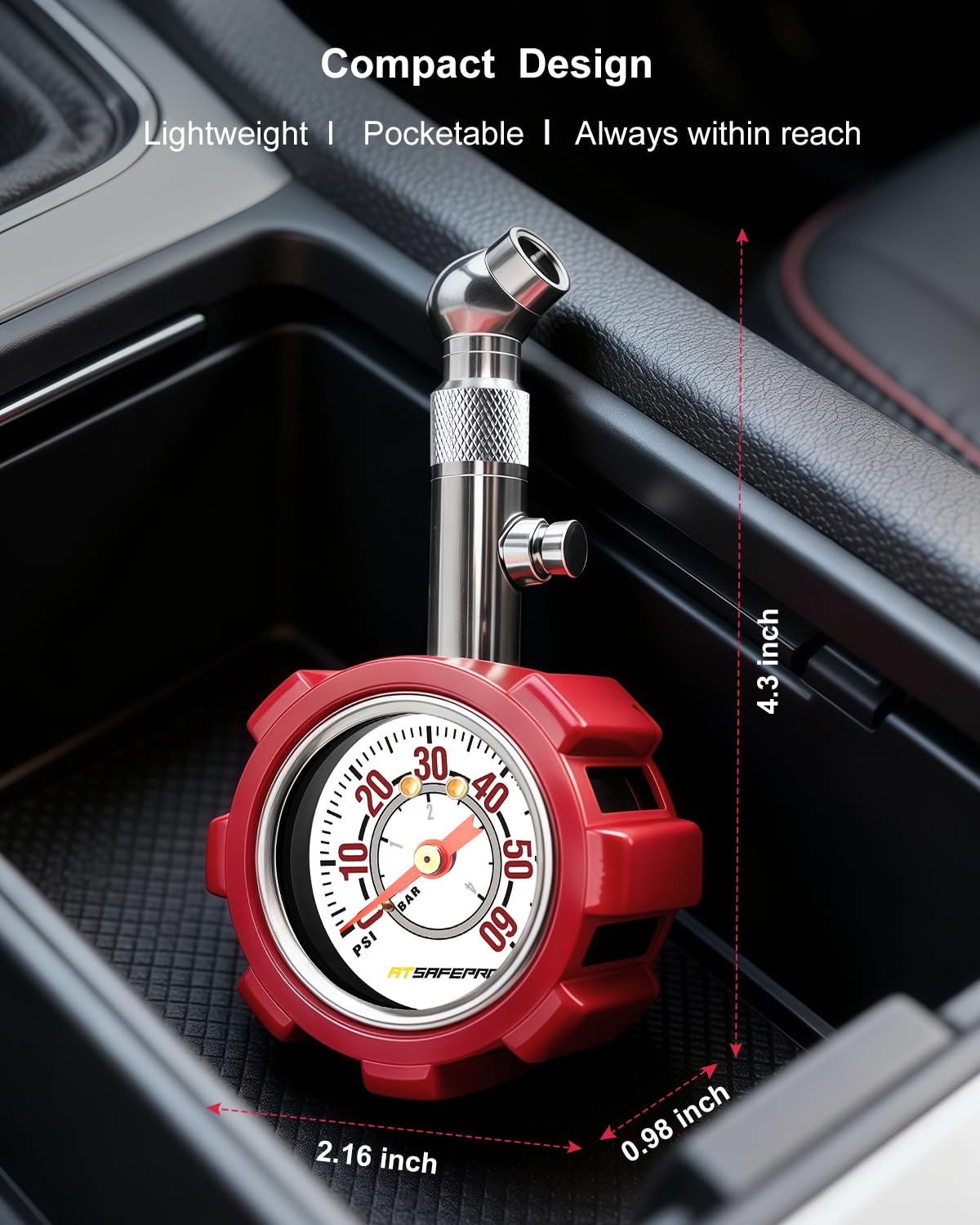
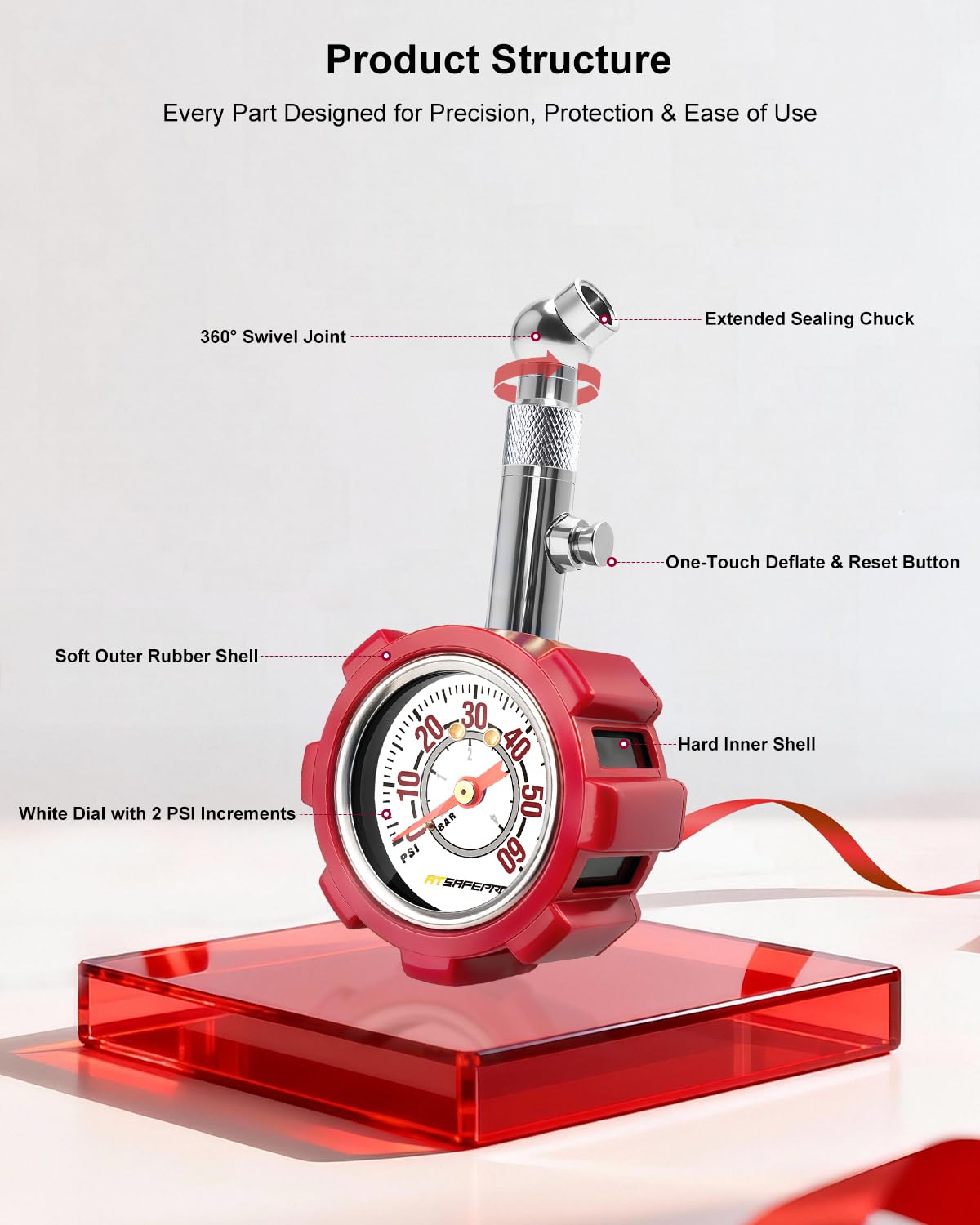
From the visible design, this product leans toward a mechanical, analog style rather than a digital one. The round dial, the dual PSI and BAR markings, and the live needle reading all point to a straightforward instrument that likely uses a pressure mechanism inside the housing. The red molded body and chrome-toned upper assembly also suggest a tool made for repeated handling rather than a disposable accessory.
Quick Takeaways for Buyers
If you are choosing a tire pressure tool for routine automotive work, a few details matter more than the brand name alone.
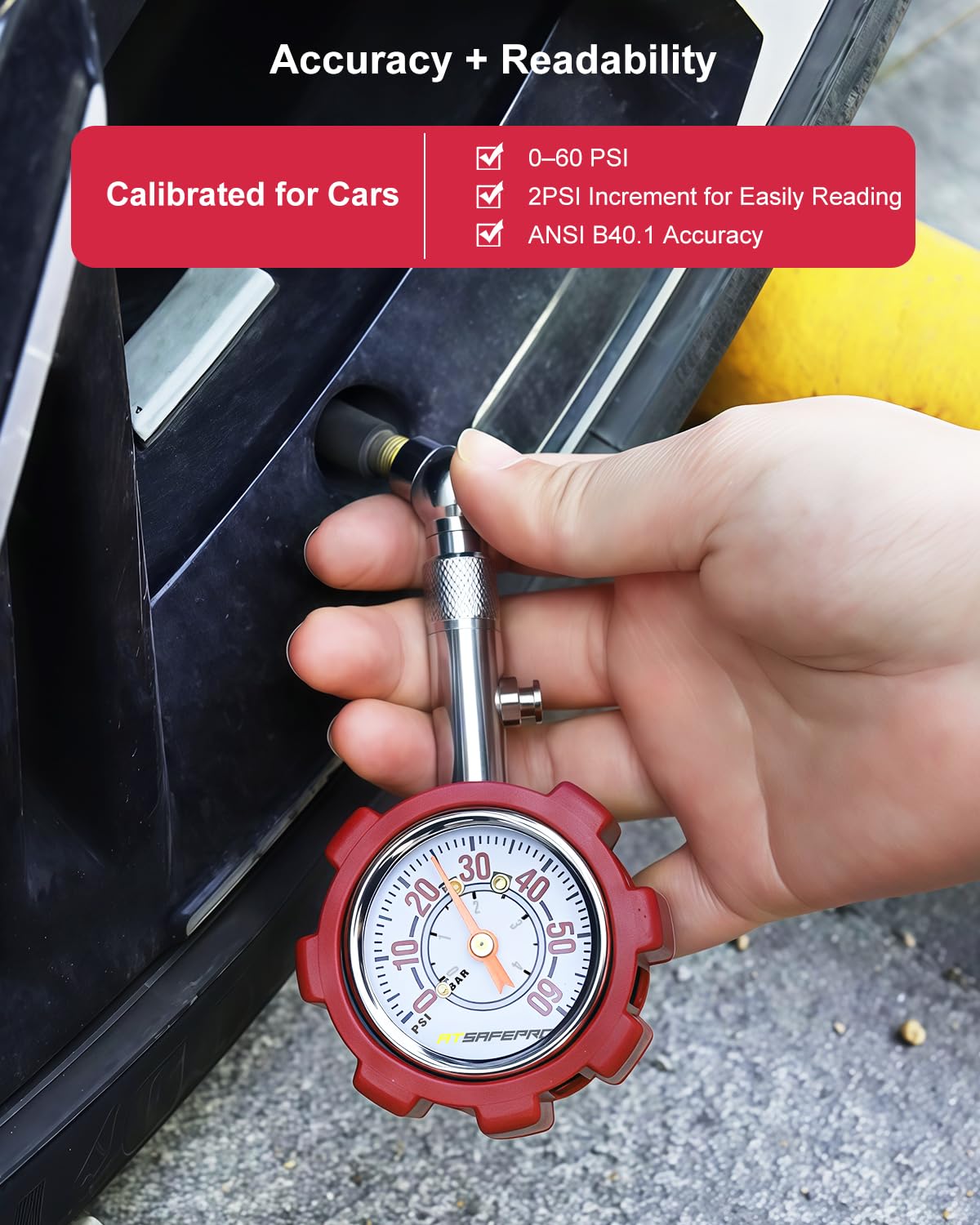
The ATsafepro tire pressure gauge presents a dial that is easy to glance at, with both PSI and BAR shown on the face. That matters in shops and fleets where different standards or customer preferences may come into play. The visible scale appears to reach 60 PSI, which is suitable for many passenger cars and light-duty applications, though buyers working on higher-pressure systems should always confirm the full working range before relying on it.
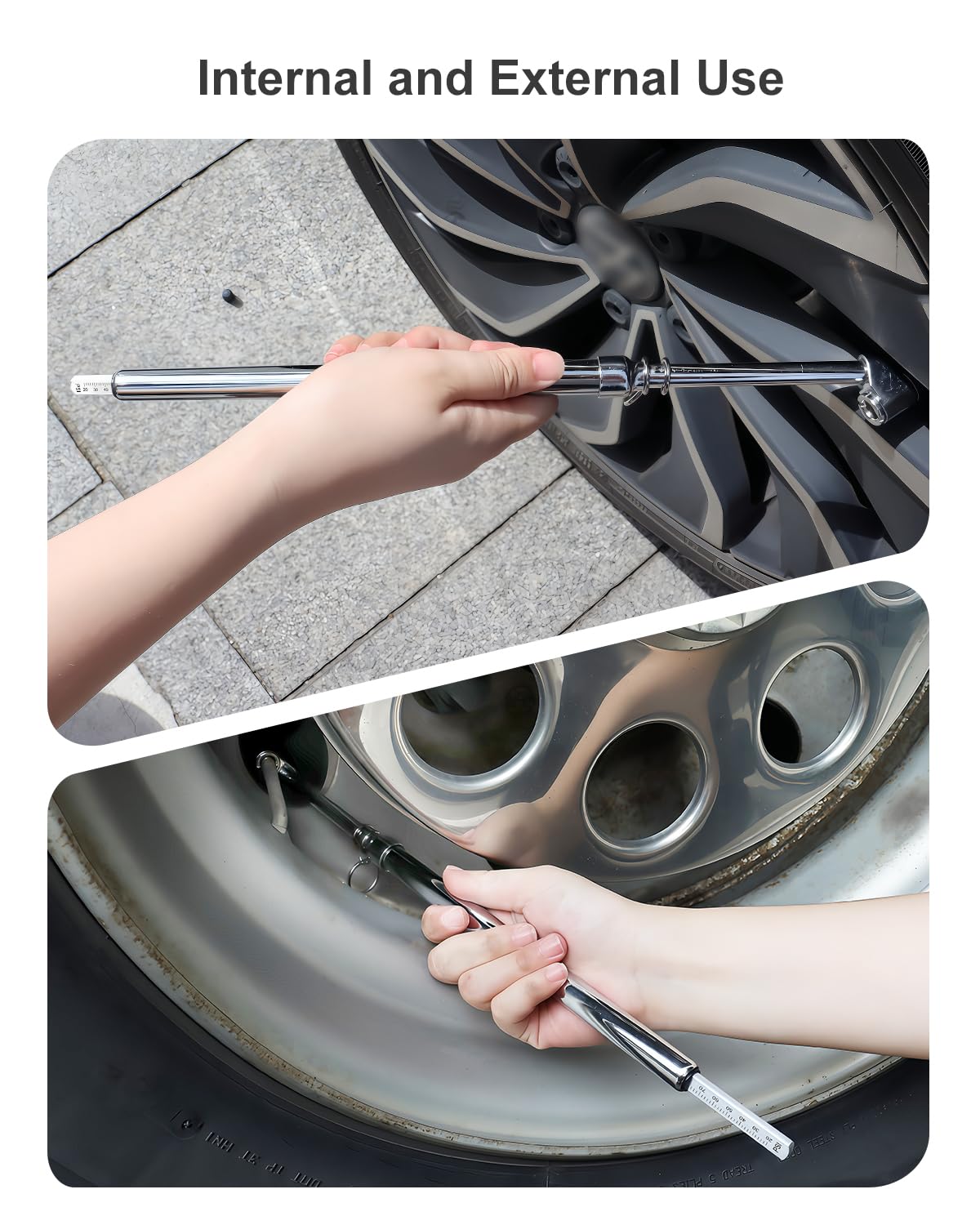
The angled metal fitting is another practical point. Tools like this are often chosen because they make it easier to connect to a valve stem or hose in tight wheel well spaces. That said, fit is never a detail to assume. Chuck shape, thread compatibility, and hose connection style can vary, so users should verify how this unit interfaces with their air system before purchase.
Why Tire Pressure Tools Need to Be Simple and Trustworthy
Tire pressure measurement looks basic from the outside, but the buying decision is usually about workflow. A service bay needs speed. A fleet manager needs consistency. A home user wants a tool that will not fight them every time they check a tire before a weekend trip. If the gauge is awkward to hold, hard to read, or fragile around the valve connection, it quickly gets left in a drawer.
That is where an analog gauge still has a place. It does not need batteries, and it can be read immediately. For many users, that is enough. The tradeoff is that analog tools depend on mechanical condition and build quality. A bent needle, a damaged seal, or a loose fitting can affect confidence in the reading, so the physical construction matters a great deal.
In this case, the visible mix of molded polymer and machined or stamped metal parts points to a common manufacturing approach for tools in this category. The plastic housing can reduce cost and weight, while the metal assembly protects the pressure interface and improves wear resistance where it counts most. That is a sensible structure for a tool intended to live in a garage or service cart.
Construction Details That Matter in Real Use
Housing and grip
The red outer shell appears to be injection-molded plastic, which is typical for enclosed gauge bodies. A glossy finish can make the tool easier to spot in a crowded box, though it will also show scratches sooner than a matte finish. For most buyers, the more important issue is whether the housing protects the gauge mechanism and resists cracking if dropped on a concrete floor.
Side openings or windows are visible in the body. Their exact purpose is not clear from the image alone, and it would be a mistake to guess too confidently. They may be part of the display layout, ventilation, or the casing design. Either way, buyers should look for a body that keeps the dial readable while still shielding the internals.
Dial readability
The face shows both PSI and BAR, which is a useful feature in mixed-use shops and for users who switch between unit systems. The scale appears to extend to 60 PSI, and the needle provides a live reading rather than a binary pass-fail result. That is the kind of feedback most technicians prefer because it supports small adjustments instead of guesswork.
One small caution: a dial can be clear on paper but less convenient in the field if glare or small markings make it hard to read at a glance. Tool buyers often focus on maximum pressure first, then discover later that the numbers are cramped. It is worth checking dial size and contrast if the gauge will be used outdoors or in low light.
Metal connection point
The polished metal top section with a knurled grip suggests an emphasis on control and durability. The angled fitting is likely intended to connect with a valve stem or air hose in a practical working position. In tire service, small changes in geometry can make a big difference, especially when the wheel design leaves little finger room.
This is also the area where compatibility questions should be asked early. A gauge may look universal and still not match every hose, chuck, or shop setup. Buyers using compressed air systems in garages or maintenance fleets should confirm the interface before they build a workflow around it.
Where This Kind of Gauge Fits Best
The ATsafepro tire pressure gauge is a sensible fit for automotive and light truck tire inflation, pressure checks in repair shops, maintenance fleets, and home tool kits. Those are the environments where a straightforward, rugged tool tends to earn its keep.
For a shop, the appeal is speed and repeatability. For a fleet, it is about keeping checks simple enough that they actually happen. For a homeowner, it is about having a gauge that does not require a learning curve every six months when the tires need attention again.
It is less likely to be the right choice if a buyer needs a fully specified calibration program, an exact published accuracy class, or a digital record of readings. None of those details are confirmed here, so they should not be assumed. If those are important to the purchasing decision, the supplier documentation should be checked carefully before ordering in volume.
Common Buying Mistakes
One common mistake is treating every tire gauge as interchangeable. They are not. The visible pressure range may be fine for ordinary passenger vehicles, but that does not automatically make it suitable for every truck, trailer, or specialty tire application.
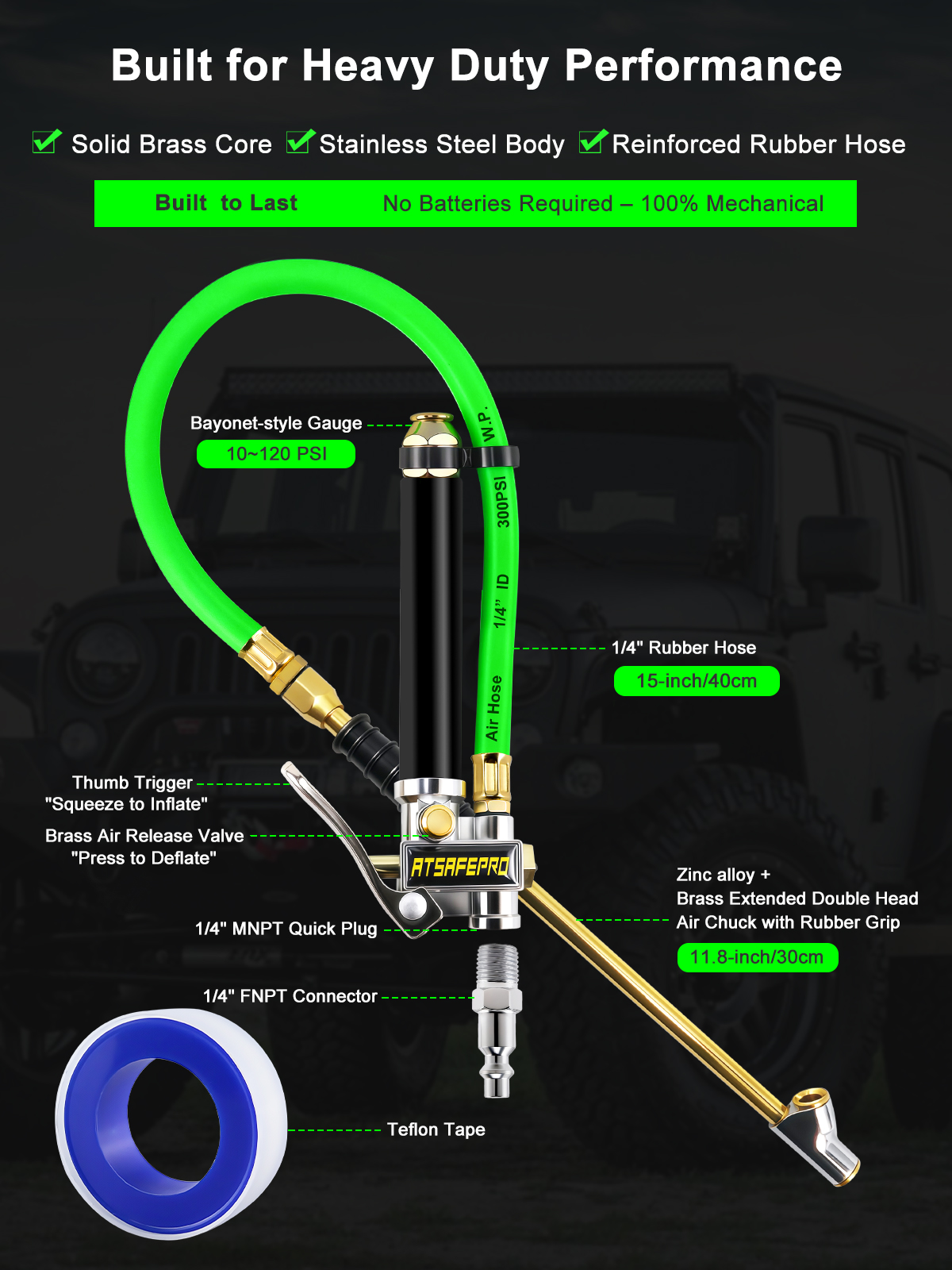
Another mistake is ignoring the interface. An angled metal head may be helpful in use, but only if it matches the hose or valve setup you already have. The best-looking gauge in the catalog is not useful if it slows the inflation process or leaks at the connection.
A third mistake is assuming the tool is ready for long-term calibration work simply because it has a dial. A mechanical gauge can be very practical and still need periodic checking against a known reference, especially in professional environments where readings affect service decisions.
Practical Selection Criteria
When comparing tools in this category, focus on the following points instead of just the finish or the brand badge.
First, check the pressure range and make sure it covers the tires you service most often. Second, confirm that the unit markings suit your team; dual PSI and BAR display is useful, but only if the scale is easy to read in the field. Third, look at the connection style and verify it with your existing equipment. Fourth, think about durability: a molded shell is normal, but the important question is whether the metal parts are robust where pressure and wear are concentrated.
Finally, ask how the tool will be used day to day. A fleet maintenance kit has different needs than a weekend garage. The best tool is rarely the most complicated one; it is the one that gets picked up, used correctly, and put back without friction.
FAQ
Is this a digital gauge?
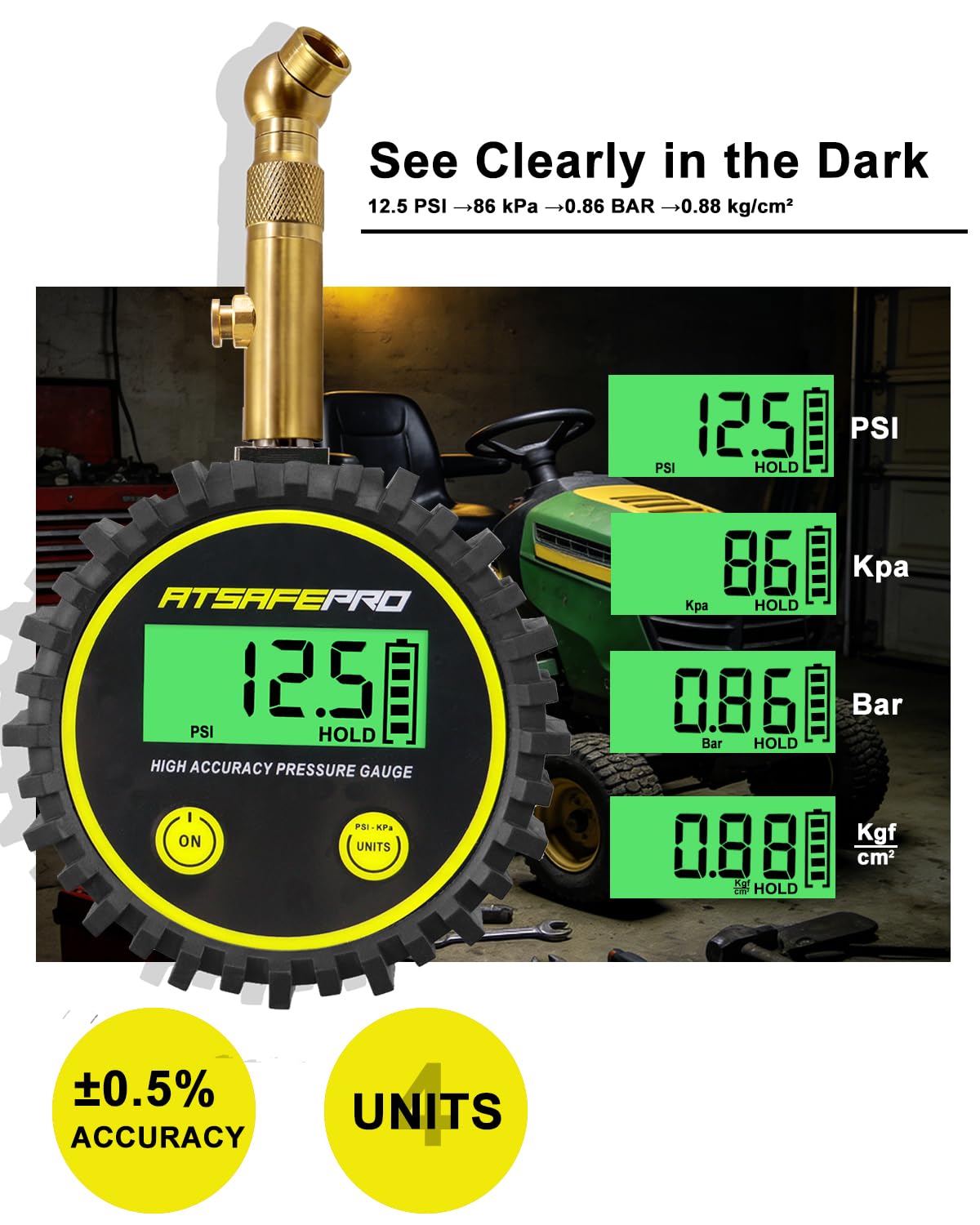
From the visible dial and needle, it appears to be a mechanical analog gauge rather than a digital unit.
Can it be used on passenger cars?
Yes, the visible scale and general construction suggest it is suitable for automotive and light truck tire pressure checks, subject to matching the vehicle’s pressure requirements.
Does it include calibration data?
No calibration or exact accuracy specification is provided here, so buyers should request that information if it matters for their application.
Will it fit every air hose or valve?
Not necessarily. The angled metal connection looks practical, but hose and chuck compatibility should be verified before purchase.
What a Buyer Should Ask Before Ordering
If you are sourcing this for a shop, fleet, or reseller program, the useful questions are boring ones: what is the exact compatibility, what is the full operating range, and what support documentation comes with the tool? Those are the details that decide whether a gauge becomes a dependable everyday item or just another accessory with a nice-looking face.
The ATsafepro tire pressure gauge looks like the kind of practical, no-frills tool that can fit into many maintenance setups. The value is in the combination of a readable analog dial, dual-unit markings, and a metal connection point housed in a durable-looking molded shell. That is enough for many buyers to keep looking, but it is not enough to skip the usual checks. In this category, fit and function matter more than appearance.
If you are comparing gauges for real shop or fleet use, the next step is simple: confirm compatibility, confirm the pressure range, and compare the physical feel against the tools already in your workflow. That will tell you more than a product photo ever will.