ATsafepro tire pressure gauge: a plain-spoken tool that does the unglamorous job properly
The ATsafepro tire pressure gauge sits in that useful corner of the garage where nobody posts a selfie, but everybody trusts it. It is an analog tire pressure gauge and tire inflator-style tool with an angled air chuck, which makes it the kind of accessory that matters most when tires are low, schedules are tight, and someone in the bay is saying, "It was probably fine yesterday."
For shops, fleet maintenance teams, service stations, and hands-on drivers, the real question is not whether a gauge looks clever. The question is whether it helps you check pressure quickly, inflate with less guesswork, and avoid the slow drip of problems that comes from running tires soft. This kind of tool answers that question in a very old-fashioned way: with a dial, a hose connection, and no dramatic app notifications.
What the tool appears to be built for
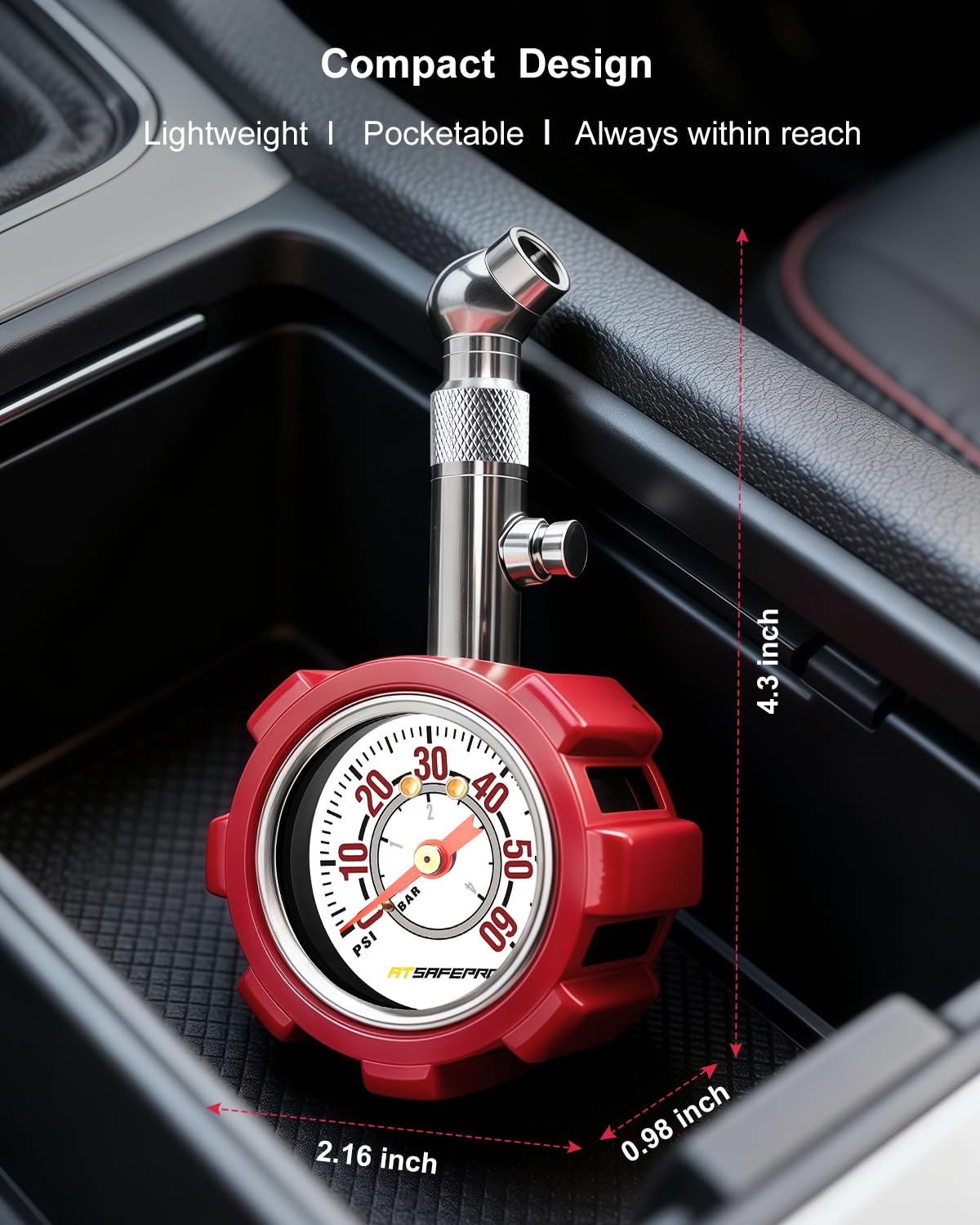
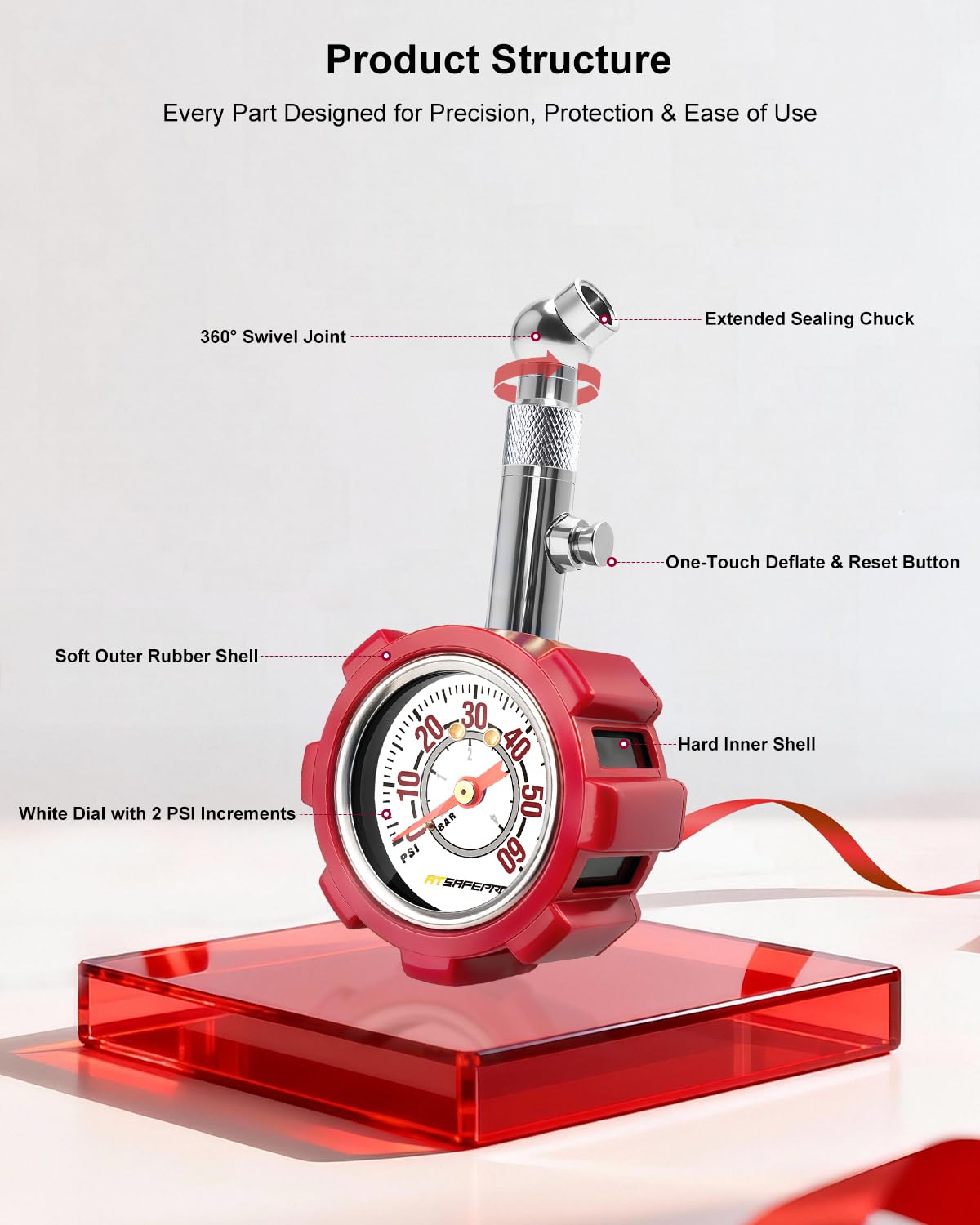
From the visible design, this is a chrome-colored metal gauge body with a round analog dial, a vertical stem, and a red protective outer housing. The angled clip-on chuck at the top suggests it is meant to connect to a tire valve during inflation, likely on an air compressor or inflation hose. A side protruding button or control is also visible, which may serve as a bleed or release function, though that cannot be confirmed from the image alone.
The dial shows PSI and BAR, with visible markings up to about 60 PSI and 4 BAR. That range fits common shop tasks such as car tires, motorcycles, light trucks, and similar pneumatic-tyre equipment. In other words, it is not trying to be everything to everyone. It is trying to be useful where tires actually live.
Why an analog gauge still has a place
Digital tools get a lot of attention because they can look like tiny spacecraft, but analog gauges still hold their ground for a simple reason: many users want a direct reading without waiting for a screen to wake up, pairing to a phone, or deciding whether the battery has chosen today to become philosophical.
An analog tire pressure gauge is also easy to read at a glance, especially in routine shop work where the operator repeats the same task dozens of times a day. The circular dial, if it is well laid out, gives a fast visual check while inflation is underway. That matters when the goal is not ceremony but service.
There is also a practical comfort in the format. Metal body, mechanical movement, simple display. It is the sort of tool that does not ask for much, which is more than can be said for some workshop gadgets that behave like spoiled cats.
Design details that matter in daily use
Angled chuck
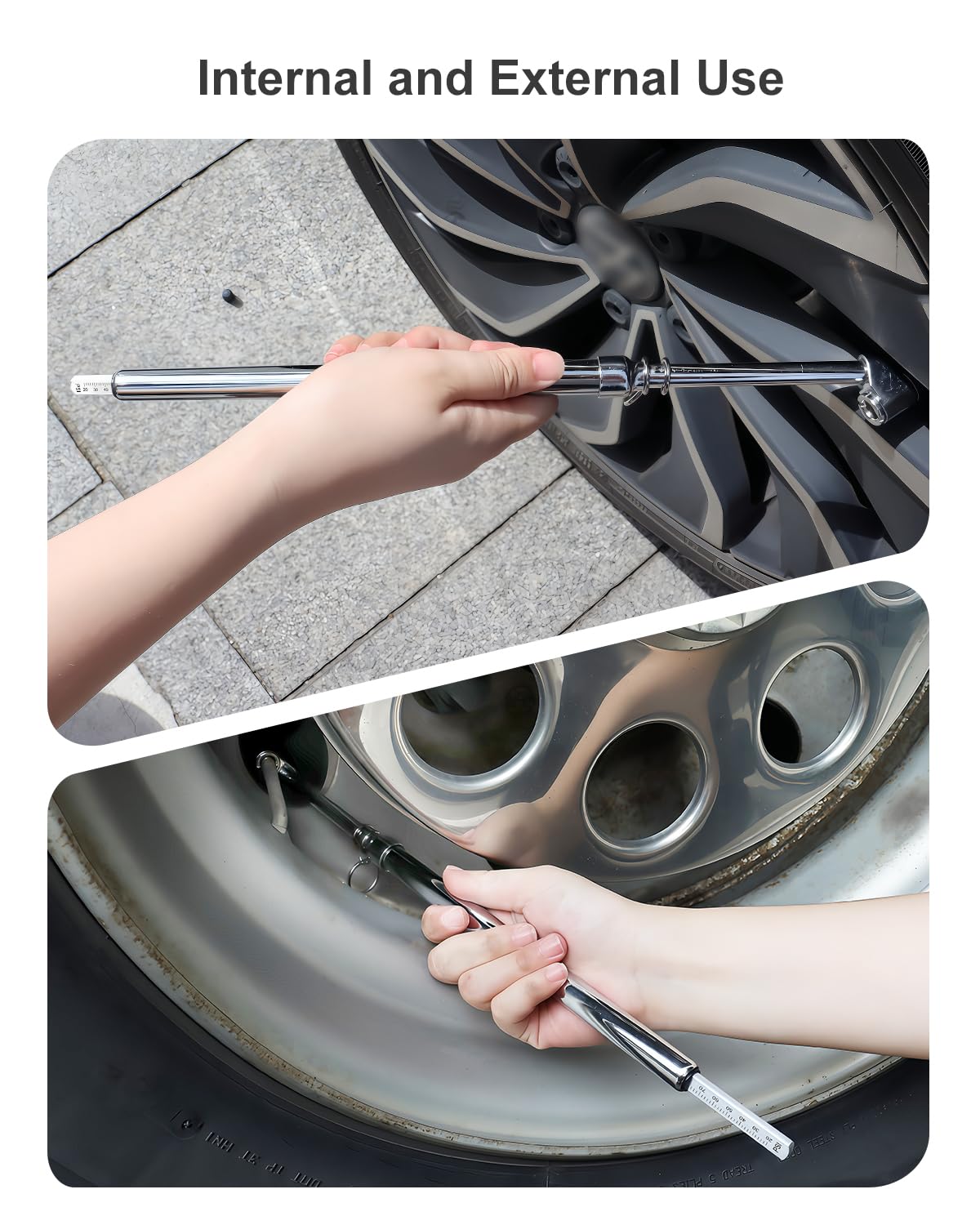
The angled air chuck is one of the more useful visible features. It can make valve access easier in tighter wheel positions and awkward angles, especially when the wheel design or hub shape makes a straight approach clumsy. Anyone who has wrestled a hand around a crowded wheel well knows that a few degrees of angle can feel like a miracle invented by a very patient engineer.
Protective housing
The red outer housing appears to be molded plastic or rubberized plastic. That kind of cover is not decorative fluff. In shop life, tools get bumped, dropped, tossed into drawers, and occasionally introduced to concrete with the confidence of a falling brick. A protective shell helps the tool survive that sort of relationship, or at least complain less loudly.
Dial face and scale
The analog dial includes both PSI and BAR, which makes it handy in mixed-use environments or for teams that work across different units. A visible dual-scale face reduces mental conversion on the fly, and that is good because tire inflation is not the place for heroic arithmetic. The visible range suggests a tool aimed at common tire pressures rather than high-pressure industrial systems.
Grip and handling
The knurled grip section on the upper tube is another small but worthwhile detail. If you are connecting the chuck repeatedly during a shift, better grip means less fumbling and less frustration. It is the sort of feature that sounds boring in a product description and feels excellent at 7:30 a.m. when the first vehicle of the day arrives underinflated.
Where this kind of gauge fits best
For tire shops and garages, a gauge like this is a practical daily tool. It supports pressure checks during service, adjustment during inflation, and general maintenance on common vehicle types. Fleet maintenance teams may also appreciate the straightforward nature of the setup, since the equipment is meant to be used often, not admired on a shelf.
Service stations and roadside service operators tend to prefer tools that are fast, tough, and easy to explain to a new employee before the coffee has fully kicked in. An analog inflator gauge fits that brief well. The learning curve is short, the use case is obvious, and there is less chance of a user staring at the device like it has asked for a password.
For general vehicle owners, the same tool can make sense if they prefer a hands-on method for checking and topping up tire pressure. It is especially appealing for those who like to keep one eye on the dial while making small adjustments instead of bouncing between separate tools.
What buyers should compare before choosing
When evaluating a tire pressure gauge of this type, buyers should focus on the parts that affect daily use rather than the shiny bits. The visible scale, readability, chuck design, grip, and housing durability matter more than marketing language with a heroic font.
First, check whether the pressure range matches the work you do most often. A gauge that tops out around the visible range shown here is generally suited to standard automotive use, not specialized high-pressure needs. Second, think about the valve access on your common vehicles. An angled chuck is helpful, but the real test is whether it reaches those annoying spots without turning the job into a three-handed puzzle.
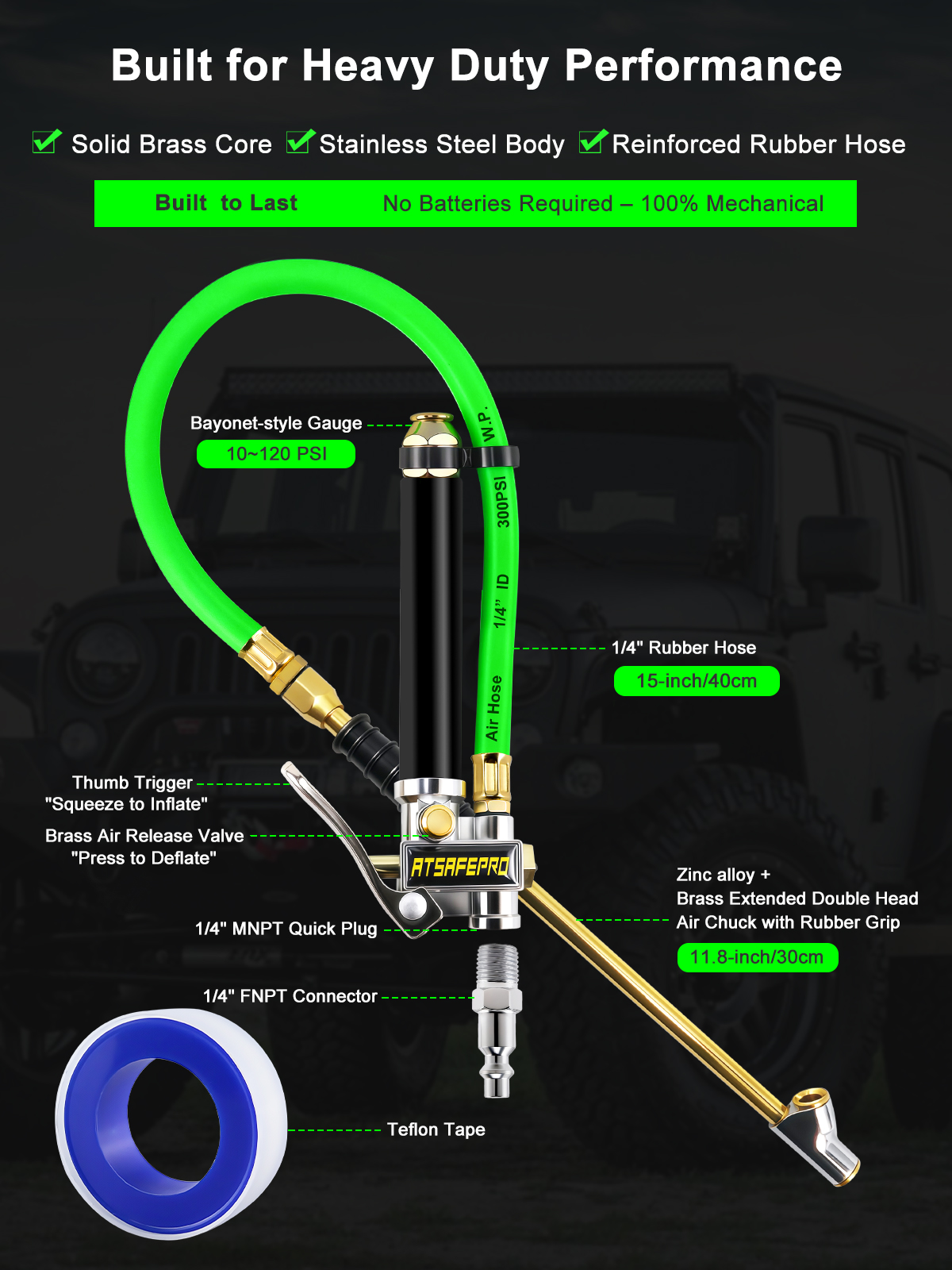
Third, look at how the tool is meant to integrate with your inflation setup. The product appears intended for use with an air compressor or inflation hose, so a buyer should make sure the connector style and hose setup fit their existing equipment. That sounds obvious, but obvious is often where workshops lose time.
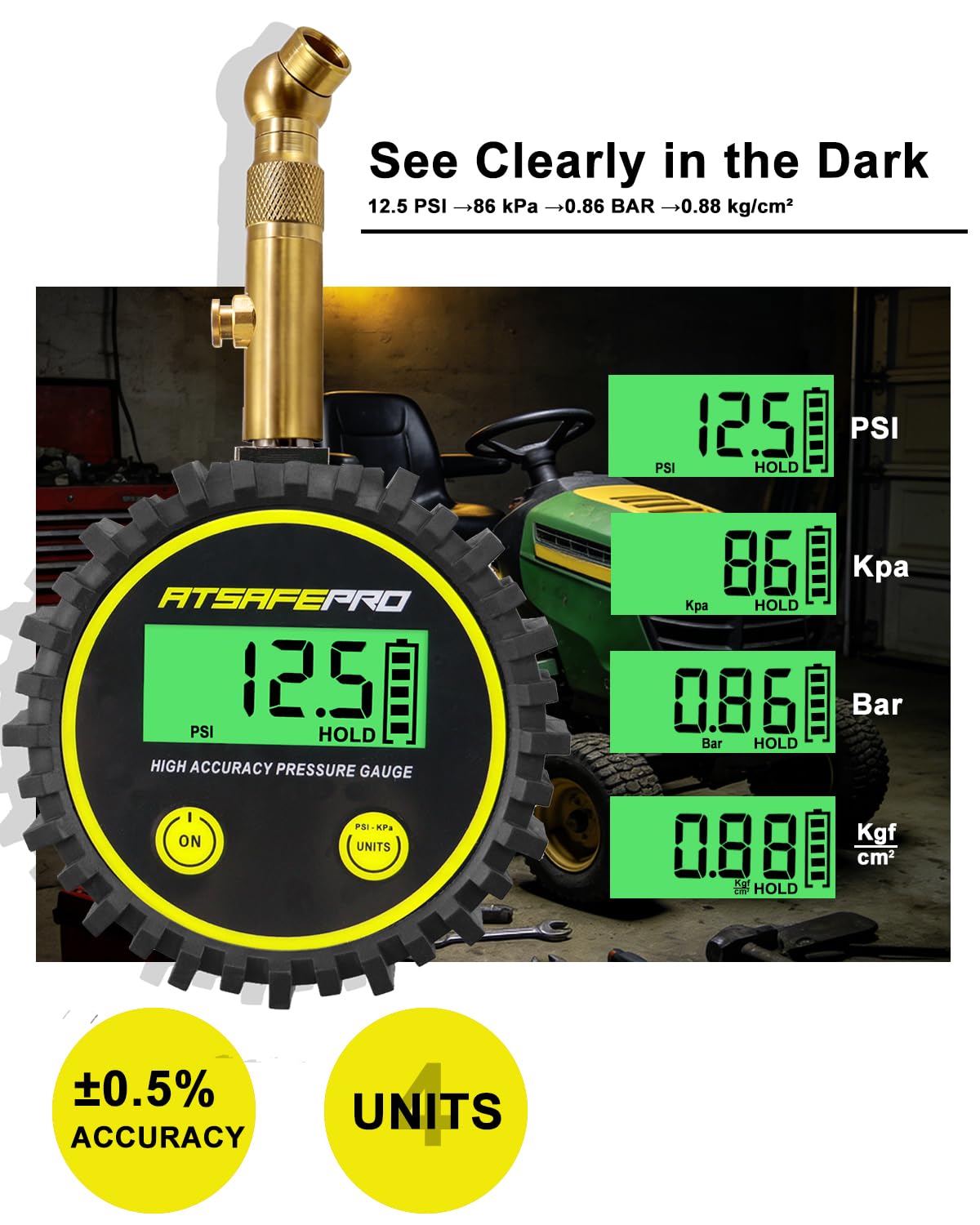
Finally, be cautious about assuming accuracy, calibration status, or certifications unless they are clearly provided. The visible image does not confirm those details, and a serious buyer should treat measurement tools with the respect they deserve. Pressure readings are not a place for optimism-based purchasing.
Common mistakes with tire inflation tools
One common mistake is overfilling because the operator is watching the hose, the valve, the compressor, and a colleague asking about lunch at the same time. A gauge with a bleed or release function may help with fine adjustment, but the user still has to work carefully and check the reading after each change.
Another mistake is ignoring unit differences. PSI and BAR are both useful, but they are not interchangeable in the way people sometimes pretend on a Friday afternoon. If a shop switches between vehicle types, the dial should be read deliberately rather than guessed at from memory and confidence alone.
A third mistake is using any gauge as if it were immune to wear. Mechanical tools can drift, get dirty, or suffer from rough handling. If pressure readings start to look suspiciously optimistic or strangely moody, the tool deserves inspection before the tire does.
Practical buyer advice
If your work is mostly repeat-service on passenger cars and light-duty vehicles, a straightforward analog inflator gauge can be the right level of sophistication. It keeps the process fast and the setup simple. If your team handles a broad mix of vehicles, the dual PSI/BAR scale adds convenience without making the device complicated.
For buyers comparing models, the best question is not, "Which one has the most features?" It is, "Which one will my team use correctly at the speed we need every day?" That is where a compact, legible, mechanically simple tool usually wins. Less theater, more tire pressure.
If the work environment is rough, the protective housing and metal construction are worth noting. Tools in garages and service bays lead hard lives. They roll, they fall, they scrape, and they sometimes disappear into a drawer that nobody admits owning. Durable construction is not a luxury; it is damage control.
FAQ
Is this an analog or digital gauge?
It appears to be an analog gauge with a round dial face, not a digital display.
Can it be used while inflating tires?
The visible angled chuck and inflator-gauge style suggest it is designed for checking and adjusting tire pressure during inflation, likely with an air compressor or hose setup.
What units are shown?
The dial shows PSI and BAR, which is helpful for mixed-use workshops and international references.
What vehicles is it suitable for?
Based on the visible scale and general design, it is suited to common automotive and light-duty pneumatic tire applications such as cars, motorcycles, and light trucks.
Final take
The ATsafepro tire pressure gauge looks like a tool built for practical work rather than display cases. The angled chuck, analog dial, dual-scale readout, and protective housing all point toward a straightforward shop instrument for daily tire checks and inflation tasks. It is not trying to impress anyone with software updates, which is usually a healthy sign in this category.
For teams that value speed, familiarity, and a direct mechanical reading, this style of gauge is worth a close look. Before buying, confirm the connector setup, the pressure range needed for your vehicles, and any calibration or accuracy information supplied by the seller. That way the tool arrives ready for work instead of becoming another box on the shelf that everyone gestures toward and says they will "test next week."
If you are choosing equipment for a garage, fleet bay, or service counter, start with the basics: clear readings, easy handling, and a chuck that does not behave like it has an agenda. This one appears to check those boxes well enough to deserve a serious look.