Precision Under Pressure: How a Tire Pressure Gauge Factory Defines Accuracy in Modern Vehicle Maintenance
Industry Challenge: Precision That Defines Performance
In modern automotive servicing, a 1 PSI error can mean uneven tire wear, wasted fuel, or unsafe handling. Despite the importance of accurate pressure control, many workshops still rely on outdated or inconsistent tools.
This discrepancy has pushed global suppliers to demand one thing above all—precision built at the manufacturing source.
ATSAFEPRO’s tire pressure gauge factory was designed around that principle, combining calibration science with industrial-grade engineering to ensure every reading counts.
Inside the Mechanics: How Gauge Accuracy Is Engineered
Traditional gauges often rely on spring-based mechanical movement—effective, but prone to drift from temperature, vibration, or fatigue.
ATSAFEPRO integrates digital sensors calibrated under ISO/TS 16949 standards, ensuring repeatability within ±1 PSI even under intensive workshop use.
By pairing automated calibration lines with pressure reference standards traceable to NIST, the factory guarantees that each unit meets strict automotive service tolerances.
According to SAE International studies, consistent tire pressure improves fuel efficiency by up to 3% and reduces blowout risk by 20%—reinforcing why precision tools matter beyond convenience.
Traditional vs. Factory-Calibrated Gauges
| Feature | Traditional Gauges | ATSAFEPRO Factory-Calibrated Gauges |
|---|---|---|
| Accuracy | ±3–5 PSI | ±1 PSI Digital Sensor |
| Calibration | Manual, irregular | Automated ISO-certified calibration |
| Durability | Prone to corrosion | Stainless + aluminum composite body |
| Maintenance | Frequent | 30% longer calibration cycle |
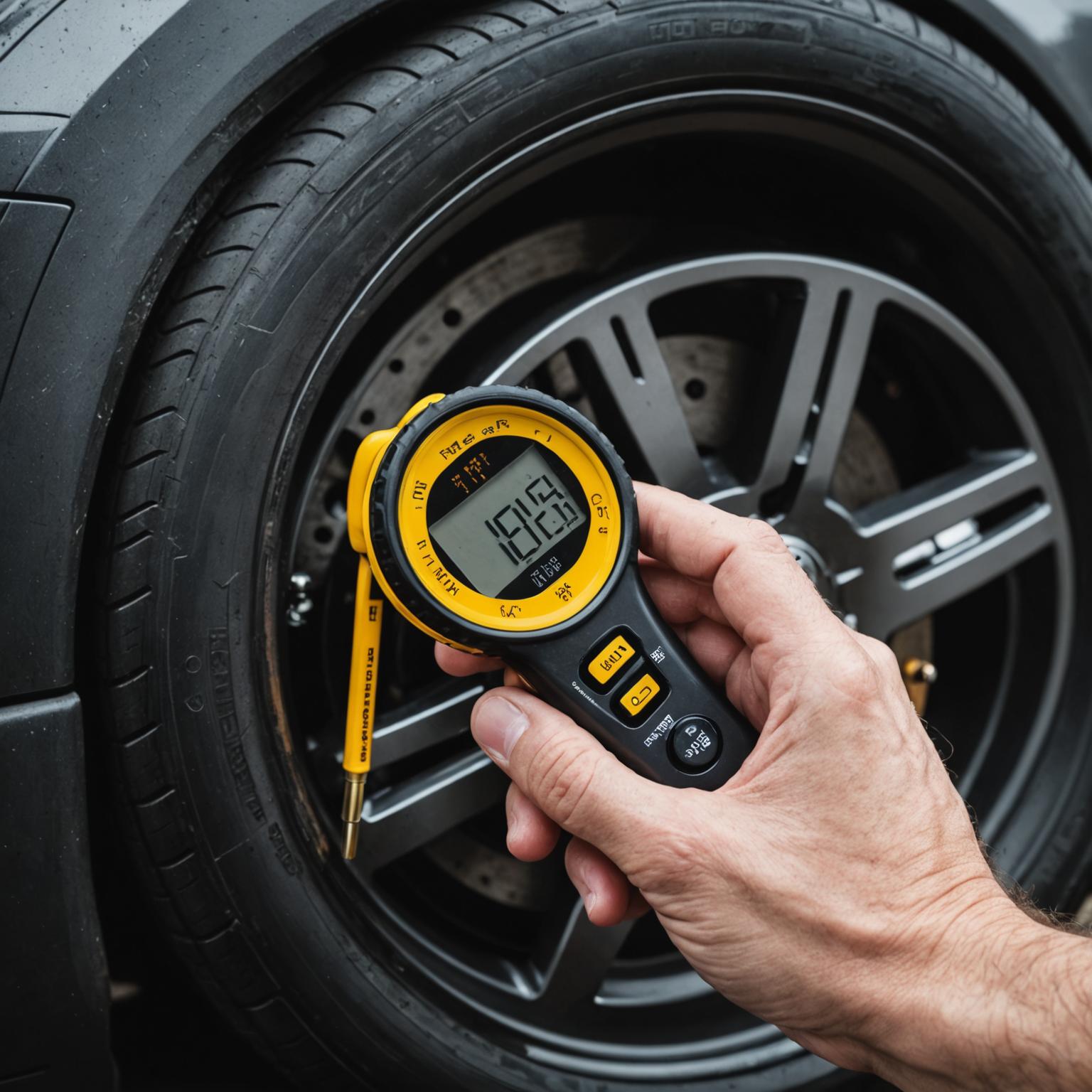
| Usability | Analog readout | Backlit digital display with auto shutoff |
Unlike mass-market gauges, ATSAFEPRO’s factory process integrates precision testing after each assembly stage, ensuring long-term reliability and reduced drift over time.
Core Advantages of Factory-Level Engineering
1. Accuracy and Repeatability
Every ATSAFEPRO gauge undergoes temperature-compensated calibration cycles, ensuring readings remain stable across a wide environmental range (-20°C to 60°C).
2. Durability Built for Professionals
CNC-machined brass cores and reinforced seals provide long-term pressure stability even under industrial compressor systems.
3. Maintenance Efficiency
Digital and hybrid gauges include self-check functions that alert users when recalibration is needed, reducing downtime and service costs.
4. OEM & Fleet Compatibility
Customizable scale ranges (PSI, BAR, kPa) and multi-port adapter options make them ideal for automotive assembly lines, tire retailers, and fleet service stations.
Application Scenarios Across Automotive & Industrial Fields
-
Fleet Maintenance: Multi-vehicle calibration systems reduce air leaks and tire failures across logistics fleets.
-
Service Garages: Technicians benefit from quick, backlit digital readouts and ergonomic triggers for consistent inflations.
-
OEM Assembly Lines: High-precision digital gauges ensure every tire leaves the factory within regulated pressure tolerance.
-
Motorsports Teams: Low-latency digital sensors assist in optimizing tire grip and surface temperature management.
One automotive service chain in Europe reported a 40% drop in tire-related warranty claims after switching to ATSAFEPRO’s digital gauge system.
Practical Advice for Professional Buyers
Best suited for:
-
Tire service centers handling 50+ vehicles daily
-
OEM factories requiring ISO-level calibration consistency
-
Fleet operators seeking to minimize tire replacement costs
Avoid using:
-
Low-volume, personal repair kits without regular calibration
-
Environments with unstable voltage or extreme humidity
Recommendation:
For long-term use, pair ATSAFEPRO’s digital tire gauge with a mechanical backup unit for redundancy—especially in off-grid or field operations.
FAQ: Addressing Buyer Concerns
Q1: How often should I recalibrate a factory-tested tire gauge?
→ Every 12 months for industrial use, or after 10,000 cycles, whichever comes first.
Q2: What standards does ATSAFEPRO follow?
→ All digital and mechanical gauges comply with ISO/TS 16949 and SAE J1502 standards.
Q3: Can the factory produce custom units for OEM branding?
→ Yes, private labeling and specification customization are available for large orders.
Q4: What is the difference between mechanical and digital models?
→ Mechanical gauges are ideal for rugged use; digital ones offer precision and fast readout under variable conditions.
Conclusion & Action
Precision isn’t an option—it’s a foundation.
ATSAFEPRO’s tire pressure gauge factory combines automation, material science, and certified calibration to redefine reliability for professionals worldwide.
Explore our full line of tire tools and inflators on the homepage or connect with our engineering team via the contact page for tailored OEM and workshop solutions.