


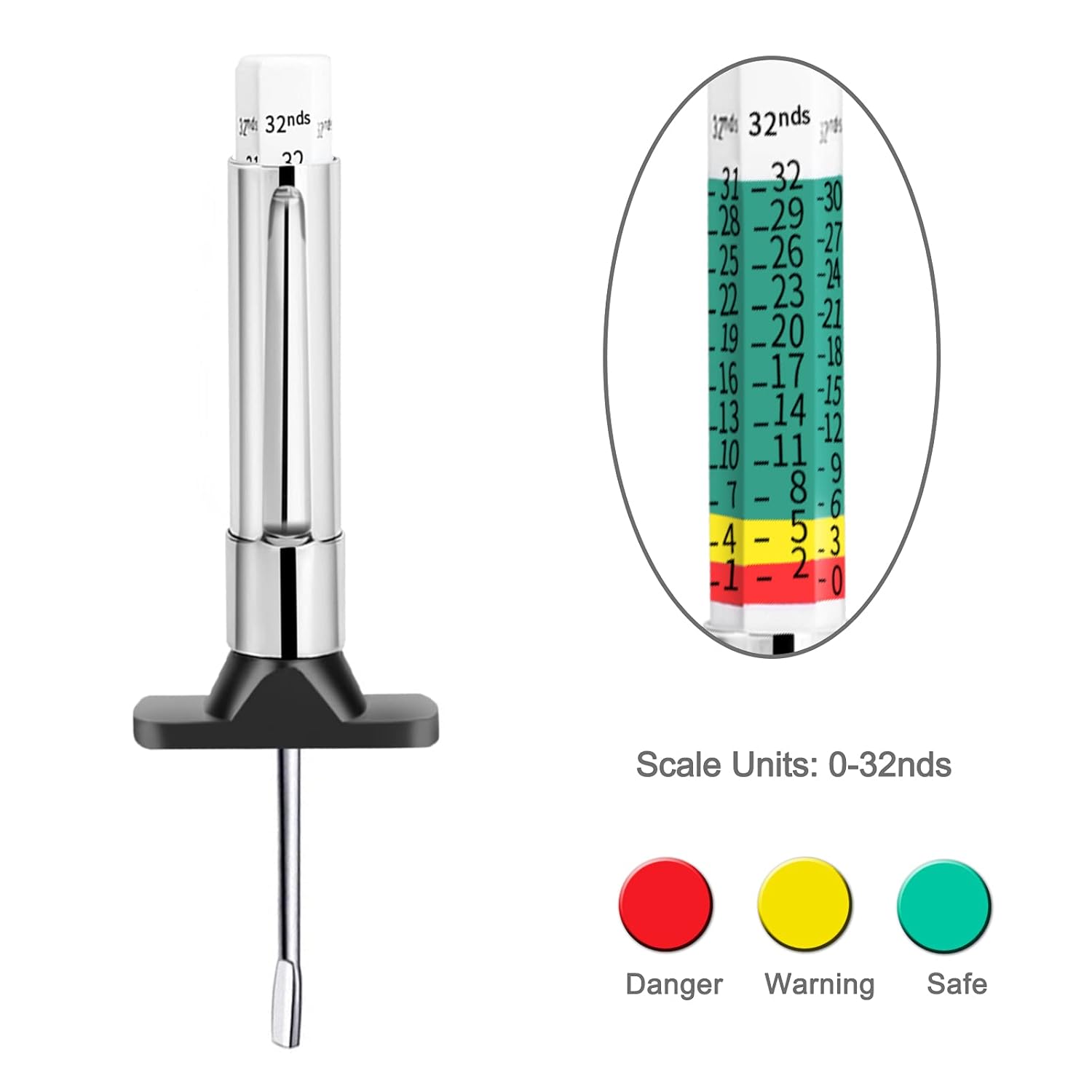
Smart Color Code Tread Depth Gauges: Making Tire Checks Simple and Clear
Why Tread Depth Plays a Bigger Role Than Most Drivers Realize
When people think about vehicle safety, they usually think about brakes, airbags, or seatbelts. Yet the actual stopping distance of a car depends heavily on the tires—and especially the depth of the tread. Shallow tread cannot channel away water, snow, or dirt, leaving the tire sliding across the road surface. That’s why safety experts warn that tread depth directly affects braking distance, traction, and stability. A car with strong brakes but worn tread may need dozens of extra feet to come to a complete stop, especially in rain.
According to U.S. Department of Transportation data, tires with tread below 2/32 inch are twice as likely to be involved in crashes during wet conditions. For drivers who commute daily or families preparing for road trips, this difference can mean avoiding an accident altogether.
The Problem With Traditional Gauges
Classic tread depth gauges measure in 32nds of an inch or millimeters. While precise, many everyday drivers don’t know whether “4/32” is safe or dangerous. For this reason, routine checks are often skipped, or drivers wait until an inspection at a service shop to learn their tires are overdue for replacement. This gap between technical data and user understanding is where problems start.
How Smart Color Code Gauges Solve the Issue
The Smart Color Code Tread Depth Gauge simplifies this process by replacing numbers with visual cues:
-
Green Zone: Safe and ready for everyday driving.
-
Yellow Zone: Worn—still usable, but it’s time to start budgeting for replacements.
-
Red Zone: Unsafe—tires must be replaced immediately to avoid serious risks.
Instead of interpreting numbers, drivers can instantly recognize whether their tires are safe or not. This one innovation turns an intimidating task into a simple, one-minute check.
Everyday Scenarios Where Color Codes Matter
-
Morning Commute in the Rain: Drivers rushing to work may not notice their tread is in the yellow zone. A quick check at home with a color-coded gauge reduces hydroplaning risk before leaving the driveway.
-
Family Trips: A car loaded with luggage and passengers requires maximum tire grip. Parents can check all tires the night before traveling and confirm they’re in the green zone.
-
Winter Preparation: Before icy conditions set in, checking tread depth ensures the grooves are deep enough to cut through slush and snow.
-
Used Car Purchases: Buyers often overlook tire condition when evaluating vehicles. A quick color-coded check prevents expensive surprises after the deal.
Complementary Tools That Strengthen Tire Safety
While tread depth is crucial, it’s only one side of tire care. Pairing the Smart Color Code Gauge with other tools maximizes safety:
-
A Pencil or Mechanical Tire Pressure Gauge ensures PSI is always at manufacturer-recommended levels.
-
A Portable Inflator allows drivers to make corrections instantly without finding a service station.
-
An Emergency Tire Repair Kit handles punctures quickly, reducing downtime during unexpected flats.
By combining these tools, drivers cover every aspect of tire safety: pressure, tread, and emergency preparedness.
Why ATSAFEPRO Tools Stand Out
Many tire care products are designed for professionals, leaving everyday drivers with tools that feel too complicated. ATSAFEPRO develops solutions for people who want accuracy and simplicity. The Smart Color Code Gauge embodies this idea—it’s compact, easy to read, and built for regular use. Drivers can keep it in the glove box, center console, or even carry it during used car inspections. With ATSAFEPRO, safety becomes part of your daily routine, not just a workshop task.
Clear Checks, Safer Roads Ahead
Safety on the road doesn’t come from complicated routines. It comes from small, consistent habits. The ATSAFEPRO Smart Color Code Tread Depth Gauge removes the uncertainty of traditional tools, giving drivers clear, visual guidance in seconds. Whether you’re commuting, traveling with family, or preparing for seasonal changes, this simple tool provides the confidence that your tires are ready for the journey.
Explore ATSAFEPRO tire tools or reach us via Contact Us to make tire checks easier and safer today.





